



📌 Quick answer (checked 18 October 2026): High blood pressure affects an estimated 35–40% of Nigerian adults, according to the State of Health of the Nation Report 2025 (reported March 2026). The World Health Organization diagnoses hypertension at 140/90 mmHg or higher on two different days; the 2025 American Heart Association/American College of Cardiology guideline treats 130/80 as Stage 1 and sets a treatment target below 130/80 for most adults. The best-proven steps are cutting salt and seasoning cubes to keep total salt under 5 g a day (WHO), eating more vegetables, fruit and beans, moving for at least 150 minutes a week, limiting alcohol and taking prescribed medicine every day. Blood pressure checks at primary health centres are free. A reading of 180/120 or higher with symptoms is an emergency.
⚠️ Medical disclaimer: This guide is general information, not medical advice. Do not start, stop or change any medicine without speaking to a registered doctor or pharmacist. If your blood pressure is 180/120 or higher, or you have chest pain, a severe headache, weakness on one side or trouble speaking, go to the nearest hospital immediately.
High blood pressure is called the “silent killer” because most people feel nothing until it damages the heart, brain, kidneys or eyes. In Nigeria it is one of the most common long-term conditions in adults, and many people who have it do not know. This guide explains how hypertension is diagnosed in 2026, what to eat and avoid using everyday Nigerian food, how treatment works, what the condition costs households, and where to get free checks.
How Common Is Hypertension in Nigeria?
The State of Health of the Nation Report 2025, made available to the News Agency of Nigeria in March 2026, estimated that 35% to 40% of Nigerian adults had hypertension in 2025, and said awareness improved compared with 2024.
Other recent figures paint the same picture:
| Figure | What it says | Source and date |
|---|---|---|
| Adults with hypertension | About 35–40% | State of Health of the Nation Report 2025, via NAN, 16 March 2026 |
| Nigerians with elevated blood pressure | More than 20 million (about 4 in 10 adults) | LISDEL financing factsheet, Leadership, 9 September 2026 |
| Strokes linked to hypertension | Over 13,000 a year, plus more than 14,000 ischaemic heart disease events | LISDEL factsheet, Leadership, 9 September 2026 |
| Share of 2025 health budget for hypertension | 0.05%, against an estimated need of 0.7% | LISDEL factsheet, Leadership, 9 September 2026 |
| Worldwide | 1.4 billion adults aged 30–79; only 23% have it under control | WHO fact sheet, 25 September 2025 |
What the Numbers Mean
Blood pressure is written as two numbers. The top (systolic) number is the pressure when your heart beats; the bottom (diastolic) number is the pressure between beats. Two widely used standards exist, and your doctor may use either.
| Category (2025 AHA/ACC guideline) | Top number (mmHg) | Bottom number (mmHg) | |
|---|---|---|---|
| Normal | Below 120 | and | Below 80 |
| Elevated | 120–129 | and | Below 80 |
| Stage 1 hypertension | 130–139 | or | 80–89 |
| Stage 2 hypertension | 140 or higher | or | 90 or higher |
| Severe / possible emergency (WHO) | 180 or higher | or | 120 or higher |
The WHO diagnoses hypertension when the top number is 140 or more and/or the bottom number is 90 or more on two different days. The American guideline, published on 14 August 2025, starts treatment with medicine for all adults whose average is 140/90 or higher, and for some people at 130/80 if they already have heart disease, a past stroke, diabetes or kidney disease, or a high 10-year heart risk. One high reading is not a diagnosis: you need repeated readings, ideally including some at home.
Step-by-Step: Checking Your Blood Pressure at Home
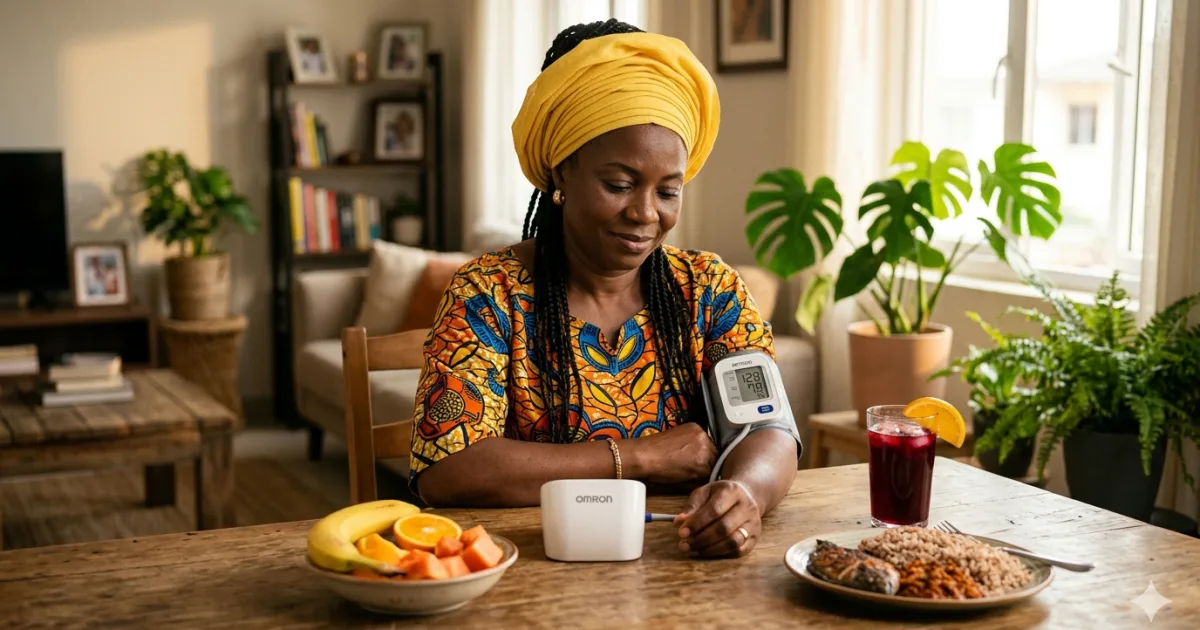
Home readings help your doctor see your real pattern and avoid “white coat” readings that are high only because you are nervous at the clinic. The 2025 American guideline names home monitoring as an important tool and advises against relying on smartwatches and other cuffless devices for now.
- Use an upper-arm digital monitor rather than a wrist monitor, and ask your pharmacist whether the model is clinically validated.
- Avoid tea, coffee, cigarettes and exercise for 30 minutes before you measure. Empty your bladder.
- Sit with your back supported, feet flat and legs uncrossed, and rest quietly for five minutes.
- Put the cuff on bare skin, with your arm resting on a table at heart level. Do not talk.
- Take two readings one minute apart and write down both.
- Measure morning and evening for about a week before a clinic visit, and take the record with you.
For a fuller walkthrough, see our guide on how to check blood pressure at home in Nigeria.
Salt: The Biggest Lever for Nigerians
The WHO advises adults to eat less than 5 g of salt a day (under 2 g of sodium), which is about one level teaspoon in total, including the salt already inside food. At an August 2024 briefing reported by the ICIR, the Corporate Accountability and Public Participation Africa (CAPPA) said average salt intake in Nigeria is up to 10 g a day, and that bouillon cubes are used by 96% of the population according to survey findings. In other words, many households eat roughly double the safe limit, much of it from seasoning cubes, salted fish and processed food.
Practical ways to cut down:
- Cut back on cubes. Use fewer seasoning cubes per pot, and do not add table salt on top.
- Flavour with spices instead. Garlic, ginger, onion, uziza, scent leaf, ehuru, curry, thyme and pepper add taste without sodium.
- Use salted protein sparingly. Stockfish, dried fish and crayfish carry a lot of salt. Use a little, or rinse and soak dried fish first.
- Read labels. Instant noodle seasoning, sausages, corned beef, tinned fish and many snacks are high in sodium. Use half the noodle sachet or less.
- Cook at home more. Food from bukas and fast-food outlets is usually saltier than home cooking.
- Ask about salt substitutes. Potassium-based substitutes can help some people but are unsafe for others, especially people with kidney disease or on certain blood pressure medicines. Ask your doctor first.
Nigerian Foods to Eat More Of
The WHO and the American guideline both recommend more fruit and vegetables, more potassium-rich food and less saturated and trans fat. In Nigerian terms, that looks like this:
| Food group | Nigerian examples | Tip |
|---|---|---|
| Leafy vegetables | Ugu, ewedu, efo tete (amaranth), waterleaf, bitter leaf, moringa (zogale) | Add a generous portion to soups and stews daily; do not overcook |
| Fruit | Banana, pawpaw, watermelon, oranges, avocado (pear), agbalumo, garden egg | Eat whole fruit rather than sweetened juice |
| Beans and legumes | Brown beans, black-eyed beans, moi moi, akara (not deep-fried often), unsalted groundnuts | Good protein and fibre; make moi moi with less seasoning |
| Whole grains and tubers | Oats, ofada rice, acha (fonio), millet, sweet potato, unripe plantain | Swap some white rice and white bread for these |
| Lean protein | Fresh fish (titus, croaker, tilapia, catfish), chicken without skin, eggs | Grill, boil or stew instead of frying |
| Drinks | Water, unsweetened zobo, fresh coconut water | Leave out the sugar; ask your doctor before drinking coconut water often if you have kidney problems |
Unsweetened zobo (hibiscus) is popular and some studies suggest a small effect on blood pressure, but it is a drink, not a treatment, and it does not replace prescribed medicine. If you make it at home, our zobo recipe guide explains how; simply skip the sugar.
Foods and Habits to Limit
- Seasoning cubes and extra salt: the main source of sodium in many Nigerian kitchens.
- Processed meats: sausages, corned beef, hot dogs and heavily salted suya.
- Salty snacks: salted groundnuts, plantain chips, chin chin, meat pies and puff-puff, especially when eaten daily.
- Deep-fried food and reused oil: limit frying and do not reuse oil many times.
- Fatty cuts and offal: ponmo, shaki and fatty red meat are often cooked with a lot of salt and oil.
- Sugary drinks: soft drinks, malt drinks and sweetened zobo add calories and make weight control harder.
- Alcohol: the American guideline advises reducing or stopping alcohol; the WHO says no more than one drink a day for women and two for men.
- Tobacco and nicotine: there is no safe level for someone with high blood pressure.
A Sample Lower-Salt Nigerian Day
This is an example only. Adjust portions to your weight, activity and any other conditions such as diabetes or kidney disease, ideally with a dietitian.
| Meal | Example |
|---|---|
| Breakfast | Oats with sliced banana and a few unsalted groundnuts, or pap with moi moi made with less seasoning |
| Lunch | Ofada or brown rice with vegetable stew (half the usual cubes) and grilled fish, plus a side of steamed vegetables |
| Dinner | Efo riro or okra soup with fresh fish and a small portion of swallow, or beans porridge with ugu |
| Drinks | Water through the day; unsweetened zobo |
Movement, Weight, Sleep and Stress
- Exercise: the WHO recommends at least 150 minutes a week of moderate activity (for example 30 minutes of brisk walking on five days) plus muscle-strengthening on two or more days. Early-morning walks, skipping in the compound, dancing and home workouts all count.
- Weight: both the WHO and the American guideline list reaching or keeping a healthy weight as a key step. Losing weight slowly and steadily is easier to keep up than crash dieting.
- Sleep: aim for regular, adequate sleep. Loud snoring with daytime sleepiness can be a sign of sleep apnoea, which is linked to high blood pressure; mention it to your doctor.
How Treatment Works
Lifestyle change is the foundation, but most people with Stage 2 hypertension also need medicine. Common groups of blood pressure medicines include calcium channel blockers (such as amlodipine), ACE inhibitors (such as lisinopril), angiotensin receptor blockers (such as losartan) and thiazide-type diuretics. Many people need two medicines, sometimes in a single combined tablet. Which one suits you depends on your age, kidneys, other illnesses and other medicines, so only a doctor should choose.
Key rules:
- Take your medicine every day, even when you feel fine. The WHO advises not to skip or share medicines.
- Do not stop when your readings become normal. Normal readings usually mean the treatment is working, not that the condition is gone.
- Do not buy “BP drugs” over the counter on a guess. See a doctor for a diagnosis and prescription, and go back for reviews.
- Get your tests done. Doctors often check kidney function, blood sugar, cholesterol and urine, and may do an ECG, to look for damage and other risks.
- Be careful with herbal mixtures. Their strength and safety are not standardised, and some interact with medicines. Tell your doctor about anything you take.
Check that your medicine is genuine
Buy from a licensed pharmacy. NAFDAC recommends four ways to check a medicine: look it up in the NAFDAC Green Book of approved medicines, search the NAFDAC Verify database, scan the barcode, or use the scratch code on the pack (Mobile Authentication Service) and send it by text message.
What Hypertension Costs Nigerian Households
Prices of individual medicines, monitors and tests vary widely between cities, pharmacies and brands, and change often, so we no longer publish a price list we cannot tie to a named, dated source. The most recent dated estimate we found comes from a LISDEL hypertension financing factsheet reported by Leadership on 9 September 2026: families spend about $20 to $55 or more a month managing the condition, fewer than 5% of primary health care patients have prepaid insurance, and 48.2% of affected households face a risk of being pushed into poverty.
Ways to keep costs down:
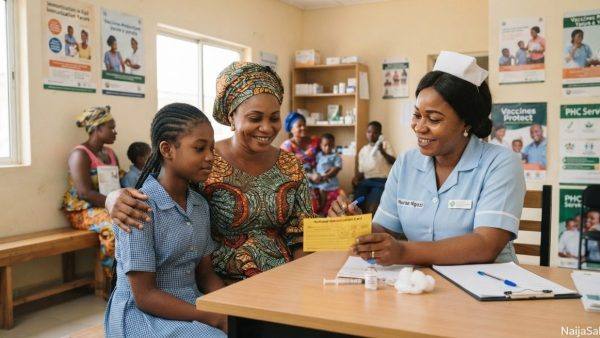
- Use free checks. The Federal Government said in May 2026 that blood pressure checks at primary health centres are free, and that PHCs are being equipped to diagnose and manage uncomplicated hypertension.
- Ask about generics. Your doctor or pharmacist can tell you whether a cheaper generic version of your medicine is suitable.
- Get insured. The NHIA scheme and private HMO plans can cover consultations and listed medicines. Confirm what your plan covers before you rely on it. See how to register for NHIA health insurance.
Where to Get Checked and Treated
- Primary health centres (PHCs): the National Primary Health Care Development Agency says there are over 9,000 facilities nationwide, and checks are free. In Kano and Ogun States, PHCs take part in the Nigeria Hypertension Control Initiative, supported by Resolve to Save Lives.
- General and teaching hospitals: for diagnosis, follow-up and referral to a cardiologist or kidney specialist when blood pressure stays high on two or three medicines, or when there are signs of organ damage.
- Private clinics and telehealth: useful for regular reviews. See our guide to telehealth and online doctor apps in Nigeria.
How often to check: at the May 2026 World Hypertension Day event, officials advised adults from age 18 to check their blood pressure regularly at a PHC, and people over 50, or with symptoms or a family history, to check at least weekly.
Emergency Warning Signs
The WHO says very high blood pressure (usually 180/120 or higher) can cause a severe headache, chest pain, dizziness, difficulty breathing, nausea or vomiting, blurred vision, confusion, buzzing in the ears, nosebleeds or an abnormal heart rhythm. If you have these symptoms with high blood pressure, seek care immediately.
Sudden weakness or numbness on one side, a drooping face or slurred speech are stroke signs: go to hospital at once. Our stroke warning signs guide explains the FAST test.
Frequently Asked Questions
What is normal blood pressure?
Below 120/80 mmHg. Under the 2025 American guideline, 120–129 over less than 80 is “elevated”, and 130/80 or higher is hypertension. The WHO diagnoses hypertension at 140/90 or higher on two different days.
Can I control hypertension without medicine?
Some people with mildly raised readings and low heart risk can bring their numbers down with lifestyle changes alone. The American guideline suggests a 3–6 month lifestyle trial for these people, then medicine if readings stay at 130/80 or above. Anyone averaging 140/90 or higher is advised to take medicine as well. Decide this with your doctor.
How much salt is safe?
The WHO recommends less than 5 g of salt a day in total, about one level teaspoon, including salt in seasoning cubes and processed foods.
Is zobo good for high blood pressure?
Unsweetened zobo is a healthy drink choice and may have a small effect, but it is not a substitute for prescribed treatment. Adding sugar cancels much of the benefit.
Where can I check my blood pressure for free?
At primary health centres. The Federal Government said in May 2026 that checks at these facilities are free.
Can I stop my medicine once my blood pressure is normal?
No, not without your doctor’s advice. Normal readings usually mean the medicine is working. Stopping can make your pressure rise again.
Is hypertension hereditary?
Family history is a known risk factor, according to the WHO. If a parent or sibling has high blood pressure, start checking yours early and regularly.
Sources
- World Health Organization, “Hypertension” fact sheet, 25 September 2025.
- American Heart Association, “Top Things to Know: 2025 High Blood Pressure Guideline”, 14 August 2025.
- Leadership, “Hypertension crisis: Nigeria funds only 7% of required investment” (LISDEL factsheet), 9 September 2026.
- Federal Ministry of Information and National Orientation, “Hypertension: FG rolled out policy and guidelines for early detection and management”, 23 May 2026.
- News Agency of Nigeria via Shipping Position, “Report finds hypertension affects up to 40% of Nigerian adults in 2025”, 16 March 2026.
Related reading on NaijaSabi: Signs of high blood pressure in Nigerians · How to manage diabetes in Nigeria
Last updated: 18 October 2026 · NaijaSabi.




0 Comments
No comments yet. Be the first to share your thoughts!