




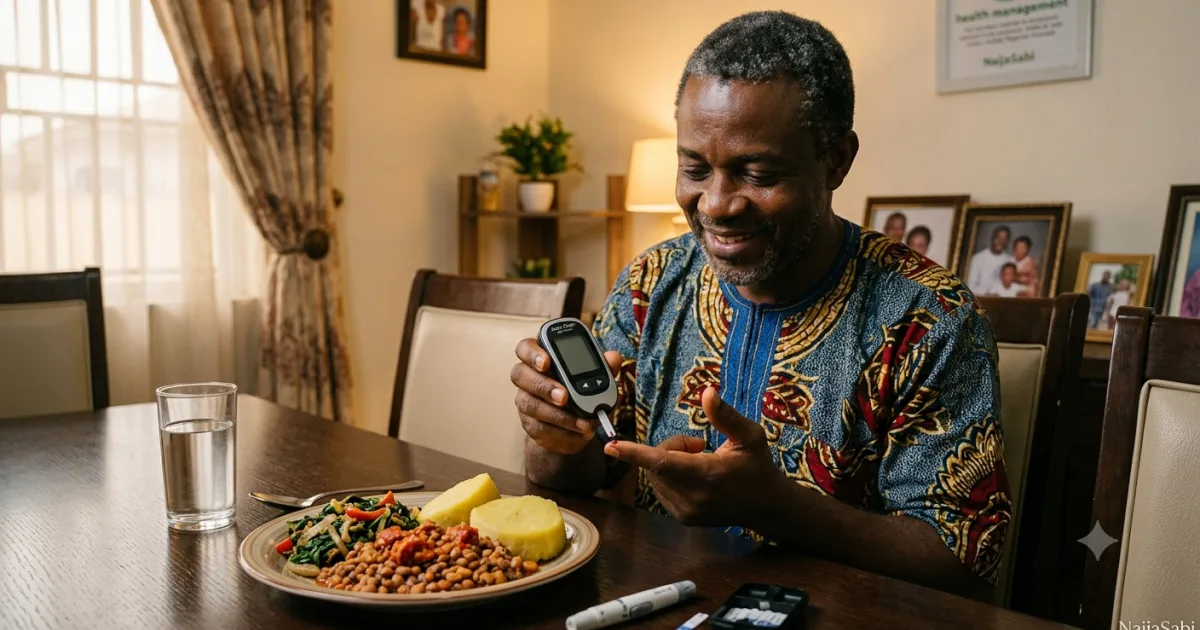
📌 Quick Summary: Nigeria has the highest diabetes burden in Africa. Over 11 million Nigerians are living with the condition — and more than half do not know it. An estimated 132,500 Nigerians die annually from diabetes complications including stroke, kidney failure, heart disease, blindness and limb amputations. Yet diabetes — particularly Type 2 — is manageable with the right combination of diet, exercise, medication and regular monitoring. This NaijaSabi guide covers everything Nigerians living with diabetes need to know: the difference between Type 1 and Type 2, how to eat well with Nigerian foods, what medications are available and how to afford them, blood sugar targets, complications to prevent and where to get specialist care across Nigeria.
⚠️ Medical Disclaimer: This article is for informational purposes only and does not constitute medical advice. NaijaSabi is not a medical institution. Diabetes is a serious medical condition requiring diagnosis and ongoing management by a qualified Nigerian doctor or endocrinologist. Never change, stop or start any diabetes medication — including insulin — based on information in this article. Always consult a qualified Nigerian healthcare professional before making any changes to your diabetes management. For medical emergencies, call Nigeria’s emergency line: 112.
There is a quiet epidemic in Nigeria that most Nigerians have no idea they are part of. Eleven million Nigerians are living with diabetes. More than half of them do not know — because they have never been tested. They attribute their persistent fatigue to stress. They explain away the increased thirst and urination as normal life. They assume the slow-healing wound on their foot is a minor skin issue. By the time many Nigerians receive a diabetes diagnosis, the condition has already been progressing for years — and complications are either already present or approaching fast. This NaijaSabi guide is for the 11 million who do know — and for the millions more who should find out.
| Fact | Detail |
| Nigerians living with diabetes | Over 11.2 million — highest burden in Africa (Prof. Sunny Chinenye, UPTH/DAN) |
| Percentage undiagnosed | Over 50% — more than half of Nigerian diabetics are unaware (IDF/DAN) |
| Annual deaths from diabetes complications in Nigeria | ~132,500 per year |
| Type 1 diabetes in Nigeria | ~560,000 Nigerians — insulin-dependent, typically diagnosed in childhood/youth |
| Type 2 diabetes in Nigeria | ~11.2 million — most common form, linked to lifestyle, diet and genetics |
| Average annual treatment cost Nigeria (2021) | ₦800,000 per person — up from ₦60,000 in 2011 (Federal Ministry of Health) |
| Nigeria’s diabetes projection | 8 million by 2045 (official IDF estimate — actual burden likely higher) |
| Key specialist body | Diabetes Association of Nigeria (DAN) — diabetesassociation.ng |
Type 1 vs Type 2 Diabetes — What Every Nigerian Needs to Know
Diabetes is not one disease — it is a category of conditions characterised by elevated blood sugar. The two most common forms in Nigeria are fundamentally different in cause, management and who they affect:
Type 1 Diabetes
Type 1 diabetes is an autoimmune condition — the body’s immune system attacks and destroys the insulin-producing beta cells in the pancreas. Without these cells, the body cannot produce any insulin at all. Insulin is the hormone that allows glucose (sugar) to enter cells and be used for energy. Without insulin, glucose builds up in the blood to dangerous levels.
Type 1 diabetes is typically diagnosed in children, teenagers and young adults — though it can occur at any age. It is not caused by diet or lifestyle — it is genetic and immune-mediated. Every person with Type 1 diabetes requires insulin — there is no oral medication that replaces the missing insulin. This is why access to affordable insulin is a matter of survival for Nigeria’s 560,000 Type 1 diabetics. Without insulin, Type 1 diabetes is fatal.
Type 2 Diabetes
Type 2 diabetes is the far more common form — accounting for approximately 95% of Nigeria’s diabetes burden. In Type 2, the body still produces insulin but becomes resistant to it — cells no longer respond properly to insulin’s signal. Over time, the pancreas works harder to produce more insulin to compensate, and eventually becomes exhausted, producing insufficient amounts.
Type 2 diabetes is strongly linked to lifestyle factors — excess body weight (particularly abdominal obesity), physical inactivity, high-carbohydrate diets (particularly refined carbohydrates and sugary drinks), and family history. It is also increasingly common in younger Nigerians — the combination of rapidly urbanising lifestyles, increased consumption of processed foods and sugary beverages, and reduced physical activity has made Type 2 diabetes a disease of Nigerian adults in their 30s and 40s, not just the elderly.
Type 2 diabetes is manageable — and in the early stages, sometimes reversible — with significant lifestyle changes. Medication is often needed alongside lifestyle changes, particularly as the condition progresses. Any decision about medication must be made with a qualified Nigerian doctor.
Symptoms of Diabetes — Warning Signs Nigerians Must Not Ignore
The most dangerous thing about diabetes in Nigeria is how long it can go undetected. Symptoms are often gradual and easy to attribute to other causes. The classic warning signs of undiagnosed diabetes include:
- Frequent urination: especially at night — the kidneys are working overtime to filter excess glucose from the blood
- Excessive thirst: the body loses water through frequent urination and signals thirst to compensate
- Unexplained fatigue and weakness: glucose cannot enter cells properly, so the body lacks its primary fuel source
- Blurred vision: high blood sugar causes fluid shifts in the lens of the eye
- Slow-healing wounds: particularly on the feet — high blood sugar impairs the immune system and blood circulation required for healing
- Tingling or numbness in the feet or hands: early nerve damage (diabetic neuropathy) from prolonged high blood sugar
- Unexplained weight loss: particularly in Type 1 — the body burns fat and muscle for fuel when it cannot use glucose
- Recurrent skin infections or genital itching: high blood sugar creates an environment where bacteria and fungi thrive
If you experience several of these symptoms together, do not wait — get a fasting blood glucose test at any laboratory or health facility. A fasting blood glucose above 7.0 mmol/L (126 mg/dL) on two separate occasions indicates diabetes. A random blood glucose above 11.1 mmol/L (200 mg/dL) with symptoms also indicates diabetes. Only a qualified doctor can diagnose you — these are screening reference points, not self-diagnosis tools.
Blood Sugar Targets for Nigerians Living with Diabetes
Managing diabetes means keeping your blood sugar within target ranges that prevent damage to your organs. Your doctor will set your personal targets — these are the general reference ranges endorsed by international diabetes guidelines and used by Nigerian endocrinologists:
| Test | Target Range (General) | Frequency |
| Fasting blood glucose (before breakfast) | 4.4–7.2 mmol/L (80–130 mg/dL) | Daily if on insulin; weekly if on oral medication |
| 2-hour post-meal blood glucose | Below 10.0 mmol/L (180 mg/dL) | Periodically — after high-carbohydrate meals |
| HbA1c (3-month average blood sugar) | Below 7% (below 53 mmol/mol) | Every 3–6 months at your doctor’s clinic |
| Blood pressure | Below 130/80 mmHg | At every clinic visit |
The HbA1c test — available at most Nigerian teaching hospitals and private laboratories — is the most important measure of how well diabetes is controlled over time. It reflects your average blood sugar over the previous 3 months, which a single fasting glucose reading cannot show. Every Nigerian with diabetes should have their HbA1c tested at least twice a year. Ask your doctor for your HbA1c result at every clinic visit.
Managing Diabetes with Nigerian Foods — What to Eat and What to Limit
This is the section most Nigerian diabetes guides get wrong — by giving generic Western dietary advice that is completely impractical for how Nigerians actually eat. Here is the honest, Nigerian-specific dietary guidance from the perspective of what Nigerian endocrinologists advise their patients:
The Core Principle — Manage Carbohydrate Quantity and Quality
Carbohydrates raise blood sugar more directly than protein or fat. Nigerian diets are typically high in carbohydrates — rice, garri, fufu, yam, eba, semovita, bread, akamu, and the starchy base of most Nigerian meals. This does not mean these foods are forbidden — it means portion size matters enormously and the type of carbohydrate matters too.
Nigerian Foods That Are Safer for Blood Sugar Management
- Unripe plantain: significantly lower glycaemic index than ripe plantain. Unripe plantain fufu, unripe plantain porridge and boiled unripe plantain are commonly recommended by Nigerian dieticians for people with diabetes. The starch in unripe plantain behaves more like dietary fibre, causing a slower, gentler rise in blood sugar than ripe plantain or white rice
- Brown rice over white rice: if rice is a staple, brown rice raises blood sugar more slowly than polished white rice. Ofada rice — Nigeria’s unpolished local variety — has a lower glycaemic index than imported white rice and is recommended by Nigerian nutrition researchers
- Beans and legumes (ewa, moin moin, akara): beans are among the best foods for Nigerian diabetics — high protein, high fibre, low glycaemic index. Black-eyed beans, honey beans, soybeans and lentils all slow glucose absorption significantly. Moin moin (steamed bean pudding) and akara (bean cakes without excessive oil) are excellent choices
- Okra: widely available across Nigeria, okra contains soluble fibre and compounds that research suggests may help slow sugar absorption and support blood glucose control. Okra soup is a regular part of many Nigerian diets and is actively recommended for people with diabetes by Nigerian dieticians
- Bitter leaf (Vernonia amygdalina) and moringa: traditional Nigerian vegetables with research-supported blood sugar benefits. Bitter leaf soup and moringa powder are both used alongside conventional diabetes management — not as replacements for medication, but as supportive dietary elements. Always inform your doctor about any herbal or food-based supplements you are taking.
- Ugwu (fluted pumpkin leaves): high in fibre, vitamins and minerals. Ugwu soup is nutritionally excellent for people with diabetes — a low-glycaemic vegetable base that pairs well with controlled protein portions
- Boiled or roasted yam over pounded yam or eba: processing increases the glycaemic index of starchy foods significantly. Boiled yam raises blood sugar more slowly than pounded yam. Roasted yam (bole) is lower glycaemic than fried. Choose preparation methods that minimise processing
Nigerian Foods and Drinks to Limit or Avoid
- Sugary drinks: Fanta, Coke, Sprite, Maltina, Malt, energy drinks, sweet zobo without portion control, packaged fruit juices — these are among the most damaging foods for blood sugar management. A single 35cl bottle of regular Coke contains approximately 37g of sugar — capable of spiking blood sugar significantly in a diabetic. Switch to water, unsweetened zobo, herbal teas or very diluted fresh citrus juice
- White bread, wheat bread and agege bread: highly refined, rapidly digested, fast blood sugar spike. If bread is eaten, limit portion and accompany with protein (eggs, sardines) to slow absorption
- Eba, fufu and semovita in large portions: these are rapidly absorbed high-glycaemic carbohydrates. Small portions — the size of a tennis ball — with large proportions of vegetable soup and protein are the recommended approach when these staples are consumed
- Fried foods in excess: excess dietary fat contributes to insulin resistance over time and weight gain, both of which worsen Type 2 diabetes. Suya, fried chicken and heavily fried snacks eaten daily are problematic — not occasional treats
- Ripe plantain: significantly higher sugar content than unripe. Dodo (fried ripe plantain) eaten in large portions causes rapid blood sugar rises
Exercise and Physical Activity for Nigerian Diabetics
Physical activity directly improves insulin sensitivity — meaning your cells respond better to insulin and glucose enters them more effectively, reducing blood sugar. Even modest regular exercise has measurable benefits for blood sugar control in people with Type 2 diabetes. Nigerian endocrinologists consistently identify physical inactivity as one of the top contributors to poor diabetes control in Nigerian patients.
Practical exercise recommendations for Nigerian adults living with diabetes:
- 30 minutes of brisk walking, 5 days per week is the most accessible and effective exercise recommendation for most Nigerian diabetics. A morning walk in your estate or neighbourhood before the heat peaks — consistent, free, low-impact and proven to reduce HbA1c
- Avoid sitting for long periods without movement. Office workers, market traders who stand in one place, and people who spend long periods in Lagos traffic should make a deliberate effort to move — even a 5-minute walk every hour makes a measurable difference
- Check blood sugar before exercise if you are on insulin — exercise can lower blood sugar significantly in insulin-dependent diabetics. Carry a glucose tablet, Lucozade or small sweet in case of hypoglycaemia (low blood sugar) during or after exercise. Discuss your exercise plan with your doctor, particularly if you take insulin or sulphonylurea medications.
Medications Used for Diabetes in Nigeria
All diabetes medications must be prescribed and monitored by a qualified Nigerian doctor or endocrinologist. Never self-medicate for diabetes. Never stop or change your dose without consulting your doctor.
Type 2 Diabetes — Oral Medications Available in Nigeria
- Metformin: the first-line oral medication for Type 2 diabetes worldwide and in Nigeria. Reduces glucose production by the liver and improves insulin sensitivity. Widely available at government and private pharmacies across Nigeria at relatively affordable prices. Generally well-tolerated — the most common side effect is gastrointestinal upset, reduced by taking with food
- Glibenclamide (Daonil) and Glimepiride: sulphonylurea medications that stimulate the pancreas to produce more insulin. Used when Metformin alone is insufficient. Risk of hypoglycaemia (blood sugar dropping too low) — patients on sulphonylureas must eat regular meals and monitor blood sugar. Available at most Nigerian pharmacies
- Glipizide: another sulphonylurea — similar mechanism and precautions to glibenclamide
- Sitagliptin (Januvia) and other DPP-4 inhibitors: newer class, lower hypoglycaemia risk than sulphonylureas. Available in Nigeria but significantly more expensive than Metformin and sulphonylureas. Typically accessed at private hospitals and specialist pharmacies
- SGLT2 inhibitors (Empagliflozin, Dapagliflozin): newer class with cardiovascular and kidney protection benefits beyond blood sugar control. Available in Nigeria at higher cost — typically at specialist endocrinology centres and some private hospitals
Insulin — For Type 1 and Advanced Type 2 Diabetes
Insulin is essential for all Type 1 diabetics and is required by many Type 2 diabetics when oral medications no longer achieve adequate control. Common insulin types available in Nigeria include:
- Regular insulin (short-acting) — available through government programmes and pharmacies
- NPH insulin (intermediate-acting) — widely available, relatively affordable
- Premixed insulin (e.g., 30/70 — 30% regular + 70% NPH) — commonly prescribed at Nigerian teaching hospitals
- Insulin analogues (long-acting — glargine/Lantus, detemir/Levemir; rapid-acting — aspart/NovoRapid, lispro/Humalog) — available but significantly more expensive than conventional insulin. Essential for tight blood sugar control in many Type 1 patients
The insulin affordability crisis in Nigeria: The annual cost of insulin in Nigeria has risen dramatically — the Federal Ministry of Health cited a rise from ₦60,000/year in 2011 to ₦800,000/year in 2021, with further increases since then. The Diabetes Association of Nigeria (DAN) and Insulin for Life Nigeria (IFL Nigeria) run programmes to provide subsidised or free insulin to Nigerians who cannot afford it. Contact DAN at diabetesassociation.ng or IFL Nigeria for information on current access programmes. Never ration or skip insulin doses due to cost without speaking to your doctor first — this is life-threatening for Type 1 diabetics.
Preventing Diabetes Complications in Nigeria
The most devastating aspect of poorly managed diabetes in Nigeria is not the high blood sugar itself — it is the complications it causes over time. The leading complications killing and disabling Nigerian diabetics are:
- Diabetic foot and amputation: the most visible and feared complication in Nigeria. High blood sugar reduces circulation and nerve sensation in the feet — making injuries invisible to the patient and slow to heal, leading to infection, gangrene and amputation. Nigerian diabetics must: inspect their feet daily for cuts, blisters and sores; never walk barefoot; wear proper-fitting shoes; and see a doctor immediately for any foot wound, no matter how minor it appears
- Kidney disease (diabetic nephropathy): high blood sugar damages the blood vessels in the kidneys over years. Regular urine tests (for protein/albumin) and creatinine blood tests detect early kidney damage — ask your doctor for these at least annually
- Eye disease (diabetic retinopathy): high blood sugar damages the tiny blood vessels in the retina, causing progressive vision loss and eventually blindness. Annual eye examination (dilated fundus examination) by an ophthalmologist is essential for all Nigerian diabetics — even those with no current vision complaints
- Heart disease and stroke: diabetics have significantly higher risk of heart attack and stroke. Blood pressure control (below 130/80 mmHg), cholesterol management and aspirin therapy (where prescribed) are essential alongside blood sugar control
- Nerve damage (diabetic neuropathy): causes tingling, burning, numbness and pain in the feet and hands. Symptoms are managed but damage is not fully reversible — prevention through good blood sugar control is critical
The annual diabetes review checklist for every Nigerian diabetic:
- HbA1c test: at least twice per year
- Blood pressure measurement: at every clinic visit
- Urine albumin test: annually
- Serum creatinine (kidney function): annually
- Fasting lipid profile (cholesterol): annually
- Eye examination (dilated fundus): annually
- Foot examination: at every clinic visit
- Weight and BMI: at every clinic visit
When to See a Doctor in Nigeria — Diabetes Emergencies
Go to hospital immediately — do not wait or manage at home — if you experience any of the following:
- Hypoglycaemia (low blood sugar) not correcting with glucose: symptoms include sudden shakiness, sweating, confusion, weakness, palpitations. Eat glucose tablets, Lucozade or any sugary drink/food immediately. If not improving within 15 minutes or the person is unconscious, call 112 or go to the nearest emergency unit immediately
- Diabetic ketoacidosis (DKA) — Type 1 emergency: symptoms include nausea, vomiting, abdominal pain, deep fast breathing, fruity breath odour, confusion. DKA is a life-threatening emergency. Call 112 or go to the nearest Teaching Hospital emergency unit immediately
- Hyperglycaemic Hyperosmolar State (HHS) — Type 2 emergency: extreme high blood sugar (above 33 mmol/L), severe dehydration, confusion or loss of consciousness. Medical emergency — go to hospital immediately
- Any foot wound, ulcer or infection in a diabetic: do not self-treat or wait. Even a small cut that shows signs of redness, swelling or discharge requires same-day medical review for a diabetic
- Chest pain, sudden severe headache, sudden weakness or facial drooping: potential heart attack or stroke — call 112 immediately
- Vision changes — sudden blurring or loss of vision
Where to Get Diabetes Care in Nigeria
Major diabetes specialist centres and endocrinology units in Nigeria:
- University of Port Harcourt Teaching Hospital (UPTH) — home of Prof. Sunny Chinenye, one of Nigeria’s leading endocrinologists. Port Harcourt, Rivers State
- Lagos University Teaching Hospital (LUTH) — Idi-Araba, Lagos. Strong endocrinology department
- Lagos Island General Hospital — Lagos Island. Government-subsidised rates
- Obafemi Awolowo University Teaching Hospital (OAUTH) — Ile-Ife, Osun State. Prof. Babatope Kolawole, consultant endocrinologist
- University College Hospital (UCH) — Ibadan, Oyo State
- National Hospital Abuja — Central Business District, FCT
- Aminu Kano Teaching Hospital — Kano
- University of Nigeria Teaching Hospital (UNTH) — Enugu
The Diabetes Association of Nigeria (DAN) at diabetesassociation.ng provides resources, specialist referrals and advocacy for Nigerians living with diabetes. Insulin for Life Nigeria (IFL Nigeria) provides subsidised insulin access programmes for low-income Nigerians. Contact both organisations for current support programmes available in your area.
Frequently Asked Questions — Diabetes Nigeria
How common is diabetes in Nigeria?
Diabetes is extremely common in Nigeria — and becoming more so. Over 11.2 million Nigerians are estimated to be living with diabetes, according to analysis by Professor Sunny Chinenye at the University of Port Harcourt Teaching Hospital, published in collaboration with the Diabetes Association of Nigeria. The International Diabetes Federation’s official figure of approximately 3 million is considered a significant underestimate due to Nigeria’s low diagnosis rates — more than half of Nigerian diabetics are undiagnosed. Nigeria has the highest diabetes burden of any country in Africa. The number is projected to reach 8 million by 2045 on the official IDF estimate, with actual numbers likely higher. If you have never been tested for diabetes, particularly if you are over 35, overweight, or have a family history, ask your doctor for a fasting blood glucose test.
Can Type 2 diabetes be reversed in Nigeria?
Type 2 diabetes can go into remission — a state where blood sugar levels return to normal without medication — in some people, particularly those who are significantly overweight and achieve substantial weight loss (10–15% of body weight) through diet and exercise changes in the early stages of the condition. “Remission” does not mean “cured” — blood sugar must be monitored regularly and lifestyle maintained to sustain it. Many Nigerians with Type 2 diabetes who lose significant weight, reduce their carbohydrate intake dramatically and exercise regularly see major improvements in blood sugar control and may be able to reduce or eliminate oral medication under their doctor’s supervision. This is best achieved under the guidance of a Nigerian endocrinologist and dietician. Never stop diabetes medication on your own — only your doctor can safely supervise medication reduction.
What Nigerian foods should a diabetic avoid?
Nigerian foods and drinks that most significantly raise blood sugar and should be limited or avoided by diabetics include: sugary drinks (Coke, Fanta, Malt, Maltina, packaged fruit juices, sweet energy drinks), large portions of eba, fufu and semovita, white bread and agege bread, ripe plantain (dodo) in large portions, fried foods consumed daily, and foods with hidden sugar (sweet biscuits, chin-chin, puff puff in large quantities). Foods that are beneficial for Nigerian diabetics include: beans and legumes (moin moin, akara, ewa), unripe plantain, okra, bitter leaf and moringa, ugwu, ofada rice in controlled portions, boiled (not fried or pounded) yam in small portions, and non-starchy vegetables. Always work with a qualified Nigerian dietician for a personalised meal plan — general guidance cannot replace individual dietary advice.
How much does diabetes treatment cost in Nigeria in 2026?
Diabetes treatment costs in Nigeria have risen sharply. The Federal Ministry of Health cited an average annual treatment cost of ₦800,000 per person in 2021, projected to exceed ₦1,000,000 by 2030 — driven by rising insulin prices, the cost of blood glucose monitoring strips, laboratory tests and clinic fees. Costs vary significantly by treatment type: Type 2 diabetes managed on Metformin alone is significantly more affordable than Type 1 requiring daily insulin. Patients who use insulin analogues (Lantus, NovoRapid) face substantially higher costs than those on conventional NPH insulin. Government teaching hospitals offer subsidised rates compared to private hospitals. The Diabetes Association of Nigeria (DAN) and Insulin for Life Nigeria (IFL Nigeria) run access programmes for patients who cannot afford standard treatment costs — contact them at diabetesassociation.ng for current programme availability. Discuss the most affordable effective treatment option for your situation with your doctor.
Sources
- BusinessDay Nigeria — Over 11 million Nigerians living with diabetes — Prof. Sunny Chinenye, UPTH/DAN — businessday.ng
- Guardian Nigeria — Doctors, patients bemoan diabetes epidemic, 200% spike on treatment costs — guardian.ng
- International Diabetes Federation — Diabetes in Nigeria 2024 — idf.org
- Guardian Nigeria — Nigeria may suffer 5 million diabetes cases by 2030, warns IDF — guardian.ng
- Population Medicine — Sweet but deadly: uncovering the growing diabetes epidemic in Nigeria — populationmedicine.eu
- Diabetes Association of Nigeria — diabetesassociation.ng
Last updated: 17 September 2026 · NaijaSabi Health Desk. This article is for informational purposes only and does not constitute medical advice. Diabetes requires diagnosis and management by a qualified Nigerian doctor or endocrinologist. Never change or stop any medication without medical supervision. For medical emergencies, call 112.



0 Comments
No comments yet. Be the first to share your thoughts!