




⚕️ Medical Disclaimer: This article is for educational purposes only and does not constitute medical advice. For severe symptoms, always go to a hospital immediately — food poisoning can be life-threatening, especially in children, the elderly, and pregnant women.
📌 Quick Summary: Food poisoning is one of the most common illnesses in Nigeria — caused by eating food or drinking water contaminated with bacteria, viruses, or their toxins. Most common Nigerian culprits: rice left out for hours, reheated party rice, street food from unhygienic sources, contaminated water used in food preparation, and improperly stored protein foods (fish, chicken, meat). Key symptoms: nausea, vomiting, diarrhoea, abdominal cramps, and fever — usually starting 1 to 6 hours after eating the contaminated food. Home treatment for mild cases: oral rehydration, rest, and small sips of clean fluids. When to go to hospital: bloody diarrhoea, inability to keep down fluids, fever above 38.5°C, signs of severe dehydration, or symptoms lasting more than 3 days. This guide covers causes, symptoms, home treatment, when to see a doctor, and how to prevent food poisoning in Nigerian homes.
Food poisoning is so common in Nigeria that many Nigerians dismiss it as a normal part of life — “I ate something that disagreed with me” is how millions of episodes of genuine food poisoning are described and managed with paracetamol and a day of rest. While most cases of food poisoning are mild and self-resolving, a significant proportion are serious, and some are life-threatening — particularly in vulnerable groups including young children, the elderly, pregnant women, and people with weakened immune systems. Every Nigerian adult who cooks, eats street food, or manages a household should understand how to identify food poisoning, treat mild cases safely at home, recognise the warning signs that require hospital attendance, and prevent the most common causes in Nigerian home kitchens.
The Most Common Causes of Food Poisoning in Nigeria
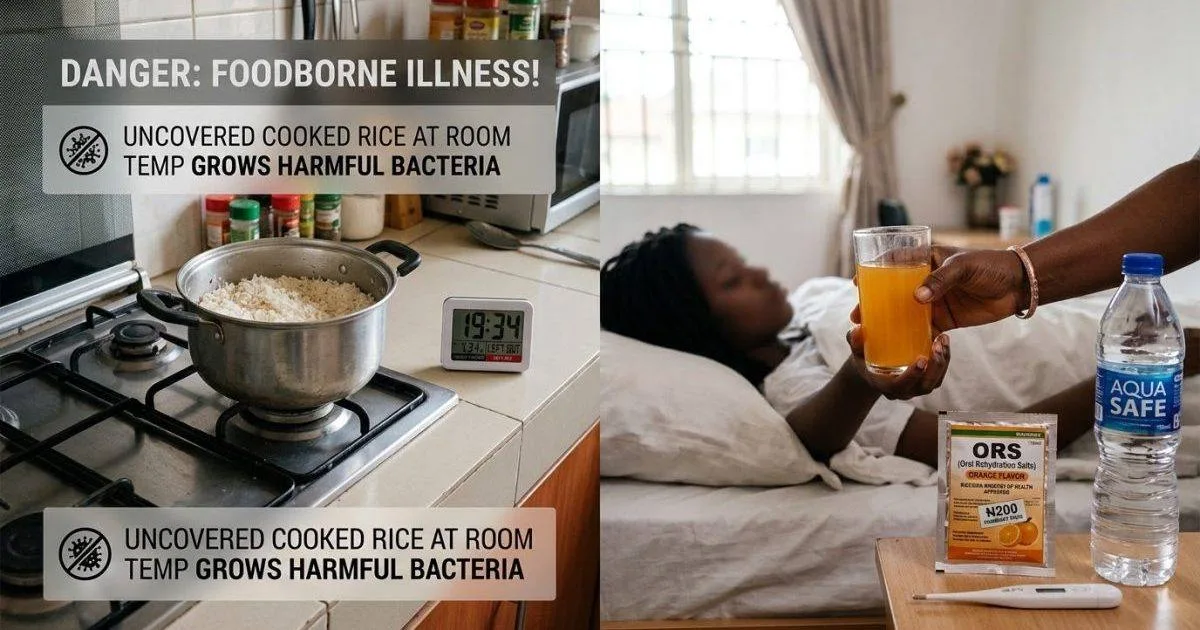
Several food handling patterns specific to the Nigerian environment are responsible for the majority of food poisoning episodes. Cooked rice left at room temperature: rice is one of the most common food poisoning vehicles in Nigeria. Bacillus cereus, a bacterium naturally present in uncooked rice, produces heat-resistant spores that survive cooking. When cooked rice is left at room temperature for more than 2 hours (as it frequently is in Nigerian homes where large pots of rice are cooked in the morning and left on the stove all day), Bacillus cereus multiplies and produces toxins that cause vomiting and diarrhoea within 1 to 6 hours of eating. Reheating this rice does not destroy the toxins — once formed, they survive reheating. Party jollof rice served many hours after cooking, or “yesterday’s rice” from the fridge that was not refrigerated promptly after the original cooking, is the single most common food poisoning trigger in Nigerian homes. Street food with inadequate refrigeration: suya stored in warm conditions, akara and bean cake prepared hours before sale and reheated, pepper soup that has been sitting all day without reheating to boiling, and pre-prepared stews at market stalls kept warm but not hot create ideal bacterial growth conditions. Salmonella and Staphylococcus aureus are the most common bacteria in these scenarios. Contaminated water used in food preparation: drinking water that carries E. coli, Vibrio, or Salmonella introduced through poor sanitation transfers these bacteria directly into food and drinks prepared with the water — a particularly significant risk in areas where borehole water is not regularly tested. Inadequately cooked chicken and meat: undercooked poultry is the classic Salmonella vehicle worldwide, and Nigeria is no exception. Chicken that is fried quickly on the outside but remains pink at the bone carries Salmonella into the consumer.
Symptoms and Timeline
| Causative Agent | Typical Nigerian Source | Symptom Onset | Key Symptoms |
| Bacillus cereus (emetic toxin) | Reheated rice, party jollof stored at room temperature | 1 to 6 hours | Sudden nausea and vomiting, mild abdominal cramps. Diarrhoea less common. |
| Staphylococcus aureus | Reheated stews, meat pies, akara prepared hours before sale, any protein food handled after cooking | 1 to 6 hours | Sudden, severe nausea and vomiting, abdominal cramps, sometimes diarrhoea |
| Salmonella | Undercooked chicken, eggs, contaminated water | 6 to 48 hours | Diarrhoea (sometimes bloody), fever, abdominal cramps, vomiting |
| E. coli (ETEC, EHEC) | Contaminated water, unwashed raw vegetables, undercooked meat | 3 to 8 hours (ETEC); 1 to 8 days (EHEC) | Watery diarrhoea (ETEC — common traveller’s diarrhoea); bloody diarrhoea (EHEC — more serious) |
| Vibrio cholerae | Contaminated water, raw or undercooked seafood from polluted waters | 2 hours to 5 days | Profuse watery diarrhoea (rice-water stool), rapid dehydration — medical emergency |
Home Treatment for Mild Food Poisoning in Nigeria
Mild food poisoning — nausea, vomiting, diarrhoea without blood, no high fever, and no signs of severe dehydration — can be managed at home for most adults. The primary goal is replacing the fluids and electrolytes lost through vomiting and diarrhoea. Oral Rehydration Salts (ORS): available at any Nigerian pharmacy for approximately ₦100 to ₦500 per sachet. Mix one sachet in 1 litre of clean, boiled and cooled water and sip slowly throughout the day. Do not try to drink a large amount at once — small, frequent sips are better tolerated when nauseous. If ORS is not immediately available, a homemade solution: 1 litre of clean water + 6 teaspoons of sugar + 1/2 teaspoon of salt, stirred until dissolved. This is not a perfect substitute but is better than plain water alone. Foods to eat during recovery: start with plain, easily digestible foods as nausea subsides — plain white rice (freshly cooked and eaten hot), boiled yam, boiled plantain, clear broth, plain crackers, bananas. Avoid: dairy products (milk, yoghurt), fatty or heavily spiced foods, alcohol, and caffeinated drinks until fully recovered. Over-the-counter medications: paracetamol for fever and body aches. Antiemetics (drugs that reduce nausea and vomiting) like metoclopramide (Maxolon) or promethazine can help if available — ask your pharmacist. Antidiarrhoeals like loperamide (Imodium) reduce diarrhoea frequency but should be avoided if you have a fever or bloody diarrhoea — suppressing diarrhoea in bacterial infection can prolong illness by preventing the body from expelling the bacteria.
When to Go to Hospital — Urgent Warning Signs
These symptoms require immediate hospital attendance. Do not wait to see if they improve at home. Bloody or very dark diarrhoea — indicates intestinal bleeding or serious bacterial infection. Inability to keep down any fluids for more than 6 to 8 hours — rapid dehydration risk. Signs of severe dehydration: extreme thirst, very dark or no urine, dry mouth and sunken eyes, rapid heartbeat, dizziness on standing, confusion. Fever above 38.5°C (101.3°F) alongside diarrhoea and vomiting. Symptoms that show no improvement after 3 days of home treatment. Any food poisoning symptoms in an infant under 2 years old, a pregnant woman, or a person with a serious underlying illness — these groups dehydrate rapidly and require prompt medical attention. Suspected cholera (profuse watery “rice-water” diarrhoea, very rapid dehydration, abdominal cramping) — this is a medical emergency.
Prevention: Stopping Food Poisoning Before It Starts
The most important food safety rule in the Nigerian kitchen: never leave cooked food at room temperature for more than 2 hours. Rice, stew, soup, and protein foods must be either kept actively hot (above 60°C) on a low flame, or refrigerated promptly after cooking. The Nigerian practice of cooking a large pot of food in the morning and leaving it on the stove at room temperature all day is the single most significant domestic food safety risk. Refrigerate within 1 to 2 hours of cooking, or reheat to a full rolling boil before serving if it has been out of the refrigerator. Reheat fully: when reheating stew, soup, or rice, heat to a full boil (not just warm) before serving — this kills surface bacteria (though it does not destroy pre-formed toxins like Bacillus cereus toxin, which is why prompt refrigeration after initial cooking is more protective than reheating). Cook chicken and meat thoroughly: chicken must reach an internal temperature of 74°C — no pink at the bone. Use a meat thermometer if available, or cut the thickest part to check that juices run clear and flesh is completely white throughout. Wash hands before handling food. Wash all fruits and vegetables before cutting. Use clean, boiled, or treated water for drinking and for washing raw produce eaten uncooked. Choose street food carefully: hot, freshly made food is safer than cold, pre-prepared food that has been sitting out.
Frequently Asked Questions
How long does food poisoning last in Nigeria?
Most mild food poisoning cases caused by bacterial toxins (Bacillus cereus, Staphylococcus aureus) resolve within 24 to 48 hours. Bacterial infections like Salmonella may cause symptoms for 4 to 7 days. Seek medical attention if symptoms persist beyond 3 days, if you cannot keep down fluids, or if symptoms are severe.
What should I drink when I have food poisoning in Nigeria?
Oral Rehydration Salts (ORS) are the best treatment — available at Nigerian pharmacies. Sip slowly and continuously rather than gulping large amounts. Plain clean water, weak tea without milk, and clear broth are also helpful. Avoid sugary drinks, carbonated drinks, milk, and alcohol during recovery.
Is it safe to eat reheated rice in Nigeria?
Reheated rice is safe only if the cooked rice was refrigerated promptly (within 1 to 2 hours of cooking) and is reheated thoroughly to steaming hot throughout. Rice that was left at room temperature for several hours and then reheated may still cause food poisoning because Bacillus cereus toxins are heat-stable — the reheating does not destroy toxins that have already formed. When in doubt, discard rice that has been out of the refrigerator for more than 2 hours.
Food Safety in the Nigerian Street Food Context
Street food is a fundamental part of Nigerian urban food culture — the buka, the mama put, the suya spot, the akara seller, and the freshly fried plantain vendor provide affordable, fast, culturally familiar food to millions of Nigerians who cannot cook for themselves at work or do not have time to prepare meals at home. Most Nigerian street food sellers maintain reasonable hygiene standards and their food is safe most of the time. The risk is not inherent to street food — it is concentrated in specific situations: food held at warm (not hot) temperatures for extended periods, protein foods (chicken, fish, meat) that are fully cooked then held and reheated multiple times, cold drinks cooled with ice of uncertain quality, raw salads and garnishes washed in unclean water, and sellers who handle cash and food without hand-washing between transactions. The practical approach to safe Nigerian street food consumption is not to avoid street food but to make smarter choices within it. Choose food that is freshly cooked and served hot — food that you can see being cooked from raw, rather than pre-prepared food that is being reheated. Avoid protein dishes at stalls where you cannot confirm how recently they were made. Be more cautious during rainy season when surface water contamination of produce is higher and vendor hygiene is more challenged. Trust your instincts — if a food stall looks unclean, smells off, or handles food in ways that concern you, move on. The marginal cost of choosing a different stall is trivially small compared to the cost of a serious food poisoning episode.
Food Poisoning in Children: What Nigerian Parents Need to Know
Children are significantly more vulnerable to food poisoning than healthy adults — their immune systems are still developing, they dehydrate more rapidly from vomiting and diarrhoea, and they are less able to communicate their symptoms clearly in the early stages. Any Nigerian parent whose child develops vomiting and diarrhoea after eating should watch closely for signs of dehydration: sunken fontanelle (in infants), dry mouth, reduced or absent urination, excessive crying without tears, unusual lethargy, and rapid breathing. Children who show these signs must go to hospital immediately — paediatric dehydration can progress to a medical emergency within hours in a hot Nigerian climate. For mild food poisoning in children: continue breast milk for infants, offer ORS solution frequently in small amounts, and avoid giving food until vomiting stops. Do not give antidiarrhoeals (loperamide) to children under 12 without medical guidance. Do not give aspirin to children for fever. Do not assume that a child who appears to recover quickly is fully recovered — food poisoning symptoms in children can return, and follow-up with a paediatrician is advisable after any significant food poisoning episode.
Sources
- WHO — Food safety fact sheet — who.int
- Nigeria Centre for Disease Control — food safety guidance — ncdc.gov.ng
- Original health guide — NaijaSabi Health Desk, September 2026
Last updated: 28 September 2026 · NaijaSabi Health Desk. This article is for educational purposes only. Seek immediate medical attention for severe symptoms.





0 Comments
No comments yet. Be the first to share your thoughts!