




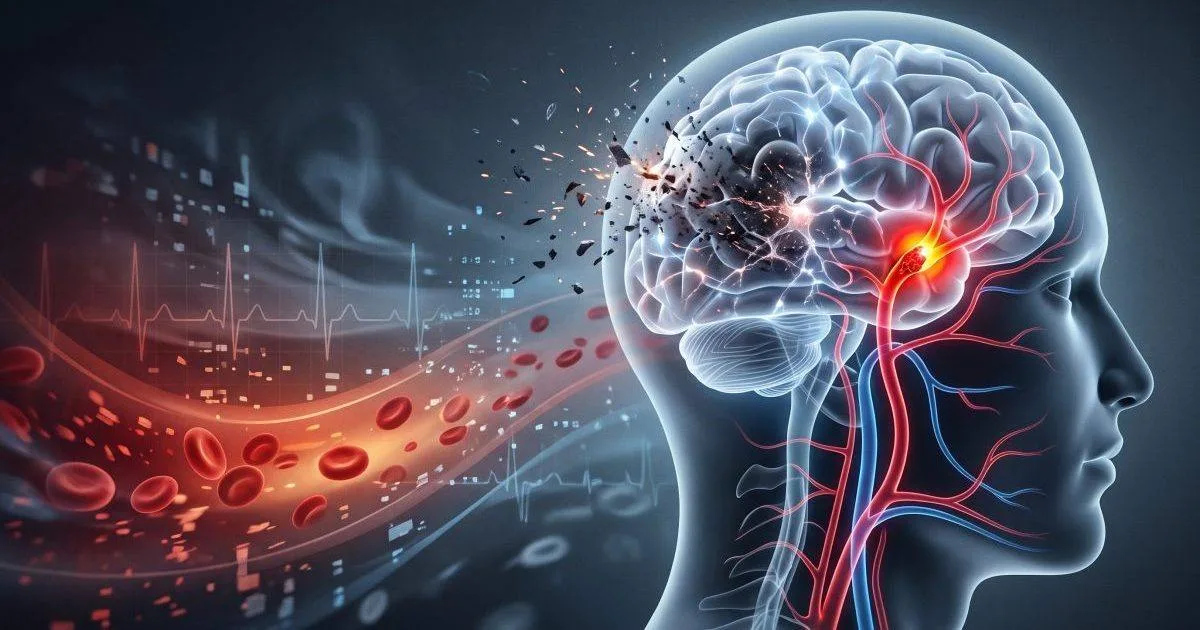
📌 Quick Summary: Stroke happens when blood flow to part of the brain is blocked or a blood vessel in the brain bursts. Nigeria’s Health Minister has said hypertension contributes to up to 90% of stroke cases and that up to 40% of patients admitted with acute stroke do not survive beyond 30 days. The warning signs are summed up as FAST: Face drooping, Arm weakness, Speech difficulty, Time to get help immediately. Clot-dissolving treatment has to be given within about 4.5 hours of the first symptom, so every minute counts. Most strokes are preventable by controlling blood pressure and diabetes. October is Stroke Awareness Month; World Stroke Day is 29 October.
⚠️ Medical Disclaimer: This article is for general information only. It is not medical advice, a diagnosis or a substitute for care from a qualified doctor. A suspected stroke is a medical emergency: do not wait to see if it passes, and do not rely on prayer, herbs or home remedies instead of getting to a hospital.
Stroke is not only a disease of “big men” or old age. It strikes traders, drivers, civil servants and people in their 30s and 40s, often with very little warning. This NaijaSabi guide explains how common stroke is in Nigeria, how to recognise it, what to do in the first minutes and how to lower your risk.
| Fact | Detail |
| Main cause | Hypertension — up to 90% of stroke cases (Health Minister Muhammad Ali Pate) |
| Survival | Up to 40% of patients admitted with acute stroke do not survive beyond 30 days (Pate) |
| In hospitals | Most common cause of adult neurological admissions in many parts of Nigeria (Federal Ministry of Health director) |
| Warning signs | FAST: Face, Arm, Speech, Time |
| Treatment window | Clot-dissolving medicine within about 4.5 hours for eligible blocked-vessel strokes |
| Stroke units | Few — a survey cited in a Guardian opinion piece counted only five |
How Big Is the Stroke Problem in Nigeria?
At a World Stroke Day briefing in Abuja, Health Minister Pate said hypertension alone contributes up to 90% of stroke cases, worsened by diabetes, obesity, poor diet, alcohol, smoking and inactivity, and that up to 40% of patients admitted for acute stroke do not survive beyond 30 days. A Federal Ministry of Health director said stroke is the most common cause of adult neurological admissions in many parts of the country. Doctors quoted by The Guardian describe stroke as the commonest cause of medical-ward admissions in teaching hospitals and blame poorly managed hypertension and diabetes. The same newspaper’s opinion page, citing a survey, says Nigeria has only five stroke-specific units and that most facilities lack equipment for advanced stroke care. Prevention and speed therefore matter even more here.
Types of Stroke
An expert quoted by The Guardian lists three types: cerebral infarction (a blocked vessel, usually a clot), intracerebral haemorrhage (a vessel bursts and bleeds into the brain) and subarachnoid haemorrhage (bleeding on the brain’s surface). Only a brain scan can tell which it is, and treatment differs. That is why you should never give aspirin or any medicine on your own, and why reaching a hospital with a CT scan quickly matters.
Warning Signs: Learn FAST
A Lagos hospital and a Nigerian medical foundation both teach the FAST test: Face — ask the person to smile; does one side droop? Arms — ask them to raise both; does one drift down? Speech — is it slurred, garbled or confused? Time — if you see any of these, get help immediately and note when symptoms began. Other signs include sudden numbness on one side, sudden confusion, sudden vision loss, dizziness or loss of balance, trouble walking and a sudden severe headache. One sign is enough to act.
What to Do in the First Minutes
- Act immediately — do not wait for symptoms to pass or for relatives to gather.
- Note the time symptoms started; doctors need it to decide on treatment.
- Get to a hospital that can do a brain scan. Call an ambulance (112 is Nigeria’s national emergency number) but, if help will be slow, take the person by the fastest safe means to the nearest hospital with a CT scan. Call ahead if you can.
- Keep them lying down and safe, head slightly raised.
- Give no food, drink or medicine by mouth — swallowing may be affected and the wrong drug is dangerous in a bleed.
- Bring their medicine list and known conditions such as hypertension or diabetes.
Treatment, the 4.5-Hour Window and Mini-Strokes
A Lagos hospital’s stroke information says clot-busting medicine (tPA) must be given within 4.5 hours of symptoms, with a clot-removal procedure possible up to 24 hours in selected cases. Bleeding strokes are managed by controlling blood pressure and bleeding, sometimes with surgery, followed by neurological intensive care and rehabilitation. Few Nigerian hospitals offer all of this: The Guardian reports LUTH has a dedicated Stroke Centre, and some private hospitals advertise neuro-ICU and advanced imaging. In an emergency, ask one question: can you do a CT scan and treat a stroke now?
A mini-stroke (TIA) has stroke symptoms that go away completely. Nigerian stroke advocates stress that it is a risk factor for a major stroke, so see a doctor the same day.
How to Prevent a Stroke
Experts quoted by The Guardian say hypertension is the number one cause, followed by diabetes, and that almost all strokes are preventable. A family history raises your risk, according to Stroke Action. To lower yours:
- Know your blood pressure and check it regularly — many people with hypertension feel well. If it is high, take your medicines and keep follow-up visits.
- Control diabetes and have your blood sugar checked, especially with a family history.
- Eat more fruit and vegetables and exercise — doctors quoted by The Guardian say both help protect against stroke.
- Do not smoke, and limit alcohol.
- Get regular check-ups, especially after 40. See NaijaSabi’s overview of common diseases in Nigeria.
Recovery, Rehabilitation and Cost
Recovery usually involves physiotherapy, occupational therapy and speech therapy, and starting early gives the best outcome. A Nigerian foundation campaigning for stroke centres stresses the need for intensive in-patient rehabilitation. I could not find a reliable current naira figure for acute stroke care, and prices vary widely between public and private hospitals; Stroke Action Nigeria has warned that families are often asked to find money before tests and treatment begin. Ask for an itemised estimate and check what your plan covers — see our guides to NHIS/NHIA registration and affordable HMO plans. Caregivers can find support in our guide to mental health help in Nigeria.
When to See a Doctor in Nigeria
Go to a hospital immediately for a drooping face, weak arm or leg, slurred or confused speech, sudden one-sided numbness, sudden vision loss, severe dizziness or loss of balance, a sudden severe headache or sudden confusion or collapse. See a doctor within days if you had a mini-stroke that resolved, have never checked your blood pressure, have untreated hypertension or diabetes or have a close relative who had a stroke.
Frequently Asked Questions — Stroke in Nigeria 2026
What are the first signs of a stroke?
The FAST test: Face drooping on one side, Arm weakness or drifting, Speech that is slurred or confused, and Time to get help immediately. Other signs include sudden one-sided numbness, confusion, vision loss, dizziness and a sudden severe headache. One sudden sign is enough to get the person to a hospital straight away.
What causes stroke in Nigeria?
Hypertension is the leading cause — Health Minister Pate says up to 90% of cases — followed by diabetes, according to experts quoted by The Guardian. Obesity, poor diet, alcohol, smoking, inactivity, heart disease and family history also raise risk, and most strokes are preventable by controlling these early.
How soon must stroke treatment start?
As early as possible. For a blocked-vessel stroke, clot-dissolving medicine generally has to be given within about 4.5 hours, according to a Lagos hospital’s stroke information. Note the time symptoms began and reach a hospital with a CT scan immediately, because doctors need a scan to tell a clot from a bleed.
Can people recover from a stroke?
Many recover some or much function, depending on the type of stroke, how fast treatment starts and how good rehabilitation is. Nigerian experts caution that complete recovery is difficult, which is why prevention and speed matter. Early physiotherapy, occupational and speech therapy help, and controlling blood pressure lowers the risk of another stroke.
What is a mini-stroke (TIA)?
A transient ischaemic attack has stroke symptoms that go away completely, usually within minutes or hours. Nigerian stroke advocates describe it as a warning and a risk factor for a major stroke, so see a doctor the same day to find the cause and start preventive treatment.
Are there stroke centres in Nigeria?
Yes, but very few. The Guardian reports that LUTH has a dedicated Stroke Centre, and a survey cited in its opinion pages counted only five stroke-specific units nationwide. In an emergency, go to the nearest hospital that can do a brain scan and treat stroke now, rather than losing hours travelling to a famous one.
Last updated: 16 October 2026 · NaijaSabi Health Desk. Treatment windows, hospital capacity and costs vary — confirm with a qualified doctor and the hospital concerned. This article is for general information only and is not medical advice. NaijaSabi is not affiliated with any hospital, government agency or organisation mentioned.





0 Comments
No comments yet. Be the first to share your thoughts!