




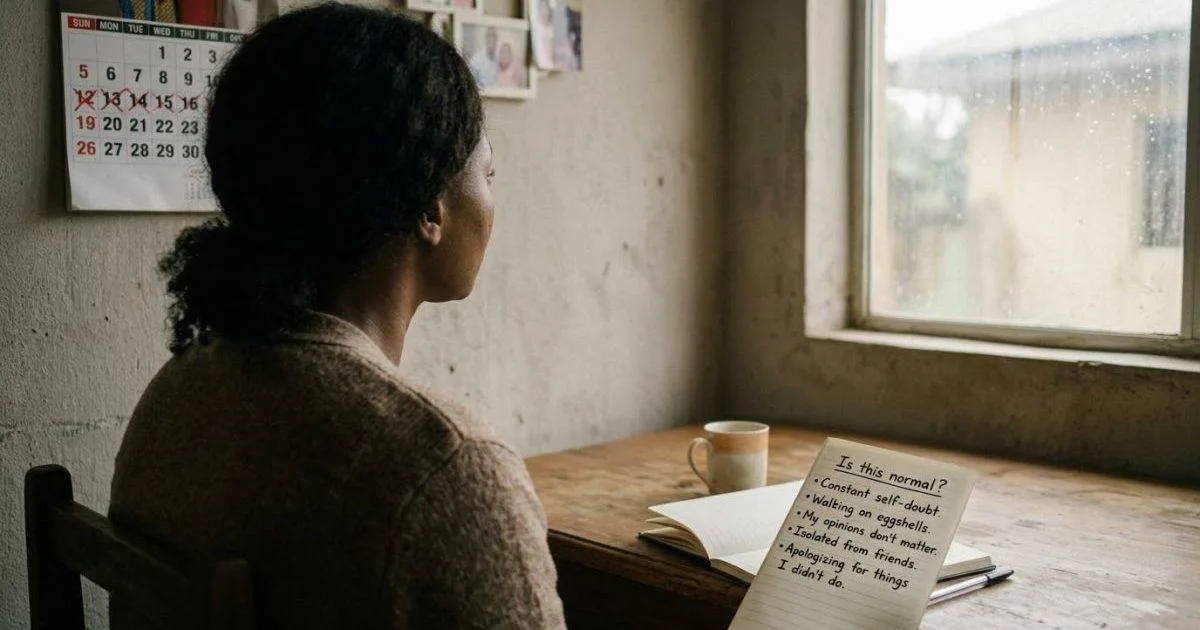
📌 Quick Summary: Red flags in a relationship are early warning signs of toxic, unhealthy, or potentially abusive behaviour that Nigerians often dismiss, excuse, or don’t recognise until significant emotional damage has been done. The most significant red flags: love bombing followed by control, isolation from family and friends, jealousy framed as love, gaslighting (making you doubt your own memory and perception), disrespect for boundaries, and a pattern of blame-shifting where everything is always your fault. This guide explains the most important relationship red flags in the Nigerian context, what narcissistic behaviour looks like in practice, what gaslighting is and how to recognise it, and how to think clearly about a relationship when your emotions are deeply involved.
The Nollywood Times 2026 year-in-search report identified “narcissist” and “gaslighting” among Nigeria’s top rising search terms — a clear signal that more Nigerians are asking questions about unhealthy relationship dynamics than ever before. This increase in awareness is significant: a generation ago, these concepts barely existed in everyday Nigerian conversation, and the cultural framework around relationships in Nigeria — particularly the pressure on women to maintain relationships regardless of the cost to their wellbeing, and the tendency to frame controlling behaviour as expressions of love — made it very difficult to name and address unhealthy dynamics. That is changing. More Nigerians in 2026 are recognising that a relationship can look successful on the outside while being genuinely damaging on the inside. This guide provides a clear, Nigeria-aware framework for recognising red flags early — when it is still possible to make a clear-eyed decision.
What Is a Red Flag in a Relationship?
A red flag is a behaviour, pattern, or attitude in a partner that signals a potential problem — something that, if not addressed, is likely to lead to a damaging relationship. Red flags are not the same as imperfections or incompatibilities: everyone has flaws, and no relationship is without friction. The distinction is between ordinary human shortcomings (impatience, untidiness, communication style differences) and patterns that indicate a fundamental issue with how someone treats another person (contempt, control, manipulation, disrespect). Red flags matter because they are often visible early in a relationship — before the emotional investment makes leaving difficult. The person who dismisses five early red flags and gets deeply emotionally and financially entangled faces a much harder decision six years later. Recognising and taking red flags seriously early — not as proof that a relationship is doomed, but as information that requires attention — is one of the most protective things a person can do for their own long-term wellbeing.
The Most Important Relationship Red Flags in the Nigerian Context
1. Love Bombing Followed by Control
Love bombing is when a new partner showers you with intense attention, affection, gifts, and devotion very early in the relationship — before you have had time to know each other properly. It feels extraordinarily good and is designed to. The problem: love bombing is a manipulation tactic used by narcissistic and controlling personalities to create rapid emotional dependency before revealing their true behaviour patterns. The “bombing” phase is followed — sometimes gradually, sometimes suddenly — by withdrawal, criticism, control, or emotional distance. The person becomes confused: “What happened to the person who was so wonderful in the beginning?” The confusion keeps them trying to get back to the early phase, which the controlling partner uses as leverage. In the Nigerian context, love bombing may look like a man who calls 20 times per day, insists on knowing your location at all times, wants to move in together or discuss marriage within weeks, and frames all of this as evidence of how much he loves you. The intensity that feels romantic early is the same intensity that becomes suffocating control later.
2. Jealousy Framed as Love
One of the most culturally normalised red flags in Nigeria: the partner who checks your phone, interrogates you about your friendships, gets angry when you spend time with friends or family, and monitors your movements — all framed as “I love you so much I can’t bear to share you” or “If I wasn’t jealous, it would mean I don’t care.” This framing is manipulation. Jealousy is not love — it is insecurity and control dressed up as devotion. A partner who respects you trusts you. A partner who controls your movements, demands access to your phone, and erupts in anger when you spend time with others is not expressing love — they are expressing ownership. The Nigerian cultural tendency to frame possessive behaviour as flattering devotion makes this red flag particularly easy to rationalise.
3. Isolation from Family and Friends
A controlling partner systematically distances you from your support network — because your family and friends can see what you cannot when emotions are deeply involved. The isolation may be subtle at first: “Your sister doesn’t want you to be happy with me,” “Your friends are bad influences,” “I just want you all to myself.” Over time, the distance from your support network grows, leaving you with only the partner to turn to — which is exactly what a controlling or abusive person wants. Isolation is one of the most consistent predictors of escalating relationship abuse. If a partner consistently criticises your family, creates friction with your friends, or pressures you to choose between them and the people you love, this is a serious red flag regardless of how they justify it.
4. What Gaslighting Is and How to Recognise It
Gaslighting is a form of psychological manipulation in which one partner causes the other to question their own memory, perception, and sanity. The term comes from a 1944 film in which a husband systematically manipulates his wife into doubting her own mind. In practice, gaslighting looks like: you clearly remember an argument happening and what was said; your partner denies it completely (“That never happened,” “You’re making things up,” “You’re too sensitive”). You raise a legitimate concern about their behaviour; they turn it around to make you the problem (“You’re always starting trouble,” “Why do you have to make everything dramatic?”). Over time, a gaslighted person begins to distrust their own perceptions and becomes dependent on the partner’s version of reality — which is precisely the control the gaslighter seeks. Recognising gaslighting: you consistently feel confused after conversations with your partner; you frequently apologise without being sure what you did wrong; you feel like you can never express concerns without them being turned back on you; friends and family notice you seem less confident and more doubtful of yourself than you used to be.
5. Contempt and Disrespect
Relationship researcher John Gottman identified contempt — treating a partner as inferior, mocking them, using sarcasm at their expense, rolling eyes, dismissing their feelings — as the single strongest predictor of relationship failure and toxicity. In the Nigerian context, contempt may appear as a partner who consistently belittles your education, career, or income; who mocks your ideas in front of others; who dismisses your emotions as weakness; or who speaks to you in a demeaning way that they would never use with anyone they respected. Occasional rudeness or thoughtlessness is human. Consistent contempt — a pattern of treating you as less than — is a fundamental character signal about how this person views you and will treat you long-term.
6. Everything Is Always Your Fault
Healthy relationships involve shared accountability — both partners can acknowledge when they have contributed to a problem, apologise genuinely, and work to change. A significant red flag is a partner who never accepts responsibility for anything: every argument is your fault, every conflict is caused by your behaviour, every problem in the relationship is a result of your inadequacy. This pattern — called blame-shifting — is a hallmark of narcissistic personality and is exhausting and damaging for the person on the receiving end, who gradually internalises the belief that they are the problem. If you find yourself constantly apologising while your partner never does, constantly trying to change yourself to prevent conflict while they never reflect on their own behaviour, this is a significant relationship red flag.
7. Hot and Cold Behaviour (Intermittent Reinforcement)
A partner who alternates between warmth and coldness, closeness and distance, affection and withdrawal — without consistent reason — creates a psychological pattern called intermittent reinforcement that is uniquely difficult to escape. The unpredictability produces anxiety, and the warm periods feel disproportionately wonderful compared to the coldness — making the person cling to the relationship in pursuit of the good phases. This pattern is not accidental in controlling relationships: it is one of the most effective tools for creating emotional dependency. If you feel like you are always trying to earn or maintain your partner’s positive mood, walking on eggshells to avoid triggering coldness, or relieved and excited when they are “nice to you again” — this is a red flag worth examining closely.
What Narcissistic Behaviour Looks Like in a Nigerian Relationship
Narcissistic Personality Disorder is a clinically diagnosable condition — but narcissistic traits (high self-focus, low empathy, entitlement, need for admiration, exploitation of others) exist on a spectrum and do not require a formal diagnosis to be damaging in a relationship. Narcissistic behaviour in the Nigerian relationship context often looks like: a partner who dominates every conversation and turns every topic back to themselves; who reacts to any criticism or disappointment with disproportionate anger or extended coldness; who presents differently in public (charming, respected, generous) versus in private (dismissive, controlling, contemptuous); who uses your vulnerabilities and insecurities against you when arguments arise; who makes major decisions affecting both of you without consultation; and who genuinely cannot understand or consistently disregards your emotional needs. The challenge with narcissistic partners is that the early relationship is often intensely exciting — narcissists are frequently charismatic, confident, and attentive when pursuing someone. The cost becomes clearer over time, as the relationship becomes increasingly about the narcissist’s needs, and your own needs are consistently minimised.
Taking Red Flags Seriously: The Nigerian Cultural Context
Several cultural patterns in Nigeria make it particularly difficult to take relationship red flags seriously and act on them. The pressure to marry — particularly for women above a certain age — creates significant pressure to maintain a relationship despite serious problems. The fear of being seen as the person who could not sustain a relationship. The tendency to frame controlling or abusive behaviour as strength or love within certain religious and traditional frameworks. The influence of family and community expectations that prioritise the appearance of relationship stability over the actual wellbeing of the people in the relationship. None of these cultural pressures make the red flags less real or less damaging. Understanding that a difficult truth now is significantly better than a harder truth later — and that leaving a relationship with red flags early is not failure, but self-knowledge — is essential. The Nigerian woman who exits a controlling relationship after six months has made a courageous and intelligent decision. The one who stays for ten years because of cultural pressure has not proven her worth — she has simply paid a higher cost.
Frequently Asked Questions
What is the most important red flag in a relationship?
Any behaviour that involves control, contempt, or isolation of you from your support network is among the most serious. Gaslighting — systematic manipulation of your perception of reality — is particularly damaging because it undermines your ability to trust yourself and seek help. A partner who makes you feel consistently worse about yourself, more confused, and more isolated over time is showing you exactly who they are.
Is jealousy a red flag in a Nigerian relationship?
Mild jealousy is a normal human emotion. Controlling jealousy — monitoring your phone, demanding to know your location at all times, creating conflict over your friendships, and framing all of this as love — is a significant red flag. The cultural tendency in Nigeria to frame possessive behaviour as devotion makes this particularly important to be clear-eyed about.
What is the difference between a red flag and a dealbreaker?
A red flag is a warning sign — something that requires attention and honest conversation. A dealbreaker is something that, for you personally, makes a relationship untenable regardless of other factors. Some red flags become dealbreakers over time; others can be addressed with genuine communication and change. The key distinction: a red flag that is acknowledged, discussed, and genuinely changed is different from one that is dismissed, denied (gaslighting), or repeated despite being raised.
Sources
- Gottman Institute — relationship research — gottman.com
- Original guide — NaijaSabi Lifestyle Desk, September 2026
Last updated: 28 September 2026 · NaijaSabi Lifestyle Desk.




0 Comments
No comments yet. Be the first to share your thoughts!