




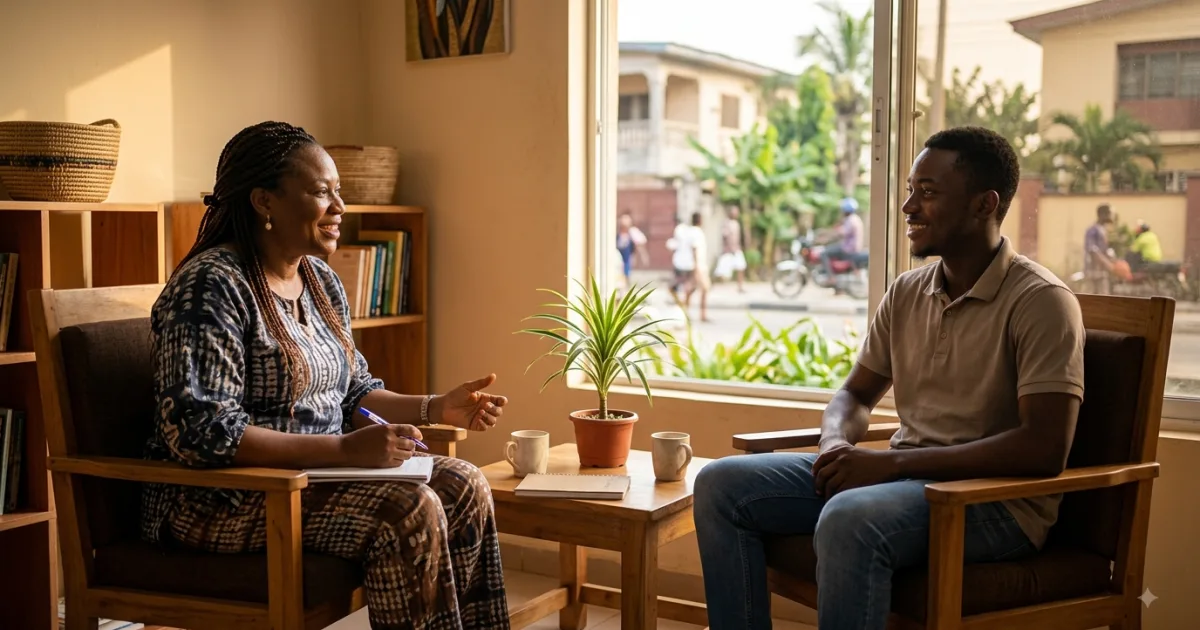
Your mental health matters just as much as your physical health — and looking after it is not a luxury or a weakness. In Nigeria, more people than ever are recognising this, yet many still hesitate to seek help, often because they assume therapy is unaffordable, hard to find, or something to be ashamed of. None of that has to be true. In 2026, there are more affordable, accessible and private ways to get mental-health support in Nigeria than at any point before.
This guide is a practical starting point. It walks through the kinds of support available — from low-cost online therapy to community resources and helplines — how to choose what fits you, and what to do if you or someone you care about needs help urgently. Reaching out is a strong, healthy step, and there are real options to make it possible.
📌 The quick start: affordable mental-health support in Nigeria includes online therapy platforms (often cheaper and more private than in-person), counsellors at universities, hospitals and clinics, community and faith-based support, and helplines for when you need to talk now. Cost should not be the thing that stops you — sliding-scale, low-cost and free options exist. If you are in crisis or thinking of harming yourself, please reach out to a helpline or emergency services immediately; you deserve support, and help is available.
First: You Deserve Support, and Seeking It Is Strength
Before the practical options, one thing worth saying plainly: struggling with your mental health is human, common, and nothing to be ashamed of. Stress, anxiety, low mood, grief, burnout, relationship strain — these are real and they affect millions of Nigerians. Asking for help is not giving up; it is one of the most capable, self-respecting things a person can do. The stigma around mental health is fading, and reaching out connects you with people whose entire job is to help you feel better. You are not alone in this, and support is genuinely within reach.
Affordable Ways to Access Therapy and Counselling
There are several routes, and the right one depends on your budget, privacy needs and what you’re going through.
Online therapy platforms. A growing number of Nigerian telehealth and dedicated mental-health platforms connect you with licensed therapists and counsellors by chat, audio or video. These are often more affordable and more private than in-person therapy, with flexible scheduling that fits around work — a strong first option for many people.
Hospital and clinic services. Teaching hospitals and many clinics have psychiatry and psychology departments offering assessment and treatment, sometimes at lower cost than private practice. If you have an HMO plan, check whether mental-health consultations are included.
University and institutional counselling. Students can usually access free or low-cost counselling through their university’s guidance and counselling unit — an underused but valuable resource.
Community and faith-based support. Trusted community groups, support circles and faith-based counselling can provide a caring, low-cost or free space to talk, particularly helpful alongside (not instead of) professional care for clinical conditions.
NGOs and advocacy organisations. Several Nigerian mental-health NGOs and initiatives offer resources, support groups, awareness programmes and, in some cases, free or subsidised access to help — a good route if cost is a major barrier.
How to Choose the Right Support for You
A few questions help you match the option to your need. How urgent is it? If you need to talk right now or are in crisis, a helpline is the immediate step (see below). What are you dealing with? Everyday stress and mild anxiety may be well served by counselling or an online platform; persistent, severe or worsening symptoms (such as ongoing depression) warrant a qualified mental-health professional or psychiatrist. What’s your budget? Online platforms and institutional services are often the most affordable; ask about sliding-scale or low-cost options — many providers have them. What feels safe and private to you? Some people prefer the anonymity of online chat; others want face-to-face. There’s no wrong choice — the best therapy is the one you’ll actually attend. It’s also completely normal to try someone and switch if the fit isn’t right; finding the right therapist can take a couple of tries.
Free and Low-Cost Resources
If money is tight, you still have options. Helplines offer someone to talk to, often free and confidential. University counselling units serve students at little or no cost. Some NGOs and community initiatives run free support groups and awareness programmes. Reputable self-help resources — guided breathing, journaling, sleep and stress-management techniques from credible mental-health organisations — can support (though not replace) professional care for milder difficulties. And simply talking to a trusted person — a friend, family member, mentor or community leader — can be a vital first step toward feeling less alone and deciding what help to seek next.
If You Need Help Urgently
This part matters most. If you are in immediate danger, or you are thinking about harming yourself, please reach out for help right now — you deserve support and you do not have to face it alone. Contact a mental-health helpline to speak with someone trained to help, or go to the nearest hospital or call local emergency services if there is immediate risk. Reaching a trusted person — a family member, friend, or anyone who cares about you — and letting them stay with you can also make a real difference in a hard moment.
Nigeria has mental-health helplines and crisis-support services (such as those run by mental-health NGOs and the Nigerian Mental Health movement); a quick, current search for a Nigerian mental-health or suicide-prevention helpline will give you a number you can call or message. Please don’t wait until things feel unbearable to reach out — support is there for you, and things can get better with help.
Looking After Your Mental Health Day to Day
Alongside professional support, everyday habits genuinely help: keeping some routine and regular sleep, staying connected to people who care about you, moving your body, limiting doomscrolling, and being kind to yourself when things are hard. These aren’t a cure for clinical conditions — and they’re not a reason to avoid professional help when you need it — but they build a foundation that makes coping easier. Think of them as caring for your mind the way you’d care for your body: consistently, and without waiting for a crisis.
FAQ: Mental Health Support in Nigeria 2026
1. Is therapy expensive in Nigeria?
It can be in private practice, but affordable options exist — online therapy platforms, hospital/clinic services, university counselling, and NGO support groups. Many providers offer low-cost or sliding-scale options, so cost need not stop you.
2. Can I get therapy online in Nigeria?
Yes — several Nigerian platforms connect you with licensed therapists and counsellors by chat, audio or video, often more affordably and privately than in-person sessions.
3. Where can students get mental-health help?
Most universities have guidance and counselling units offering free or low-cost support to students — a valuable and underused resource.
4. What’s the difference between a counsellor, psychologist and psychiatrist?
Broadly: counsellors and psychologists provide talk therapy and support; psychiatrists are medical doctors who can diagnose and prescribe medication for mental-health conditions. Severe or persistent symptoms may need a psychiatrist.
5. Is mental-health support covered by HMOs?
Some plans include mental-health consultations; coverage varies. Check your specific HMO plan’s benefits, and ask whether therapy or psychiatric care is included.
6. How do I find a good therapist?
Look for licensed, qualified professionals via reputable platforms, hospitals or referrals. It’s normal to try someone and switch if the fit isn’t right — the best therapist is one you feel safe with and will keep seeing.
7. Are there free mental-health resources in Nigeria?
Yes — helplines, university counselling, some NGO support groups and credible self-help resources. Talking to a trusted person is also a meaningful, free first step.
8. What should I do in a mental-health crisis?
If there’s immediate danger or you’re thinking of harming yourself, contact a mental-health helpline now, reach out to someone you trust, or go to the nearest hospital / call emergency services. You deserve support and don’t have to face it alone.
9. Is it normal to feel anxious or low sometimes?
Yes — stress, anxiety and low mood are common human experiences. They become a reason to seek help when they’re persistent, severe, or interfering with your daily life. Seeking support early is wise, not weak.
10. How do I support a friend who’s struggling?
Listen without judgement, take them seriously, encourage them to seek professional help, and stay connected. If they’re in immediate danger, help them reach a helpline or emergency services and don’t leave them alone.
The Bottom Line
Your mental health deserves care, and in 2026 getting support in Nigeria is more affordable and accessible than many people realise. Online therapy platforms, hospital and university services, community and faith-based support, NGOs and helplines all offer routes in — many low-cost or free. The most important step is the first one: reaching out.
If you’re struggling, please don’t let cost or stigma stop you from getting help — sliding-scale and free options exist, and asking for support is a sign of strength, not weakness. And if you ever feel in crisis or unsafe, reach out to a helpline or a trusted person straight away. You matter, support is available, and things can get better.
This article is general information and not a substitute for professional care. If you or someone you know is in immediate danger or crisis, please contact local emergency services or a Nigerian mental-health helpline right away. You deserve support — please reach out to a qualified professional or trusted person.
Related reading on NaijaSabi:
- Best Telehealth & Online Doctor Apps in Nigeria 2026 — some platforms offer therapy too
- Affordable Health Insurance & HMO Plans in Nigeria 2026 — check if your plan covers mental-health care
- How to Live Comfortably in Lagos on a Tight Budget 2026 — easing financial stress supports wellbeing
Sources & References
- World Health Organization (WHO) — mental health resources and guidance. Available at: who.int
- Mentally Aware Nigeria Initiative (MANI) — mental-health awareness and support. Available at: mh+aware.org
- Federal Ministry of Health Nigeria — mental-health policy and the Mental Health Act. Available at: health.gov.ng
- Association of Psychiatrists in Nigeria — professional body. Available at: apn.org.ng
Editorial standards. This article is independently researched and compiled to point Nigerians toward affordable and free mental-health support. It is general information, not a substitute for professional care. Resources and contact details change — please search for current, official Nigerian mental-health and crisis helplines when you need them. If you or someone you know is in immediate danger, contact emergency services or a helpline right away. If you spot an error or have a correction, please write to editorial@naijasabi.com.ng.
Last reviewed and updated: 18 July 2026 · NaijaSabi Health Desk. Mental health is a sensitive topic — if you’re personally affected, please reach out to a qualified professional or a trusted person for support.




0 Comments
No comments yet. Be the first to share your thoughts!