


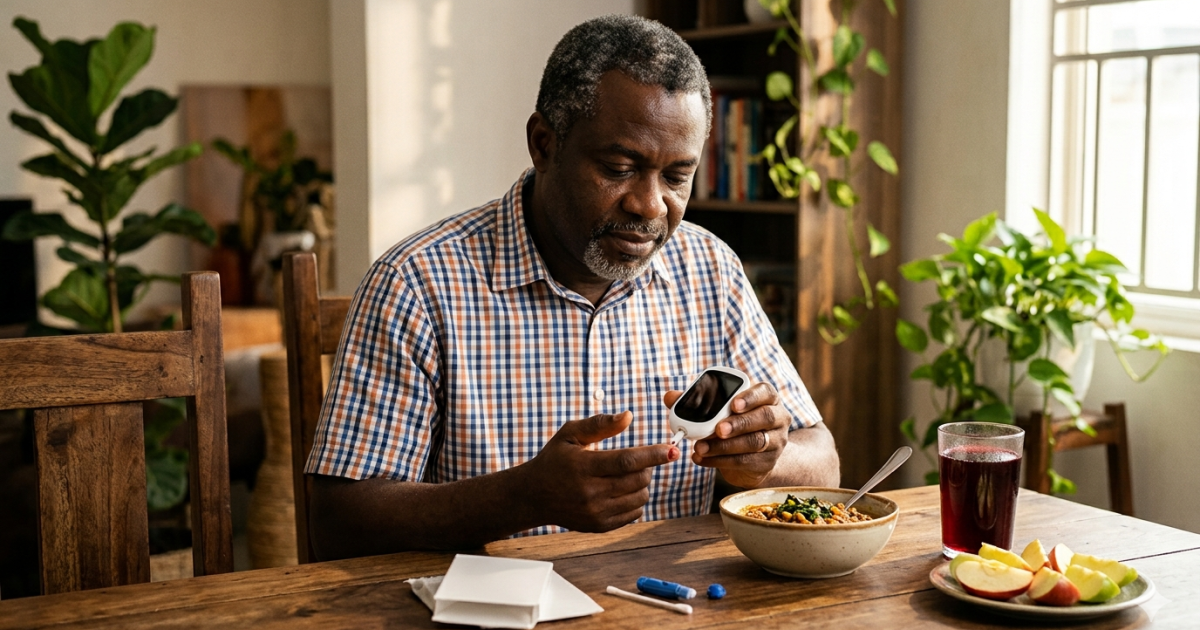
Diabetes is the quiet emergency unfolding inside Nigerian homes right now. A 2024 meta-analysis covering 60 separate studies and nearly 125,000 Nigerian adults — published in Cardiovascular Diabetology – Endocrinology Reports — put national Type 2 diabetes prevalence at 7.0 per cent, nearly double the 3.7 per cent figure the International Diabetes Federation reported just five years earlier. In rural and urban community testing across five southern states, researchers using the gold-standard HbA1c test found that more than half of supposedly healthy adults already had either pre-diabetes or full diabetes — and most of them had no idea.
That second statistic is where the danger lives. In Nigeria, diabetes is rarely caught at the pre-diabetes stage when it is still completely reversible. Most patients are diagnosed only after they show up at a clinic with frequent urination, unexplained weight loss, persistent thirst, a foot ulcer that refuses to heal, or — worst of all — a stroke or sudden vision loss. By then, the disease has been silently damaging blood vessels, nerves, kidneys and eyes for years.
This guide is built for the Nigerian reality. It covers what diabetes actually is, why our food environment makes it explosive, which everyday Nigerian foods help and which quietly do damage, what insulin and oral medication really cost in naira in 2026, where to find genuine endocrinologists, and the lifestyle changes that move the needle. No imported “eat avocado on whole-grain toast” advice — this guide speaks fluent eba, ofada, and amala.
⚠️ Medical disclaimer: This article is for general information only. Diabetes is a serious chronic condition that requires individualised medical supervision. Never start, stop, or change diabetes medication without consulting a registered Nigerian doctor. If you have symptoms of severely high or low blood sugar — confusion, fainting, fruity-smelling breath, rapid breathing or unresponsiveness — treat it as an emergency.
What Diabetes Actually Is — Type 1 vs Type 2 vs Gestational
Diabetes is a disorder of how the body handles blood sugar (glucose). The hormone responsible for moving glucose out of the bloodstream and into cells where it is used for energy is insulin, produced by the pancreas.
There are three main forms.
Type 1 diabetes is an autoimmune condition. The body’s own immune system destroys the insulin-producing cells in the pancreas, leaving the patient producing little or no insulin at all. It typically appears in childhood or adolescence, though it can develop in adults. Type 1 patients require daily insulin injections for life — there is no oral medication that can substitute. In Nigeria, Type 1 accounts for a small fraction of all diabetes cases, but the diagnosis is more devastating because of the cost and logistical demands of lifelong insulin.
Type 2 diabetes is by far the most common, accounting for over 90 per cent of Nigerian cases. Here the pancreas still produces insulin, but the body’s cells gradually stop responding to it properly — a condition called insulin resistance. Glucose accumulates in the blood. Type 2 develops slowly over years and is heavily driven by lifestyle: weight, diet, physical inactivity and family history. Most Nigerian adults with diabetes have Type 2.
Gestational diabetes develops in some women during pregnancy. It usually resolves after delivery but significantly raises the woman’s lifetime risk of later developing Type 2 diabetes. Routine prenatal care in Nigerian hospitals now includes glucose screening between weeks 24 and 28 of pregnancy.
A separate, increasingly recognised category is pre-diabetes — blood glucose higher than normal but not yet high enough for a diabetes diagnosis. Pre-diabetes is the warning shot. With aggressive lifestyle change at this stage, full Type 2 diabetes can often be prevented entirely.
How Diabetes Is Diagnosed — The Three Tests
Three tests are routinely used in Nigerian clinics:
| Test | What it measures | Diabetes if… |
|---|---|---|
| Fasting Blood Glucose (FBG) | Blood sugar after at least 8 hours without food | ≥ 126 mg/dL (7.0 mmol/L) on two occasions |
| Oral Glucose Tolerance Test (OGTT) | Blood sugar 2 hours after drinking 75g glucose | ≥ 200 mg/dL (11.1 mmol/L) |
| HbA1c (Glycated Haemoglobin) | Average blood sugar over the past 2–3 months | ≥ 6.5% |
The HbA1c is the most informative because it averages out daily fluctuations and meal-related spikes. A single fasting reading can be misleading — HbA1c paints the truthful three-month picture.
Costs in Nigeria 2026: a fasting blood glucose runs ₦1,500–₦4,000 at most labs; an HbA1c is ₦5,000–₦15,000 depending on the facility; an OGTT is ₦4,000–₦10,000.
Why Nigerians Face a Particular Diabetes Risk
The same meta-analysis cited earlier identified the strongest risk factors driving Nigerian diabetes prevalence: family history of diabetes, high socio-economic status (counter-intuitive but consistent across studies), physical inactivity, urban living, body mass index above 25, infrequent vegetable consumption, and abdominal obesity. South-south Nigeria has the highest regional prevalence at 11.35 per cent; north-central the lowest at roughly 2 per cent.
Read those risk factors carefully. Most of them describe the everyday reality of working professionals in Lagos, Abuja, Port Harcourt and other Nigerian cities: long hours sitting at desks, meals built around heavy carbohydrate swallows, vegetables treated as a garnish rather than the main event, restaurant and party food that swims in salt and oil, and waistlines that quietly expand year by year.
The genetic component is real but not destiny. Even people with strong family histories can dramatically reduce their risk through weight management, diet and exercise.
Foods That Help — The Nigerian Diabetes Edition
The principle is simple: foods that release glucose slowly into the bloodstream protect you. Foods that flood the system with quick sugar damage you. The glycemic index (GI) ranks foods on this exact scale. Below 55 is low, 56–69 is medium, 70 and above is high.
The hard truth for Nigerian patients is that many of our beloved staples sit in the high GI category — particularly the swallows. But you do not have to abandon Nigerian food. You have to learn which versions, which portions, and which combinations are diabetes-friendly.
Smart Swallows and Carbohydrates
Most traditional Nigerian swallows carry high glycemic indices, with research from Nigerian universities placing eba (depending on the cassava variety) anywhere between 58 and 93. The smarter choices in 2026 are:
- Wheat swallow: Lower GI than garri or pounded yam. The most diabetes-friendly mainstream swallow in Nigeria. Buy genuine whole wheat, not semovita, which is highly refined.
- Oat swallow: Even lower GI. Made from rolled oats, increasingly available.
- Unripe plantain flour swallow: Low GI and increasingly stocked at Spar, Shoprite and major markets.
- Beans (ewa, wake, agwa): Among the most diabetes-protective Nigerian foods. High protein, high fibre, low GI.
- Acha (fonio): Indigenous Northern Nigerian grain with a low glycemic load. Underused but excellent for diabetic diets.
- Ofada / unpolished brown rice: Always preferable to imported white parboiled rice.
When eating any swallow, the rule is small wrap, big vegetables. The protein and vegetable content in your soup is what blunts the glucose spike. A small fist-sized portion of eba paired with a generous bowl of vegetable soup, fish and beans is profoundly different from a mountain of eba and a thin smear of stew.
Vegetables — Eat These Every Day
Dark leafy greens slow glucose absorption, supply magnesium (which improves insulin sensitivity), and barely register on the glycemic index:
- Ugu (fluted pumpkin leaves)
- Ewedu (jute leaves)
- Bitter leaf — long associated in traditional medicine with blood-sugar lowering; some clinical studies support a modest effect.
- Efo tete (amaranth) and waterleaf
- Okro (okra) — its mucilage may slow glucose absorption.
- Garden egg — eat freely.
- Moringa leaves — research shows promising glucose-lowering activity.
- Onion, cabbage, carrots, cucumber, tomatoes — all daily-friendly.
Fruits That Are Safe in Sensible Portions
Fruit contains natural sugars, but fibre slows the release. Eat the whole fruit, not juiced versions:
- Garden egg — virtually no impact on blood sugar.
- Watermelon — sweet but mostly water and fibre; small portions are fine.
- Pawpaw — moderate portions.
- Oranges, tangerines, grapefruit — small portions; eat the whole fruit, not just the juice.
- Avocado pear (ube oyibo) — actually lowers blood sugar response when eaten with carbs.
- Strawberries, blackberries (where available) — low GI.
- Apples — moderate; eat with skin.
Be cautious with high-sugar fruits: ripe banana, ripe plantain (especially fried), mango (in large amounts), pineapple, and dates. Small portions are fine; party-sized portions are not.
Proteins to Build Meals Around
- Fish: Mackerel (titus), croaker, tilapia, catfish. Two to four servings a week.
- Chicken without skin. Grilled, baked or stewed, not deep-fried.
- Eggs: No restriction in diabetes; eat freely in moderation.
- Beans: A near-perfect diabetic food. Eat several times a week.
- Lean beef and goat meat: Smaller portions, less frequent than fish or beans.
Smart Drinks
- Water: 2–3 litres daily.
- Unsweetened zobo (hibiscus tea): Caffeine-free, antioxidant-rich.
- Green tea: Linked in studies to improved insulin sensitivity.
- Unsweetened tigernut milk (kunun aya): Fibre-rich, naturally sweet.
- Coffee, unsweetened: Acceptable in moderation.
Foods to Avoid or Strictly Limit
Sugary drinks. Coke, Fanta, La Casera, Pepsi, Mountain Dew, sweetened bottled malt, energy drinks, sweetened zobo from roadside vendors, sweet yogurt drinks, fruit juices in tetrapaks. One bottle of regular Coke contains about 35 grams of sugar — nine teaspoons. This single change alone moves diabetes management dramatically for many Nigerians.
Refined white rice in large portions. Standard parboiled white rice has a high glycemic index. Switch to ofada or genuine brown rice, and keep portion sizes moderate.
Large portions of eba, fufu, pounded yam, amala. Not banned — but moderated. A small wrap with a generous, vegetable-rich soup is workable. A large mountain with thin stew is not. Eat swallows during the day rather than at dinner, when insulin sensitivity is lowest.
White bread, semovita, agege bread, doughnuts, meat pies, cake. All refined carbohydrate, all spike blood sugar quickly.
Sweet biscuits, ice cream, chocolate bars, sweets, chin chin made with heavy sugar.
Ripe plantain in large quantities. Especially fried (dodo). Unripe boiled plantain is fine and even helpful.
Fried foods. Akara, fried yam, fried plantain, suya (the rub sometimes contains sugar), fried meat. Acceptable occasionally, not as a daily habit.
Alcohol. Beer is high in fast carbs. Sweetened spirits and palm wine raise blood sugar. If you drink, limit to one or two standard drinks per occasion and never on an empty stomach (this risks dangerous hypoglycaemia for patients on insulin or sulphonylureas).
“Diabetic-friendly” packaged biscuits and bread. Most are marketing rather than medicine. Read the actual nutrition label — many contain large amounts of refined flour and added sugar.
A 7-Day Nigerian Diabetes-Friendly Meal Plan
| Day | Breakfast | Lunch | Dinner |
|---|---|---|---|
| Mon | Oats with sliced apple and groundnut, unsweetened tea | Wheat swallow (small) + vegetable soup with assorted fish | Grilled chicken + garden egg salad + boiled unripe plantain |
| Tue | Beans porridge with ugu | Brown rice + ayamase (less oil) + grilled tilapia | Pepper soup with catfish + small wrap of wheat |
| Wed | Boiled yam (small) + scrambled eggs + tomato | Acha (fonio) + efo riro + grilled chicken | Moi moi (no Maggi) + steamed vegetables |
| Thu | Whole wheat bread (1 slice) + avocado + boiled egg | Ofada rice + ayamase + assorted fish | Native soup with seafood + small wheat wrap |
| Fri | Unsweetened pap + boiled groundnut | Bean porridge with ugu and small fish | Grilled tilapia + cabbage salad + half-portion boiled yam |
| Sat | Oats with cinnamon and walnut | Small eba + okro soup with assorted lean protein | Vegetable stir-fry with chicken |
| Sun | Akara (one or two pieces) + akamu | Brown rice jollof + grilled chicken + vegetables | Pepper soup + steamed vegetables |
Snacks: cucumber slices, garden egg, a small handful of unsalted groundnut, plain unsweetened yoghurt, small portion of nuts, boiled egg. Drink water, unsweetened zobo and green tea.
The big shifts: smaller swallow portions, more vegetables, more beans, fewer sweet drinks, and absolutely no Coke and Indomie midnight runs.
The Real Cost of Managing Diabetes in Nigeria 2026
The price tag is the toughest part of Nigerian diabetes. While oral medication for mild Type 2 is reasonably affordable, insulin remains a serious financial strain — especially for Type 1 patients and Type 2 patients whose disease has progressed.
Oral Diabetes Medications
| Medication | Typical Dose | Approx. Pack Price (₦) 2026 | Monthly Cost (₦) |
|---|---|---|---|
| Metformin 500mg (generic) | 1–2 tabs twice daily | 2,000 – 5,000 (60 tabs) | 2,500 – 6,000 |
| Metformin 1000mg | 1 tab twice daily | 4,500 – 7,000 (60 tabs) | 4,500 – 7,500 |
| Glibenclamide 5mg | 1 tab daily | 1,500 – 3,500 | 1,500 – 3,500 |
| Glimepiride 2mg | 1 tab daily | 4,000 – 9,000 | 4,000 – 9,000 |
| Gliclazide MR 30mg | 1–2 tabs daily | 5,500 – 11,000 | 5,500 – 14,000 |
| Sitagliptin 100mg (Januvia) | 1 tab daily | 25,000 – 55,000 | 25,000 – 55,000 |
| Empagliflozin 10mg (Jardiance) | 1 tab daily | 30,000 – 70,000 | 30,000 – 70,000 |
| Dapagliflozin 10mg (Forxiga) | 1 tab daily | 28,000 – 60,000 | 28,000 – 60,000 |
Note the dramatic price jump for the newer DPP-4 and SGLT-2 inhibitors. These drugs have important benefits for kidney and heart protection but are well beyond most Nigerian patients’ monthly budgets. Most Type 2 diabetic Nigerians remain on metformin alone or metformin plus a sulphonylurea (glibenclamide or glimepiride) for years.
Insulin Prices in Nigeria 2026
| Insulin Type | Form | Approx. Price (₦) 2026 |
|---|---|---|
| Mixtard 30 (Human, vial 10ml) | Vial | 18,000 – 24,000 |
| Mixtard 30 Penfill / Pen | Pen | 55,000 – 65,000 |
| Actrapid (Human regular, vial) | Vial | 17,000 – 22,000 |
| Insulatard NPH (Human, vial) | Vial | 17,000 – 22,000 |
| Lantus Solostar (insulin glargine, pen) | Pen | 15,000 – 20,000 per pen |
| Novomix 30 FlexPen (analogue) | Pen | 60,000 – 70,000 |
| Humalog / Apidra (rapid-acting analogue) | Pen / Vial | 25,000 – 45,000 |
A patient on multiple daily insulin injections will typically need 1 to 3 vials or pens per month depending on insulin requirements and weight. A realistic monthly insulin budget runs from ₦20,000 (single vial of Mixtard) to over ₦150,000 for those on analogue regimens. Combined with monitoring supplies, the cost can devastate families.
Monitoring Equipment
- Glucometer (one-time purchase): Accu-Chek Active, OneTouch Select Plus, Contour Plus — ₦15,000 to ₦40,000 depending on model.
- Test strips (recurring): ₦5,000–₦12,000 for 50 strips. Patients testing once daily use about 30 strips a month; intensive Type 1 monitoring may consume 100–150 strips.
- Lancets: ₦2,000–₦4,000 for 100.
- HbA1c test (every 3 months): ₦5,000–₦15,000.
- Annual eye check (retinopathy screening): ₦5,000–₦12,000.
- Annual urine albumin / kidney panel: ₦8,000–₦20,000.
- Lipid profile annually: ₦7,000–₦15,000.
HMO and NHIA Coverage
Most major Nigerian HMOs (Hygeia, AXA Mansard, Avon, Reliance, Leadway, Total Health Trust) cover diabetes consultations and basic oral medications under standard plans. Insulin coverage is more variable — many plans cap monthly drug spend at levels that fall short of intensive insulin regimens. The National Health Insurance Authority (NHIA) lists metformin and several sulphonylureas in its drug formulary, but availability at NHIA-accredited facilities is inconsistent. Always confirm directly with your provider what is covered before assuming.
A real-world tip: ask your doctor whether genuinely equivalent generics can substitute for branded oral medications — for many oral diabetes drugs, well-manufactured generics work identically at a third or quarter of the brand price.
A Critical Nigerian Problem: Insulin Storage
Insulin loses potency above 25°C and is destroyed above 30°C. In a country where many homes face daily power cuts, refrigeration is not a given. Three practical points every Nigerian diabetic should know:
- Unopened insulin must be refrigerated at 2–8°C until ready for use.
- Insulin currently in use (pen or vial) can be kept at room temperature for up to 28 days as long as the temperature stays below 25°C.
- A working refrigerator with reliable backup power is essential. If your area has unreliable electricity, an inverter, solar system or a clay-pot evaporative cooler (kept in a cool, shaded location with a wet cloth) can extend insulin life in emergencies.
Never freeze insulin. Never leave it on a sunny window sill. Discard any insulin that has been exposed to extreme heat — even if it looks normal, its effectiveness is gone.
Lifestyle Changes That Move Blood Sugar Numbers
Exercise is among the most powerful interventions in diabetes management. Just 30 minutes of moderate activity, five days a week, dramatically improves insulin sensitivity. For Nigerians, practical options include:
- A brisk 30-minute morning walk before sunrise.
- Skipping rope in your compound.
- Cycling where roads safely permit.
- Climbing stairs instead of using the lift.
- Following YouTube workouts at home.
Even a 10-minute walk after each meal substantially lowers post-meal blood glucose spikes.
Weight management. Losing just 5 to 10 per cent of body weight can normalise blood sugar in many newly diagnosed Type 2 diabetics. Aim for sustainable change — 0.5kg per week — not crash dieting.
Stress management. Cortisol raises blood sugar. Daily prayer, meditation, breathing exercises and protected downtime measurably help.
Sleep. Aim for 7 to 8 hours nightly. Poor sleep raises insulin resistance.
Stop smoking. Smokers with diabetes face dramatically higher risks of kidney failure, blindness and amputation than non-smoking diabetics.
Foot care. Diabetics must inspect their feet daily for cuts, blisters or colour changes. Diabetes damages nerves; an injury you do not feel can become an ulcer, then a wound that needs amputation. Wear well-fitting shoes, never walk barefoot, and treat any wound as serious until proven otherwise.
Diabetes Complications to Watch For
Uncontrolled diabetes damages four major systems:
- Eyes (retinopathy): Annual dilated eye exams are essential. Diabetic retinopathy is now a leading cause of preventable blindness in Nigerian adults.
- Kidneys (nephropathy): Annual urine and blood tests detect early damage.
- Nerves (neuropathy): Causes numbness or burning in feet and hands. Once advanced, it is largely irreversible.
- Heart and blood vessels: Diabetes doubles cardiovascular risk; hypertension and diabetes together compound the danger.
- Feet: Combined nerve damage and poor circulation make the diabetic foot one of the most dangerous Nigerian medical complications.
When Diabetes Becomes an Emergency
Two acute emergencies require immediate hospital care:
Diabetic ketoacidosis (DKA) — more common in Type 1. Symptoms include rapid breathing, fruity-smelling breath, severe abdominal pain, vomiting, confusion. Go to hospital immediately.
Severe hypoglycaemia (low blood sugar) — typically affects patients on insulin or sulphonylureas. Symptoms: shaking, sweating, confusion, slurred speech, fainting. Give a fast-acting sugar source (glucose tablets, sweet juice, sugar dissolved in water) if the person is conscious; rush to hospital if they are not.
Top Endocrinology and Diabetes Centres in Nigeria
For specialist diabetes care — especially Type 1, complications, pregnancy in diabetic women, or resistant cases — these centres are among the most established:
- Lagos University Teaching Hospital (LUTH), Idi-Araba — Endocrinology and Diabetes Unit
- University College Hospital (UCH), Ibadan — One of Nigeria’s strongest endocrinology departments
- University of Benin Teaching Hospital (UBTH)
- Ahmadu Bello University Teaching Hospital (ABUTH), Zaria
- National Hospital, Abuja (NHA) — Endocrinology unit
- Ladoke Akintola University of Technology Teaching Hospital (LAUTECH), Ogbomoso — Strong Endocrinology, Diabetes & Metabolism Unit
- Aminu Kano Teaching Hospital (AKTH)
- University of Nigeria Teaching Hospital (UNTH), Enugu
- Reddington Multi-Specialist Hospital, Lagos — Private
- First Cardiology Consultants and Endocrine Centre, Ikoyi
- Babcock University Teaching Hospital, Ilishan-Remo
The Diabetes Association of Nigeria (DAN) is the country’s leading patient advocacy and education body and a useful starting point for support groups, screening events and education materials.
Common Mistakes Nigerians Make with Diabetes
Stopping medication when blood sugar “feels normal.” Type 2 diabetes is progressive. Drugs control it; they do not cure it. Stopping rebounds your sugar — often higher than baseline.
Self-medicating from the pharmacy. Different diabetes drugs suit different patient profiles. Sulphonylureas can cause dangerous hypoglycaemia in elderly patients. SGLT-2 inhibitors are wrong for some kidney patients. Always be prescribed by a doctor.
Relying solely on herbal mixtures, “bitter herbs,” or unregulated diabetes “cures.” Some Nigerian plants do have mild glucose-lowering effects (bitter leaf, moringa, vernonia), but no herb has the consistency or potency to replace metformin or insulin in moderate-to-severe diabetes. The “I have stopped my drugs because of this herbal mixture” decision has cost Nigerian lives.
Skipping glucose monitoring. Without numbers, you are flying blind. Even if a glucometer feels expensive, the cost of a single hospitalisation is many times more.
Ignoring foot care. A small unnoticed wound becomes a chronic ulcer becomes an amputation. Inspect daily.
Treating diabetes in isolation from blood pressure and cholesterol. Most Nigerian Type 2 diabetics also have hypertension and cholesterol abnormalities. All three must be managed together.
FAQ: Diabetes in Nigeria 2026
1. Can I eat eba if I have diabetes?
Yes — but in small portions, ideally made from yellow garri (lower GI), paired with vegetable-rich soup and protein, and not at dinner. Wheat or oat swallow is better.
2. What is the best swallow for diabetics?
Genuine whole wheat swallow and oat swallow are the most diabetes-friendly. Unripe plantain flour is also good. Avoid semovita despite the marketing.
3. How much does monthly diabetes treatment cost in Nigeria?
Type 2 on metformin alone: ₦3,000–₦7,000 monthly. Type 2 on combination oral therapy: ₦8,000–₦20,000. Type 1 or insulin-dependent Type 2: ₦25,000–₦150,000 depending on regimen. Add monitoring supplies (₦5,000–₦15,000) and quarterly tests.
4. Is sugar the only thing that causes diabetes?
No. Type 2 diabetes is driven by insulin resistance, which has multiple causes including obesity, physical inactivity, genetic predisposition, and chronic stress. Sugar-sweetened drinks accelerate it but are not the only cause.
5. Can diabetes be cured?
Type 1 cannot be cured at this time. Type 2 can sometimes be put into long-term remission through aggressive weight loss and dietary change, particularly if caught early — but this requires sustained lifestyle change and medical supervision.
6. Is bitter leaf good for diabetes?
Bitter leaf contains compounds with modest glucose-lowering activity in clinical studies. It is a useful daily vegetable. It is not a replacement for prescribed medication in moderate or severe diabetes.
7. Which is the best glucometer to buy in Nigeria?
Accu-Chek Active, OneTouch Select Plus, and Contour Plus are the most reliable mainstream brands available across Nigerian pharmacies. Stick to brands with widely available test strips — a cheap meter with hard-to-find strips is a false economy.
8. Can diabetes affect pregnancy?
Yes — both pre-existing diabetes and gestational diabetes. All pregnant Nigerian women should undergo glucose screening between 24 and 28 weeks. Tight blood sugar control during pregnancy dramatically reduces complications for mother and baby.
9. Does NHIA cover diabetes drugs?
Metformin and some sulphonylureas appear on the NHIA drug formulary. Insulin coverage and availability are inconsistent across accredited facilities. Confirm with your specific HMO or provider.
10. Why is insulin so expensive in Nigeria?
Nigeria does not manufacture insulin domestically. All insulin is imported, denominated in foreign currency, and subject to exchange rate pressure. Naira depreciation since 2023 has roughly doubled insulin prices for Nigerian patients.
The Bottom Line
Diabetes in Nigeria is no longer rare and no longer an old-age disease. It is showing up in 35-year-old bankers in Lagos, in pregnant women in Abuja, in civil servants in Owerri who quietly noticed they were urinating four times a night before they ever heard the word “pre-diabetes.” The earlier it is caught, the more reversible it is. The longer it is ignored, the more permanent the damage.
The blueprint is consistent: get tested if you have any of the risk factors. Embrace Nigerian foods that protect — beans, vegetables, fish, smart swallows — and shrink the portions of foods that harm. Stay active. Watch your weight. If you are diagnosed, take your medication consistently, monitor your numbers, see your endocrinologist quarterly, and inspect your feet every day. Budget realistically — insulin and test strips are not optional luxuries.
Hypertension and diabetes very often travel together in Nigerian adults. If you have one, screen for the other. Manage them as a single project, not two diseases.
The cost of doing it right is real. The cost of ignoring it is your eyes, your kidneys, your feet, your heart — and ultimately, your life.
Related reading on NaijaSabi:
- Hypertension Management for Nigerians 2026: Foods, Drug Costs & Treatment Guide — diabetes and hypertension are sister diseases
- Best Savings Apps in Nigeria 2026: PiggyVest vs Cowrywise vs Kuda — budget for monthly medication and test strips
- Best Solar Panels for Home in Nigeria 2026 — reliable power for refrigerating insulin
Sources & References
- Olamoyegun M.A., Alare K., Afolabi S.A., Aderinto N., Adeyemi T. “A systematic review and meta-analysis of the prevalence and risk factors of type 2 diabetes mellitus in Nigeria.” Cardiovascular Diabetology – Endocrinology Reports, December 2024. Available at: clindiabetesendo.biomedcentral.com
- International Diabetes Federation. IDF Diabetes Atlas — Nigeria Country Report. Available at: idf.org
- World Health Organization. Diabetes — Fact Sheet. Available at: who.int/news-room/fact-sheets/detail/diabetes
- Balogun W.O., Ajayi I.O. et al. “Prevalence of haemoglobin A1c based dysglycaemia among adult community dwellers in selected states in Nigeria.” Frontiers in Endocrinology, 2023. Available at: frontiersin.org
- Federal Ministry of Health and Social Welfare, Nigeria. State of Health of the Nation Report 2025. Released March 2026.
- American Diabetes Association. Standards of Medical Care in Diabetes — 2025. Available at: diabetes.org/clinical-practice-recommendations
Editorial standards. This article is independently researched and fact-checked against primary government, peer-reviewed and international health-authority sources. All statistics cited are verified against the most recent publicly available data at the time of publication. If you spot an error or have a correction, please write to editorial@naijasabi.com.ng — we review and update promptly.
Medical disclaimer. This article is for general information only and is not a substitute for professional medical advice, diagnosis or treatment from a licensed Nigerian healthcare provider. Diabetes is a serious chronic condition. Always consult a qualified medical professional before changing medication, diet or exercise routines.
Last reviewed and updated: 16 May 2026 · NaijaSabi Health Desk · Next scheduled review: August 2026.



0 Comments
No comments yet. Be the first to share your thoughts!