




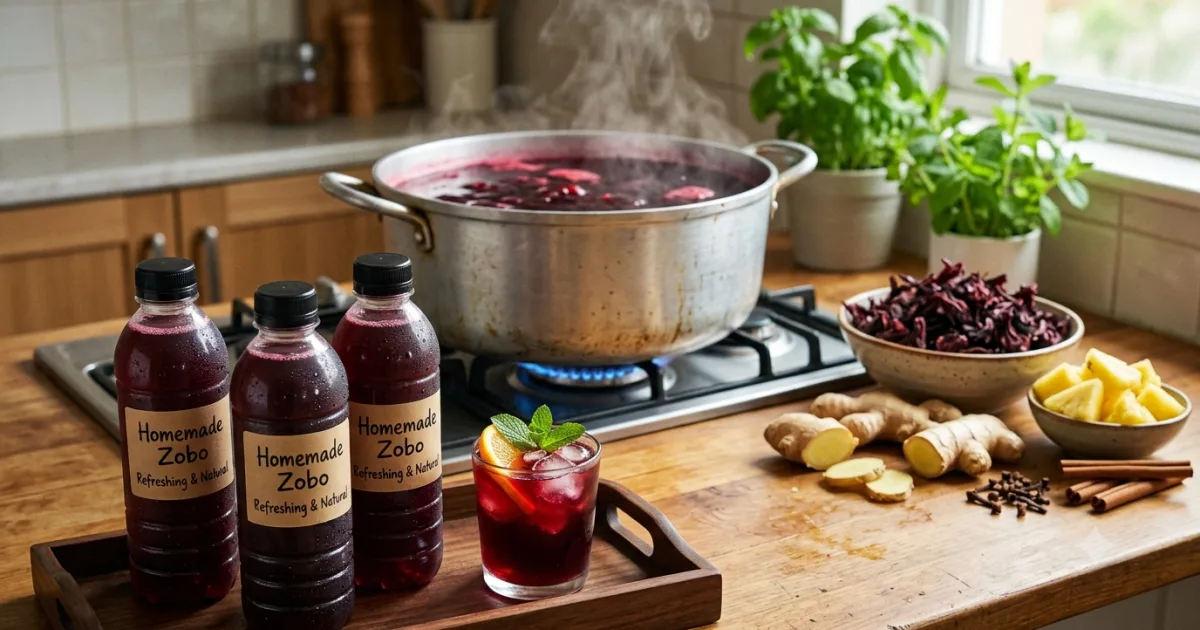
📌 Quick Summary: Zobo drink (hibiscus drink) is made from dried Hibiscus sabdariffa flowers (called zobo leaves in Nigeria), water, ginger, pineapple, and spices — boiled, strained, chilled, and sweetened. A batch of 20 bottles (50cl each) costs approximately ₦3,500–₦5,000 in ingredients and sells for ₦500–₦1,000 per bottle, giving a gross profit of ₦6,500–₦15,000 per batch. A zobo business serving 50 bottles daily earns approximately ₦150,000–₦300,000 monthly before expenses. This is the complete guide — the full recipe, the business setup, how to preserve zobo for 5–7 days, packaging that sells, and what you need from NAFDAC.
Few drinks are more Nigerian than zobo. Made from dried hibiscus flowers, sweetened with pineapple and spiced with ginger and cloves, it is sold at weddings, owambes, offices, schools, and roadside stalls from Lagos to Kano. It is also one of the most overlooked small business opportunities in Nigeria — a drink that costs ₦3,500 to produce in a 20-bottle batch and sells for ₦10,000–₦20,000 in the same batch. If you want to make it at home or turn it into a business, this guide covers both.
What Is Zobo? The Science and the Tradition
Zobo is the Nigerian name for a drink made from the dried calyces of Hibiscus sabdariffa — the same plant known internationally as hibiscus tea, sorrel (in the Caribbean), bissap (in West Africa), or agua de jamaica (in Latin America). In Nigeria, the dried flowers are called “zobo leaves” in markets. The drink has been consumed across northern Nigeria for centuries — it is a staple at Hausa-Fulani ceremonies and has spread across all regions and ethnic groups over the past four decades. Beyond taste, zobo contains several documented nutritional properties: high vitamin C content, antioxidant compounds, and properties that research suggests may support healthy blood pressure. These health claims — which NaijaSabi does not present as medical advice — have contributed to zobo’s growing popularity among health-conscious Nigerians.
Zobo Drink Recipe: Standard Home Batch (20 Bottles)
Ingredients
| Ingredient | Quantity (20 bottles/10 litres) | Approximate Cost 2026 |
| Dried zobo leaves (Hibiscus sabdariffa) | 500g | ₦800 – ₦1,200 |
| Fresh ginger | 100g | ₦200 – ₦300 |
| Pineapple (fresh) | 1 medium or pineapple flavour (for budget batches) | ₦500 – ₦800 |
| Cloves (konafuru) | 1 tablespoon | ₦100 – ₦150 |
| Cinnamon sticks (optional) | 2 sticks | ₦150 – ₦200 |
| Sugar or honey | 250g – 500g (to taste) | ₦400 – ₦700 |
| Water | 12–14 litres (extra for boiling loss) | Minimal |
| Artificial flavour (pineapple/zobo, optional) | 1 bottle | ₦200 – ₦300 |
| Total ingredients cost | ₦2,350 – ₦3,650 |
Equipment Needed
Large pot (minimum 15-litre capacity), sieve or muslin cloth for straining, large bowl or second pot for straining into, blender or grater (for ginger), measuring cup, bottles (PET bottles for commercial, glass for premium), funnel for bottling, refrigerator for cooling and storage.
Step-by-Step Cooking Method
- Wash the zobo leaves thoroughly. Place the dried hibiscus calyces in a large bowl and rinse with clean water two to three times. The wash water will run dark red — this is normal. Rinsing removes dust and any debris from the drying and market process.
- Prepare your spices and flavourings. Peel and grate or blend the fresh ginger. If using fresh pineapple, cut the flesh into chunks (the peel can also be boiled with the zobo for a more pronounced flavour — wash it thoroughly first). Measure out your cloves and cinnamon sticks.
- Boil the zobo leaves with spices. Place the washed zobo leaves in your large pot. Add 12–14 litres of water. Add the ginger, cloves, cinnamon sticks, and pineapple peel (if using). Bring to a vigorous boil, then reduce heat and simmer for 30 to 45 minutes. The water will turn a deep, vibrant crimson — this is the zobo extract. The longer you simmer, the more concentrated the flavour.
- Strain the zobo. Remove from heat and allow to cool for 15–20 minutes (hot liquid is harder to strain safely). Pour the liquid through your sieve or muslin cloth into a large clean bowl or second pot. Press the zobo leaves and spice residue firmly against the sieve to extract all liquid. Discard the strained solids.
- Add sweetener and flavouring. While still warm (not hot), stir in your sugar or honey to taste. Add artificial pineapple or zobo flavour if using. Add the fresh pineapple flesh (blended or in chunks) if you prefer natural flavour over artificial. Stir until the sweetener is fully dissolved.
- Taste and adjust. This is the critical step. Taste your zobo. Adjust sweetness, add more ginger flavour if needed, add a small pinch of salt to round out the flavour profile (optional but used by experienced zobo makers). The flavour should be vibrant, tart, sweet, and spiced — not flat.
- Cool completely before bottling. Allow the zobo to cool to room temperature (or use a cold water bath to speed cooling). Never bottle warm zobo — heat in a sealed bottle accelerates fermentation and spoilage, dramatically reducing shelf life.
- Filter a second time if needed. For commercial production and premium presentation, pass the cooled zobo through a fine mesh strainer or muslin cloth a second time to remove any remaining fine particles. Clear, bright zobo sells better than cloudy zobo.
- Bottle and refrigerate. Pour into clean, sterilised bottles using a funnel. Seal tightly and refrigerate immediately. Refrigerated zobo lasts 5–7 days. Frozen zobo lasts 2–3 months.
How to Preserve Zobo for Longer Shelf Life
Fresh zobo without preservatives lasts 5–7 days refrigerated and will ferment or go mouldy at room temperature within 24–48 hours in Nigeria’s heat. For a commercial business, understanding and managing shelf life is critical.
| Method | Shelf Life | Notes |
| Refrigeration only (no preservatives) | 5–7 days | Standard for home production and local sales |
| Freezing | 2–3 months | Best for large batch production — thaw before selling |
| Sodium benzoate (food preservative) | 2–3 weeks refrigerated | NAFDAC-approved food preservative — use at 0.1% concentration (1g per litre). Dissolve in a small amount of water before adding. Approved for commercial use in Nigeria. |
| Citric acid | Extends to 10–14 days | Also a natural preservative and flavour enhancer. Commonly used by commercial zobo producers. |
For any zobo sold beyond the immediate vicinity of the producer — in shops, offices, or through delivery services — sodium benzoate at the NAFDAC-approved concentration (1g per litre maximum) is the standard commercial preservative. Buy food-grade sodium benzoate from supermarkets or ingredient suppliers — not from hardware stores where the grade and purity may not be food-safe.
The Zobo Business: What You Need to Start
Capital Required to Start a Zobo Business
| Item | Cost |
| Equipment (pot, sieve, blender, funnel) | ₦15,000 – ₦30,000 (if not already owned) |
| Bottles — 50cl PET, 50 pieces | ₦5,000 – ₦8,000 |
| Labels (custom printed, 50 pieces) | ₦3,000 – |
| First production batch ingredients | ₦3,500 – ₦5,000 |
| Refrigerator (if not owned) | ₦80,000 – ₦150,000 (second-hand) |
| Minimum startup capital (without fridge) | ₦25,000 – ₦45,000 |
| With refrigerator | ₦110,000 – ₦200,000 |
Zobo Business Profitability: Realistic Monthly Numbers
| Metric | Conservative | Growing Business |
| Bottles produced per day | 20 bottles | 50 bottles |
| Selling price per bottle (50cl) | ₦500 | ₦700 |
| Daily revenue | ₦10,000 | ₦35,000 |
| Daily ingredient cost | ₦3,500 | ₦7,000 |
| Daily gross profit | ₦6,500 | ₦28,000 |
| Monthly gross profit (25 production days) | ₦162,500 | ₦700,000 |
These are gross profit figures before deducting packaging, gas, electricity, water, transport, and labour. Net profit for a home-based zobo business serving local customers typically runs 50–65% of gross profit after all costs. For a zobo business supplying offices, event caterers, and shops at wholesale, margins are lower but volumes are higher.
Selling Channels for Zobo
The best-performing zobo businesses in Nigeria in 2026 sell through multiple channels simultaneously. Direct sale at home or market is the starting point — but the most profitable channel is office supply. Cold calling offices in your area and offering a weekly delivery of freshly made zobo at ₦600–₦800 per bottle is a reliable recurring income stream. Event catering supply — providing zobo in bulk for owambes, weddings, church events, and corporate events — is the highest-volume single-order opportunity. WhatsApp marketing to a contact list of regular customers, with weekly specials and seasonal flavours, builds a loyal recurring customer base that is the foundation of a sustainable business.
NAFDAC Requirements for Commercial Zobo
If you sell zobo commercially — in bottles with labels, to shops, or in quantities beyond immediate personal sales — you are legally required to register with NAFDAC (National Agency for Food and Drug Administration and Control). NAFDAC registration for small food businesses follows the NAFDAC Small Scale and Cottage Industry (SSCI) registration pathway. The requirements include: a completed NAFDAC registration form, a list of ingredients with quantities, your production premises, your product label with all mandatory information (name, ingredients, net weight, production date, expiry date, producer’s name and address, and your NAFDAC number once issued). Operating without NAFDAC registration exposes your business to product seizures and fines. The SSCI registration pathway is designed to be accessible for small producers — visit your nearest NAFDAC office with your product and documents to begin the process.
Zobo Flavour Variations: Expanding Your Menu
Standard zobo with ginger and pineapple is the foundation — but the most successful zobo businesses in 2026 have expanded into flavour variations that attract premium prices. Zobo with cloves and cinnamon (a warm, spiced version popular at events in cooler months), zobo with cucumber (a fresh, spa-style version increasingly popular in offices and gyms), zobo with watermelon (a summer variation), and zobo with lemon and honey (a health-positioned variant at a premium price) are all established in Nigerian markets. Seasonal and limited flavours create urgency and social media sharing — two of the most effective marketing tools available to a small zobo business.
Frequently Asked Questions
How do you make zobo drink at home?
Rinse 500g dried zobo leaves. Boil with 12 litres of water, 100g ginger, cloves, and pineapple for 30–45 minutes. Strain. Add sugar to taste and pineapple flavour if desired. Cool completely, bottle, and refrigerate. Makes approximately 10 litres — about 20 bottles of 50cl each.
How long does zobo drink last?
Refrigerated without preservatives: 5–7 days. Frozen: 2–3 months. With food-grade sodium benzoate (NAFDAC-approved, 1g per litre): 2–3 weeks refrigerated. Never store zobo at room temperature — it ferments quickly in Nigeria’s heat.
How much does it cost to start a zobo business in Nigeria?
Minimum ₦25,000–₦45,000 if you already have a refrigerator. ₦110,000–₦200,000 if you need to purchase a refrigerator as well. A daily production of 20 bottles selling at ₦500 each generates ₦162,500 monthly gross profit before expenses.
Do I need NAFDAC to sell zobo?
Yes — for commercial sales in bottles with labels, to shops, or at any scale beyond immediate personal sales. Register through NAFDAC’s Small Scale and Cottage Industry (SSCI) pathway at your nearest NAFDAC office.
What preservative can I add to zobo?
Food-grade sodium benzoate at 1g per litre (0.1% concentration) is the NAFDAC-approved standard preservative for zobo. Citric acid also extends shelf life and enhances flavour. Buy food-grade preservatives from reputable ingredient suppliers — never from non-food sources.
What are the health benefits of zobo drink?
Zobo contains vitamin C, antioxidants, and flavonoids. Research suggests it may support healthy blood pressure and has anti-inflammatory properties. NaijaSabi notes these are nutritional properties documented in published research — not medical claims. Zobo is not a treatment for any medical condition. Consult a healthcare professional for medical advice.
Sources
- NAFDAC — Small Scale and Cottage Industry (SSCI) registration guidelines — nafdac.gov.ng
- Original recipe development and Nigerian market pricing — NaijaSabi Lifestyle Desk, September 2026
Last updated: 4 September 2026 · NaijaSabi Lifestyle Desk. Ingredient costs reflect Lagos market prices as at September 2026 and will vary by location and season.
Common Mistakes That Ruin Zobo — and How to Avoid Them
Several consistent errors turn what should be a vibrant, delicious zobo into a flat, sour, or quickly spoiled drink. Boiling the ginger for too long — more than 30 minutes at high heat — produces a bitter, overpowering ginger flavour that dominates the hibiscus. Add ginger at the start but taste the zobo after 20 minutes and remove the ginger if the flavour is already strong enough. Adding sweetener while the zobo is still very hot causes the sugar to concentrate unevenly — add when the liquid has cooled to approximately 60°C. Bottling warm zobo is the most common cause of premature spoilage — always cool to room temperature before sealing in bottles. Not filtering thoroughly enough leaves fine particles in suspension that accelerate fermentation and give the drink an unpleasant texture. Filter twice for commercial production. Finally: using low-quality or old dried zobo leaves produces a pale, flavourless drink regardless of technique. Fresh, vibrantly coloured dried zobo leaves — dark burgundy to deep purple — produce the best flavour and colour. Buy from a reputable ingredient supplier rather than old market stock that has been sitting in sunlight for months.




0 Comments
No comments yet. Be the first to share your thoughts!