




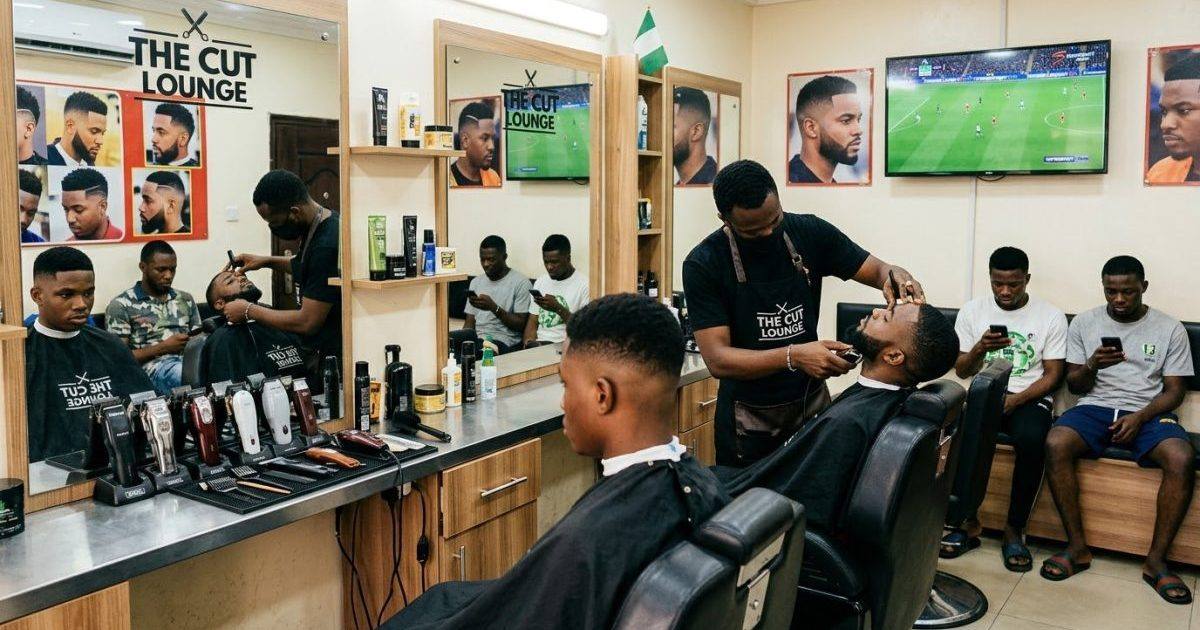
📌 Quick Summary: A barbershop (barbing salon) business in Nigeria requires startup capital of ₦150,000 to ₦600,000 for chairs, clippers, mirrors, and shop setup. A busy Nigerian barbershop earns ₦500 to ₦3,000 per haircut and sees 15 to 50+ clients daily in a good location — generating ₦150,000 to ₦600,000 monthly gross revenue. Nigerian men visit their barber every 1 to 3 weeks, making barbershop one of the most repeat-visit service businesses in Nigeria. The most important decisions: location (near a residential estate or office area with high male foot traffic) and clipper quality (professional-grade clippers are the non-negotiable tool quality investment). This guide covers equipment, pricing, location, hiring, and how to build the loyal client base that makes a barbershop a genuinely passive income business.
The barbershop holds a unique social role in Nigerian urban life that no other service business quite replicates. It is simultaneously a place of grooming, a social hub, a sports commentary venue, a neighbourhood information exchange, and — for many Nigerian men — a weekly ritual that structures their sense of personal presentation and community belonging. A busy Lagos or Abuja barbershop on a Saturday morning is a microcosm of Nigerian masculine social life: sports debates, business conversations, political commentary, and the particular ease of men among men, all playing out against the backdrop of clippers buzzing and mirrors reflecting the neighbourhood passing by. For the entrepreneur, this social function is a business advantage: men who enjoy their barbershop experience — not just the haircut but the atmosphere, the barber who knows their name, the particular comfort of a familiar chair — are extraordinarily loyal customers who actively resist switching even when a cheaper option is available nearby.
Services and Pricing
| Service | Rate (Lagos/Abuja 2026) | Time |
| Standard haircut (low cut / shape-up) | ₦500 – ₦2,000 | 15 to 25 minutes |
| Haircut + beard trim and shape | ₦1,000 – ₦3,000 | 25 to 40 minutes |
| Fade (skin fade, taper fade, high-top fade) | ₦1,500 – ₦4,000 | 30 to 50 minutes |
| Hair design / pattern cut | ₦2,000 – ₦5,000 | 30 to 60 minutes |
| Kids’ haircut | ₦500 – ₦1,500 | 15 to 20 minutes |
| Shave (straight razor) | ₦500 – ₦1,500 | 15 to 20 minutes |
| Hair treatment / conditioning | ₦2,000 – ₦5,000 | 20 to 30 minutes |
| Dreadlock maintenance | ₦3,000 – ₦10,000 | 45 to 90 minutes |
| Home/office visit (mobile barber premium) | ₦5,000 – ₦15,000 | Travel + service |
Equipment List
| Item | Cost (2026) | Notes |
| Professional barber chair (hydraulic) | ₦40,000 – ₦120,000 each | The central piece of equipment — invest in a quality, comfortable chair. Clients spend 20 to 60 minutes in it. |
| Large salon mirror with mounted lighting | ₦20,000 – ₦50,000 each | One per barber station. Good lighting is essential for precision cutting. |
| Professional hair clippers (cordless, heavy duty) | ₦20,000 – ₦80,000 per pair | The single most important quality investment. Wahl, Andis, BaByliss Pro, and Remington are the professional standard brands. A barber needs minimum 2 clipper pairs — a main pair and a backup. Cheap clippers produce poor cuts, burn clients’ skin, and break constantly. |
| Trimmers / T-outliners | ₦10,000 – ₦40,000 | For clean edging and beard shape-ups |
| Clipper cleaning and maintenance kit (blades, oil, spray) | ₦5,000 – ₦15,000 | Well-maintained clippers perform better and last longer |
| Barber cape and neck strips | ₦3,000 – ₦10,000 | Professional presentation |
| Straight razor and shaving equipment | ₦5,000 – ₦20,000 | For shave and beard grooming services |
| Barber products (pomades, after-shave, edge control, beard oil) | ₦20,000 – ₦60,000 initial stock | Sell retail alongside services for additional revenue |
| Waiting area chairs | ₦10,000 – ₦30,000 | Comfortable waiting experience is part of the service |
| TV and sound system | ₦30,000 – ₦100,000 | Sports content on TV is a major driver of the Nigerian barbershop social atmosphere — invest in a good screen |
| Generator | ₦60,000 – ₦200,000 | Cordless clippers help with NEPA issues but a generator is still essential for lighting, TV, and air conditioning |
| 2-chair barbershop starter total (excluding rent) | ₦200,000 – ₦600,000 |
Location Strategy
Barbershop location logic is similar to hair salon but with specific differences reflecting the male clientele. Men are more likely than women to choose a barbershop based on proximity to home or office — the “my barber near me” search behaviour means a well-located barbershop has a natural geographical monopoly over its immediate catchment area. The ideal barbershop location: a main road within a residential estate or near a cluster of residential streets, with high visibility (clients should be able to see the barbershop from the road), adequate walk-in space (a step outside the shop where clients can wait and be visible to passersby — the visibility of activity is itself marketing), and proximity to male-dominated commercial activity (offices, motor parks, markets). Saturday and Sunday are peak days for Nigerian barbershops — most working Nigerian men visit on weekends. Locations that are easy to reach on weekends (good road access, parking, or near bus stops) maximise weekend revenue capture. Office area barbershops that serve lunchtime and after-work clients on weekdays complement the weekend peak with consistent weekday traffic.
Barbering Skills: What You Need to Learn
Professional barbering skill is learned through a combination of formal training and extensive practice on real clients. The core skills every Nigerian barber must master: low cut and shape-up (the foundation of 60 to 70 percent of Nigerian male haircuts), skin fade and taper fade (the most technically demanding everyday cut — proper blend between skin and the longer hair above requires practised hand control and the right clipper guards), beard design and shape-up (the straight razor edging around the beard perimeter that is a signature of quality Nigerian barbershop work), and hair design/patterns (optional but highly marketable skill for clients who want custom artwork in their hair). Learning pathways: formal barbering schools exist in Lagos, Abuja, and Port Harcourt (courses typically 3 to 6 months, ₦50,000 to ₦150,000); apprenticeship under an established barber (typically 6 to 12 months, may be unpaid or minimally paid); and self-learning through YouTube tutorials combined with practice (slower but possible for those with natural aptitude). Regardless of pathway: practice on family and friends willing to be your learning clients before charging professional rates. The precision of a fade requires hundreds of repetitions before it becomes reliable — you cannot shortcut the practice hours.
Building the Loyal Client Base: The Business That Runs Itself
A barbershop with 100 regular clients visiting every 2 weeks at ₦1,500 per visit generates ₦3,000,000 monthly gross revenue from repeat visits alone. This is the scale at which a Nigerian barbershop can support multiple barbers, a manager, and provide the owner with genuine passive income rather than a job. Getting from zero to 100 loyal regular clients: the first 10 clients come from your personal network and the walk-in traffic of your location. Each satisfied client refers an average of 1 to 2 additional clients within the first 3 months. A referral incentive (₦200 discount for the referred client’s first visit, ₦200 credit for the referring client) accelerates this network effect. A digital waiting list or appointment system — even a simple WhatsApp booking system — distinguishes your barbershop from the walk-in-only competition and signals professionalism that attracts clients who value their time. The barber who remembers names, remembers haircut preferences, asks about the football game, and finishes every cut with a clean line-up has the social skills that generate loyalty beyond the haircut itself. In the Nigerian barbershop market, technical skill gets clients in the chair once. Social intelligence and consistent quality keep them coming back every two weeks for years.
Frequently Asked Questions
How much does it cost to open a barbershop in Nigeria?
A basic 2-chair barbershop in a rented space: ₦200,000 to ₦600,000 for equipment plus ₦50,000 to ₦300,000 for rent deposit (location-dependent). Total startup: ₦250,000 to ₦900,000. A premium barbershop with 4 chairs, TV, air conditioning, and quality furniture: ₦600,000 to ₦2,000,000+.
How much do barbers earn in Nigeria?
A skilled barber working in their own shop in a good location earns ₦100,000 to ₦500,000 monthly net from 20 to 50 clients daily at ₦1,000 to ₦2,000 per cut. Employed barbers on commission (typically 50 to 60 percent of service revenue) earn ₦60,000 to ₦250,000 monthly depending on the shop’s client volume.
What clippers should I buy to start a barbershop in Nigeria?
Wahl (Senior, Magic Clip, Legend) and Andis (Master, Fade Master) are the professional standard brands used in Nigerian barbershops. Expect to spend ₦25,000 to ₦60,000 per pair for professional-grade cordless clippers. Do not buy cheap clippers to save money at startup — they produce poor cuts, pull rather than cut hair (causing client discomfort and skin irritation), and break quickly. The clipper investment is the one area where quality is non-negotiable.
The Mobile Barber Opportunity: Premium Service, Lower Overhead
A growing segment of the Nigerian barbershop market that is significantly underexplored is mobile barbering — the barber who visits clients at their homes or offices rather than operating from a fixed location. Mobile barbering eliminates the largest cost in a traditional barbershop (shop rent, typically ₦100,000 to ₦400,000 per year), reduces the overhead of equipment (a mobile barber operates with a professional kit that fits in a bag — clippers, capes, trimmers, cleaning supplies, a portable mirror), and commands premium pricing (₦5,000 to ₦15,000 per home or office visit) that reflects the convenience value to the client. The target market for mobile barbering in Nigeria: busy Nigerian professionals (particularly in Lagos and Abuja) who value their time more than the cost premium, corporate clients (companies that contract a barber for regular employee grooming services), and high-net-worth individuals who prefer the privacy and convenience of in-home grooming. A mobile barber serving 8 to 12 clients daily at ₦6,000 per visit earns ₦48,000 to ₦72,000 per day — significantly more than a fixed barbershop barber, at significantly lower overhead. The logistics: reliable transport (a motorcycle or tricycle), a professional kit that travels well, a WhatsApp or Instagram-based booking system, and the discipline to maintain a reliable schedule that clients can count on.
The Nigerian Barbershop in 2026: Trends and Opportunities
Several market trends are reshaping the Nigerian barbershop business in ways that create specific opportunities for new entrants who understand them. The premium barbershop trend: a segment of Nigerian barbershops has moved decisively upmarket — premium shops in Lekki, Victoria Island, Maitama, and Wuse II charge ₦3,000 to ₦8,000 per haircut in beautifully fitted, air-conditioned spaces with complimentary drinks, curated music, and barbers trained to international standards. This premium segment has grown significantly as Nigerian men with disposable income seek experiences that match their self-image. A well-executed premium barbershop in the right neighbourhood can command prices 3 to 5 times those of a standard shop while serving a client base that is intensely loyal and highly resistant to price competition. The natural hair and beard grooming explosion: the Nigerian natural hair movement has extended to men — the growing number of Nigerian men maintaining locs, afros, and elaborate beards has created demand for specialist skills (loc maintenance, afro care, precision beard design) that most barbershops do not serve well. A barbershop that positions itself as the destination for men who wear their hair natural and invest in beard grooming is addressing a rapidly growing, underserved, relatively affluent segment. The Instagram barber: Nigerian barbers who document their work on Instagram — posting before-and-after fades, intricate hair designs, beard transformations — have turned their craft into a personal brand that attracts clients specifically because of the barber rather than the location. An Instagram barber with 50,000 followers in Lagos can charge significantly more per cut than an equally skilled barber without a social media presence, simply because the social proof of their work is visible to thousands of potential clients. The barber who understands that they are not just cutting hair but providing an experience, a social space, and a weekly ritual for their clients has understood something fundamental about what makes a Nigerian barbershop genuinely successful rather than merely functional.
Sources
- Original business guide — NaijaSabi Business Desk, October 2026
Last updated: 2 October 2026 · NaijaSabi Business Desk.




0 Comments
No comments yet. Be the first to share your thoughts!