




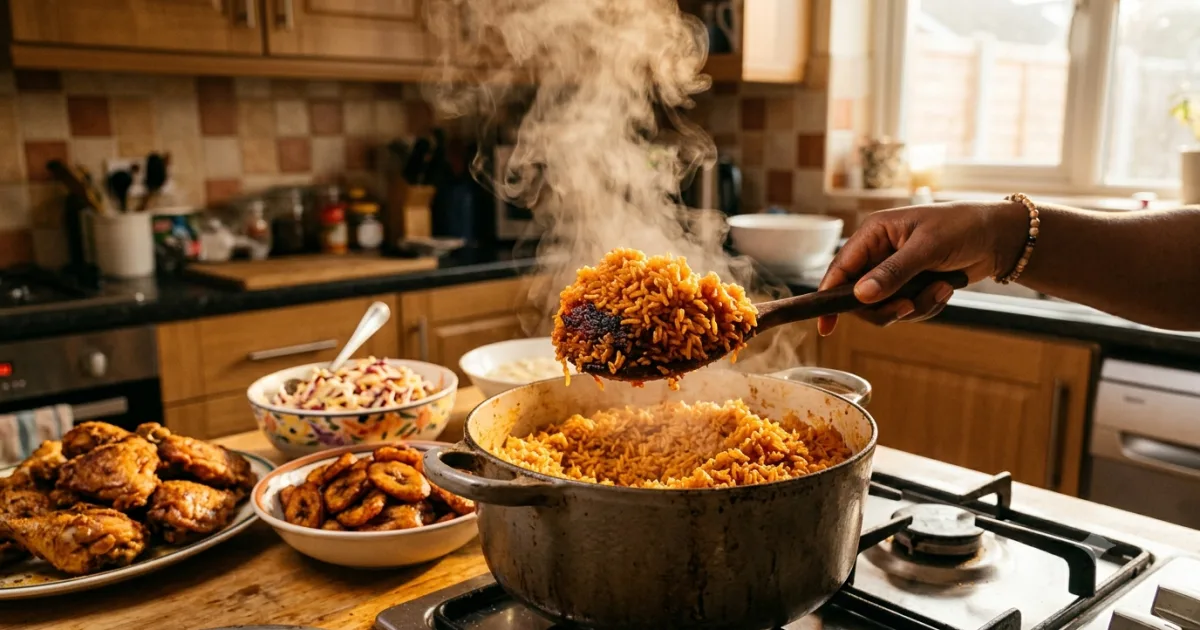
📌 Quick Summary: Nigerian jollof rice is made with parboiled long-grain rice cooked in a tomato-pepper base seasoned with onion, thyme, curry, bay leaves, and seasoning cubes. The secret to party jollof — the smoky, deeply flavoured version every Nigerian craves — is high heat at the end to create the bottom pot (party rice). This guide covers the complete recipe for a pot serving 6–8 people, the exact ratio of tomatoes to peppers, how to get the smoky party rice flavour at home, common mistakes and how to avoid them, and a version scaled for large events.
Every Nigerian has an opinion about jollof rice. The debate about which country makes it best — Nigeria, Ghana, Senegal — has generated more heat than most political arguments and will never be resolved. What is not debatable is what makes Nigerian jollof rice specifically Nigerian: the smoky bottom layer, the deeply seasoned tomato base, the particular combination of curry and thyme that no other country’s version replicates. This is the full recipe — party jollof, home jollof, and everything in between.
What Makes Nigerian Jollof Rice Different
Nigerian jollof rice is distinguished from Ghanaian and Senegalese versions by three things. First: the tomato base is cooked down much longer and more aggressively — until the raw tomato smell is completely gone and the oil has separated from the paste, creating a deeply concentrated flavour foundation. Second: the combination of thyme and curry powder as the primary spices — a seasoning profile that is distinctly Nigerian. Third: the finish — high heat at the end of cooking, with the pot tightly sealed, allowing the bottom layer to catch slightly and develop the characteristic smoky flavour that Nigerians call “party rice” or “bottom pot.” It is this bottom layer — not the rice itself — that makes Nigerian jollof rice uniquely irresistible.
Ingredients — Serves 6 to 8
| Ingredient | Quantity | Notes |
| Parboiled long-grain rice | 4 cups (800g) | Parboiled rice — not regular white rice. Uncle Ben’s style. Do not use basmati. |
| Fresh tomatoes | 6 medium (or 800g) | Roma/plum tomatoes preferred — more flesh, fewer seeds |
| Tinned tomato paste | 2 tablespoons | Concentrated — deepens colour and flavour |
| Red bell pepper (tatashe) | 2 large | Adds sweetness and body to the base |
| Scotch bonnet pepper (atarodo) | 2–3 (to taste) | Adjust to your heat preference. Remove seeds for milder jollof. |
| Large onions | 2 | One for blending, one for frying |
| Vegetable or groundnut oil | ½ cup (120ml) | Enough to fry the tomato base properly |
| Chicken or beef stock | 2–3 cups (500–750ml) | From boiling your meat. The single biggest flavour upgrade. |
| Water | As needed | To top up liquid for rice to cook |
| Seasoning cubes | 2–3 | Maggi or Knorr — adjust to taste |
| Salt | To taste | Add at end — stock already contains salt |
| Curry powder | 1 teaspoon | Nigerian yellow curry — not Indian curry powder |
| Dried thyme | 1 teaspoon | Essential — do not substitute |
| Bay leaves | 2–3 | Remove before serving |
| Butter (optional) | 1 tablespoon | Added at end for richness — used by many Nigerian cooks for party jollof |
Equipment You Need
A heavy-bottomed pot — aluminium, stainless steel, or cast iron — is essential. Thin-bottomed pots distribute heat unevenly and burn jollof before it cooks through. A blender or food processor for the tomato-pepper base. Aluminium foil to seal the pot before the lid goes on — this traps steam and is the technique most Nigerian home cooks use to prevent burning while allowing the rice to cook through evenly. A wooden spoon for stirring.
Step-by-Step Recipe
Step 1: Blend the Tomato-Pepper Base
Place the fresh tomatoes, red bell peppers, scotch bonnet peppers, and one of the onions (roughly chopped) into a blender. Add a small amount of water — just enough to get the blender moving. Blend until smooth. You should have approximately 1 litre of blended tomato-pepper mixture. Pour into a pot and boil on medium-high heat for 15 minutes, stirring occasionally, to reduce the water content before frying. This pre-boiling step prevents excessive oil splashing when you fry the base and speeds up the total cooking time.
Step 2: Fry the Tomato Base Until Oil Floats
Heat ½ cup of oil in your heavy pot over medium-high heat. Slice the second onion and fry in the oil until translucent and beginning to brown — about 5 minutes. Add your tomato paste and stir vigorously into the oil for 2 minutes. Now add the pre-boiled blended tomato mixture. This will sizzle dramatically — be careful of splashing. Fry, stirring frequently, until the raw tomato smell is completely gone and the oil has visibly separated from the tomato mixture and is floating on top. This takes 20 to 30 minutes on medium heat. Do not rush this step — it is the foundation of the entire dish. Under-fried tomato base produces sour, underwhelming jollof.
Step 3: Season the Base
Once the tomato base is properly fried — deeply red-orange, oily, fragrant — add your curry powder, dried thyme, bay leaves, and crumbled seasoning cubes. Stir well and fry the spices into the base for 2 more minutes. Taste the seasoned base. It should be intensely flavoured — salty enough to season rice, savoury from the seasoning cubes, with balanced heat from the scotch bonnet. Adjust salt and seasoning now, before the rice goes in.
Step 4: Add Stock and Bring to a Boil
Add 2 to 3 cups of meat stock (from boiling your chicken, beef, or turkey) to the seasoned tomato base. If you do not have stock, use water — but stock is the single biggest difference between home jollof and restaurant-quality jollof. Stir everything together and bring to a boil. Taste again and adjust seasoning.
Step 5: Wash and Add the Rice
Wash your parboiled rice under cold water until the water runs clear — this removes excess starch that causes the rice to clump and stick. Add the washed rice to the boiling tomato-stock mixture. Stir once to ensure the rice is evenly distributed. The liquid should be level with or just barely above the rice. If there is not enough liquid, add a small amount of hot water or stock — never cold water, which drops the pot temperature and uneven cooking results.
Step 6: Cook Covered on Medium Heat
Reduce heat to medium. Place a sheet of aluminium foil over the pot, pressing it down so it sits directly on the rice surface — this creates a tight steam seal that cooks the rice from both above and below. Place the pot lid firmly on top of the foil. Cook for 20 to 25 minutes without lifting the lid. The steam trapped inside is doing the work — every time you lift the lid you release steam and extend cooking time.
Step 7: Check and Stir
After 25 minutes, lift the foil carefully — hot steam will rush out. Test the rice: the grains should be tender but not mushy, and there should be very little or no liquid remaining at the bottom. If the rice is still hard and liquid remains, replace the foil and lid and cook for another 10 minutes. If the rice is cooked but liquid remains, uncover and cook on medium heat until it evaporates. Gently turn and stir the rice — bringing the bottom layer up and the top layer down — without scraping the bottom.
Step 8: Create the Party Bottom (The Smoky Finish)
This is the step that separates party jollof from ordinary jollof. Once the rice is fully cooked, turn heat to high. Replace the foil and lid. Cook on high for 3 to 5 minutes — you will hear a gentle crackling sound from the bottom of the pot. This is the bottom layer catching and developing the smoky crust. Do not walk away during this step — there is a fine line between party jollof and burnt jollof. Remove from heat the moment the crackling becomes more aggressive. Add the optional tablespoon of butter at this stage — it melts into the hot rice and adds a richness that finishes party jollof perfectly.
Step 9: Rest and Serve
Remove from heat and allow to rest, covered, for 5 to 10 minutes. This resting time allows any remaining steam to finish cooking the rice through and lets the flavours settle. Serve with fried or grilled chicken, beef, turkey, or fish, alongside fried plantain, Nigerian coleslaw, or moi moi.
What to Serve With Nigerian Jollof Rice
| Protein | Side | Drink |
| Fried chicken or grilled chicken | Fried plantain (dodo) | Cold Maltina or Coke |
| Peppered turkey or goat meat | Nigerian coleslaw | Zobo drink |
| Fried fish or grilled catfish | Moi moi | Chilled palm wine |
| Beef stew | Fried egg | Freshly made kunu |
Common Mistakes That Ruin Jollof Rice
1. Not Frying the Tomato Base Long Enough
The most common mistake. Raw tomato taste in jollof is unmistakable and unpleasant — a sourness that no amount of seasoning cube will fix. The base must be fried until the oil separates and the raw smell is completely gone. Twenty to thirty minutes minimum on medium heat.
2. Using the Wrong Rice
Basmati rice does not make good Nigerian jollof — its grains are too long and slender, it cooks too quickly, and it lacks the starchy body that gives Nigerian jollof its texture. Long-grain parboiled rice is the correct choice. Ofada rice produces a different but equally valid version for those who prefer it.
3. Adding Too Much Water
Soggy jollof results from too much liquid. The liquid level should be even with or barely above the rice surface when you add the rice. If you are uncertain, add less and check during cooking — you can always add more liquid, but you cannot remove it once it is in.
4. Lifting the Lid Too Often
Every time you lift the lid during cooking, steam escapes and the rice takes longer to cook through. The foil-and-lid seal method exists precisely to prevent this. Once the rice goes in and the pot is sealed, resist the urge to check for at least 20 minutes.
5. Skipping the Stock
Jollof rice cooked in plain water versus jollof rice cooked in meat stock is a meaningful quality difference. The collagen, fat, and flavour compounds in meat stock cannot be replicated by adding more seasoning cubes. When you boil your chicken or beef for the party, save every drop of that stock.
Scaling Up: Party Jollof for 20 to 30 People
For large events, multiply the recipe proportionally — but two things change at scale. First: use a larger, thicker-bottomed pot — the wider surface area requires more tomato base coverage to season the rice evenly. Second: the bottom-pot smoky step requires more care at high volume — a large pot of jollof burns unevenly at high heat, so keep the high-heat finish to 3 minutes maximum and monitor closely. Professional Nigerian caterers cook party jollof over open firewood for the most authentic smoky flavour — at home, your gas cooker’s highest flame setting approximates this.
Frequently Asked Questions
What type of rice is best for Nigerian jollof?
Long-grain parboiled rice — the kind labeled “parboiled” or similar to Uncle Ben’s. It holds its shape during cooking, absorbs the tomato base beautifully, and produces the firm, separate grains characteristic of good Nigerian jollof. Do not use basmati rice.
Why is my jollof rice sour?
Your tomato base was not fried long enough. The raw tomato mixture must be fried in oil over medium heat for at least 20 to 30 minutes — until the oil separates and all sourness is cooked out. Rushing this step is the single most common cause of sour jollof rice.
How do I get the smoky party jollof flavour at home?
Turn heat to high after the rice is fully cooked, seal the pot tightly with foil and a lid, and cook for 3 to 5 minutes until you hear a gentle crackling from the bottom. This creates the smoky bottom pot layer. Do not walk away — monitor closely to avoid burning.
How much water do I add to jollof rice?
The total liquid (stock plus any added water) should be level with the surface of the rice — approximately equal parts rice and liquid by volume. For 4 cups of rice, approximately 4 cups of total liquid. Add less rather than more, and top up during cooking if needed.
Can I make Nigerian jollof rice without meat stock?
Yes — use hot water and increase your seasoning. The result will be good but not as rich as stock-based jollof. A quality chicken or beef stock cube dissolved in hot water is a reasonable substitute when meat stock is not available.
Why does party jollof taste different from home jollof?
Two reasons. First: party jollof is cooked in large quantities over wood fire or very high heat, which produces the smoky flavour that is difficult to fully replicate on a domestic gas cooker. Second: it typically uses richer, higher-fat meat stock from larger quantities of meat. The high-heat finish method described above approximates this at home.
Sources
- Original recipe — NaijaSabi Lifestyle Desk, September 2026
- Nigerian culinary tradition — documented techniques from Nigerian home cooking practice across multiple regions
Last updated: 5 September 2026 · NaijaSabi Lifestyle Desk.




0 Comments
No comments yet. Be the first to share your thoughts!