




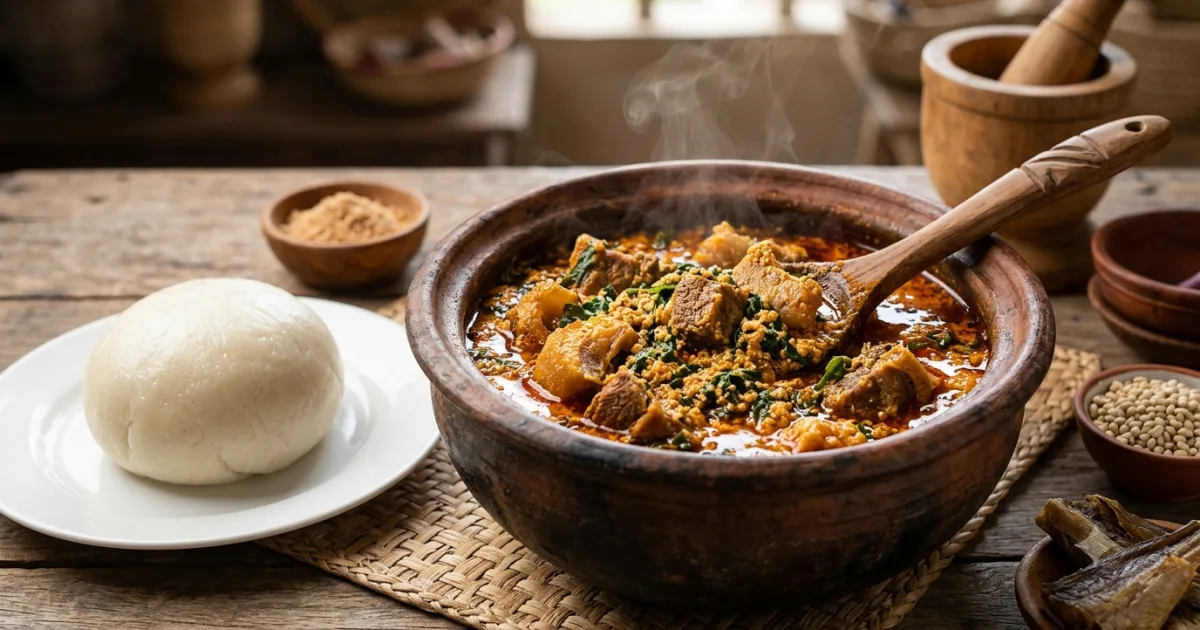
📌 Quick Summary: Nigerian egusi soup is made from ground melon seeds (egusi) cooked with palm oil, assorted meat and fish, leafy vegetables (ugwu or bitter leaf), and seasonings. There are two methods: frying (produces a firm, textured egusi) and moulding/lumping (produces soft, chunky egusi balls). The frying method is the most common across Nigeria. A pot serving 8–10 people uses 3 cups of ground egusi, ½ cup of palm oil, assorted meat, stock fish, and fresh vegetables. This is the complete step-by-step recipe for both methods, common mistakes, and what to serve with egusi soup.
If Nigerian cuisine had a national soup, egusi soup would be a strong contender. Made from the ground seeds of the wild melon plant (Citrullus lanatus), it is eaten across every geopolitical zone in Nigeria — from the Yoruba of the southwest to the Igbo of the southeast, from the Hausa-Fulani of the north to the Ijaw and Itsekiri of the Niger Delta. Every region has its own variation: the Igbo version tends to be richer with more palm oil and ugwu (fluted pumpkin leaves); the Yoruba version often uses bitter leaf and includes more tomatoes in the base; northern versions may be lighter with fewer vegetables. This guide covers the standard, widely loved version that most Nigerian home cooks make, with notes on regional variations.
Ingredients — Serves 8 to 10
| Ingredient | Quantity | Notes |
| Ground egusi (melon seeds) | 3 cups (300g) | Buy ready-ground from the market or blend whole dried egusi seeds yourself for fresher flavour |
| Palm oil | ½ cup (120ml) | Use fresh, well-processed red palm oil. Not bleached oil. |
| Assorted meat | 1kg | Beef, goat meat, pomo (cow skin), shaki (tripe) — any combination |
| Stockfish (okporoko) | 200g | Soak in hot water for at least 2 hours before cooking. Adds deep umami flavour. |
| Dried fish (eja gbigbe) | 2 medium pieces | Smoked mackerel or titus is excellent. Wash thoroughly before adding. |
| Crayfish (ground) | 3 tablespoons | Essential — do not skip. The umami backbone of egusi soup. |
| Ugwu (fluted pumpkin leaves) or bitter leaf | 2 cups (washed and chopped) | Ugwu gives a milder, sweeter flavour. Bitter leaf (washed thoroughly to reduce bitterness) gives a more traditional edge. |
| Onion | 1 large | Half blended into the egusi paste, half added to the boiling meat |
| Fresh tomatoes and pepper | 2 tomatoes + 1 scotch bonnet | Optional — used in Yoruba-style egusi for extra depth |
| Seasoning cubes | 2–3 | Maggi or Knorr |
| Salt | To taste | Add at end after tasting — stock and crayfish already contain salt |
| Ogiri or iru (locust beans) | 1 tablespoon (optional) | Traditional fermented condiment — adds deep, complex flavour. Optional but authentic. |
Method 1: The Frying Method (Most Common)
This method produces egusi with a firm, textured consistency that holds its shape in the soup. It is the method most home cooks across Nigeria use and the one most Nigerians picture when they think of egusi soup.
Step 1: Cook Your Meat and Prepare Stock
Season your assorted meat with half an onion (sliced), seasoning cubes, and a pinch of salt. Add the soaked stockfish. Add water to just cover the meat and boil over medium-high heat until the meat is tender — 30 to 45 minutes depending on the meat type. Pomo and shaki take longer than regular beef. Once tender, remove the meat and fish from the stock and set aside. Reserve all the stock — you will use it to cook the egusi.
Step 2: Prepare the Egusi Paste
Mix the ground egusi with a small amount of water — just enough to form a thick paste, similar to the consistency of peanut butter. If you have tomatoes and peppers (Yoruba style), blend them with half the onion and mix into the egusi paste. The paste should be cohesive but not watery — if it is too wet, the egusi will not fry properly.
Step 3: Heat Palm Oil and Fry the Egusi
Heat ½ cup of palm oil in a large, wide pot over medium heat. Do not bleach the oil — heat it just until it is liquid and hot, without changing its colour. Add the egusi paste to the hot oil in spoonfuls. Spread it across the bottom of the pot. Fry on medium heat, stirring frequently, for 10 to 15 minutes. The egusi will gradually dry out, clump, and then break into smaller pieces as you stir. You are looking for the egusi to turn from raw-paste yellow to a deeper, slightly browned colour, with a nutty, toasted smell replacing the raw smell. This frying step is crucial — under-fried egusi tastes raw and grainy.
Step 4: Add Stock, Meat, and Fish
Add 2 to 3 cups of the reserved meat stock to the fried egusi, stirring to combine. The egusi will absorb the stock and loosen. Add your cooked meat, stockfish, dried fish, and ground crayfish. Stir well. Add the remaining half onion (sliced), ogiri or iru if using, and any additional seasoning cubes. Bring to a gentle boil, then reduce heat and simmer for 10 to 15 minutes, stirring occasionally to prevent sticking. Add more stock or hot water if the soup becomes too thick — egusi soup should be thick but pourable, not solid.
Step 5: Add Vegetables and Finish
Add your ugwu or bitter leaf. If using ugwu, add it now and cook for 3 to 5 minutes — ugwu wilts quickly. If using bitter leaf, add it and cook for 5 to 7 minutes. Taste the soup and adjust salt and seasoning. The finished egusi soup should be rich, deeply flavoured, oily (from the palm oil and crayfish), and thick enough to coat the back of a spoon. Serve immediately.
Method 2: The Moulding/Lumping Method
This method produces egusi in soft, rounded balls or lumps throughout the soup — a texture preferred by some Igbo cooks and those who find the fried method too dry or grainy.
Step 1: Prepare the Egusi Balls
Mix the ground egusi with enough water to form a firm, mouldable dough — slightly firmer than the frying method paste. Add half the onion (blended) and some ground crayfish to the dough. Using wet hands, roll the egusi dough into small balls (about the size of a large marble) or press into flat rounds. Set aside on a plate.
Step 2: Prepare the Palm Oil Base
Heat palm oil in a pot. Add blended tomatoes, pepper, and onion if using. Fry until the tomato base is cooked — 10 to 15 minutes. Add your cooked meat, stockfish, dried fish, seasoning cubes, and meat stock. Bring to a boil.
Step 3: Add the Egusi Balls
Carefully drop the egusi balls into the boiling soup one at a time. Do not stir immediately — allow them to cook undisturbed for 5 minutes so they firm up and hold their shape. After 5 minutes, gently stir the soup without breaking the egusi balls. Simmer for 15 to 20 minutes until the egusi balls are cooked through and the soup base has thickened.
Step 4: Add Vegetables and Finish
Add ugwu or bitter leaf. Cook for 3 to 5 minutes. Taste and adjust seasoning. The finished soup has a lighter base with distinct egusi lumps — a very different texture from the fried method but equally authentic.
What to Serve With Egusi Soup
| Swallow (most traditional) | Alternative |
| Pounded yam | Boiled white rice |
| Eba (garri) | Boiled yam |
| Fufu (cassava) | Boiled plantain |
| Semovita | Ofada rice |
| Amala | Wheat meal (whole wheat swallow) |
Common Mistakes That Ruin Egusi Soup
1. Not Frying the Egusi Long Enough
Raw, under-fried egusi produces a soup with a grainy, slightly bitter taste. The egusi must fry in the palm oil until it changes colour and smells nutty — at least 10 to 15 minutes on medium heat, with frequent stirring.
2. Adding Too Much Water
Egusi soup should be thick. Watery egusi is a common mistake when too much stock or water is added. Add stock gradually and allow the egusi to absorb it before adding more.
3. Skipping the Crayfish
Ground crayfish is the umami backbone of egusi soup — the compound flavour that makes it taste deeply Nigerian. There is no substitute. If you are salt-conscious, reduce your seasoning cubes, not the crayfish.
4. Not Washing Bitter Leaf Enough
If using bitter leaf, wash it repeatedly — rubbing the leaves between your palms under running water — until the wash water runs clear and the bitterness is at the level you want. Under-washed bitter leaf makes the soup unpleasantly bitter rather than pleasantly earthy.
5. Using Bleached Palm Oil
Bleached (yellow or clear) palm oil has had its carotenoids — the nutrients and flavour compounds that make palm oil taste like palm oil — removed. It produces a pale, bland egusi soup. Use fresh, unprocessed red palm oil for authentic flavour and colour.
Frequently Asked Questions
What is the difference between fried egusi and moulded egusi?
Fried egusi is cooked by frying the ground egusi paste directly in hot palm oil until it breaks into small pieces, producing a firm, crumbly texture throughout the soup. Moulded egusi is rolled into small balls before being added to the soup, producing soft, distinct egusi dumplings. Both are authentic — preference depends on regional tradition and personal taste.
Can I make egusi soup without palm oil?
Technically yes — vegetable or groundnut oil can be substituted — but the result will taste fundamentally different and lack the characteristic colour and flavour that defines Nigerian egusi soup. Palm oil is not merely an ingredient in egusi soup; it is a defining flavour component.
How long does egusi soup last?
Refrigerated: 3 to 4 days in a sealed container. Frozen: up to 3 months — egusi soup freezes exceptionally well with no significant quality loss. Reheat thoroughly before serving. Egusi soup stored at room temperature in Nigeria’s heat will begin to sour within 24 hours — always refrigerate or freeze leftovers promptly.
What vegetable is best for egusi soup?
Ugwu (fluted pumpkin leaves) for a milder, sweeter flavour — preferred in Igbo and general Nigerian cooking. Bitter leaf (Vernonia amygdalina) for a more traditional, earthy bitterness — more common in Yoruba and Edo versions. Both are correct. Some cooks combine both in the same pot.
How do I make egusi soup less oily?
Reduce the palm oil to ¼ cup instead of ½ cup. You can also skim excess oil from the surface of the finished soup before serving — the oil floats and is easy to remove. Do not try to make egusi soup with no oil; palm oil is structurally necessary for the soup to have the right texture and flavour.
Sources
- Original recipe — NaijaSabi Lifestyle Desk, September 2026
- Nigerian culinary tradition — documented across Yoruba, Igbo, and Edo cooking practices
Last updated: 5 September 2026 · NaijaSabi Lifestyle Desk.
Egusi Soup Regional Variations Across Nigeria
Nigeria is a country of extraordinary culinary diversity, and egusi soup reflects that diversity more than almost any other dish. The Igbo version — ofe egusi — is typically made with ugwu and a generous quantity of palm oil, with pounded yam as the preferred swallow. Stock fish is almost always present, giving the Igbo version its characteristic deep, funky umami base. The Yoruba version — egunsi — often incorporates fried tomatoes and peppers into the base, producing a slightly tomatoey, more colourful soup, with bitter leaf the preferred vegetable. The Bini (Edo) version shares characteristics with both — a rich palm oil base, sometimes with uziza leaf instead of ugwu, and an affinity for pounded yam. In the North, egusi is prepared differently — typically with less palm oil and fewer fish components, a lighter soup that contrasts with the heavy southern versions. What all versions share: ground egusi, palm oil, crayfish, seasoned meat or fish, and the principle that egusi soup is a statement of care — a soup that takes time, attention, and good ingredients, and rewards all three with something that no restaurant or takeout version — however good — can fully replicate.




0 Comments
No comments yet. Be the first to share your thoughts!