

⚕️ Medical Disclaimer: This article is for educational purposes only and does not constitute medical advice. High blood pressure (hypertension) is a serious medical condition. If you suspect you have high blood pressure or are experiencing any of the symptoms described below, please consult a qualified medical doctor immediately. Do not self-diagnose or self-medicate. Only a licensed healthcare provider can diagnose and treat hypertension.
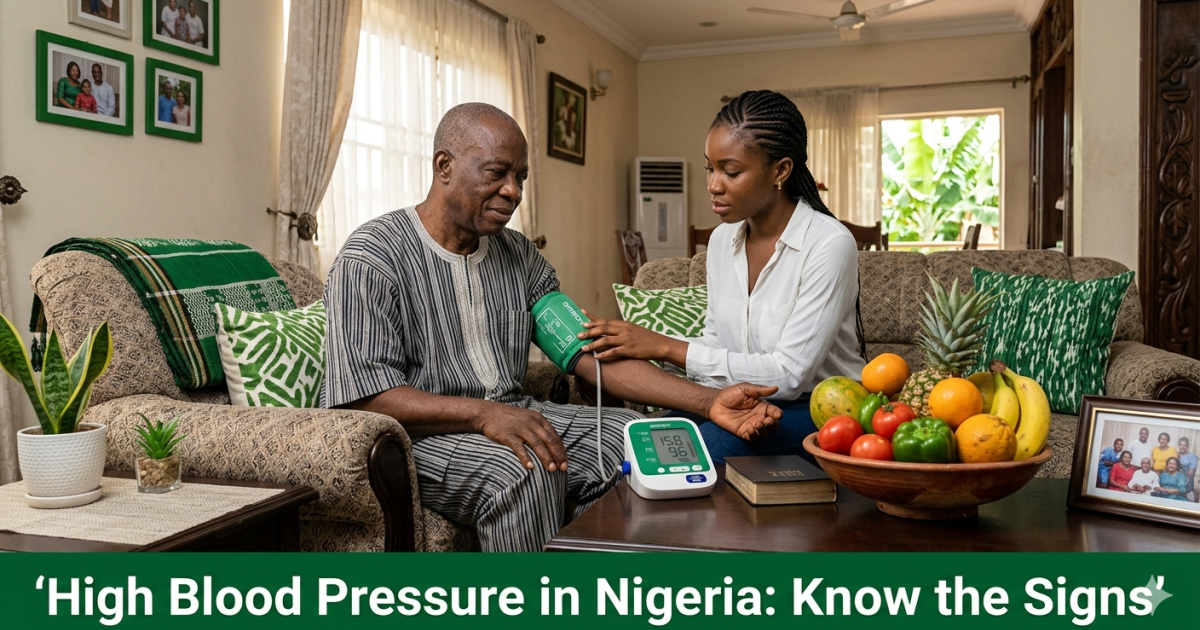
Here is a sobering fact: according to the 2025 State of Health of the Nation Report released by Nigeria’s Federal Ministry of Health and Social Welfare, at least 40% of Nigerian adults live with hypertension — and the majority have no idea. High blood pressure does not come with a dramatic warning. Most of the time, it comes with nothing at all — which is exactly why doctors call it the “silent killer.”
Your uncle who collapsed at church. Your colleague who had a stroke at 45. Your neighbour who was “fine yesterday.” Many of these tragedies begin with years of uncontrolled hypertension — years during which a simple blood pressure check and lifestyle change could have made all the difference. This article explains what high blood pressure is, why Nigerians are particularly vulnerable, what warning signs to watch for, and what changes to make — starting today.
The Scale of the Problem in Nigeria
| Nigerian adults with hypertension | At least 40% (Federal Ministry of Health, 2025) |
| Africa’s hypertension prevalence | 46% of adults aged 25+ — highest of any continent (WHO) |
| Hypertension responsible for stroke cases | Up to 80% of stroke cases in Nigerian hospital studies |
| Emergency medical admissions linked to hypertension | ~25% of urban hospital emergency admissions (Nigerian Journal of Cardiology) |
| Awareness and treatment levels | Remain “relatively low” despite high prevalence (FMOH 2025 Report) |
| Young adults increasingly affected | Doctors report rising cases in Nigerians aged 20–35 (FMOH 2025) |
The Nigeria Demographic and Health Survey (2023–2024) confirms that between 30 and 40 per cent of Nigerian adults are living with high blood pressure. The 2025 State of Health Report warned that “significant gaps remain in early diagnosis, service utilisation and screening coverage, particularly for non-communicable diseases among men.” In plain language: most Nigerian men with high blood pressure have never been diagnosed, never taken medication, and are walking around with a ticking clock in their chests.
What Is High Blood Pressure? Understanding the Numbers
Blood pressure is the force of blood pushing against the walls of your arteries as your heart pumps it around the body. When this force is consistently too high, it puts strain on your heart, damages blood vessels over time, and increases your risk of heart attack, stroke, kidney failure, and vision loss.
Blood pressure is measured in millimetres of mercury (mmHg) and expressed as two numbers — for example, 120/80 mmHg:
- The top number (systolic pressure) — the pressure in your arteries when your heart beats
- The bottom number (diastolic pressure) — the pressure when your heart rests between beats
| Blood Pressure Reading | Category | What It Means |
|---|---|---|
| Below 120/80 mmHg | Normal | Healthy — maintain your lifestyle |
| 120–129 / below 80 mmHg | Elevated | At risk — lifestyle changes needed now |
| 130–139 / 80–89 mmHg | Stage 1 Hypertension | See a doctor — lifestyle changes + possibly medication |
| 140/90 mmHg or higher | Stage 2 Hypertension | Medical treatment required |
| 180/120 mmHg or higher | Hypertensive Crisis | Medical emergency — go to hospital immediately |
According to SYNLAB Nigeria, a leading diagnostic laboratory chain with multiple locations in Lagos and Abuja, hypertension is defined as a blood pressure consistently above 140/90 mmHg. Any reading above 180/120 mmHg is considered a medical emergency requiring immediate hospital attention.
Why High Blood Pressure Is Called the “Silent Killer”
The most dangerous thing about hypertension is that it usually produces no symptoms whatsoever — especially in the early and middle stages. You can have dangerously high blood pressure and feel completely fine. You can sleep well, eat, work, exercise, and show no outward signs of any problem — while your arteries, heart, kidneys, and brain are silently being damaged.
Research published in the Nigerian Journal of Cardiology confirmed that “hypertension is rarely accompanied by any symptom and its identification is usually through screening, or when seeking healthcare for an unrelated problem.” This is particularly dangerous in Nigeria, where routine health checks are uncommon, and many people only visit a doctor when they are already ill.
Warning Signs of High Blood Pressure in Nigerians
While hypertension typically has no symptoms, some people — especially those with very high or rapidly rising blood pressure — may experience warning signs. These tend to appear only when blood pressure has reached a dangerous level. Never wait for symptoms before checking your blood pressure. But if you experience any of the following, see a doctor immediately:
⚠️ Warning Signs That Need Urgent Attention
- Severe, sudden headache — especially at the back of the head
- Blurred or double vision
- Chest pain or tightness
- Difficulty breathing or shortness of breath
- Nosebleeds without obvious cause
- Buzzing or ringing in the ears
- Irregular or very fast heartbeat (palpitations)
- Dizziness or sudden loss of balance
- Severe nausea or vomiting
- Confusion or difficulty speaking
🚨 Hypertensive Crisis: Go to Hospital Immediately
If your BP reading is above 180/120 mmHg AND you are experiencing any of these symptoms — severe headache, chest pain, shortness of breath, visual disturbances, or sudden numbness — this is a hypertensive crisis. Do not wait. Go to the nearest hospital emergency department immediately or call for emergency help. This is a life-threatening emergency.
An important clarification about headaches: Many Nigerians believe that a headache is always a sign of high blood pressure. This is a widespread misconception. Most headaches in people with hypertension are not caused by the blood pressure itself. However, a sudden, severe headache — particularly at the back of the head, or one that comes on “like a thunderclap” — can be a warning sign of dangerously high blood pressure or a hypertensive emergency. Regular blood pressure monitoring is the only reliable way to know your actual reading.
Major Causes and Risk Factors for High Blood Pressure in Nigeria
Research from the Journal of Human Hypertension (2022), conducted across all six geopolitical zones of Nigeria with 3,782 adult participants, identified several key risk factors specific to Nigerian populations. A 2023 meta-analysis published in the Journal of Hypertension focusing on West African dietary patterns confirmed the dietary drivers. Here is a comprehensive breakdown:
1. Excess Salt and Sodium Consumption
Salt is the number one dietary driver of high blood pressure in Nigeria. The problem is not just the salt you add at the table — it is the hidden sodium in seasoning cubes (Maggi, Knorr, Royco), canned tomato paste, packaged noodles (Indomie), processed meats like sausages, corned beef, and suya, smoked fish, and dried crayfish. The WHO recommends less than 5 grams of salt per day, but many Nigerians consume significantly more due to heavy use of seasoning cubes — each of which contains high quantities of sodium. Dr. Nsisong Asanga, a Nigerian public health physician, notes that “food practices vary from one part of the continent to another,” meaning the specific dietary risks for Nigerians are distinct from generic global recommendations.
2. Physical Inactivity
The nationwide survey published in the Journal of Human Hypertension found that 30.7% of Nigerian adults had low physical activity levels. A sedentary lifestyle — sitting at a desk all day, commuting in traffic, coming home too tired to exercise — significantly increases blood pressure over time. The WHO recommends at least 150 minutes of moderate-intensity exercise per week (equivalent to 30 minutes of brisk walking, five days a week).
3. Obesity and Excess Body Weight
Research published in the Nigerian Journal of Clinical Practice (2024), which studied 427 schoolteachers in Calabar, confirmed that body mass index (BMI) was one of the strongest predictors of hypertension. As body weight increases, the heart must pump harder to supply blood to more tissue, raising blood pressure. SYNLAB Nigeria explains: “An increase in body weight requires more oxygen which increases blood volume to be supplied to excess fat cells, and that can eventually lead to an increase in high blood pressure.”
4. Chronic Stress — The Nigerian Context
Life in Nigeria carries specific stressors that are often underappreciated as health risks: Lagos traffic that can keep you in a car for 4–5 hours daily, economic pressure from the naira’s depreciation and cost of living, NEPA-related frustration, job insecurity, and family financial obligations. Chronic stress triggers the body’s fight-or-flight response — elevated heart rate, constricted blood vessels, elevated blood pressure. Over months and years, this contributes significantly to hypertension, particularly in urban Nigerians. Hygeia HMO’s health education material specifically identifies “stressful work situations” as linked to high blood pressure in the Nigerian context.
5. Age and Family History
The Journal of Human Hypertension nationwide Nigeria survey found the mean age of hypertensive participants was 53.1 years — compared to 39.2 years for those with normal blood pressure. Risk increases significantly after age 40. Family history is also a major factor: if your parent or sibling has hypertension, your risk is substantially higher. Importantly, the 2025 State of Health Report noted that doctors are now reporting increasing cases of hypertension in Nigerians as young as 20–35 — a trend attributed to urban stress, poor diet, and reduced physical activity among young professionals.
6. Excessive Alcohol Consumption
The Journal of Human Hypertension study found that 35.4% of surveyed Nigerian adults consumed alcohol. Drinking alcohol is linked to 16% of high blood pressure cases globally, and the relationship is dose-dependent — the more alcohol consumed, the higher the blood pressure. The American Heart Association confirms that alcohol raises blood pressure, and this applies equally to Nigerian alcoholic beverages: palm wine, beer, ogogoro, and cocktails. The WHO recommends no more than one standard drink per day for women and two for men.
7. Diet High in Saturated Fats and Fried Foods
Deep-fried Nigerian snacks and foods — puff-puff, chin chin, fried plantain, akara, fried chicken — cooked in oils high in saturated and trans fats contribute to arterial narrowing, raised cholesterol, and higher blood pressure over time. Palm oil, while culturally important in Nigerian cooking, is high in saturated fat and should be used in moderation by those at risk of hypertension.
Nigerian Foods to Avoid If You Have High Blood Pressure
Dr. Semiya Aziz, a general practitioner at Chase Lodge Hospital in London who has commented extensively on African dietary patterns and hypertension, advises: “There is no particular food type that can reduce blood pressure but rather it is a combination of foods alongside healthy lifestyle measures.” With that principle in mind, here are the specific Nigerian foods to limit or avoid if you are managing high blood pressure:
| Food / Drink | The Problem | Better Alternative |
|---|---|---|
| Seasoning cubes (Maggi, Knorr, Royco) | Extremely high in sodium — a single cube can contain 1,000mg+ of sodium | Fresh herbs, garlic, ginger, uziza leaves, utazi, onions |
| Packaged noodles (Indomie, etc.) | Very high sodium in the seasoning sachet | Cook without the seasoning sachet or use half; choose whole grain pasta |
| Canned tomato paste (Gino, Sonia, etc.) | High sodium as a preservative | Fresh tomatoes blended and cooked down |
| Salted dried fish, stockfish, crayfish (over-salted) | Salt used as preservative adds significant sodium | Fresh fish, unsalted versions; rinse thoroughly before cooking |
| Processed red meats (sausages, hot dogs, corned beef) | High in sodium AND saturated fat — double risk | Grilled fresh fish, boiled chicken breast, beans |
| Suya, peppered goat meat, asun, nkwobi | Red meat + salt seasonings = high BP risk when eaten frequently | Grilled fish suya; limit frequency to once per week or less |
| Soft drinks, malt drinks, energy drinks | High sugar raises blood pressure and causes weight gain | Water, zobo (without added sugar), fresh fruit juice (no added sugar) |
| Fried snacks (puff-puff, chin chin, fried plantain, akara) | Trans fats and saturated fats from deep frying damage arteries | Roasted plantain (boli), boiled plantain, baked snacks |
| Palm oil in excess | High in saturated fat; raises bad cholesterol | Use sparingly; consider olive oil or groundnut oil in smaller quantities |
| Beer, palm wine, ogogoro, cocktails | Alcohol raises blood pressure directly and interferes with medications | Non-alcoholic zobo, kunu, tigernut milk (kunun aya) |
Nigerian Foods That Support Healthy Blood Pressure
The good news is that Nigerian cuisine has a wealth of genuinely heart-healthy options when prepared correctly. The 2014 Nigerian National Nutritional Guidelines recommend consuming at least 400g (five portions) of fruits and vegetables per day — and Nigerian markets are full of affordable options that qualify:
| Nigerian Food | Why It Helps Blood Pressure | How to Use It |
|---|---|---|
| Beans (black-eyed, honey beans, ewa agoyin) | High in potassium, magnesium, and fibre — all lower BP | Moi moi (baked/steamed), bean porridge, akara (baked not fried) |
| Unripe plantain (ogi baba) | High potassium, low glycaemic index | Boiled, roasted (boli), made into flour porridge |
| Okra (okro soup) | High in fibre, antioxidants, and minerals that regulate BP | Okra soup, boiled okra as vegetable side |
| Leafy vegetables — ugwu (fluted pumpkin), efo riro, bitter leaf, spinach | High in potassium, magnesium, nitrates that relax blood vessels | Vegetable soups (light on salt and palm oil) |
| Fatty fish — mackerel (titus), sardines, croaker (apo) | Omega-3 fatty acids reduce systolic BP by up to 5 mmHg (research shows) | Grilled, steamed, or in pepper soup (light on salt) |
| Zobo (hibiscus tea, without added sugar) | Studies show hibiscus significantly lowers BP by relaxing blood vessels | Brewed and chilled without sugar or with minimal honey |
| Avocado pear | High in potassium and healthy monounsaturated fats | Eaten raw with bread (no salt), in salads |
| Garlic | Allicin compound reduces arterial stiffness and lowers BP | Fresh garlic in cooking; let it sit for 10 minutes after crushing before cooking |
| Ugba (oil bean / African salad) | Rich in potassium and antioxidants that balance sodium levels | In moderation; light on oil in preparation |
| Tiger nuts (aya / ofio) | High in arginine, which widens blood vessels; potassium-rich | Kunun aya (tigernut milk), eaten raw as snack |
Lifestyle Changes That Lower Blood Pressure — Without Medication
Hygeia HMO, one of Nigeria’s largest health maintenance organisations, and SYNLAB Nigeria both emphasise that lifestyle changes form the foundation of hypertension management — even when medication is also needed. Here is what the evidence supports:
1. Exercise Consistently
Walking just 40 minutes a day can help lower blood pressure, according to Hygeia HMO’s clinical guidelines. You do not need a gym membership — a brisk walk around your estate, climbing stairs instead of using a lift, or a morning walk before Lagos traffic builds up all count. The goal is 150 minutes of moderate activity per week. People who exercise regularly can lower their systolic blood pressure by 5–8 mmHg on average — equivalent to the effect of some medications.
2. Reduce Salt Intake Aggressively
Replace seasoning cubes with fresh aromatics: garlic, ginger, onions, fresh peppers, scent leaf (efirin), uziza, utazi, and ehuru (African nutmeg). Cook with these flavour-rich ingredients and taste before adding any additional salt. Cook from scratch using fresh tomatoes instead of canned paste. When using dried fish or crayfish, rinse well before adding to pot. The WHO’s target of less than 5g of salt per day is achievable if you eliminate seasoning cubes and processed foods entirely.
3. Lose Weight if Overweight
A 2016 study cited by Hygeia HMO found that losing just 5% of body mass can significantly lower high blood pressure. For someone weighing 100kg, that is 5kg of weight loss making a measurable clinical difference. When combined with exercise, the effect on blood pressure is even greater.
4. Manage Stress Actively
In Nigeria’s high-pressure environment, stress management is not a luxury — it is cardiovascular medicine. Evidence-based strategies include: listening to calming music (clinically shown to lower heart rate), deep breathing exercises (4 counts in, hold for 4, 6 counts out), prayer and meditation, limiting news consumption to specific times of day, and protecting your sleep. Aim for 6–8 hours of quality sleep per night — inadequate sleep raises cortisol (the stress hormone), which in turn raises blood pressure.
5. Limit Alcohol
If you drink alcohol, limit it to a maximum of one standard drink per day for women and two for men (WHO recommendation). One standard drink equals one bottle of beer (33cl), one glass of palm wine, or one measure of ogogoro/spirit. Reducing alcohol consumption can produce measurable reductions in blood pressure within weeks.
6. Stop Smoking
The relationship between smoking and blood pressure is complex, but tobacco use damages blood vessels, reduces the effectiveness of blood pressure medications, and dramatically increases cardiovascular risk. If you smoke, stopping is one of the most impactful health decisions you can make. The Federal Ministry of Health provides support through public health campaigns, and your doctor can advise on cessation support.
7. Monitor Your Blood Pressure Regularly
Digital blood pressure monitors are available at most Nigerian pharmacies (Health Plus, MedPlus, Ebeano Pharmacy) for ₦5,000–₦15,000. They are easy to use at home and give you regular readings without a hospital visit. Every Nigerian adult over 30 — and especially those with a family history of hypertension, diabetes, obesity, or kidney disease — should check their blood pressure at least once a month. Those already diagnosed with hypertension should check weekly, or more frequently if their doctor advises.
When to See a Doctor: Do Not Wait
See a doctor immediately if:
- Your blood pressure reading is 140/90 mmHg or above on two separate occasions
- Your reading is 180/120 mmHg or above at any time (hypertensive crisis — go to emergency)
- You experience any of the warning symptoms listed above — severe headache, chest pain, blurred vision, difficulty breathing
- You have a family history of hypertension and have never had your blood pressure checked
- You are over 40 and have not had a blood pressure check in the past 12 months
- You have diabetes, kidney disease, or are significantly overweight — all of which increase hypertension risk
Hypertension is diagnosed by a doctor based on multiple readings over time, not a single measurement. Do not self-diagnose, and do not self-medicate with herbs, supplements, or other people’s blood pressure medications. Only a licensed physician can determine the right treatment plan for you — which may include lifestyle changes alone, or lifestyle changes alongside antihypertensive medication.
Where to Check Your Blood Pressure in Nigeria (Free and Paid Options)
| Option | Cost | Availability |
|---|---|---|
| Home digital BP monitor | ₦5,000–₦15,000 (one-time purchase) | Health Plus, MedPlus, Ebeano Pharmacy, Jumia, Konga |
| Community pharmacy BP check | Free or nominal charge (₦200–₦500) | Most registered pharmacies in major cities |
| Government PHC (Primary Health Centre) | Free or subsidised | Nationwide — over 30,000 facilities |
| SYNLAB Nigeria diagnostic centres | Paid (check current price list) | Lagos, Abuja, Port Harcourt |
| Private hospital outpatient clinic | ₦2,000–₦10,000 consultation fee | All major cities |
| Health fairs and community screening events | Usually free | Watch for Federal Ministry of Health campaigns |
Frequently Asked Questions
Does headache always mean high blood pressure?
No. This is one of the most common health misconceptions in Nigeria. Most headaches are not caused by high blood pressure. However, a sudden, severe headache — particularly at the back of the head, or one described as the “worst headache of your life” — can be a warning sign of dangerously high blood pressure or a hypertensive emergency. The only way to know if your blood pressure is high is to measure it with a blood pressure monitor. Do not assume your blood pressure is normal because you feel fine and have no headache.
What is a normal blood pressure reading for a Nigerian adult?
A healthy blood pressure reading is below 120/80 mmHg. Readings between 120/80 and 129/80 are considered elevated and should be monitored. Readings of 130/80 or above indicate Stage 1 hypertension and warrant medical attention. Any reading of 140/90 or above is Stage 2 hypertension requiring treatment. These thresholds apply to Nigerian adults exactly as they do globally — there is no separate “normal” reading for Nigerians.
Can high blood pressure be cured?
According to SYNLAB Nigeria, “hypertension is a disease that cannot be cured — it requires lifelong treatment.” However, “treatment” does not always mean medication. Many people can achieve and maintain healthy blood pressure through lifestyle changes alone — diet, exercise, weight management, and stress reduction. Others require medication in addition to lifestyle changes. Your doctor will determine what is right for your situation. The important thing is that hypertension is controllable, and millions of Nigerians live normal, full lives with well-managed blood pressure.
Can young Nigerians get high blood pressure?
Yes, and cases are increasing. The 2025 Federal Ministry of Health report noted that doctors are now reporting rising cases of hypertension among Nigerians aged 20–35. A BMC Cardiovascular Disorders study published in 2025 confirmed rising rates of hypertension and pre-hypertension among clinical students at the University of Ibadan, attributing the trend to stress, poor sleep, unhealthy eating, physical inactivity, and substance use. No age group is immune. Nigerians as young as their twenties should get their blood pressure checked, especially if they have a family history of hypertension or live with risk factors like obesity or chronic stress.
Is zobo good for high blood pressure?
Multiple studies have shown that hibiscus tea (the base ingredient of zobo) can significantly lower blood pressure, particularly when consumed regularly. It contains compounds that help relax blood vessels and improve circulation. However, the zobo must be prepared without added sugar to be beneficial — sugary zobo is counterproductive for blood pressure management. Clafiya health platform describes zobo as “more than just a refreshing drink” and highlights it as one of the Nigerian foods with genuine blood-pressure-lowering properties.
Does ogiri, iru, or dawadawa cause high blood pressure?
Iru (locust beans/dawadawa) and ogiri are traditional Nigerian fermented condiments used in soups and stews. They are not inherently high in sodium like artificial seasoning cubes. In moderation, they can be a flavour-enhancing alternative to seasoning cubes for people managing blood pressure. However, always check for added salt in commercially prepared versions, and use small quantities as they have intense flavour.
The Bottom Line: Check Your BP Today
Key Facts to Remember:
- At least 40% of Nigerian adults have high blood pressure (Federal Ministry of Health 2025)
- Most people with high BP have no symptoms — it is truly the silent killer
- High BP is responsible for up to 80% of stroke cases in Nigerian hospital studies
- Normal blood pressure is below 120/80 mmHg; anything above 140/90 requires medical attention
- The biggest Nigerian dietary risks: seasoning cubes, salted processed meats, soft drinks, fried foods, excess alcohol
- Best Nigerian foods for BP: beans, unripe plantain, okro, ugwu, fresh fish, zobo (unsweetened), garlic
- Lifestyle changes that work: 40-minute daily walk, cutting salt, losing 5% of body weight, managing stress, adequate sleep
- The only way to know if your BP is high: measure it — do not wait for symptoms
- See a doctor for diagnosis, treatment, and ongoing management — not social media advice
High blood pressure is one of Nigeria’s most serious public health crises — yet it is one of the most manageable conditions when caught early. The difference between a healthy 70-year-old and someone who had a stroke at 52 is often nothing more than years of unchecked blood pressure and a diet nobody told them was dangerous. That stops with awareness. Share this article with your parents, your siblings, your colleagues. Encourage the people you love to get checked. And if you have not checked your own blood pressure recently — do it today.
This article is for educational purposes only. Always consult a qualified medical doctor for diagnosis, treatment, and personalised advice on managing high blood pressure. For more health guides, read our articles on Malaria in Nigeria 2026: Symptoms, Best Drugs and Treatment and the Best Private Hospitals in Lagos 2026.


0 Comments
No comments yet. Be the first to share your thoughts!