




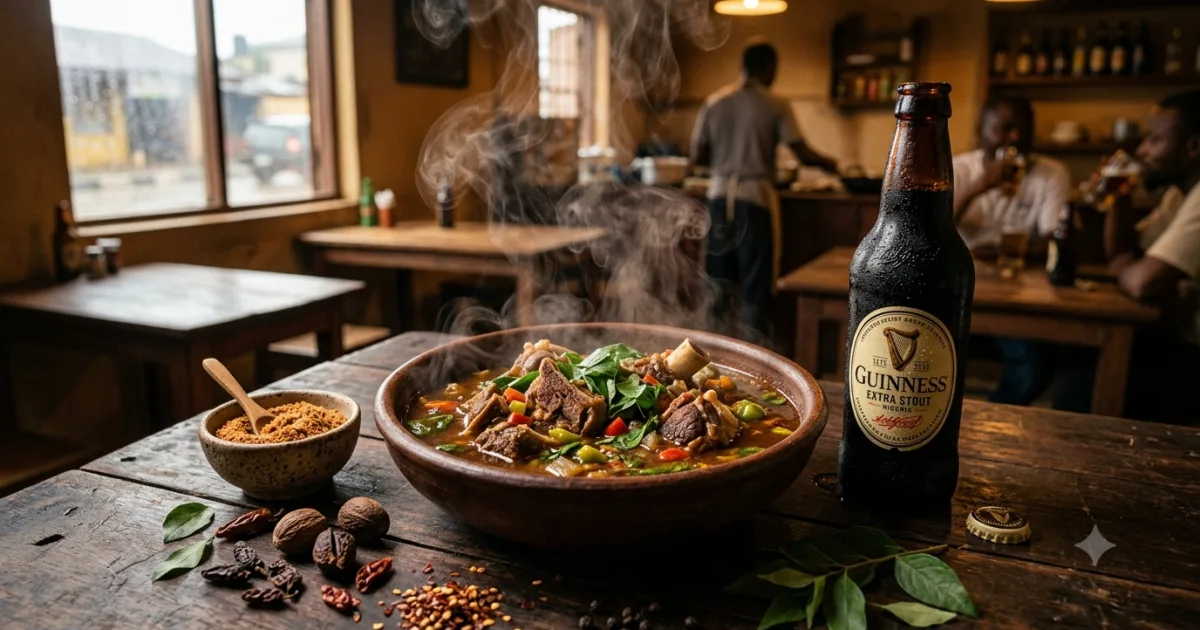
📌 Quick Summary: Nigerian pepper soup is a light, intensely spiced broth made with assorted meat or fish, water, crayfish, scent leaves, and the distinctive pepper soup spice mix — ehuru (calabash nutmeg), uda (Negro pepper), uziza seeds, and utazi. It contains no palm oil and no thickener. The three most popular versions are goat meat pepper soup, catfish (point and kill) pepper soup, and chicken pepper soup. A pot serving 6 to 8 uses approximately 1kg of protein and takes 45 to 60 minutes total. This complete guide covers all three recipes, the correct pepper soup spice blend, the postpartum version for new mothers, how long it keeps, and what to serve with it.
Pepper soup occupies a unique position in Nigerian food culture. It is the soup you eat when you are ill and need something warming and restorative. It is the soup that welcomes a new baby — the postpartum version (served to mothers in the first weeks after delivery) is one of Nigeria’s most enduring culinary traditions. It is the soup that defines the atmosphere of Nigerian bars and “joints” — the spiced, steaming broth that arrives with cold beer and loud music on a Lagos Friday evening. And it is the soup that Nigerians the world over make when they are homesick and need something that tastes exactly like home. No palm oil. No thickener. Just broth, protein, and the distinctive warmth of the pepper soup spice blend. Here is how to make all three versions correctly.
What Makes Nigerian Pepper Soup Different From Regular Soup
The defining characteristic of Nigerian pepper soup is the spice blend — a combination of dried whole spices that produces a flavour profile unlike any other Nigerian soup. The primary spices are: ehuru (calabash nutmeg, Monodora myristica) — the most important spice, responsible for the characteristic warm, slightly bitter, intensely aromatic quality; uda (Negro pepper, Xylopia aethiopica) — adds the distinctive peppery heat that gives pepper soup its name and depth; uziza seeds (Piper guineense) — related to black pepper but more pungent and aromatic; and utazi leaf (Gongronema latifolium) — a slightly bitter leaf used in some regional versions. These spices are dried and ground together into the pepper soup spice mix sold in Nigerian markets. The second defining characteristic is the absence of palm oil and thickener — pepper soup is a clear, light broth, not a thick stew. This lightness is what makes it both restorative for the unwell and refreshing alongside drinks at a bar.
The Pepper Soup Spice Blend: Making It From Scratch vs Buying Ready-Made
| Spice | Local Name | Role in Pepper Soup |
| Calabash nutmeg | Ehuru | The primary flavour — warm, bitter, deeply aromatic. The most important spice. |
| Negro pepper | Uda | Peppery heat and depth. Also used medicinally for postpartum recovery. |
| West African pepper | Uziza seeds | Pungent, aromatic heat — different from both black pepper and atarodo. |
| Calabash nutmeg pod | Ehu | Used in Igbo-style pepper soup for additional flavour complexity. |
| Country onion | Atale pupa / Kirri | Adds warmth and complexity. Optional but authentic in northern Nigerian versions. |
To make the blend from scratch: dry-roast the whole spices (ehuru, uda, uziza) in a pan for 3 to 5 minutes until fragrant, then blend to a fine powder. Store in a sealed jar. This homemade blend has a significantly more vibrant flavour than most pre-packaged pepper soup spice mixes sold in supermarkets — which often contain fillers and lose their potency quickly. If using a ready-made mix, buy from a local Igbo or Yoruba market rather than from a supermarket — the freshness difference is significant.
Recipe 1: Goat Meat Pepper Soup — Serves 6 to 8
Ingredients
| Ingredient | Quantity | Notes |
| Goat meat (bone-in pieces) | 1kg | Bone-in pieces give the richest broth. Ask the butcher to cut into medium pieces. |
| Water | 1.5 to 2 litres | Enough to cover the meat generously |
| Pepper soup spice mix | 2 tablespoons | Homemade or market-bought |
| Ground crayfish | 2 tablespoons | Essential for depth |
| Scotch bonnet pepper (atarodo) | 2 to 3 (whole or blended) | Adjust to heat preference |
| Onion | 1 medium | Roughly chopped or sliced |
| Scent leaves (efirin/nchanwu) | A small handful | Added at the very end — do not overcook |
| Seasoning cubes | 2 | Maggi or Knorr |
| Salt | To taste |
Method
- Season and parboil the goat meat. Place the goat meat in a pot with the onion, 1 seasoning cube, and a pinch of salt. Add just enough water to cover the meat. Bring to a boil and cook for 10 minutes — this parboiling removes excess blood and fat that would otherwise cloud the broth. Drain and discard this first cooking water.
- Add fresh water and begin cooking the soup. Return the parboiled goat meat to the pot. Add 1.5 to 2 litres of fresh water. Bring to a boil. Add the pepper soup spice mix, ground crayfish, scotch bonnet peppers (whole or roughly blended), and remaining seasoning cube. Stir to combine.
- Cook until meat is tender. Reduce heat to medium and cook, covered, for 30 to 40 minutes until the goat meat is fully tender. Goat meat takes longer than chicken but shorter than beef — test by pressing a piece with a fork. It should yield easily without resistance.
- Season to taste. Add salt if needed. The broth should be deeply flavoured — savoury, spiced, with a clear heat from both the scotch bonnet and the pepper soup spices. If the spice flavour is too strong, add a small amount of hot water to balance. If too mild, add more pepper soup spice mix.
- Add scent leaves and finish. Tear the scent leaves roughly and add to the pot. Do not stir vigorously — allow them to wilt gently in the hot broth for 1 to 2 minutes. Remove from heat immediately. Scent leaves lose their fresh, aromatic quality very quickly — they should be bright green and fragrant, not dark and wilted.
Recipe 2: Catfish (Point and Kill) Pepper Soup — Serves 6 to 8
Catfish pepper soup is the version most associated with Nigerian bars and outdoor joints — the “point and kill” tradition where you select your live catfish and it is prepared fresh. The characteristic slightly sweet, earthy flavour of fresh catfish pairs with the pepper soup spice blend in a way that no other protein quite matches.
Ingredients
| Ingredient | Quantity | Notes |
| Fresh catfish (cleaned and cut) | 1kg to 1.2kg | Ask the fishmonger to clean, gut, and cut into sections. Remove the skin if you prefer a less earthy flavour — traditional point and kill includes the skin. |
| Water | 1.5 litres | |
| Pepper soup spice mix | 2 tablespoons | |
| Ground crayfish | 2 tablespoons | |
| Scotch bonnet peppers | 2 to 3 | |
| Onion | 1 medium | |
| Scent leaves | Small handful | |
| Utazi leaf (optional) | 3 to 4 leaves, torn | Adds slight bitterness that cuts through the catfish earthiness. Traditional in Igbo-style catfish pepper soup. |
| Seasoning cubes | 1 to 2 | |
| Salt | To taste |
Method
- Clean the catfish thoroughly. Rub the catfish pieces with coarse salt and hot water to remove the slime coating — catfish produces significant slime that, if not removed, gives the soup an unpleasant texture. Rinse under running water until the water runs clear. This step is not optional for catfish pepper soup.
- Build the broth. In a pot, bring 1.5 litres of water to a boil. Add the pepper soup spice mix, ground crayfish, scotch bonnet peppers, onion, and seasoning cube. Simmer for 5 minutes to infuse the spices into the water before adding the fish.
- Add the catfish. Place the catfish pieces into the seasoned broth. Reduce to medium heat. Cook for 15 to 20 minutes until the catfish is fully cooked — the flesh should flake easily when pressed with a fork. Do not stir vigorously or the fish will break apart.
- Season and finish with leaves. Taste and adjust salt and seasoning. Add the scent leaves and utazi (if using) in the last 2 minutes of cooking. Remove from heat immediately when the leaves have just wilted.
Recipe 3: Chicken Pepper Soup — Serves 6 to 8
Chicken pepper soup is the mildest of the three versions and the most commonly made for postpartum recovery, children’s meals, and those who prefer a lighter heat. It is also the most forgiving to make — chicken cooks faster than goat meat and has a neutral flavour that shows the pepper soup spices clearly.
Ingredients
| Ingredient | Quantity | Notes |
| Chicken pieces (bone-in) | 1kg | Thighs and drumsticks give the richest broth. Breast pieces give lighter broth. |
| Water | 1.5 litres | |
| Pepper soup spice mix | 1.5 tablespoons | Slightly less than goat — chicken absorbs spice more readily |
| Ground crayfish | 1.5 tablespoons | |
| Scotch bonnet peppers | 1 to 2 | Fewer for the postpartum version — reduce heat significantly |
| Onion | 1 medium | |
| Scent leaves | Small handful | |
| Seasoning cubes | 1 to 2 | |
| Salt | To taste |
Method
- Season and parboil the chicken. Season with onion and seasoning cube. Parboil for 10 minutes in minimal water. Drain. This removes excess fat — particularly important for chicken, which releases significant fat that can make the broth greasy.
- Build the broth and cook. Add fresh water, pepper soup spice mix, ground crayfish, scotch bonnet, and remaining seasoning. Bring to a boil. Cook on medium heat for 25 to 35 minutes until the chicken is fully tender and the broth is richly flavoured.
- Finish and serve. Season to taste. Add scent leaves, allow to wilt for 2 minutes, and remove from heat.
Pepper Soup for New Mothers: The Postpartum Version
In Igbo, Yoruba, and many other Nigerian cultural traditions, pepper soup — specifically the version made with uda (Negro pepper) and other warming spices — is served to mothers in the weeks immediately following childbirth. The belief, supported by both traditional knowledge and some nutritional research, is that the warming spices promote recovery, stimulate appetite, aid uterine contractions, and support breastmilk production. The postpartum version of pepper soup is typically made with goat meat or chicken — not catfish — and uses a more generous quantity of uda and ehuru than the standard recipe. The heat from scotch bonnet is often reduced or eliminated for mothers who are breastfeeding, as significant scotch bonnet consumption can affect breastmilk flavour. The postpartum version is typically given warm, not piping hot, and served with soft white rice or agidi (corn pudding) rather than the cold beer of the bar version.
How Long Does Pepper Soup Last?
| Storage Method | Duration |
| Refrigerated in sealed container | 3 to 4 days |
| Frozen | 2 to 3 months |
| Room temperature (Nigeria’s climate) | Do not store — consume within 4 to 6 hours or refrigerate |
What to Eat With Nigerian Pepper Soup
Pepper soup is most commonly eaten as a standalone soup — drunk from a bowl like a broth, with pieces of meat or fish eaten separately. It is also served with: white rice (a very popular combination for chicken or goat meat pepper soup); agidi or ogi (corn pudding or pap — the traditional pairing for the postpartum version); boiled yam or boiled plantain; and in bar settings, with cold Guinness, beer, or soft drinks. The lightness of pepper soup makes it a natural companion to drinks in a way that thicker soups are not — its heat opens the appetite rather than filling it.
Common Mistakes That Ruin Pepper Soup
1. Using Too Little Spice
Pepper soup without sufficient pepper soup spice mix tastes like a generic seasoned broth, not the distinctive aromatic soup it should be. Use at least 2 tablespoons for a kilogram of protein in a 1.5-litre broth. Taste after 20 minutes and add more spice if the characteristic warmth and bitterness is not present.
2. Not Parboiling the Meat First
Skipping the parboil step for goat meat and chicken produces a cloudy, slightly bitter broth from the blood and initial impurities released by the meat. Parboil, drain the first water, and start the soup fresh. The extra 10 minutes is worth the clarity and cleanliness of flavour it produces.
3. Overcooking the Scent Leaves
Scent leaves added too early lose their fresh, aromatic quality and turn dark and slightly bitter. Add them in the last 2 minutes only. They should be bright green when you serve the soup.
4. Not Cleaning Catfish Properly
Catfish slime left uncleaned produces an unpleasant texture in the finished soup. Scrub the fish pieces with coarse salt and hot water and rinse thoroughly before cooking.
Frequently Asked Questions
What spices are in Nigerian pepper soup?
The core spices are ehuru (calabash nutmeg), uda (Negro pepper), and uziza seeds — ground together into the pepper soup spice mix. Additional spices may include country onion (kirri) and ehu (calabash nutmeg pod). These are sold pre-blended as “pepper soup spice” in Nigerian markets and supermarkets.
Does pepper soup have palm oil?
No. Authentic Nigerian pepper soup contains no palm oil. It is a clear broth — the only fat comes from the natural fat of the meat or fish used. This is what makes it light, restorative, and suitable for new mothers and the unwell.
Can I make pepper soup without crayfish?
Yes — but the flavour will be noticeably less complex. Ground crayfish provides the umami backbone of pepper soup. If unavailable, a quality fish stock or bouillon can partially substitute, but crayfish is preferred.
What is the difference between pepper soup and regular Nigerian soup?
Nigerian pepper soup is a clear, thin broth with no palm oil and no thickener (no egusi, no okra, no ogbono). Regular Nigerian soups are thick stews — egusi, efo riro, okra soup — built on a palm oil base. Pepper soup is closer to a consommé or a spiced broth than to a thick soup or stew.
Why is pepper soup called “point and kill” at bars?
The “point and kill” name refers specifically to catfish pepper soup served at Nigerian bar restaurants, where the customer physically points to a live catfish in a tank or basin, and the fish is killed and prepared fresh for their order. The name has become synonymous with catfish pepper soup regardless of whether the catfish was literally chosen live.
How much pepper soup spice should I use per kg of meat?
2 tablespoons of pepper soup spice mix per kilogram of meat in 1.5 litres of water is a good starting point. Taste after 20 minutes and adjust upward if the characteristic warmth and bitterness is too mild. The spice intensity is a matter of personal preference — some people prefer a very subtle spice background, others want a powerfully aromatic broth.
Sources
- Original recipe — NaijaSabi Lifestyle Desk, September 2026
- Nigerian culinary tradition — pepper soup preparation documented across Igbo, Yoruba, Ijaw and Hausa-Fulani cooking practices
Last updated: 8 September 2026 · NaijaSabi Lifestyle Desk.




0 Comments
No comments yet. Be the first to share your thoughts!