




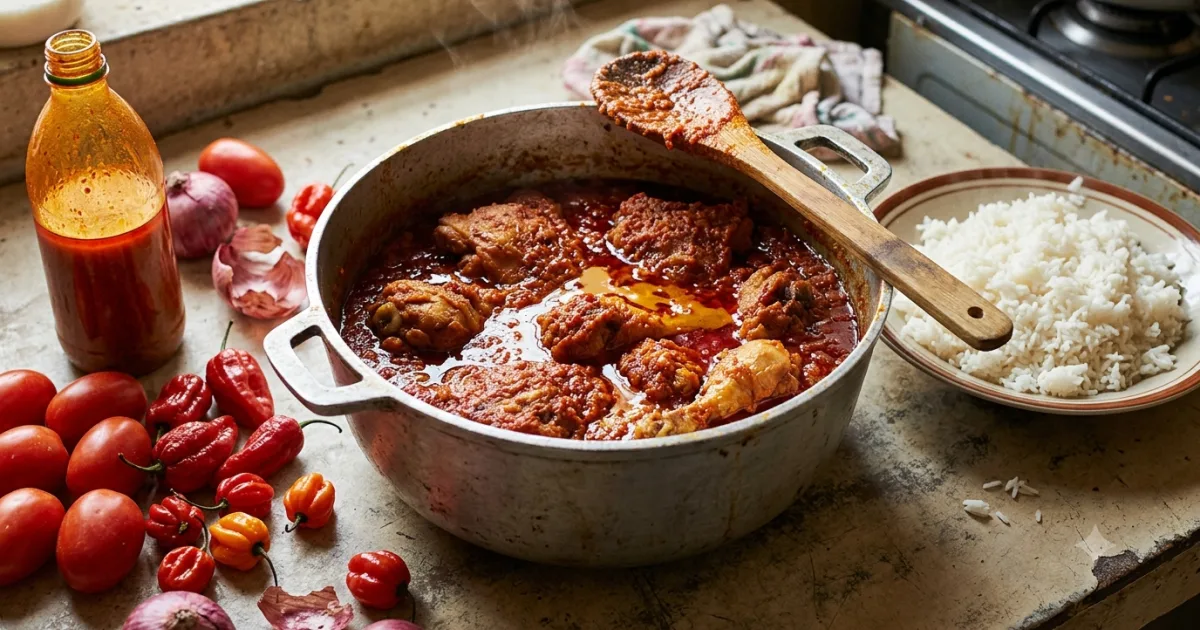
📌 Quick Summary: Nigerian pepper stew (also called ata dindin, tomato stew, or Nigerian base stew) is the foundational sauce of Nigerian cooking — made from fresh tomatoes, red bell peppers (tatashe), scotch bonnet peppers, onion, palm oil or vegetable oil, seasoning cubes, and your choice of protein. It is eaten with rice, yam, spaghetti, and bread, and forms the base of dozens of other Nigerian dishes. A pot serving 8 to 10 uses 6 large tomatoes, 3 tatashe, 2 scotch bonnet, and ½ cup of oil. The key technique is frying the blended pepper mixture until the oil floats on top — typically 30 to 45 minutes. This complete guide covers the basic stew recipe, chicken stew, beef stew, fish stew, and the ata dindin (deep-fried pepper) variation.
If there is one recipe that underpins Nigerian cooking more than any other, it is this one. Nigerian pepper stew — the tomato and pepper base sauce that every Nigerian home cook makes every week — is not merely a dish. It is infrastructure. It is the foundation of jollof rice, the sauce over white rice, the gravy for yam, the companion to spaghetti, the filling for bread at breakfast. Master this stew and you have mastered the core technique on which the majority of Nigerian savoury cooking is built. Get it wrong and almost everything else suffers. This complete guide covers every version of the stew, the correct frying technique, and the proteins that make each version distinct.
Understanding the Nigerian Stew Family
Nigerian pepper stew is not a single recipe — it is a family of preparations that share a common base of blended fresh peppers and tomatoes fried in oil, differentiated by protein addition, oil type, and technique. The main members of this family: Basic tomato stew (served with white rice, yam, or spaghetti — no specific protein branding, versatile). Chicken stew (the party version — fried or grilled chicken in the tomato base). Beef stew (richer, more savoury, with beef pieces and stock). Fish stew (lighter and fresher — typically with fried or smoked fish). Ata dindin (the Yoruba deep-fried pepper version — oil-heavy, the accompanying sauce for amala, ofada rice, and other traditional Yoruba meals). Understanding that these are all variations of the same technique allows you to master the base recipe once and adapt it across contexts.
The Base Pepper Stew: Ingredients
| Ingredient | Quantity | Notes |
| Fresh plum tomatoes | 6 large (approximately 600g) | Roma/plum tomatoes are preferred — they have less water content than regular tomatoes and reduce faster during frying |
| Red bell pepper (tatashe) | 3 large | Essential for body, sweetness, and the characteristic deep red colour of Nigerian stew |
| Scotch bonnet pepper (atarodo) | 2 to 3 | Adjust to heat preference |
| Onion | 2 medium | One blended with the peppers, one sliced for frying |
| Palm oil or vegetable oil | ½ cup (120ml) | Palm oil gives the deeper reddish-orange colour and the characteristic Nigerian stew flavour. Vegetable oil produces a lighter, cleaner stew. Many Nigerian cooks use a combination — 2 tablespoons palm oil + 4 tablespoons vegetable oil. |
| Seasoning cubes | 2 | Maggi or Knorr |
| Salt | To taste | |
| Dried thyme | ½ teaspoon (optional) | Adds depth |
| Curry powder | ½ teaspoon (optional) | Small quantity deepens colour and adds warmth without a pronounced curry flavour |
Step-by-Step: The Base Stew Method
Step 1: Blend the Peppers
Quarter the tomatoes, tatashe, and scotch bonnet. Remove the seeds from the tatashe for a milder, less bitter stew — leave them in for more heat and depth. Add half the onion (roughly chopped). Blend until smooth. Do not add water — the vegetables contain sufficient moisture. A watery blend produces stew that takes longer to fry down and has a thinner final consistency.
Step 2: Pre-cook the Blended Pepper Mixture
Pour the blended mixture into a pot. Bring to a boil over medium-high heat and cook, stirring occasionally, for 15 to 20 minutes until the water content has reduced by roughly half and the mixture has darkened slightly. This pre-cooking step (sometimes called “drying” the pepper) significantly reduces the frying time in the next step and produces a more concentrated, less acidic stew. It also reduces the aggressive splattering that raw pepper mixture produces when it hits hot oil.
Step 3: Fry the Pepper in Hot Oil — The Critical Step
Heat the oil in a wide, deep pot over medium heat. Slice the second onion and fry in the oil until golden — 4 to 5 minutes. Add the pre-cooked pepper mixture to the hot oil. The mixture will sizzle intensely. Reduce heat to medium-low and fry, stirring every 3 to 4 minutes, for 30 to 45 minutes. This is the step that most determines stew quality. The blended pepper must be fried until all raw pepper sourness is gone and the oil has fully separated — floating visibly on top of the stew. The stew should change colour from bright red-orange to a deeper, darker brick red. Taste after 25 minutes — if the stew still tastes raw, sharp, or acidic, it needs more frying. A properly fried Nigerian stew should taste rich, slightly sweet from the tatashe, and have lost all raw pepper sharpness.
Step 4: Season and Add Protein
Add crumbled seasoning cubes, salt, thyme, and curry (if using). Stir well. Add your pre-cooked protein at this stage — fried chicken, boiled beef, fried fish — and stir to coat in the stew. Add 1 to 2 cups of meat or chicken stock if the stew seems too thick. Simmer for 10 to 15 minutes on medium-low heat to allow the protein to absorb the stew flavour. Taste and adjust seasoning.
Chicken Stew (Party Stew)
Follow the base recipe above. The key difference from everyday stew is the quality and preparation of the chicken: season chicken well with curry, thyme, garlic, ginger, onion, and seasoning cubes. Parboil until just cooked. Fry the parboiled chicken in oil until golden and slightly crispy on the outside. Add the fried chicken to the finished stew base in Step 4. The frying of the chicken before adding to the stew — not boiling it directly in the stew — is the technique that produces the restaurant-quality party chicken stew that most Nigerian home cooks aspire to.
Beef Stew
Season beef with onion, seasoning cubes, salt, and thyme. Boil until tender. Remove beef from stock — reserve all stock. Optionally fry the boiled beef briefly in oil until lightly browned (adds flavour and texture — not strictly necessary but common in Nigerian cooking). Follow the base stew recipe. In Step 4, add the beef and 2 cups of the reserved stock. The beef stock enriches the stew significantly — beef stew made with good stock is richer and more complex than the same recipe made with water.
Ata Dindin: The Yoruba Deep-Fried Pepper Stew
Ata dindin (Yoruba: “fried pepper”) is the oil-heavy, deeply caramelised version of Nigerian pepper stew that accompanies ofada rice, amala, and other traditional Yoruba dishes. The difference from standard stew: double the oil quantity (1 cup per standard batch), skip the tatashe or use less (for a sharper, more intense pepper flavour), fry for longer (45 to 60 minutes) until the pepper is almost fried rather than simmered, and add iru (locust beans) during frying for depth. The result is a darker, oilier, more intensely flavoured stew that is deliberately richer and less tomato-sweet than standard stew.
Common Mistakes
1. Under-frying the Pepper Mixture
The most common stew mistake in Nigerian cooking. Under-fried stew tastes raw, acidic, and harsh. The oil must fully separate and float on top before the stew is considered properly fried. This takes a minimum of 30 minutes on medium-low heat for a standard batch — do not rush it.
2. Using Too Much Water in the Blend
Water added during blending extends frying time by 15 to 30 minutes as the extra liquid must evaporate before proper frying can occur. Blend only the vegetables — no added water.
3. Frying on Too High Heat
High heat causes the outside of the stew to char before the inside cooks through — producing burnt edges and raw centre. Medium-low heat and patient stirring is the correct approach.
Frequently Asked Questions
What is Nigerian stew made of?
Fresh tomatoes, red bell peppers (tatashe), scotch bonnet peppers, onion, palm oil or vegetable oil, seasoning cubes, and protein (chicken, beef, or fish). The tomato-tatashe base blended and fried in oil is what makes it distinctly Nigerian — the tatashe is the element most unfamiliar to non-Nigerian cooks.
How long does Nigerian stew last in the fridge?
4 to 5 days refrigerated in a sealed container. Frozen: 3 months. Nigerian stew is an ideal batch cooking item — make a large pot weekly and freeze in portion sizes.
What is the difference between Nigerian stew and Nigerian soup?
Nigerian stew is a tomato-based sauce made with fresh peppers fried in oil — it is eaten over rice, yam, or with bread. Nigerian soup refers to the thick, palm-oil-based soups (egusi, efo riro, ogbono, okra) eaten with swallows like pounded yam and eba. Stew and soup are distinct categories in Nigerian cooking, though both use pepper and palm oil.
Sources
- Original recipe — NaijaSabi Lifestyle Desk, September 2026
- Nigerian culinary tradition — tomato stew preparation documented across Yoruba, Igbo and Hausa cooking practices
Last updated: 12 September 2026 · NaijaSabi Lifestyle Desk.
Nigerian Stew as a Business: What Caterers Know
Nigerian pepper stew is one of the most commercially produced foods in Nigeria — every restaurant, canteen, school dining hall, hospital kitchen, and event caterer produces it in large quantities daily. The economics of stew production at scale are compelling: a batch of stew made from ₦3,000 to ₦5,000 in raw ingredients (tomatoes, peppers, oil, seasoning, protein) produces 20 to 30 portions sold at ₦500 to ₦1,500 per plate with rice — revenue of ₦10,000 to ₦45,000 per batch. Nigerian stew caterers who supply offices, schools, and events operate on lower margins per batch but higher volumes — the same base stew recipe cooked in a 50-litre pot produces 80 to 100 portions per batch. For a home caterer building a client base for office lunch delivery or event catering, mastering Nigerian pepper stew at consistent quality and large-batch scale is the foundational skill. The key challenges at scale: maintaining consistent spice levels across large batches (blend peppers in larger batches and taste-test before adding to the main oil fry), managing the longer frying time for large quantities (a 10-litre batch of blended pepper takes 60 to 90 minutes to properly fry), and keeping the protein additions fresh and appropriately cooked for the time between preparation and service. Nigerian stew reheats excellently — made the night before event service, it typically tastes better the following day as the flavours continue to develop. This make-ahead quality is one of the features that makes it central to the business model of most Nigerian caterers.
Storing Nigerian Stew: Batch Cooking for the Week
Nigerian pepper stew is one of the best foods for batch cooking and weekly meal prep. A large pot of stew made on Sunday provides the protein-and-sauce base for the entire week’s meals — with white rice on Monday, yam on Tuesday, spaghetti on Wednesday, rice again Thursday, and bread on Friday. Refrigerated stew in a sealed container lasts 4 to 5 days without quality loss. Frozen stew lasts 3 to 6 months — freeze in portion sizes (individual meal portions in ziplock bags or small containers) so you can thaw exactly what you need without defrosting the entire batch. The practical approach for Nigerian batch cooking: make a large pot of base stew (without protein) on the weekend. Divide into portions and freeze. During the week, thaw one portion and add whatever protein is available — eggs in the morning, fried chicken at lunch, fish in the evening — producing a different meal from the same stew base throughout the week. This approach reduces the daily cooking time to the protein preparation only, significantly simplifying weekday meal preparation.



0 Comments
No comments yet. Be the first to share your thoughts!