




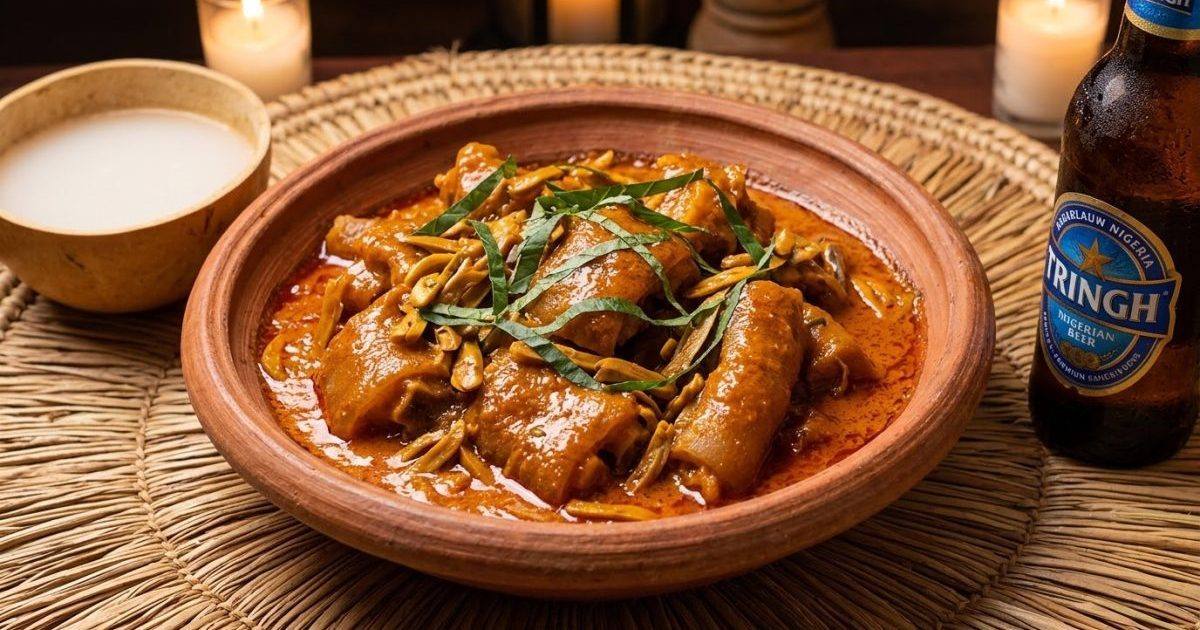
📌 Quick Summary: Nkwobi is a spicy Igbo delicacy made from cow foot (and sometimes cow tail or oxtail) cooked until tender, then tossed in a rich sauce of ground crayfish, utazi leaves, ugba (oil bean), potash (kaun), and palm oil. It is one of Nigeria’s most beloved restaurant dishes — an owambe and pepper soup joint staple across southeastern and Lagos markets. This step-by-step recipe covers selecting and cleaning the cow foot, the correct pressure cooker cooking time, making the authentic nkwobi sauce, the critical role of potash and utazi, and how to serve nkwobi the traditional way. Prep and cook time: 2 to 3 hours. Serves: 4 to 6.
Nkwobi is one of those Nigerian dishes that people order at a restaurant because they assume it is too difficult or too ingredient-specific to make at home. In reality, nkwobi is straightforward — the cooking time is long (cow foot needs time to become tender), but the technique is simple, and the ingredients are available at any Nigerian market. The most important element is getting the sauce right: the combination of potash (kaun), crayfish, palm oil, and utazi leaves creates the thick, spiced, slightly bitter sauce coating that makes nkwobi unmistakably itself. This guide covers every step, including the tricks that produce restaurant-quality nkwobi at home.
What Makes Nkwobi Different from Pepper Soup
Both nkwobi and cow foot pepper soup use the same primary protein — cow foot — but they are different dishes entirely. Pepper soup is a broth-based dish: the cow foot is cooked in spiced water and served in the cooking liquid. Nkwobi is a dry delicacy: the cow foot is cooked until very tender, then drained and coated in a thick sauce made from palm oil emulsified with potash (kaun), ground crayfish, utazi, ugba, and seasoning. The sauce clings to each piece of cow foot and is served without broth. The potash-palm oil emulsification step is what gives nkwobi its characteristic thick, creamy sauce texture — and it is the step that most home cooks get wrong if they have not made nkwobi before.
Ingredients
| Ingredient | Quantity | Notes |
| Cow foot (fresh, cleaned and chopped into pieces) | 1kg | Ask your butcher to chop into 5 to 7cm pieces. Include the skin — it becomes gelatinous and rich when fully cooked. |
| Palm oil (red) | 4 to 5 tablespoons | Use good-quality Nigerian red palm oil. The colour and depth of flavour comes from the palm oil. |
| Potash (kaun / akanwu / edible potash) | 1 teaspoon (dissolved in 3 tablespoons warm water, then strained) | The critical emulsification ingredient. Dissolved potash added to palm oil turns it from red to a thick, yellowish-orange cream — this is the nkwobi sauce base. Available at Nigerian markets. Do not substitute with baking soda. |
| Ground crayfish | 2 tablespoons | Freshly ground or good-quality packaged. Crayfish is a primary flavour component. |
| Utazi leaves (Gongronema latifolium) | Small handful (approximately 10 to 15 leaves) | Sliced into thin strips. Utazi has a characteristic bitter taste that balances the richness of the nkwobi sauce. Use fresh — dried utazi loses most of its flavour impact. |
| Ugba (oil bean / ukpaka) | ½ cup | Sliced fermented oil bean. Adds depth and texture. Optional but traditional in Igbo nkwobi. |
| Scotch bonnet (atarodo) or fresh pepper | 1 to 2, ground | Adjust to your heat preference. Nkwobi should be spicy but not overwhelming. |
| Stock cubes | 1 to 2 | Maggi or Knorr |
| Salt | To taste | |
| Onion | 1 medium | Halved, for cooking the cow foot |
Equipment
A pressure cooker is strongly recommended — it reduces the cow foot cooking time from 3 to 4 hours on a regular pot to 45 to 60 minutes. Without a pressure cooker, cook in a regular pot with a tight lid on low-medium heat, checking and adding water as needed, until the meat is completely tender (soft enough that the bone pulls away easily). A large mixing bowl and wooden spoon for making the sauce. Sharp knife for slicing utazi and ugba.
Step-by-Step Nkwobi Recipe
Step 1: Clean and Parboil the Cow Foot
Wash the cow foot pieces thoroughly under running water. Check for any remaining hair — singe off any hair over a flame and scrub clean. Place in a pot, cover with water, and parboil for 5 minutes. Drain and discard this first water — it removes impurities and any unpleasant odour. Return to the clean pot.
Step 2: Cook the Cow Foot Until Tender
Add fresh water to cover the cow foot pieces completely. Add the halved onion, one stock cube, and salt. If using a pressure cooker: cook under pressure for 45 to 60 minutes. If using a regular pot: simmer on low-medium heat for 2.5 to 3.5 hours, checking every 30 minutes and topping up water as needed. The cow foot is ready when the meat is very tender — it should pull away from the bone with gentle pressure, and the skin and cartilage around the joints should be soft and gelatinous. Do not undercook — tough nkwobi is the most common home-cooking failure. When done, drain and set aside. Reserve a small amount of the cooking stock (2 to 3 tablespoons) for adjusting sauce consistency if needed.
Step 3: Make the Potash Solution
This is the most important technique step in the entire recipe. Dissolve 1 teaspoon of potash in 3 tablespoons of warm water. Stir until fully dissolved. Strain through a fine sieve or cloth to remove any undissolved particles — undissolved potash chunks in the sauce create an unpleasant bitter taste. Set the strained potash water aside.
Step 4: Make the Nkwobi Sauce
In a large, wide saucepan or pot (large enough to hold all the cow foot pieces), warm the palm oil over very low heat — just enough to liquefy it if it has solidified. Do not fry or overheat the palm oil. Remove from heat. Add the strained potash water to the warm palm oil gradually, stirring continuously. As the potash water meets the palm oil, a chemical reaction begins — the mixture will emulsify, changing from red palm oil to a thick, pale yellow-orange cream. This is exactly what you want. Continue stirring until the mixture is fully emulsified and has a consistent, thick, creamy texture. This step should take 2 to 3 minutes of stirring. Now add the ground crayfish, ground scotch bonnet pepper, the second stock cube (crumbled), and salt to taste. Stir to combine everything into the sauce.
Step 5: Combine and Finish
Add the well-drained, cooked cow foot pieces to the sauce in the pan. Turn the heat to very low. Toss and stir gently to coat every piece of cow foot thoroughly in the sauce — use a wooden spoon and be gentle with the pieces so they do not break apart. Cook on very low heat for 3 to 5 minutes, stirring gently, until the cow foot is heated through and completely coated. If the sauce is too thick, add 1 tablespoon of the reserved cooking stock at a time. Add half the utazi strips and the ugba slices. Toss to combine. Taste and adjust salt and pepper.
Step 6: Serve
Serve nkwobi in a wide earthenware or wooden bowl — the traditional serving vessel. Garnish the top with the remaining utazi strips arranged across the top of the dish. Nkwobi is served immediately while warm. It is a standalone dish — not served with a swallow or side. It is a social sharing dish, typically eaten at the table with others, and pairs perfectly with cold palm wine, chilled beer, or fresh coconut water.
Tips for Restaurant-Quality Nkwobi at Home
Five details that produce consistently excellent nkwobi. First: cook the cow foot completely — rubber-textured, under-cooked cow foot is the most common nkwobi failure. When in doubt, give it another 15 minutes. Second: do not fry the palm oil for the sauce — you are making an emulsion, not a stir-fry base. The palm oil should be warm but not hot when you add the potash water. Third: use fresh utazi — dried utazi is a poor substitute. The fresh leaf’s bitter note is essential to balance the dish. Fourth: don’t skip the ugba — the fermented oil bean slices add a savoury, earthy depth that lifts the whole dish from good to great. Fifth: season the cooking water well — the cow foot absorbs seasonings during the long cook time. Under-seasoned cow foot produces flat-tasting nkwobi regardless of how good the sauce is.
Nkwobi Variations
Cow tail nkwobi: substitute cow tail for cow foot. Cow tail is meatier and some people prefer it for nkwobi — the preparation and sauce are identical, but cow tail is typically more expensive than cow foot. Oxtail nkwobi: oxtail works beautifully with the nkwobi sauce — the marbling produces an exceptionally rich and flavourful result. Slightly shorter cooking time than cow foot (40 to 50 minutes in a pressure cooker). Nkwobi without ugba: omit the ugba for those who do not enjoy its strong fermented flavour — the dish is still authentic and delicious, though the ugba’s textural and flavour contribution will be missed. Some Igbo homes make nkwobi without ugba as a matter of preference.
Frequently Asked Questions
What is the difference between nkwobi and isi ewu?
Both are traditional Igbo delicacies served in the same thick potash-palm oil sauce with utazi and crayfish. Nkwobi uses cow foot (and sometimes cow tail). Isi ewu (“goat head”) uses the entire goat head — brain, skin, and all — cooked and served in the same sauce. Both are restaurant staples across Igboland and in Nigerian cities.
What does potash (kaun) do in nkwobi?
Potash is the emulsifying agent that transforms red palm oil into the characteristic thick, yellowish-orange nkwobi sauce. Without potash, you cannot make the emulsified sauce — you would have liquid palm oil with spices rather than the creamy coating. Potash also slightly tenderises the meat and has been used in Nigerian cooking for centuries for its culinary properties.
Can I make nkwobi without a pressure cooker?
Yes — cook the cow foot in a regular pot on low-medium heat for 3 to 4 hours, checking and topping up water every 30 to 45 minutes. The result is the same, just significantly more time-consuming. A pressure cooker is worth the investment if you make tough meat dishes regularly.
Nkwobi as a Business: The Restaurant Opportunity
Nkwobi is one of Nigeria’s most reliably ordered restaurant dishes — it appears on the menu of virtually every bar, pepper soup joint, and Igbo-owned restaurant from Enugu to Lagos, and consistently generates repeat customers who specifically seek it out. The business case for adding nkwobi to a food service menu: the ingredients are low-cost (cow foot is one of the cheapest protein cuts available in Nigerian markets), the production process is straightforward once mastered, and the selling price is premium — nkwobi is priced as a delicacy, not a cheap snack, typically selling at ₦2,500 to ₦8,000 per portion depending on the establishment’s market positioning and the size of the serving. The margin on correctly prepared, well-seasoned nkwobi is among the highest of any protein dish in the Nigerian restaurant and bar menu. The nkwobi business extends beyond restaurants — catering for owambe parties, corporate events, and cultural celebrations where a traditional Igbo spread is requested consistently includes nkwobi as a premium addition. A caterer who has mastered making nkwobi at scale (for 100 to 500 people) and is known for the quality of their sauce and the tenderness of their cow foot occupies a market position that very few competitors can match, because most caterers avoid cow foot due to the long cooking time required and the technique involved in the sauce emulsification. These are exactly the barriers that protect a skilled nkwobi specialist from price competition. Nkwobi is ultimately a dish that rewards the cook who pays attention: to the tenderness of the meat, to the emulsification of the sauce, and to the balance of bitter utazi against rich palm oil and savoury crayfish — details that are simple once understood but that separate memorable nkwobi from the forgettable version.
Sources
- Original recipe — NaijaSabi Lifestyle Desk, September 2026
Last updated: 28 September 2026 · NaijaSabi Lifestyle Desk.




0 Comments
No comments yet. Be the first to share your thoughts!