




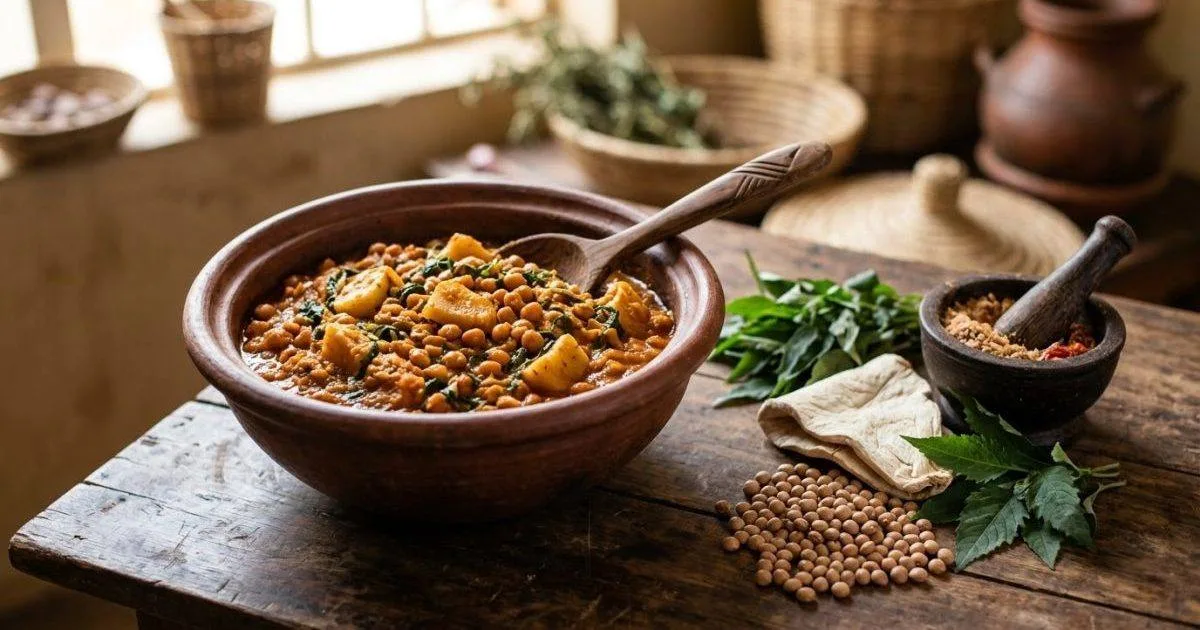
📌 Quick Summary: Fio fio is a traditional Igbo dish from Enugu and Nsukka — pigeon peas (fio fio) cooked with achicha (dried, fermented cocoyam flakes), palm oil, crayfish, utazi, and pepper. It is a deeply nourishing, protein-rich dish with a distinctive earthy flavour that comes from the combination of the pigeon peas, the fermented cocoyam, and the utazi. This recipe covers preparing the pigeon peas (soaking and sorting), rehydrating the achicha, the correct cooking sequence, seasoning, and serving. Prep time: 30 minutes (plus overnight soak). Cook time: 1.5 to 2 hours. Serves: 4 to 6.
Fio fio is one of those traditional Nigerian foods that is deeply cherished within its home culture — Nsukka and Enugu in Igboland — but almost unknown outside it. It sits alongside abacha, ofe akwu, and ofe onugbu as a dish that defines Igbo culinary identity: simple, nutritious, made from ingredients that are local and seasonal, and carrying in every bowl the flavour memory of grandmothers’ kitchens and village life. The pigeon pea — called fio fio in Igbo, otili in Yoruba, and aduwa in Hausa — is one of Nigeria’s most nutritious legumes: high in protein (approximately 20 to 24 percent by weight), rich in fibre, and a good source of iron and folate. Combined with achicha (dried fermented cocoyam flakes that add body, earthiness, and a unique texture) and the signature Nigerian spice and palm oil base, fio fio is a complete, satisfying meal that deserves to be cooked in far more Nigerian homes than it currently is.
About the Ingredients
Fio fio (pigeon peas): Sold dried at Igbo markets across Nigeria and at some Lagos markets with significant Igbo trader presence. Look for plump, evenly coloured, cream-beige seeds without insect damage. Fresh pigeon peas (seasonal) are used by some cooks instead of dried — they require no soaking and cook more quickly. Achicha (dried cocoyam flakes): The most distinctive ingredient in this dish. Achicha is cocoyam (ede) that has been cooked, peeled, sliced, and dried — sometimes also lightly fermented before drying, which gives it a distinctive earthy, slightly sour aroma when rehydrated. It is sold at Igbo markets in Nsukka, Enugu, and Onitsha, and by specialist Nigerian food sellers in Lagos and Abuja. Achicha can be omitted if completely unavailable, but the dish will be significantly different without it — it provides the characteristic body and earthy flavour that makes fio fio itself. Utazi leaves (Gongronema latifolium): The same bitter leaf used in nkwobi and some Igbo soups. It adds a pleasant, slightly bitter note that balances the earthiness of the pigeon peas and achicha. Available at most Nigerian markets.
Ingredients
| Ingredient | Quantity | Notes |
| Dried fio fio (pigeon peas) | 2 cups | Soaked overnight in cold water, then drained and rinsed. Soaking is essential — it reduces cooking time significantly and removes some of the indigestible compounds that cause bloating. |
| Achicha (dried cocoyam flakes) | 1 to 1.5 cups | Soaked in warm water for 30 minutes before use to rehydrate. The soaking water takes on a slightly earthy colour — you can include this water in the cooking or discard and use fresh water. |
| Palm oil (red) | 3 to 4 tablespoons | |
| Ground crayfish | 2 tablespoons | |
| Utazi leaves | Small handful (10 to 15 leaves) | Sliced into strips. Fresh preferred. |
| Scotch bonnet pepper (atarodo) or ground pepper | 1 to 2 peppers or 1 teaspoon ground | Adjust to heat preference |
| Onion | 1 medium | Sliced or roughly chopped |
| Stock cubes | 1 to 2 | Maggi or Knorr |
| Salt | To taste | |
| Water | As needed | |
| Optional additions: Stockfish (okporoko), dried fish (panla), or smoked fish | To taste | Many traditional recipes include stockfish or dried fish for added depth and protein |
Step-by-Step Fio Fio Recipe
Step 1: Soak and Prepare
The night before cooking: rinse the dried fio fio (pigeon peas) in cold water, then cover with plenty of cold water and leave to soak overnight (8 to 12 hours). They will swell significantly. The next day: drain and rinse the soaked pigeon peas. Sort through them and discard any that are discoloured, damaged, or didn’t swell. Soak the achicha in warm water for 30 minutes before you begin cooking. It will soften and expand. If using stockfish or dried fish, soak separately in warm water until soft, then clean and debone.
Step 2: Parboil the Pigeon Peas
Place the soaked, drained pigeon peas in a pot. Cover with fresh water (not the soaking water). Bring to a boil and cook for 10 minutes. Drain and discard this water. This parboiling step removes more of the compounds responsible for flatulence and produces a cleaner-tasting final dish. It is optional but recommended.
Step 3: Cook the Pigeon Peas
Return the parboiled pigeon peas to the pot. Add enough fresh water to cover by about 5cm. Add the onion, one stock cube, and a pinch of salt. Bring to a boil, then reduce heat to medium and cook for 45 minutes to 1 hour, until the peas are tender but not mushy — they should be soft all the way through but still hold their shape. The cooking time varies with the age of the dried peas — older, longer-stored peas take more time. Check and add more water if needed to keep the peas submerged. If using stockfish or dried fish, add them at this stage to cook with the peas and contribute flavour to the cooking liquid.
Step 4: Add the Achicha
Drain the rehydrated achicha. Add it to the pot with the cooked pigeon peas. Stir gently to combine. Add enough water so the mixture is just covered. Continue cooking on medium heat for 15 to 20 minutes, stirring occasionally, until the achicha has softened fully and begun to break down slightly, thickening the dish and creating the characteristic body of fio fio. The achicha should be tender but not dissolved completely — it should still be identifiable as soft flakes within the dish.
Step 5: Season and Add Palm Oil
Add the palm oil, ground crayfish, ground pepper, and the remaining stock cube. Stir thoroughly to distribute the palm oil evenly through the dish. Taste and adjust salt and pepper. Add half the sliced utazi leaves. The dish at this stage should have a thick, saucy consistency — not soup-like (it should not be watery) and not dry. If too wet, cook uncovered for a few more minutes to reduce. If too dry, add a small amount of water and stir.
Step 6: Final Simmer and Serve
Reduce heat to low and cook for a final 5 to 10 minutes, stirring gently. The flavours meld and deepen with this final simmer. Taste one final time and adjust seasoning. Transfer to a serving bowl and garnish with the remaining fresh utazi strips on top. Fio fio is served on its own as a complete meal — not with a swallow. It is filling and nutritious enough to be served alone, and in Nsukka tradition it is eaten morning, afternoon, or evening. It pairs beautifully with a cold drink.
Tips for the Best Fio Fio
Five details that consistently improve fio fio. Source your pigeon peas from a reliable market — old, stale pigeon peas never soften fully regardless of how long you cook them. If peas are not softening after 1 hour of cooking, add 1/4 teaspoon of baking soda to the water — this accelerates softening in alkaline conditions. Do not add salt until the peas are already tender — salt added at the beginning of cooking toughens legumes and significantly increases cooking time. Use enough palm oil — fio fio without adequate palm oil tastes flat. The oil distributes flavour, colour, and richness through the dish. Use fresh utazi, not dried — the bitter leaf’s essential role in balancing the dish’s earthiness requires its fresh form.
The Nutritional Value of Fio Fio
Fio fio (pigeon peas with achicha) is one of the most nutritionally complete traditional Igbo dishes. Pigeon peas provide approximately 21 grams of protein per 100 grams of cooked peas — comparable to many meat and fish sources — plus significant fibre, iron, folate, potassium, and B vitamins. The combination of pigeon peas (legume protein) with achicha (complex carbohydrate from cocoyam) creates a complementary amino acid profile that is particularly valuable in vegetarian and plant-based diets. Palm oil contributes vitamins A and E. The dish is high in fibre, low in saturated fat, and exceptionally filling — qualities that make it an excellent choice for Nigerians managing blood sugar (the fibre slows glucose absorption), watching weight (high satiety at moderate caloric density), or seeking affordable, protein-rich meals (pigeon peas and cocoyam are significantly cheaper than meat protein).
Frequently Asked Questions
What does fio fio taste like?
Fio fio has a distinctly earthy, slightly nutty flavour from the pigeon peas, layered with the fermented earthiness of the achicha, the richness of palm oil, the savoury depth of crayfish, and the slightly bitter freshness of utazi. It is a warm, deeply satisfying dish — substantial and complex without being heavy.
What is achicha in fio fio?
Achicha is dried, sometimes fermented, cocoyam flakes — a traditional Igbo food preservation method that transforms fresh cocoyam (ede) into a shelf-stable ingredient with a distinctive earthy flavour. In fio fio, it adds body, texture, and the characteristic earthy depth that distinguishes this dish from plain pigeon pea stew.
Can I make fio fio without achicha?
Yes — fio fio without achicha is essentially a spiced pigeon pea stew seasoned with palm oil, crayfish, and utazi. It is delicious but lacks the signature earthy, body-rich quality that achicha provides. If achicha is unavailable, the dish is still worth making — but sourcing achicha (available at Igbo markets in Enugu, Onitsha, and Lagos) for the authentic version is recommended. Fio fio is a dish worth rediscovering and sharing — a reminder that the most nourishing, most complex, and most culturally resonant Nigerian food does not always come from the best-known dishes, but often from the quieter regional traditions that have sustained communities for generations and deserve a wider audience than they currently have. Cook fio fio once with care and intention, and you will understand why the people of Nsukka have eaten it for centuries — and why it deserves a place in every Nigerian kitchen that values the full breadth of what Nigerian food can be.
Fio Fio in Igbo Culture and History
Pigeon peas have been cultivated and eaten in Igboland for centuries — they are one of the traditional subsistence crops of the Igbo agricultural system, grown alongside yam, cocoyam, and cassava in compound gardens and small plots. The name “fio fio” in Igbo is onomatopoeic — the sound of the peas being separated from their pods by hand. Achicha, the dried cocoyam component that accompanies fio fio in the traditional dish, represents the Igbo tradition of food preservation: fresh cocoyam is sliced and sun-dried (sometimes with a brief fermentation period) to create a shelf-stable food that can be stored through the dry season when fresh cocoyam is unavailable. The combination of fio fio and achicha is therefore not merely a flavour tradition but a practical nutritional strategy — the legume and the complex carbohydrate together provide a complete nutritional profile from ingredients that were available year-round in the traditional Igbo agricultural calendar. The dish is particularly associated with Nsukka local government area in Enugu State, which is considered the heartland of fio fio production and consumption. Nsukka is also the location of the University of Nigeria, and fio fio was for decades a staple of university canteen food there — eaten by students from across Nigeria who were introduced to it in their years at UNN. Many of Nigeria’s most accomplished alumni of the University of Nigeria have strong food memories of eating fio fio in Nsukka — a fact that has spread awareness of this underappreciated dish far beyond its home region through the networks and nostalgia of the Nigerian educated class.
Sources
- Original recipe — NaijaSabi Lifestyle Desk, September 2026
Last updated: 28 September 2026 · NaijaSabi Lifestyle Desk.




0 Comments
No comments yet. Be the first to share your thoughts!