




⚕️ Medical Disclaimer: This article is for educational purposes only. Sickle cell disease is a serious medical condition requiring specialist medical management. Always consult a haematologist or qualified doctor for diagnosis, treatment planning, and ongoing care.
📌 Quick Summary: Sickle cell disease (SCD) is Nigeria’s most common serious genetic disorder — Nigeria has the world’s highest burden of sickle cell disease, with approximately 150,000 babies born with SCD every year and an estimated 2 to 3 million Nigerians living with the condition. SCD is caused by inheriting the sickle cell gene (HbS) from both parents (SS genotype — the most severe form). Key symptoms: recurrent pain crises, anaemia, fatigue, frequent infections, and organ damage over time. The most important prevention tool: genotype testing before marriage or conception — when both parents carry the sickle trait (AS), there is a 25% chance each pregnancy will produce a child with SS disease. Treatment in Nigeria: hydroxyurea (significantly reduces crises), folic acid, penicillin prophylaxis, pain management, and regular monitoring. This guide covers genotypes explained, symptoms, crisis management, treatment options in Nigeria, and genotype testing before marriage.
Sickle cell disease carries a weight in Nigeria that is difficult to overstate. Nigeria accounts for approximately 75 percent of all sickle cell disease births in West Africa and roughly 25 percent of the global burden — yet the conversation about sickle cell in Nigerian homes, schools, and communities remains dominated by one question above all others: “What genotype is your partner?” This singular focus on genotype-based marriage compatibility advice is both culturally important and medically insufficient. Millions of Nigerians carry the sickle cell trait (AS genotype) without knowing it, genotype testing before marriage prevents new cases of the disease, but the estimated 2 to 3 million Nigerians already living with sickle cell disease need far more than prevention advice — they need accurate information about their condition, effective treatment options, and the support to live full, productive lives. This guide covers all of it.
Understanding Haemoglobin Genotypes in Nigeria
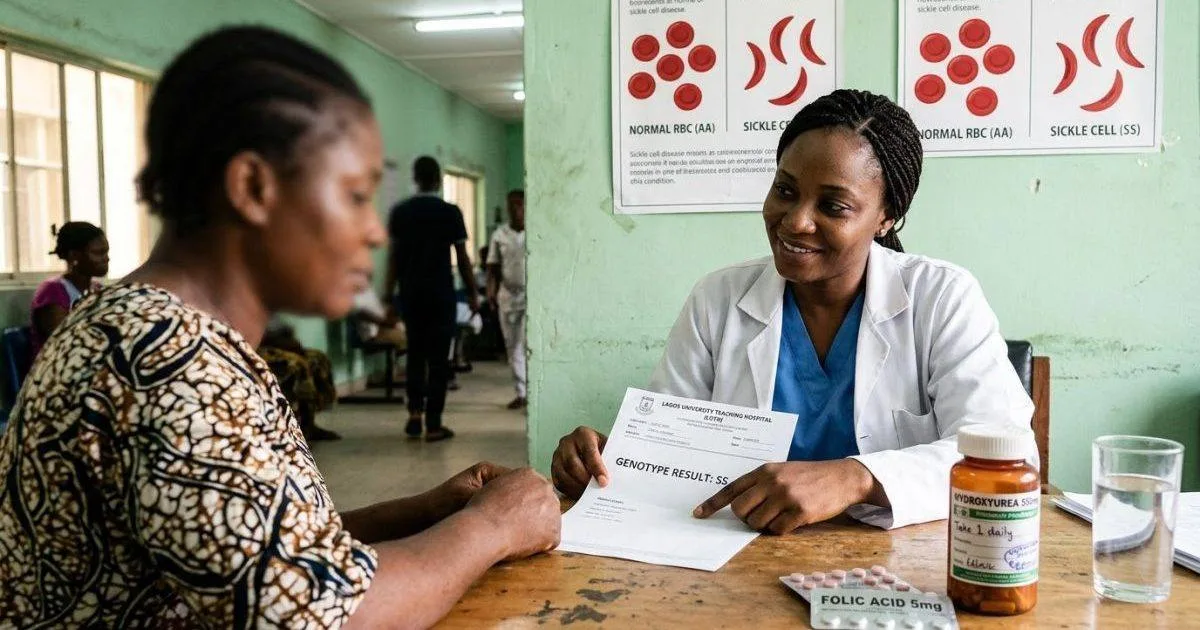
Sickle cell disease is caused by a mutation in the gene that produces haemoglobin — the protein in red blood cells that carries oxygen. The normal haemoglobin gene produces haemoglobin A (HbA). The sickle cell mutation produces haemoglobin S (HbS), which causes red blood cells to deform into a rigid, crescent (sickle) shape under conditions of low oxygen. These sickled cells are fragile, break down rapidly (causing anaemia), and obstruct small blood vessels (causing the pain crises and organ damage characteristic of the disease). Every person inherits two copies of the haemoglobin gene — one from each parent. The combination determines the genotype.
| Genotype | What It Means | Health Impact | Nigerian Prevalence |
| AA | Two normal haemoglobin genes. Does not carry or have sickle cell. | Normal haemoglobin function. No sickle cell disease, no trait. | Approximately 50-60% of Nigerians |
| AS | One normal (A) and one sickle (S) gene. Sickle cell TRAIT — a carrier. | Healthy under normal conditions. Rarely symptomatic. Can pass the S gene to children. | Approximately 25-30% of Nigerians |
| SS | Two sickle (S) genes. Sickle cell DISEASE — the most severe form. | Full sickle cell disease with recurrent crises, chronic anaemia, and organ complications. | Approximately 2-3% of Nigerians |
| SC | One sickle (S) and one haemoglobin C (C) gene. | Sickle cell disease — usually milder than SS but still clinically significant. | Less common than SS in Nigeria |
| AC | One normal (A) and one haemoglobin C (C) gene. | Carrier of haemoglobin C trait. Generally healthy. | Relatively uncommon in Nigeria |
Genotype and Marriage: The Critical Nigerian Conversation
The genetic risk calculation that every Nigerian couple should understand before having children. When an AS man and an AS woman have children together, each pregnancy has: 25 percent chance of AA (no disease, no trait), 50 percent chance of AS (carrier, no disease), and 25 percent chance of SS (sickle cell disease). This 1-in-4 risk is why “AS and AS should not marry” has become part of the Nigerian cultural conversation about relationships. The medical position is nuanced: the 25 percent risk per pregnancy means that an AS/AS couple who has four children will statistically have one child with SS disease — though random chance means actual outcomes vary. Some AS/AS couples have no SS children across multiple pregnancies; others have two or three. The risk is per pregnancy, not distributed across the family. For Nigerian couples where one or both partners are AS, the options include: proceeding with awareness of the 25 percent risk per pregnancy and preparing for the possibility of an SS child, pursuing preimplantation genetic diagnosis (PGD) during IVF to select embryos without SS genotype (available at specialist fertility centres in Lagos and Abuja), or adopting. The decision is deeply personal and involves religious, cultural, and ethical considerations that are ultimately the couple’s to make with full information and ideally genetic counselling from a specialist.
Symptoms and Signs of Sickle Cell Disease in Nigeria
Pain Crises (Vaso-Occlusive Episodes)
The most characteristic and often most debilitating feature of sickle cell disease. When sickled red blood cells obstruct small blood vessels, the tissues downstream are deprived of oxygen — producing severe pain that can occur anywhere in the body but most commonly affects the bones, joints, chest, and abdomen. Pain crises can be triggered by cold temperatures, dehydration, infections, physical exertion, psychological stress, or altitude changes — or may occur without obvious trigger. Severity ranges from mild discomfort managed at home to excruciating pain requiring hospitalisation for IV pain medication. In the Nigerian climate, cold season (Harmattan, air-conditioned environments) and episodes of illness are common crisis triggers.
Anaemia
Sickled red blood cells are fragile and have a lifespan of only 10 to 20 days compared to the 120-day lifespan of normal red blood cells. The bone marrow cannot produce replacement cells fast enough, resulting in chronic anaemia — persistently low haemoglobin levels. Symptoms: chronic fatigue and weakness, pale conjunctiva (whites of eyes, inner eyelids) and pale tongue, shortness of breath on exertion, and poor exercise tolerance. People with SS disease typically have haemoglobin levels of 6 to 9 g/dL compared to the normal 12 to 17 g/dL.
Infections
The spleen — a critical organ for filtering bacteria from the blood and mounting immune responses — is progressively damaged by repeated episodes of sickle cell-related infarction (tissue death from blocked blood vessels). By adulthood, many people with SS disease have effectively lost spleen function (functional asplenia), making them particularly vulnerable to certain bacterial infections, especially pneumococcal pneumonia, meningitis, and salmonella bone infection. Children with sickle cell disease who have not received penicillin prophylaxis and pneumococcal vaccination are at high risk of life-threatening infections. In Nigeria, where access to consistent preventive care varies significantly, infectious complications remain a major cause of morbidity and mortality in children with SCD.
Acute Chest Syndrome
One of the most dangerous complications of sickle cell disease — a condition in which sickled cells block blood vessels in the lungs, causing chest pain, difficulty breathing, fever, and falling oxygen levels. Acute chest syndrome is a medical emergency requiring immediate hospital care. In Nigeria, recognising it quickly and seeking emergency care is critical — this condition can deteriorate rapidly.
Stroke
Sickled cells can obstruct cerebral blood vessels, causing stroke. Children with SCD have a 10 percent lifetime risk of stroke — far higher than the general population. Transcranial Doppler ultrasound screening (measuring blood flow velocity in cerebral arteries) can identify children at high stroke risk, allowing preventive blood transfusion therapy. This screening is available at specialist SCD centres in Nigeria.
Treatment Options in Nigeria
Sickle cell disease cannot be cured by medication (the only cure is bone marrow transplantation, which is rarely available in Nigeria and requires a matched donor). Treatment focuses on preventing and managing complications and improving quality of life.
Hydroxyurea: The most significant advance in sickle cell disease treatment in the past 30 years. Hydroxyurea increases fetal haemoglobin (HbF) production — fetal haemoglobin does not sickle — which reduces the proportion of HbS in red blood cells and dramatically reduces pain crisis frequency (by 50 percent or more in most patients), hospitalisation rates, acute chest syndrome episodes, and blood transfusion requirements. It also reduces mortality. Hydroxyurea is available in Nigeria (at government teaching hospitals and some specialist pharmacies) at low cost. It requires regular monitoring of blood counts — it can suppress the bone marrow at high doses. Every Nigerian with SS disease who is eligible should discuss hydroxyurea with their haematologist. It is significantly underused in Nigeria relative to its potential benefit.
Folic acid: Daily folic acid supplementation (5mg daily for adults) supports the increased red blood cell production required to compensate for the shortened lifespan of sickled cells. Inexpensive and widely available at Nigerian pharmacies.
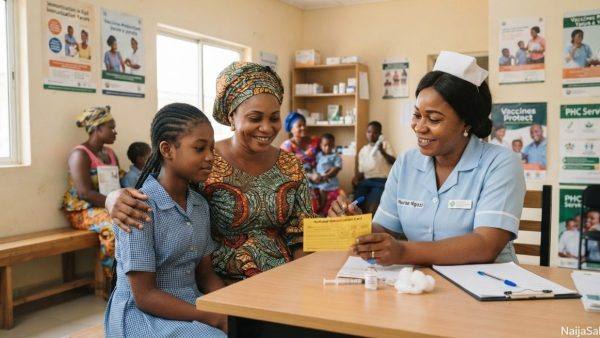
Penicillin prophylaxis for children: Daily penicillin from birth to at least age 5 (often longer) prevents the life-threatening bacterial infections to which children with SCD are particularly vulnerable due to loss of spleen function. A simple, cheap, effective intervention that has saved thousands of lives — yet is inconsistently implemented in Nigeria.
Pneumococcal and other vaccinations: Children with SCD should receive pneumococcal (Prevnar and Pneumovax), Haemophilus influenzae type B, meningococcal, and hepatitis B vaccinations as priority — these protect against the specific infections to which functional asplenia creates vulnerability.
Pain management: Mild crises: paracetamol, ibuprofen (with caution — NSAIDs may affect kidney function which is already at risk in SCD), oral codeine if prescribed. Moderate to severe crises: oral morphine or opioid analgesia, ideally managed in a hospital or sickle cell day care centre. Adequate hydration is critical during crises — dehydration worsens sickling.
Blood transfusion: Used for severe anaemia, acute chest syndrome, stroke prevention (chronic transfusion programme), and preparation for surgery. Requires blood group matching and screening for alloimmunisation.
Living Well with Sickle Cell Disease in Nigeria
Several daily habits significantly reduce crisis frequency and severity. Hydration — drinking 2 to 3 litres of water daily — is the single most impactful crisis prevention behaviour, as dehydration is a major sickling trigger. Avoiding cold exposure: wear warm clothing in harmattan season and air-conditioned environments, avoid cold water baths, avoid outdoor exposure at very cold night temperatures. Avoiding high altitude: high altitude reduces oxygen availability and triggers sickling — Nigerians with SCD should be aware of altitude risk when travelling. Avoiding extreme physical exertion without adequate preparation and hydration. Regular medical review — minimum every 3 months with a haematologist for hydroxyurea monitoring and complication screening. The Sickle Cell Association of Nigeria (SCAN) and several state government SCD programmes provide support groups, patient education, and in some cases subsidised medications. Lagos State Sickle Cell Centre (LASCC) at LASUTH, Ikeja is one of the most active specialist centres.
Frequently Asked Questions
What is the most important thing AS partners should know in Nigeria?
Each pregnancy between two AS carriers has a 25 percent chance of producing an SS child. This is a per-pregnancy risk — it does not mean exactly one in four children will have SS disease. Genetic counselling from a haematologist or genetic counsellor helps couples understand their options before deciding whether and how to have children.
Is there a cure for sickle cell disease in Nigeria?
Bone marrow (haematopoietic stem cell) transplantation is the only established cure — it replaces the patient’s bone marrow with that of a compatible donor who produces normal haemoglobin. It is available at a small number of specialist centres in Nigeria but requires a matched sibling donor and significant resources. Gene therapy is in advanced clinical trials internationally and may become more accessible within the next decade. For the vast majority of Nigerians with SCD, management rather than cure is the current reality — but hydroxyurea and comprehensive care significantly improve quality of life and lifespan.
Where can I get genotype testing in Nigeria?
Genotype testing (haemoglobin electrophoresis) is available at: all federal and state government teaching hospitals, most private hospital laboratories, and many stand-alone diagnostic laboratories in major Nigerian cities (MedLab, Synlab, Clina Lancet, and similar). Cost: approximately ₦2,000 to ₦8,000 depending on the facility. Result: typically available within 24 to 48 hours. This test should be part of routine pre-marital or pre-conception health checks for every Nigerian couple.
Sources
- Sickle Cell Association of Nigeria (SCAN) — patient education resources
- WHO — Sickle cell disease in Africa — who.int
- Federal Ministry of Health Nigeria — National SCD programme guidelines
- Original health guide — NaijaSabi Health Desk, September 2026
Last updated: 30 September 2026 · NaijaSabi Health Desk. Educational purposes only. Always consult a haematologist for diagnosis and treatment of sickle cell disease.




0 Comments
No comments yet. Be the first to share your thoughts!