



📌 Quick Summary: Nigeria is getting self-service fuel stations where you pump your own petrol with no attendant. The first self-service filling station has launched. Here is how it works, where to find one, and what it means for fuel buying in Nigeria.
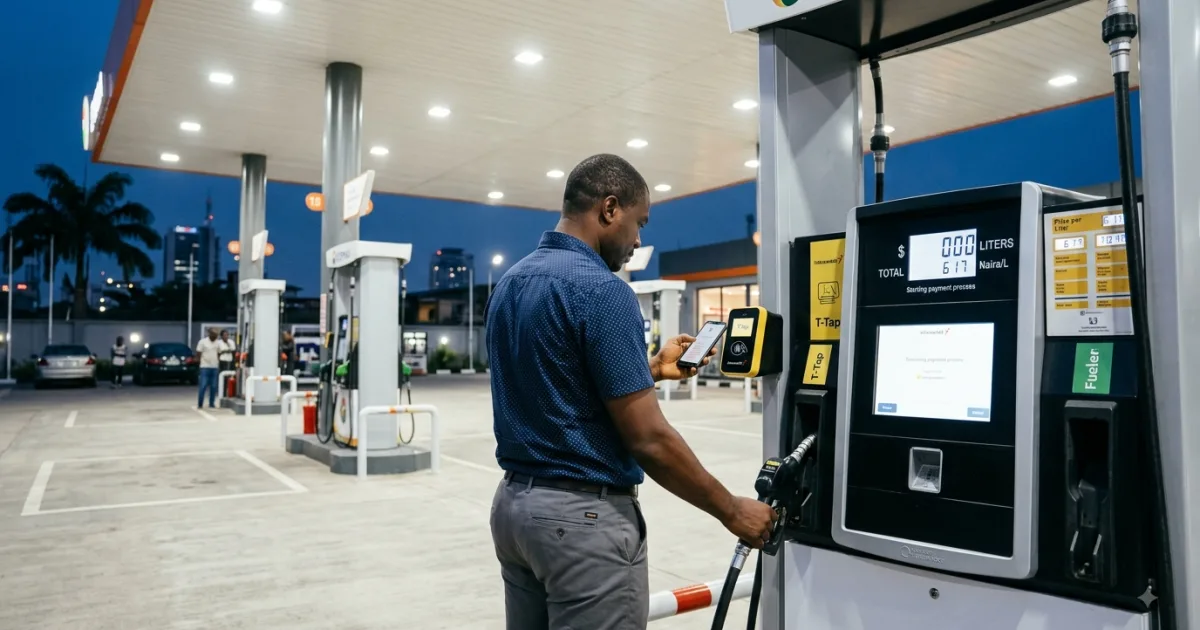
Nigerians are about to have a very different experience at the filling station. A company has launched Nigeria’s first self-service petrol station — where you pump your own fuel, pay through a machine or mobile app, and leave without interacting with a single attendant. If you have ever bought fuel in the UK, USA, Canada, or most of Europe, this is already how it works everywhere there. For Nigeria — where the filling station attendant is as much a fixture of daily life as the danfo bus conductor — this is a genuinely significant cultural and commercial change.
How Self-Service Fuel Stations Work
The process at a self-service filling station is straightforward but different from what Nigerians are used to. Here is the step-by-step:
- Drive up to the pump. Pull up alongside the fuel pump and turn off your engine.
- Select your payment method. Most self-service stations accept payment via the pump’s card reader (ATM cards), a QR code scan from your mobile banking app, or through the station’s own mobile app if one is available. Some may also accept cash payment at a central pay point before pumping.
- Select your fuel type and amount. Choose between PMS (petrol), Diesel, or Kerosene as available. Enter the amount in litres or naira value you want to purchase.
- Remove the nozzle and pump. Lift the fuel nozzle from the pump housing, insert it into your vehicle’s fuel tank, and squeeze the handle to dispense fuel. The pump stops automatically when the purchased amount has been dispensed.
- Return the nozzle and go. Replace the nozzle in its holder, ensure your fuel cap is secured, and drive away. Your receipt is printed automatically or sent to your registered email or mobile number.
Why Self-Service Stations Are Coming to Nigeria Now
Several factors have converged to make self-service filling stations commercially viable in Nigeria for the first time. The removal of fuel subsidies in 2023 has raised fuel prices to market rates — at higher price points, the economics of automating the pumping process become more attractive to filling station operators who can reduce their wage bills. Improved digital payment infrastructure — more Nigerians using mobile banking, POS machines, and contactless payment than at any point in the country’s history — means the payment problem that previously made self-service difficult in Nigeria is now largely solved. And the general growth of self-service culture across Nigerian commerce — ATMs, self-checkout at supermarkets, online shopping — has reduced the cultural resistance to doing things yourself that previously made attendant-served stations the only commercially viable model.
Concerns: What Happens If Something Goes Wrong?
The most common concern Nigerian motorists have raised about self-service stations is what happens when something goes wrong — a pump malfunction, a payment error, a fuel spill, or uncertainty about the correct fuel type for their vehicle. Legitimate concerns, and ones that self-service operators must address through: clearly visible emergency stop buttons on every pump, on-site supervisory staff available to assist (even if they do not pump fuel), clear signage about fuel types and pump operation, and reliable customer service channels for payment disputes. The international model — where self-service is standard — handles these situations routinely, and Nigerian operators are expected to implement similar support infrastructure.
Fuel Prices at Self-Service Stations vs Regular Stations
International experience suggests that self-service stations often offer slightly lower prices than full-service alternatives — the labour savings from eliminating attendants can be partially passed on to customers. Whether Nigerian self-service operators adopt this pricing model or maintain parity with regular filling stations will be an important commercial decision that determines how quickly consumers adopt the new format. If the price difference is meaningful — even ₦5–₦10 per litre — the incentive to use self-service will be significant for high-volume users like commercial drivers and businesses with vehicle fleets.
What This Means for Filling Station Attendants
The most sensitive dimension of self-service filling stations in Nigeria is the employment question. Nigeria’s filling station sector employs hundreds of thousands of attendants across the country — many of them young Nigerians for whom the attendant job represents their first formal employment. The automation of pumping raises direct questions about those jobs. The international pattern is not universal displacement — full-service lanes often coexist with self-service lanes in markets where both models are established — but the direction of travel in automated retail consistently favours the self-service model over time. Nigerian filling station operators and policymakers should be developing transition plans for affected workers rather than discovering the employment consequences after the fact.
Frequently Asked Questions
Where are self-service fuel stations in Nigeria?
The first self-service stations have launched in Lagos as of 2026. More locations are expected as the model expands. Check the operating company’s website or social media for current locations.
How do I pay at a self-service fuel station in Nigeria?
Most self-service stations accept ATM cards at the pump, mobile banking QR codes, and in some cases, cash payment at a central pay point before pumping.
Is self-service petrol stations safe?
Yes — self-service fuel stations operate to the same safety standards as traditional stations, with emergency stop mechanisms, clear safety signage, and supervisory staff on site.
Will fuel be cheaper at self-service stations?
Potentially — labour savings from eliminating attendants could be partly passed on as lower prices, though this depends on individual operator pricing decisions.
Last updated: 14 August 2026 · NaijaSabi Finance Desk.
More on NaijaSabi
Nigeria’s biggest stories are happening every day — across entertainment, civic affairs, finance, education, sport, and lifestyle. NaijaSabi covers them all with speed, depth, and the Nigerian perspective our audience deserves. Bookmark naijasabi.com.ng/ and subscribe to our Morning Brief newsletter serving over 52,000 daily subscribers. Whether it is a trending celebrity moment, a breaking political development, an economic policy change affecting your wallet, or an education update determining your academic future — NaijaSabi is where Nigeria comes first to understand what is happening and why it matters. Share this article with someone who will find it useful. Drop your thoughts in the comments below. Return for our continuous updates. NaijaSabi — Nigeria’s most trusted independent digital publication, serving millions of readers monthly across the country and the Nigerian diaspora worldwide. From Lagos to London, from Abuja to Atlanta, from Port Harcourt to Paris, from Kano to Toronto — wherever Nigerians are building their lives, NaijaSabi keeps them connected to home and to every story that shapes the country they love. We are independent, we are Nigerian, and we are here every single day.




0 Comments
No comments yet. Be the first to share your thoughts!