




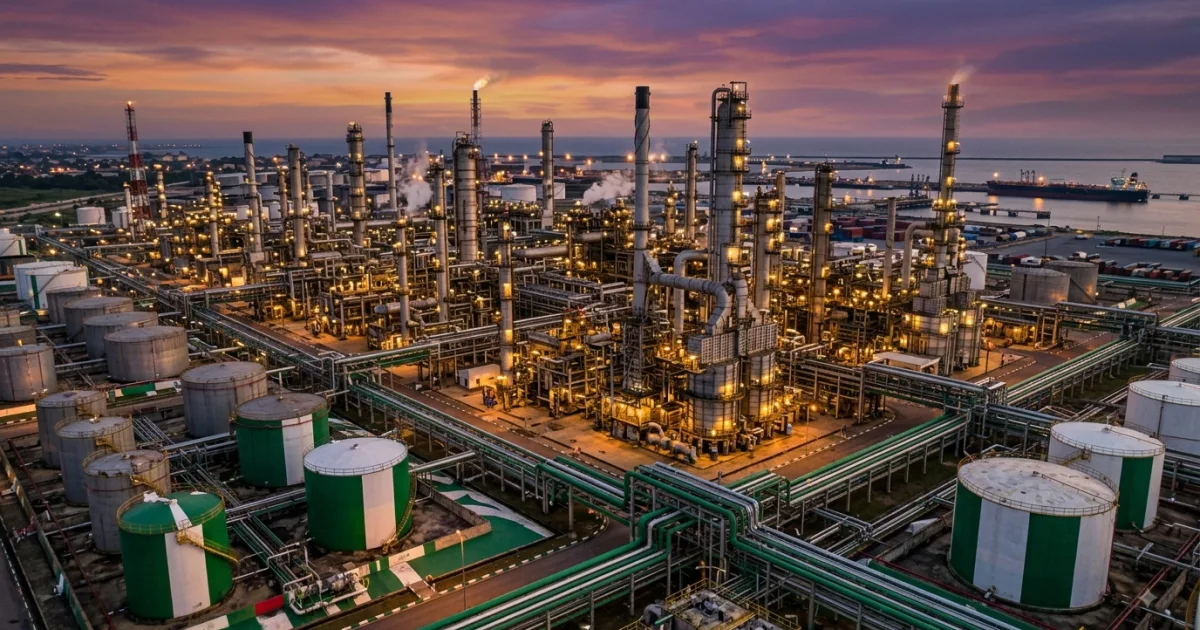
📌 Quick Summary: Dangote Petroleum Refinery has suspended petrol sales in US dollars, selling exclusively in naira. NNPC cut petrol prices by ₦36 to ₦1,299 per litre in Abuja on 4 August 2026. Here is exactly what both developments mean for fuel prices, the naira, and your daily transport costs.
Two fuel developments are reshaping the cost of petrol in Nigeria simultaneously — and together, they represent the most significant structural change in Nigeria’s fuel market since the subsidy removal in 2023. The Dangote Petroleum Refinery has suspended selling petrol in US dollars, switching to naira sales. And the Nigerian National Petroleum Company (NNPC) cut the retail price of petrol by ₦36 — from ₦1,335 to ₦1,299 per litre in Abuja. If you fill up a car, take a bus, or run any business that involves transportation, this article explains exactly what is happening and what it means for you.
Development 1: Dangote Suspends Petrol Dollar Sales
The Dangote Petroleum Refinery — Africa’s largest oil refinery, operating at up to 650,000 barrels per day capacity in Lagos — had been selling a portion of its refined petrol output in US dollars rather than naira. This was a point of significant controversy. Critics argued that a refinery built in Nigeria, refining Nigerian crude oil, should sell the refined product to Nigerians in naira — not in dollars that most Nigerian fuel marketers and individual consumers do not have direct access to. The dollar pricing effectively limited who could buy from Dangote at scale (large marketers with dollar accounts) and maintained an implicit dollar dependency in Nigeria’s domestic fuel market even as the refinery was supposed to reduce that dependency.
The suspension of dollar sales — meaning Dangote now sells petrol to marketers in naira — is a significant structural shift. It removes the dollar cost burden from the domestic supply chain for Dangote’s petrol, which should eventually reduce the naira price of petrol at the retail level as the dollar-cost component of pricing disappears. It also removes a layer of complexity and exchange rate risk from the supply chain between Dangote and petrol stations, which should improve distribution efficiency.
Development 2: NNPC Petrol Price Cut to ₦1,299 per Litre
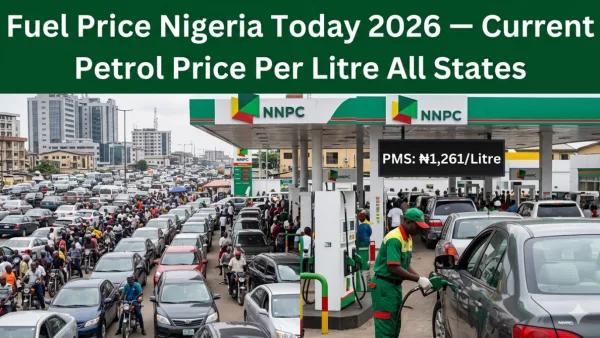
On 4 August 2026, NNPC Limited cut the pump price of petrol by ₦36 — from ₦1,335 to ₦1,299 per litre at its retail stations in Abuja and the FCT. The price cut was driven by a combination of the improved naira exchange rate (which reduces the naira cost of any remaining imported components in the petrol supply chain), Dangote’s domestic refinery output reducing import dependence, and NNPC’s ongoing effort to gradually normalise fuel pricing as refinery capacity improves. The ₦36 reduction may seem modest in absolute terms, but at scale — across millions of litres consumed daily — it represents a significant cost reduction for transporters, which should gradually feed into reduced transport fares and freight costs.
Petrol Price by State: August 2026
| State / Zone | Approximate Price per Litre | Notes |
| Abuja (FCT) | ₦1,299 | Official NNPC reduced price |
| Lagos | ₦1,300–₦1,350 | Competitive market, near refinery |
| Port Harcourt | ₦1,300–₦1,360 | Oil-producing region |
| Kano | ₦1,320–₦1,380 | Transport costs from south |
| Maiduguri | ₦1,400–₦1,500+ | Security and logistics premium |
| Rural areas generally | ₦1,400–₦1,600+ | Last-mile distribution premium |
What This Means for Transport Fares
Fuel price changes in Nigeria should eventually pass through to transport fares — but the relationship is not immediate and not proportional. Transport fares tend to rise quickly when fuel prices rise and fall slowly (or not at all) when fuel prices fall. The price reduction from ₦1,335 to ₦1,299 is approximately 2.7% — insufficient on its own to trigger a visible fare reduction. However, if further price reductions follow as Dangote’s naira-denominated supply scales up and the exchange rate continues to improve, a cumulative reduction of 10-15% from peak prices could meaningfully reduce transport costs — particularly for commercial buses and freight vehicles that run on petrol.
The Bigger Picture: Nigeria’s Fuel Market Transformation
Nigeria’s fuel market is undergoing the most significant structural transformation in its history — from a heavily subsidised, import-dependent, dollar-denominated system to an increasingly market-priced, domestically refined, naira-denominated one. The transition is painful — subsidy removal tripled fuel prices overnight in 2023, with cascading inflation effects that ordinary Nigerians are still managing. But the direction of travel — Dangote refinery scaling up, import dependence falling, dollar pricing being removed from the domestic supply chain — creates conditions where fuel prices can eventually stabilise and even fall from current levels as the structural costs that drove them up are progressively removed.
Frequently Asked Questions
What is the current petrol price in Nigeria 2026?
₦1,299 per litre in Abuja following NNPC’s August 4 price cut. Prices vary by state — typically ₦1,300–₦1,380 in southern cities and higher in northern and remote areas.
Why did Dangote stop selling petrol in dollars?
To reduce dollar dependency in Nigeria’s domestic fuel supply chain, improve access for naira-paying marketers, and support the naira by reducing dollar demand in the fuel sector.
Will petrol prices fall further in Nigeria?
Further reductions are possible as Dangote refinery scales production and import dependence falls. The pace depends on exchange rate stability and refinery output growth.
How does the petrol price cut affect transport fares?
Transport fares typically respond slowly to fuel price reductions. A visible fare reduction would require cumulative fuel price falls significantly larger than the current ₦36 reduction.
Sources
- Legit.ng — “Dangote suspends petrol dollar sales as Nigeria enhances imports.” August 2026
- Nairametrics — “NNPCL cuts petrol price by N36 to N1,299 per litre.” August 2026
- NaijaSabi Finance Desk research — August 2026
Last updated: 18 August 2026 · NaijaSabi Finance Desk.
Stay Updated with NaijaSabi
Nigeria’s most important stories — across education, finance, entertainment, civic affairs, sport, and lifestyle — are covered daily by NaijaSabi’s editorial team. We research deeply, verify carefully, and write specifically for Nigerian audiences who deserve accurate, useful, actionable information. Bookmark naijasabi.com.ng/ and subscribe to our Morning Brief newsletter, which delivers the most important Nigerian stories to over 52,000 inboxes every morning. Whether you are a student navigating the admission process, a professional tracking economic policy, a parent managing family finances, or a fan following Nigerian music and sport — NaijaSabi has the content you need, written with the depth you deserve. Share this article with anyone who needs this information. Drop your questions and thoughts in the comments section below — our editorial team reads every comment and updates articles based on reader questions. Return to this page for the most current information as the situation develops. NaijaSabi: Nigeria’s most trusted independent digital publication, serving millions of readers monthly across Nigeria and the Nigerian diaspora worldwide. From Lagos to London, Abuja to Atlanta, Kano to Toronto — wherever Nigerians are, NaijaSabi keeps them informed, engaged, and ahead of the story.




0 Comments
No comments yet. Be the first to share your thoughts!