




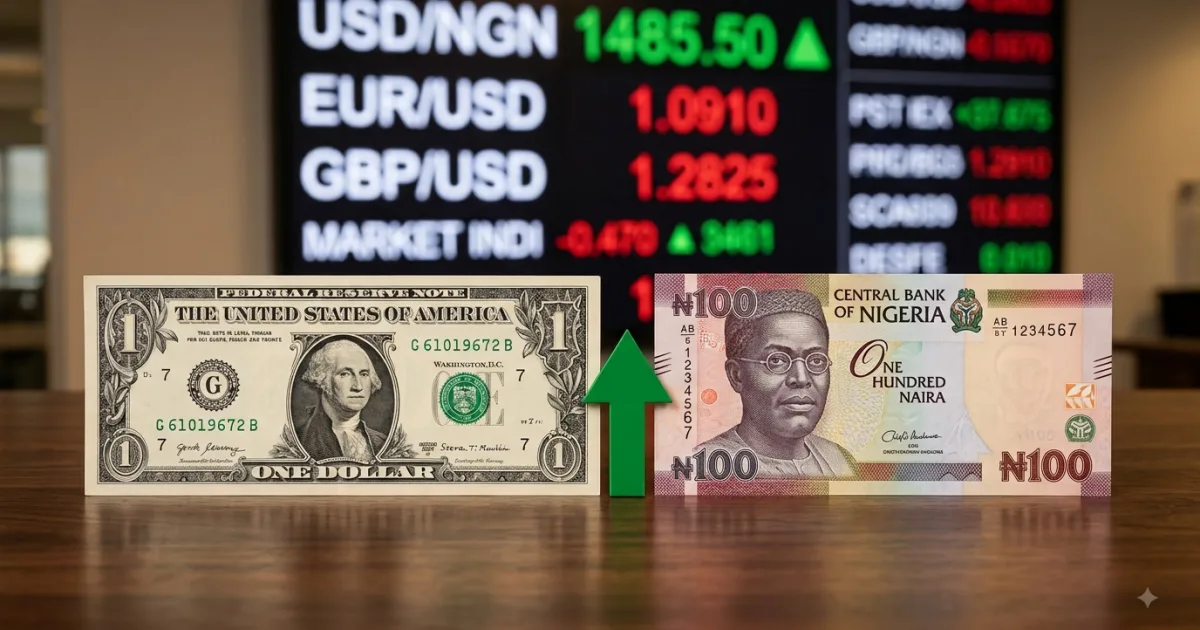
📌 Quick Summary: The dollar to naira exchange rate today stands at approximately ₦1,359 at the official NAFEM window and ₦1,415–₦1,425 at the parallel market (black market). The naira has strengthened 11.32% against the dollar over the past 12 months. Here is today’s full rate breakdown across all major currencies.
The dollar to naira exchange rate today continues to reflect the gradual but real strengthening of the naira that has defined the second half of 2026. At the official NAFEM (Nigerian Autonomous Foreign Exchange Market) window, the USD/NGN rate stands at approximately ₦1,359 per dollar — while the parallel market (commonly called the black market or Bureau de Change rate) sits around ₦1,415–₦1,425. The gap between official and parallel rates has narrowed significantly from the ₦500+ spread that characterised the peak crisis of early 2024, reflecting genuine improvement in Nigeria’s foreign exchange fundamentals.
Dollar to Naira Exchange Rate Today — August 18, 2026
| Market | Rate (per $1) | Change |
| NAFEM Official Rate | ₦1,359.23 | ▲ Naira strengthening |
| Parallel Market (BDC) | ₦1,415–₦1,425 | Narrowing gap |
| Bank Buying Rate | ~₦1,350 | Varies by bank |
| Bank Selling Rate | ~₦1,365 | Varies by bank |
Other Major Currency Rates Against the Naira Today
| Currency | Official Rate | Parallel Rate (approx.) |
| British Pound (GBP) | ~₦1,833 | ~₦1,870–₦1,900 |
| Euro (EUR) | ~₦1,574 | ~₦1,600–₦1,620 |
| Canadian Dollar (CAD) | ~₦972 | ~₦995–₦1,010 |
| UAE Dirham (AED) | ~₦371 | ~₦380–₦390 |
| South African Rand (ZAR) | ~₦75 | ~₦77–₦80 |
| Ghanaian Cedi (GHS) | ~₦95 | ~₦98–₦102 |
NAFEM vs Parallel Market: What Is the Difference?
The NAFEM (Nigerian Autonomous Foreign Exchange Market) is the official CBN-regulated interbank market where banks, licensed financial institutions, and qualified businesses transact foreign exchange. The rate here represents the official government-sanctioned price for the dollar. The parallel market — commonly called the black market or BDC (Bureau de Change) market — operates outside CBN’s direct supervision and reflects the rate at which individual traders, informal money changers, and unlicensed operators buy and sell foreign currency. The parallel rate is typically higher than the official rate because it has fewer restrictions on who can buy and sell, and it absorbs demand that cannot be met through official channels. As the official market improves in transparency and accessibility, the gap between the two rates narrows — which is exactly what has been happening in 2026.
Why Is the Naira Getting Stronger in 2026?
Five key factors are driving the naira’s 11.32% appreciation over the past 12 months. First, the Dangote Petroleum Refinery’s increasing domestic fuel production is reducing Nigeria’s dollar-denominated fuel import bill — one of the largest drains on Nigeria’s foreign exchange reserves. Second, improved oil production in the Niger Delta has increased dollar inflows from crude oil exports. Third, the CBN’s foreign exchange market reforms have improved transparency and attracted more dollar supply into the official market. Fourth, diaspora remittances are increasingly flowing through official banking channels rather than informal parallel routes, as the official-parallel rate gap has narrowed. Fifth, Dangote’s recent decision to suspend dollar-denominated petrol sales — selling in naira instead — removes another layer of dollar demand from the domestic fuel supply chain.
What the Exchange Rate Means for Ordinary Nigerians
A stronger naira should eventually translate into lower prices for imported goods — food ingredients, electronics, industrial inputs — though the pass-through from exchange rate to retail prices takes 3–6 months in most Nigerian markets. For Nigerians sending money home from abroad, a stronger naira means their remittances buy fewer naira per dollar than a year ago — which is a negative for the recipient household but a positive for Nigeria’s overall currency stability. For businesses importing raw materials, a stronger naira directly reduces naira-denominated costs and should eventually improve profit margins. For the federal government, a stronger naira reduces the naira cost of servicing dollar-denominated external debt.
How to Get the Best Exchange Rate in Nigeria
For legitimate personal foreign exchange needs — school fees abroad, medical travel, international business payments — Nigerian banks offer the most regulated and reliable rates. For Nigerians receiving remittances from abroad, mobile money platforms like Lemfi, Grey, and Chipper Cash often offer more competitive rates than traditional bank transfers by routing through the official NAFEM window more efficiently. Always compare rates across at least three sources before transacting. Avoid unlicensed parallel market operators for large transactions — the legal and financial risks outweigh the marginal rate advantage.
Dollar to Naira Rate: 12-Month Trend
| Month | Approximate Rate | Direction |
| August 2025 | ₦1,530 | Stabilising |
| November 2025 | ₦1,480 | Strengthening |
| February 2026 | ₦1,430 | Strengthening |
| May 2026 | ₦1,400 | Strengthening |
| August 2026 | ₦1,359 | Strengthening |
Frequently Asked Questions
What is the dollar to naira exchange rate today?
The official NAFEM rate is approximately ₦1,359 per dollar on 18 August 2026. The parallel market (black market) rate is approximately ₦1,415–₦1,425 per dollar.
What is the black market dollar rate in Nigeria today?
The parallel market (black market) dollar rate is approximately ₦1,415–₦1,425 per dollar as of 18 August 2026. This is significantly lower than the ₦1,900 peak of early 2024.
Why is there a difference between NAFEM and parallel market rates?
The NAFEM is the official CBN-regulated market; the parallel market operates outside CBN supervision. The parallel rate is typically higher due to fewer restrictions and absorbing demand that cannot access official channels.
How much is pound to naira today?
The British pound (GBP) to naira rate is approximately ₦1,833 at the official rate and ₦1,870–₦1,900 at the parallel market rate on 18 August 2026.
Is the naira getting stronger in 2026?
Yes. The naira has strengthened approximately 11.32% against the dollar over the past 12 months, driven by Dangote refinery production, improved oil output, CBN market reforms, and increased diaspora remittances through official channels.
Where can I check the official naira exchange rate?
Check the CBN official rate at cbn.gov.ng, or the NAFEM daily rate at fmdqotc.com. For parallel market rates, Nairametrics (nairametrics.com) tracks both daily.
Sources
- Central Bank of Nigeria — cbn.gov.ng
- FMDQ OTC Securities Exchange — fmdqotc.com
- Nairametrics FX tracker — nairametrics.com
- NaijaSabi Finance Desk research — August 2026
Last updated: 18 August 2026 · NaijaSabi Finance Desk. Rates are indicative and change throughout the trading day.
Follow NaijaSabi for More
Nigeria’s biggest stories break every single day — across entertainment, civic affairs, finance, education, sport, and lifestyle. NaijaSabi covers them all with the speed, depth, and Nigerian perspective our millions of readers deserve. Bookmark naijasabi.com.ng/ and subscribe to our Morning Brief newsletter, trusted by over 52,000 daily subscribers across Nigeria and the diaspora. Whether you are tracking the BBNaija drama, watching the exchange rate, following a JAMB admission update, or keeping up with the Super Eagles — NaijaSabi is where Nigeria comes first to understand what is happening and why it matters to your life today. Share this article. Drop your thoughts in the comments. Return for updates as the story develops. From Lagos to London, Abuja to Atlanta, Kano to Toronto — wherever Nigerians are building their lives, NaijaSabi keeps them informed, engaged, and ahead of every story that shapes the country they love. We are independent, we are Nigerian, and we are here every single day for you.




0 Comments
No comments yet. Be the first to share your thoughts!