




🎵 Quick Summary: M$NEY (pronounced “money”) is the fourth studio album by Nigerian Afrobeats superstar Asake — born Ahmed Ololade in Lagos — released on 1 May 2026 via his independent label Giran Republic and Empire Distribution. The 13-track album features DJ Snake, Tiakola, and Kabza De Small, runs for 35 minutes and 7 seconds, and was primarily produced by Magicsticks. It debuted at No. 1 on the TurnTable Nigeria Albums Chart, No. 2 on the US Billboard World Albums chart, No. 27 on the UK Albums Chart, and has accumulated 281 million total plays on Audiomack. It is available to stream on Spotify, Apple Music, Audiomack, Boomplay, and YouTube Music in Nigeria. Asake described the album as “a reflection of my spiritual and creative journey” rooted in gratitude, faith, and personal evolution.
When Asake — born Ahmed Ololade in Lagos — released Mr. Money with the Vibe in 2022, it felt like an arrival. When he followed it with Work of Art in 2023 and Lungu Boy in 2024, it became clear the arrival was just the beginning of something much larger. M$NEY, his fourth studio album released on 1 May 2026, is the most deliberately constructed album of his career — 13 tracks, 35 minutes, three carefully chosen international features, and his first release on his own Giran Republic label. It has crossed 281 million plays on Audiomack alone. Here is every track, fully explained — what it means, how it sounds, and why it matters.
Asake M$NEY — Key Facts
| Detail | Information |
|---|---|
| Album Title | M$NEY (pronounced “money”) |
| Artist | Asake (Ahmed Ololade) |
| Release Date | 1 May 2026 |
| Label | Giran Republic / Empire Distribution |
| First album on own label | Yes — first Giran Republic release |
| Genre | Afrobeats, Fújì, street pop, Amapiano, jazz, orchestral |
| Number of Tracks | 13 |
| Runtime | 35 minutes 7 seconds |
| Featured Artists | DJ Snake, Tiakola, Kabza De Small |
| Primary Producer | Magicsticks (also DJ Snake, Kabza De Small, P.Priime, others) |
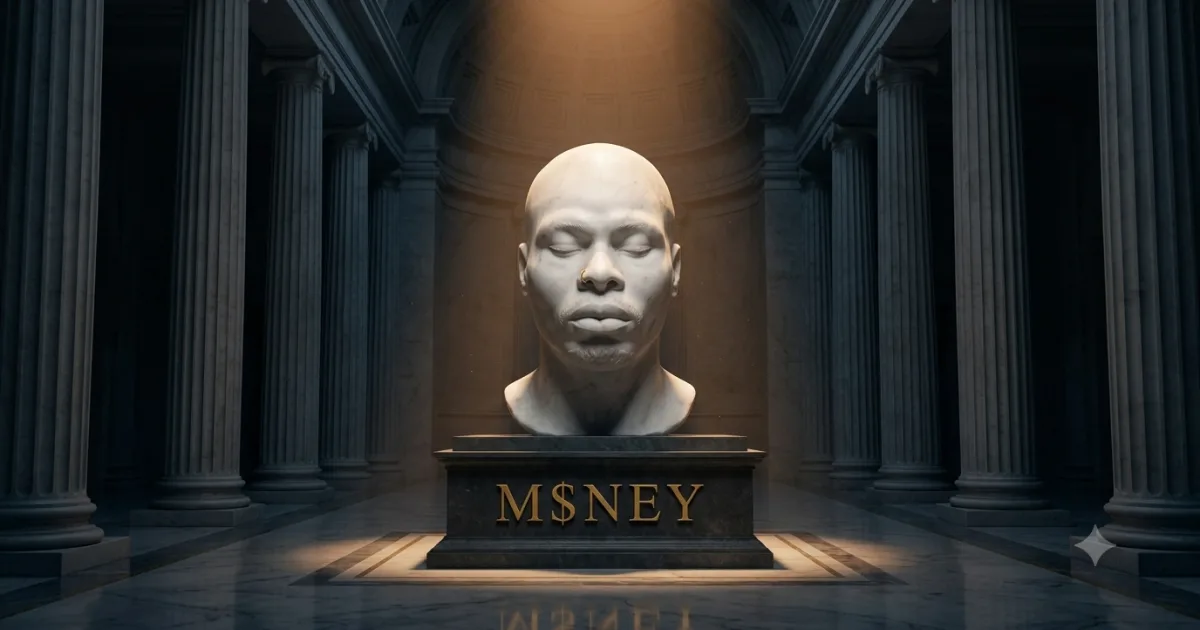
| Album Artwork | Marble sculpture in Asake’s likeness by Iraqi-Dutch artist Arthar Jabar |
| Chart Peaks | No. 1 Nigeria (TurnTable) · No. 2 US World Albums · No. 27 UK Albums · No. 30 US Independent Albums |
| Audiomack Total Plays | 281 million |
| Where to Stream in Nigeria | Audiomack (free), Spotify, Apple Music, Boomplay, YouTube Music |
What to Know Before You Listen to M$NEY
M$NEY is the first album Asake has released on his own independent imprint — Giran Republic, the label he established after departing YBNL Nation, Olamide’s record label that launched his career. That independence is the album’s quiet thesis. Everything about M$NEY announces self-ownership: the stylised title (the dollar sign replacing the S is not a gimmick — it is a declaration), the artwork (a marble sculpture of Asake’s own face, created by Iraqi-Dutch artist Arthar Jabar — the physical artist immortalised in stone, owning his image literally), and the 13-track structure that opens with a live choral performance and closes with a track called “Skilful.” This is an artist narrating his own story in the most deliberate way he has yet managed.
Asake described the album as: “M$NEY is a reflection of my spiritual and creative journey. Everything flows from a place of gratitude to God, and every moment that’s shaped me. The music explores different sonic elements, from orchestral sounds to dance beats. I stay true to myself but also weave in new creative expressions from my life experiences and personal evolution.” That description is honest and precise. M$NEY is not Asake reinventing himself — it is Asake expanding. It carries his signature Fuji-inspired sound, blended with Amapiano, jazz, orchestral arrangements, and live choirs. The result is the most sonically ambitious Nigerian album of 2026.
Asake M$NEY — Full Track-by-Track Breakdown
| # | Track Title | Featured Artist | What It Is |
|---|---|---|---|
| 1 | Intro | — | Live choral opening — sets the spiritual, immersive tone immediately |
| 2 | Worship | DJ Snake | Lead single — faith anthem, Alhamdulillah over festival-ready production |
| 3 | Gratitude | — | Jazz-tinged reflection on visibility and public scrutiny |
| 4 | Rora | — | Street-rooted energy — Yoruba storytelling at its most direct |
| 5 | Amen | — | Prayer record — spiritual declaration, faith over doubt |
| 6 | Wa | — | Yoruba command (“come”) — seductive, intimate mid-album turn |
| 7 | MCBH | — | Confidence record — abbreviated bravado, Asake at his most assured |
| 8 | Why Love | — | Pre-release Amapiano single — emotional, romantic, chart-tested |
| 9 | Forgiveness | — | Introspective prayer for grace — album’s emotional turning point |
| 10 | Oba | — | “King” in Yoruba — pure confidence declaration, no apologies |
| 11 | BADMAN GANGSTA | Tiakola | Afropean street anthem — samples Amerie’s 2005 “1 Thing” |
| 12 | Asambe | Kabza De Small | Afrobeats meets Amapiano — “let’s go” in Zulu, Nigerian-SA fusion |
| 13 | Skilful | — | Closing statement — the art and the craft, held together |
The Standout Tracks — What Nigeria Is Still Streaming
Worship ft. DJ Snake — The Global Statement
“Worship” was released on 19 March 2026 as the album’s lead single, produced by Magicsticks in collaboration with DJ Snake — born William Grigahcine on 13 June 1986 in Châtellerault, France, of Algerian heritage. The song has Asake chanting “Alhamdulillah” over DJ Snake’s production — a mid-tempo record that lands at the intersection of Afrobeats, Fújì, street pop, and electronic dance music. DJ Snake’s production instinct is global — he has produced records for Lady Gaga, Justin Bieber, and Selena Gomez — and what he brings to Asake’s sound is an openness: the track breathes in a way that Asake’s Lagos-rooted productions sometimes do not. The music video, directed by Edgar Esteves, shows Asake dressed entirely in white alongside choirs similarly dressed in white, filmed against a serene beach backdrop — framing the performance as a moment of personal and spiritual communion. It is the clearest single declaration of what M$NEY is trying to be: Asake, globally positioned, spiritually grounded, aesthetically at his most assured.
Gratitude — The Album’s Emotional Core
On “Gratitude,” Asake reflects on the weight of visibility and the realities of public scrutiny, delivering a heartfelt performance over jazz-tinged instrumentation. It is the track that most directly addresses what it actually feels like to be Asake in 2026: the most-charted artist in TurnTable Nigeria history, with 62 Billboard Afrobeats chart entries, a marble sculpture of his face as album cover art, and the knowledge that millions of people are watching, projecting, and forming opinions about who you are. Gratitude, on this album, is not a simple thank-you. It is the specific practice of counting blessings when the weight of expectation threatens to obscure them.
Forgiveness — The Turn Inward
“Forgiveness” sees Asake turn inward, offering a prayer for grace and growth as he confronts past missteps with humility and clarity. It sits at position nine on a 13-track album — the deliberate placement of the most vulnerable moment past the album’s midpoint, where listeners who have stayed are fully present and the ones who skipped have already left. “Forgiveness” is the track that will outlast M$NEY’s commercial moment because it says something true about a specific kind of Nigerian faith practice: not the performative kind, but the quiet, private kind that happens when you are alone and honest with yourself about the distance between who you are and who you intended to be.
BADMAN GANGSTA ft. Tiakola — The Afropean Banger
Tiakola — born Nathan Dupré on 5 March 2000 in Créteil, France, of Congolese descent — is one of the most commercially successful French-speaking rap artists in Europe, with a sound built at the intersection of French rap, Afrobeats, and Congolese musical tradition. His appearance on “BADMAN GANGSTA” extends Asake’s global reach in the specific direction of French-speaking African diaspora audiences — a community of hundreds of millions whose purchasing power the Nigerian music industry has historically underserved. The track samples Amerie’s 2005 hit “1 Thing” — a choice that is both an audacious flex and a genuine sonic decision: the “1 Thing” sample is one of the most recognisable drum patterns in early 2000s R&B, and transplanting it into a 2026 Afrobeats context gives the track an instant familiarity that lands before the first bar is finished.
Asambe ft. Kabza De Small — Nigeria Meets South Africa
Kabza De Small — born Kabelo Motha on 25 October 1994 in Mpumalanga, South Africa — is the most celebrated producer in Amapiano history and one of the most influential figures in contemporary African music. “Asambe” continues the creative dialogue between Nigerian Afrobeats and South African Amapiano that Asake has been a recurring participant in throughout his career. “Asambe” means “let’s go” in Zulu — and the track is exactly that: forward motion, collective energy, two artists from different sides of the continent agreeing on direction and tempo. It is the track that positions M$NEY most explicitly as a pan-African album rather than a Nigerian one — and in 2026, when the conversation about African music unity has never been louder, that positioning is strategic as much as it is musical.
Oba — The Confidence Record
“Oba” (king in Yoruba) represents pure confidence. It is the album’s shortest emotional journey and its most direct: Asake knows who he is, he knows what he has built, and “Oba” is the track where he says so without metaphor or elaboration. In the context of an album that is otherwise deeply invested in spiritual humility, gratitude, and introspection, “Oba” functions as the necessary counterweight — the moment where confidence and faith are not in contradiction but are the same thing expressed differently. A man who truly trusts God also trusts what God has made him capable of. That trust is “Oba.”
What Asake Was Saying with M$NEY — The Bigger Picture
Read from Intro to Skilful, M$NEY is an album about the relationship between money, faith, and identity — specifically the question of whether you can have all three without one destroying the other. The title is almost a provocation: Nigerian society has complicated feelings about the celebration of wealth, especially when it comes from young men who grew up with very little. Asake has always navigated that tension by keeping his faith visible and his gratitude audible. M$NEY does not resolve that tension — it inhabits it. The choral Intro says this is spiritual. “Oba” says this is also a throne. “Gratitude” says holding both simultaneously is the work.
M$NEY comes at a crucial point in Asake’s career. After three back-to-back successful albums, the question is no longer whether he can make hits — it is whether he can build an enduring artistic identity. M$NEY answers that question by expanding his sonic vocabulary without abandoning the Fújì foundation that made him different from every other Afrobeats artist in the first place. The album further solidifies Asake’s position as one of the most defining voices in global Afrobeats. It is his most intentional album — and the 281 million Audiomack plays in less than four months suggest that intentionality is landing exactly where he aimed it.
How to Stream M$NEY in Nigeria
M$NEY by Asake has accumulated 281 million total plays on Audiomack — the most widely used free streaming platform in Nigeria — where it is available without a subscription. The full 13-track album is also on Spotify Nigeria, Apple Music Nigeria, Boomplay, and YouTube Music. On Apple Music, the album page includes editorial notes that provide additional context for individual tracks. The three pre-release singles — “Why Love” (released 12 February 2025), “Badman Gangsta” (released 25 July 2025), and “Worship” (released 19 March 2026) — are available as standalone singles on all platforms if you want to start with the most-streamed tracks before working through the full album.
Frequently Asked Questions
What is Asake’s M$NEY album about?
M$NEY is Asake’s fourth studio album, released on 1 May 2026. In Asake’s own words: “M$NEY is a reflection of my spiritual and creative journey. Everything flows from a place of gratitude to God, and every moment that’s shaped me.” The album explores themes of faith, gratitude, prosperity, identity, and personal evolution across 13 tracks. It blends Asake’s signature Fújì-influenced street pop with jazz, orchestral arrangements, Amapiano, and electronic dance production — making it his most sonically diverse project to date.
What are all 13 songs on Asake’s M$NEY album?
The 13 tracks on M$NEY are: 1. Intro; 2. Worship (featuring DJ Snake); 3. Gratitude; 4. Rora; 5. Amen; 6. Wa; 7. MCBH; 8. Why Love; 9. Forgiveness; 10. Oba; 11. BADMAN GANGSTA (featuring Tiakola); 12. Asambe (featuring Kabza De Small); 13. Skilful. The album runs for 35 minutes and 7 seconds and was released through Giran Republic and Empire Distribution on 1 May 2026.
Where can I stream Asake M$NEY in Nigeria?
Asake’s M$NEY album is available to stream for free in Nigeria on Audiomack, which does not require a subscription and has registered 281 million plays for the album since its release. It is also available on Spotify Nigeria, Apple Music Nigeria, Boomplay, and YouTube Music. Search “Asake M$NEY” or “Asake Money album” on any of these platforms to find it immediately.
How did Asake’s M$NEY perform on the charts?
M$NEY debuted at No. 1 on the TurnTable Nigeria Official Albums Chart on its release week of 1 May 2026 — setting a new Spotify Nigeria opening-week streaming record according to The Guardian Nigeria. Internationally, it peaked at No. 2 on the US Billboard World Albums chart, No. 27 on the UK Albums Chart (OCC), No. 30 on the US Billboard Independent Albums chart, No. 4 on the Irish Independent Albums chart, and charted in Portugal and Canada. It remains one of the biggest Nigerian album releases of 2026 by commercial metrics.
Who produced Asake’s M$NEY album?
M$NEY was primarily produced by Magicsticks — born Kareem Olasunkanmi — who is also the primary architect of Asake’s signature “Omopiano” sound across his previous three albums. Additional production credits on M$NEY include DJ Snake (on “Worship”), Kabza De Small (on “Asambe”), P.Priime, Nana Pokes, Blaisebeatz, YungAce, AoD, and Alhaji Tunga. The album’s orchestral and choral arrangements are credited to Gaetan Judd and Awele Kelechukwu.
What does M$NEY mean and why is it spelled that way?
M$NEY is pronounced simply as “money” — the dollar sign replacing the letter S is a stylistic and symbolic choice. Asake has explained that the title represents not just financial wealth but everything he has worked for: the music, the independence, the spiritual journey, and the creative ownership that comes with releasing his first album on his own Giran Republic label. The dollar-sign spelling signals ownership — a man who controls the money rather than being controlled by it. The album artwork — a marble sculpture of Asake’s face by Iraqi-Dutch artist Arthar Jabar — extends the same metaphor: the artist as monument, permanent and self-authored.
Stay Updated
Follow NaijaSabi for full album reviews, tracklist breakdowns, and chart analysis for every major Nigerian and Afrobeats release — updated regularly from Lagos.
Sources
- Wikipedia — “M$ney” — en.wikipedia.org — Retrieved August 2026
- Audiomack — M$NEY album page — audiomack.com — April 30, 2026
- Groove Africa — “Asake Releases Fourth Studio Album M$NEY” — groove-africa.com — May 1, 2026
- Music in Africa — “Nigeria: Asake shares fourth studio album M$NEY” — musicinafrica.net — May 4, 2026
Last updated: 28 August 2026 · NaijaSabi Entertainment Desk


0 Comments
No comments yet. Be the first to share your thoughts!