




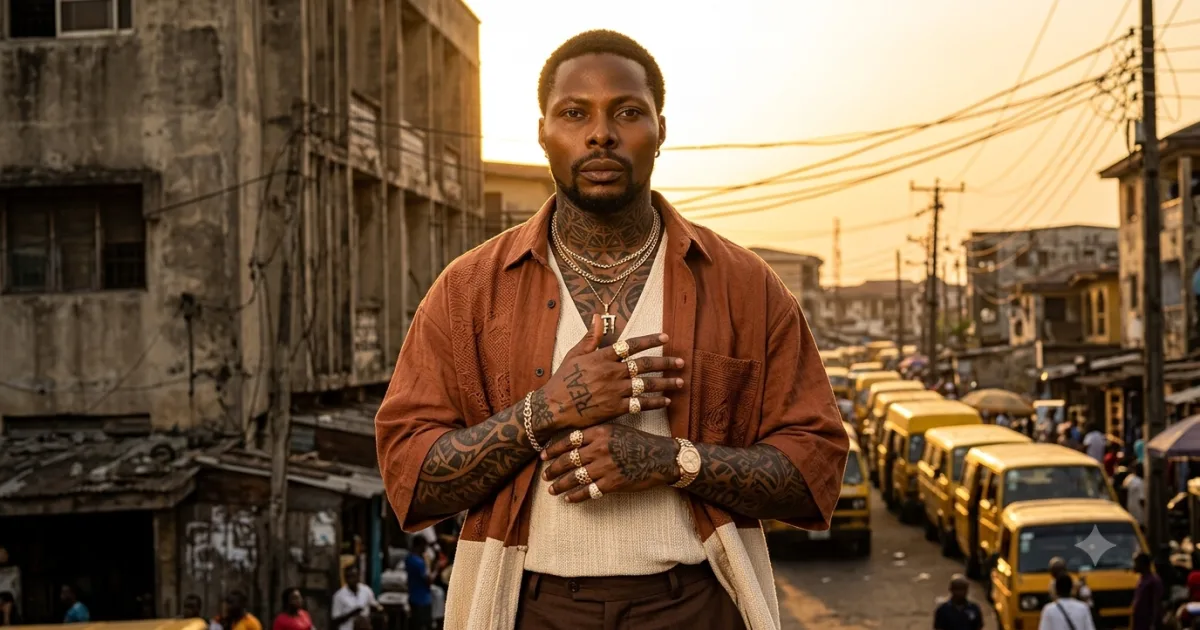
In January 2022, a young man from Isale Eko in Lagos walked into Olamide’s YBNL Nation and walked out as one of the most exciting signings in Nigerian music that year. Nobody outside the Lagos street music world knew his name. By December of that same year, he had released a debut album that broke Apple Music records, charted on the US Billboard 200, and earned him comparisons to legends of Fuji, Afrobeats, and street-pop all at once. By 2024, he was selling out Madison Square Garden and the O2 Arena. By 2026, he had left YBNL, founded his own independent label, dropped a collaborative EP with Wizkid, released his fourth studio album, and launched a world tour — all in the space of four breathless years that have redefined what a Nigerian music career can look like in its opening chapter.
His name is Ahmed Ololade. The world knows him as Asake. And this is his full story.
Asake Biography Facts at a Glance
| Full Name | Ahmed Ololade Odunsi |
| Stage Name | Asake (also known as Mr. Money) |
| Date of Birth | January 13, 1995 |
| Age | 31 years old (as of 2026) |
| Place of Birth | Iga Idunganran, Isale Eko, Lagos State, Nigeria |
| State of Origin | Lagos State, Nigeria |
| Ethnicity / Tribe | Yoruba |
| Religion | Islam (Muslim) |
| Height | 5 ft 7 in (170 cm) |
| Education | B.A. Dramatic Arts, Obafemi Awolowo University, Ile-Ife |
| Occupation | Singer, Rapper, Songwriter, Actor, Dancer |
| Genres | Afrobeats, Fuji, Street Pop, Afro-fusion, Amapiano |
| Record Label | Giran Republic / Empire Distribution (formerly YBNL Nation) |
| Grammy Nominations | Two (66th and 67th Grammy Awards — Best African Music Performance) |
| Net Worth (Estimated) | $7 million – $15 million USD |
| @asakeofficial | |
| Nationality | Nigerian |
Early Life: From Isale Eko to Ile-Ife
Ahmed Ololade Odunsi was born on January 13, 1995, in Iga Idunganran, Isale Eko — one of Lagos Island’s oldest and most culturally layered communities, a place where Yoruba tradition, street energy, and Islamic heritage have coexisted for generations. It is precisely the kind of environment that produces artists with deep roots and wide range, and Asake is perhaps the clearest modern example of what that neighbourhood gives to the world when it gives a musician its full blessing.
He was raised in a Yoruba Muslim household. His father, known as Mr. Ololade Odunsi, was a businessman; his mother — whose first name is Ololade — was a teacher. That detail matters more than it might initially appear: Asake chose his stage name as a deliberate tribute to his mother. In Yoruba, Asake (or Àṣàkẹ́) is a name meaning “chosen to be pampered” — and the fact that he adopted it as his professional identity is a public declaration of the gratitude and reverence he carries for her.
His childhood in Lagos was saturated with music. The sounds that shaped him were not the polished productions of Lagos Island’s elite music scene — they were the raw, spiritual, percussive rhythms of Fuji music: the genre pioneered by legends like Sikiru Ayinde Barrister, Wasiu Ayinde Marshal (KWAM 1), and Pasuma Wonder. These were the artists playing at the celebrations, ceremonies, and street events of Isale Eko, and their influence would eventually define Asake’s sound in ways that made him genuinely unique in a generation of Nigerian artists who largely drew from Afrobeats and hip-hop.
Asake completed his primary and secondary school education in Lagos before gaining admission to one of Nigeria’s most prestigious universities. He enrolled at Obafemi Awolowo University (OAU) in Ile-Ife, Osun State, where he studied Dramatic Arts — a degree that, unlike Frank Edoho’s Animal Science, turned out to be directly relevant to the career that followed. At OAU, he developed his performance instincts on a formal academic foundation, began writing and performing music more seriously, and built the early networks that would eventually connect him to the industry.
At university, he was initially better known as a dancer than a singer — a detail that speaks to both his versatility and the organic way his artistry developed. Over time, the dance gave way to song, and the song quickly made everyone forget there had ever been a time he was not primarily a musician.
Early Career: The Grind Before the Glory
Asake did not explode overnight, though it can feel that way looking back. Between 2018 and 2021, he was doing what every serious Nigerian musician without a major label deal does: releasing music independently, building an online presence, performing wherever the opportunity presented itself, and hoping the right person was listening.
His first official single, “Lady,” was released in 2020. It was not an immediate blockbuster, but it moved — gaining traction on social media and catching the attention of music lovers who appreciated the distinctive, Fuji-inflected vocal style that immediately set him apart from the crowded field of young Lagos artists trying to break through. “Lady” demonstrated that Asake had something rare: a sound that was instantly recognisable. You could hear three seconds of his voice and know it was him.
The song that truly changed his trajectory was a collaboration with Olamide — the YBNL boss and one of Nigerian street-pop’s most influential figures — on the track “Omo Ope.” The record circulated widely, and it clearly made an impression on Olamide personally. What followed was a decision that would reshape Nigerian music.
The YBNL Signing: Olamide’s Best Decision in Years
In February 2022, Asake was officially signed to YBNL Nation — Olamide’s record label, one of the most successful and culturally significant labels in Nigerian music history. The announcement was met with excitement in music circles, where Asake’s raw talent was already widely acknowledged even if mainstream audiences had not yet caught up.
YBNL moved quickly. On February 16, 2022 — just weeks after the signing — Asake released his debut EP, titled simply Ololade. The EP contained the track “Omo Ope” featuring Olamide, which became his first major commercial hit and announced him to the Nigerian mainstream with unmistakable force. In the same month, he also signed a distribution deal with Empire Distribution, giving his music global reach.
The response to Ololade was electric. The EP generated the kind of word-of-mouth enthusiasm that no marketing budget can manufacture — people who heard it told others, who told others, who shared it across every platform available. By mid-2022, Asake was no longer an underground name. He was a phenomenon in the making.
Mr. Money With the Vibe: The Album That Changed Everything
On September 8, 2022, Asake released his debut studio album: Mr. Money With the Vibe. What happened next was the kind of debut performance that Nigerian music had genuinely never seen before.
The album broke Apple Music’s record for the largest opening day for an African album. It broke the record again for the biggest three-day opening for an African album on the same platform. It became the highest-charting debut album by a Nigerian artist on the US Billboard 200 at the time of its release — a statistic that placed Asake not just at the top of Nigerian music, but in a conversation with the biggest African artists ever to make an impact on the American charts.
The songs on the album — tracks like “Mr. Money,” “Palazzo,” “Peace Be Unto You,” “Terminator,” and “Lonely at the Top” — were not just hits; they were cultural moments. They soundtracked parties, commutes, gyms, and Instagram reels across Nigeria and the diaspora. The Mr. Money persona — extravagant, confident, spiritual in a street-inflected way — became instantly iconic.
What made the album exceptional was not just its commercial performance but its artistic coherence. Asake had done something genuinely difficult: he had taken the Fuji music of his Lagos Island upbringing, the street-pop energy of Lagos’s underground scene, the rhythmic templates of amapiano, and the melodic sensibility of contemporary Afrobeats, and fused them into something that sounded like nothing else. Critics and fans alike noted that listening to Asake felt like discovering a new dialect of music that, once heard, made everything else sound slightly familiar in a less interesting way.
Work of Art, Lungu Boy and Global Domination
In 2023, Asake released his sophomore album Work of Art, which cemented his status as a consistent hitmaker rather than a one-album wonder. The album produced global hits including “Lonely At The Top” and “Remember,” and it earned him a BRIT silver plaque — presented to him on stage at the O2 Arena by British-Nigerian actor Idris Elba during what became one of the most memorable nights in recent Afrobeats history. Asake became only the third Nigerian artist — after Davido and Wizkid — to sell out the O2 Arena, and he did it in his second year as a mainstream artist.
He also received his first Grammy nomination at the 66th Grammy Awards for Best African Music Performance for “Amapiano” featuring Olamide — a recognition that confirmed the international music establishment had taken notice.
In August 2024, he released his third album: Lungu Boy. The album was a creative expansion — darker in places, more experimental in others, and loaded with high-profile collaborations including Central Cee, Stormzy, Travis Scott, and Wizkid. The track “MMS” featuring Wizkid earned Asake his second Grammy nomination at the 67th Grammy Awards. Lungu Boy broke Spotify’s record for the biggest opening day for an African album, became the longest-running number one album in Nigerian chart history, and powered the Lungu Boy World Tour — which sold out Madison Square Garden, Barclays Center, the O2 Arena, and multiple other major arenas around the world.
At the O2 Arena concert, Wizkid joined him on stage to perform “MMS” live — a moment that electrified both the arena and social media simultaneously. The concert also featured Central Cee, Gunna, and Fridayy, confirming that Asake had built the kind of cross-genre, cross-continental relationships that only the genuinely elite artists manage to accumulate.
Independence: The Birth of Giran Republic
In 2025, Asake made one of the most significant career decisions of his life: he declined to renew his contract with YBNL Nation and founded his own independent record label, Giran Republic. The first signal of the transition came with the release of his single “Why Love” on February 11, 2025 — credited to Giran Republic rather than YBNL, which confirmed to the industry that the separation had been completed.
The decision to go independent after just three years at YBNL was bold, but the logic was clear: Asake had grown into one of the biggest artists on the continent, his albums were breaking records, his world tours were selling out arenas, and his brand had expanded far beyond what any single label deal could contain. Giran Republic gave him full ownership and control — over his music, his creative direction, his business arrangements, and his financial future.
The move significantly boosted his earnings. As an independent artist distributing through Empire, he retains a substantially larger share of streaming revenue, merchandise income, and licensing fees than any traditional label deal would have permitted. It was the move of an artist who had learned quickly and positioned himself to benefit from his own success in a way that previous generations of Nigerian artists rarely managed.
2026: The Wizkid EP, M$NEY Album and World Tour
Asake entered 2026 in extraordinary form. On January 23, 2026 — just ten days after his 31st birthday — he released Real, Vol. 1, a collaborative EP with Wizkid, distributed through Starboy Entertainment, Giran Republic, and Empire. The lead single “Jogodo,” released on January 16, had already generated significant anticipation. The EP, which the pair had been teasing since late 2025 after a planned December release was delayed, received mixed critical reviews — praise for the production quality and the chemistry between the two artists, some critique of the songwriting depth — but performed strongly commercially, confirming that a Wizkid-Asake collaboration carried the kind of commercial gravity that very few combinations in Nigerian music can match.
Then, on May 1, 2026, Asake released his fourth studio album: M$NEY (pronounced “money,” stylised in all caps). Released through Giran Republic and Empire, the album featured contributions from DJ Snake, Tiakola, and Kabza De Small, and included previously released singles “Why Love,” “Badman Gangsta” featuring French rapper Tiakola, and “Worship.” The album ran to 13 tracks and demonstrated a continued evolution in Asake’s sound — drawing more explicitly on international production influences while maintaining the Yoruba linguistic and cultural identity that has always distinguished him.
The album was followed by the announcement of his In God We Trust World Tour — his most ambitious touring project yet, with dates confirmed across North America, Europe, and Africa, including a headline slot at the iconic Greek Theatre in Los Angeles.
Asake’s Sound: Why Nobody Else Sounds Like Him
To understand Asake’s dominance, you have to understand what he actually does with music — because it is genuinely unusual. Most successful Afrobeats artists draw from a relatively similar sonic palette: contemporary production, melodic hooks, English-Pidgin-Yoruba lyrical blends, and a rhythmic architecture that owes its DNA to a relatively defined set of influences.
Asake does something different. His foundational influence is Fuji music — a specifically Yoruba musical tradition with roots in Islamic devotional practice that uses talking drums, complex rhythmic patterns, and vocal ornamentation in ways that are quite different from the mainstream of Nigerian pop. By layering Fuji’s rhythmic vocabulary over contemporary Afrobeats and amapiano production, he creates a sound that is simultaneously ancient and modern, deeply local and globally appealing.
He sings primarily in Yoruba, with English and Nigerian Pidgin woven in — and his Yoruba is not the generic, simplified version that many contemporary artists use. It is textured, idiomatic, and specific in ways that reward native speakers with layers of meaning that non-Yoruba listeners experience simply as compelling sound. He is also fluent in French and Spanish, which have occasionally surfaced in his music — the multilingualism reflected in tracks like “Joha,” where multiple languages appear within a single composition.
His vocal delivery is equally distinctive: a nasal, slightly adenoidal tone that sits in an unusual register for contemporary Nigerian music, delivered with the rhythmic emphasis patterns of Fuji rather than the smoother melodic phrasing of mainstream Afropop. It is a voice that divides people on first hearing — some find it immediately irresistible; others need a few listens to be converted. But almost nobody who has spent serious time with his music remains unmoved by it.
Personal Life: Private by Design
For an artist of his magnitude, Asake maintains a remarkably private personal life. He has spoken openly about his faith — Islam — which surfaces in his music in ways that are sometimes subtle and sometimes explicit. His most discussed relationship was with Isha Sankoh, a Sierra Leonean socialite known publicly as Madame Mystiquee, whose romance with Asake became public in late 2023 when she shared intimate moments from his January 2024 birthday celebration on social media. The relationship ended in early 2024; in an Instagram Q&A, Mystiquee explained that she ended things because Asake was — in her words — “letting the devil use him,” a phrase she later clarified was a reference to emotional or spiritual struggles rather than anything more literal.
Beyond that relationship, Asake has maintained strict boundaries around his personal life. His parents are rarely mentioned. His childhood home in Isale Eko is acknowledged but rarely discussed in detail. He does not use social media in the way that many celebrities do — as a window into daily life — but rather as a platform for music and artistic expression. That privacy, in an era of relentless celebrity oversharing, has only deepened the mystique that his stage name already evokes.
Asake’s Net Worth in 2026
Estimating Asake’s net worth with precision is genuinely difficult — not because he lacks wealth but because his finances span multiple revenue streams that are not publicly disclosed, and estimates in circulation range from $7 million to $15 million USD, with some sources placing the figure as high as $20 million.
What can be stated with confidence is that his wealth is real, substantial, and growing. His primary income streams include:
- Music streaming: With albums that have collectively accumulated hundreds of millions of streams across Spotify, Apple Music, Audiomack, and YouTube, his streaming revenue alone is significant — and as the owner of Giran Republic, he retains a larger share of that revenue than a signed artist would
- Live performances: World tours selling out Madison Square Garden, Barclays Center, and the O2 Arena generate income in the millions of dollars per tour cycle
- Brand endorsements: International fashion brands, beverage companies, and tech firms have all partnered with him as his global profile has grown
- Giran Republic: As the owner of his independent label, he benefits from catalogue ownership and distribution margins that multiply his earnings relative to what a signed artist receives
- Merchandise: His brand merchandise — driven by the Mr. Money persona — has been a consistent commercial extension of his music
He is known to own luxury vehicles and maintains a lifestyle commensurate with his status as one of Africa’s highest-earning musicians. The exact value of his real estate holdings and other investments has not been publicly confirmed.
Asake’s Full Discography
| Year | Title | Type | Label | Notable Achievement |
| 2022 | Ololade | EP | YBNL / Empire | Debut EP; launched mainstream career |
| 2022 | Mr. Money With the Vibe | Album | YBNL / Empire | Highest-charting Nigerian debut on Billboard 200; Apple Music records |
| 2023 | Work of Art | Album | YBNL / Empire | Sold out O2 Arena; BRIT silver plaque; Grammy nomination (66th) |
| 2024 | Lungu Boy | Album | YBNL / Empire | Sold out MSG, Barclays, O2; Grammy nomination (67th); longest-running #1 in Nigeria |
| January 2026 | Real, Vol. 1 (with Wizkid) | EP | Giran Republic / Starboy / Empire | Joint project with Wizkid; “Jogodo” lead single |
| May 2026 | M$NEY | Album | Giran Republic / Empire | First album as fully independent artist; features DJ Snake, Kabza De Small |
Career Timeline
| Year | Milestone |
| 1995 | Born January 13 in Isale Eko, Lagos; named Ahmed Ololade Odunsi |
| ~2013–2017 | Studies Dramatic Arts at Obafemi Awolowo University, Ile-Ife |
| 2018 | Begins music career independently; known first as a dancer |
| 2020 | Releases debut single “Lady” — first significant online traction |
| February 2022 | Signed to YBNL Nation; releases debut EP Ololade; signs Empire distribution deal |
| September 2022 | Debut album Mr. Money With the Vibe breaks Apple Music and Billboard 200 records |
| 2023 | Work of Art released; sells out O2 Arena; first Grammy nomination (66th); BRIT silver plaque from Idris Elba |
| August 2024 | Lungu Boy released; world tour sells out MSG, Barclays Center, O2; second Grammy nomination (67th) |
| November 2025 | Sold-out Red Bull Symphonic concert at Brooklyn’s Kings Theatre with 33-piece orchestra |
| January 2026 | Real, Vol. 1 EP released with Wizkid via Giran Republic and Starboy |
| May 2026 | Fourth studio album M$NEY released via Giran Republic / Empire |
| 2026 | In God We Trust World Tour announced; dates across North America, Europe, and Africa |
What Makes Asake One of the Most Important Artists of His Generation
In four years, Asake went from unsigned Lagos artist to two-time Grammy-nominated global headliner. That trajectory is not merely impressive — it is historically significant. Very few Nigerian artists have moved from debut release to O2 Arena sellout in under two years. Fewer still have done it while maintaining a sound that is genuinely, defiantly Nigerian in its cultural DNA — not the polished, internationally smoothed version of Nigerian music that sometimes sacrifices cultural specificity for global palatability, but the full-throated Yoruba-Fuji-Lagos-street version of who this artist actually is.
That authenticity is what makes Asake matter beyond chart positions and arena capacities. He has demonstrated that an artist can be rooted in the deepest, most specific textures of Nigerian cultural identity and still connect with audiences in New York, London, Paris, and Lagos simultaneously. He has proven that Fuji music — long considered a genre for older Yoruba audiences, not for the international mainstream — has a global audience waiting to discover it if given the right vehicle.
He is only 31. He has four studio albums. He owns his masters. He headlines arenas. He is only getting started.
Frequently Asked Questions About Asake
What is Asake’s real name?
Asake’s real name is Ahmed Ololade Odunsi. He was born on January 13, 1995, in Isale Eko, Lagos State. His stage name “Asake” is his mother’s first name — a tribute to her influence on his life and career. He is also widely known by his alter-ego Mr. Money.
How old is Asake?
Asake is 31 years old as of 2026. He was born on January 13, 1995, in Lagos State, Nigeria. He celebrates his birthday on January 13 and turned 31 on the same day his collaborative EP with Wizkid, Real, Vol. 1, was released in 2026.
What state is Asake from?
Asake is from Lagos State, Nigeria. He was born and raised in Iga Idunganran, Isale Eko — one of Lagos Island’s oldest communities. He is Yoruba by tribe and was raised in a Muslim household.
What is Asake’s net worth in 2026?
Asake’s estimated net worth in 2026 is between $7 million and $15 million USD, with some sources estimating as high as $20 million. His wealth is generated through music streaming, sold-out world tours, brand endorsements, merchandise, and his independent label Giran Republic, through which he retains a larger share of his music revenue than under his previous YBNL deal.
What label is Asake signed to?
As of 2025, Asake is no longer signed to YBNL Nation. He founded his own independent record label, Giran Republic, after declining to renew his YBNL contract. He distributes his music globally through Empire Distribution. His 2026 album M$NEY and his EP with Wizkid were both released through Giran Republic and Empire.
How many Grammy nominations does Asake have?
Asake has received two Grammy nominations — both in the Best African Music Performance category. His first nomination came at the 66th Grammy Awards for “Amapiano” featuring Olamide (from his Work of Art album). His second came at the 67th Grammy Awards for “MMS” featuring Wizkid (from his Lungu Boy album).
What is Asake’s most successful album?
Commercially, Lungu Boy (2024) is arguably his most successful album to date — it broke Spotify’s record for the biggest opening day for an African album, became the longest-running number one album in Nigerian chart history, and powered a world tour that sold out Madison Square Garden, Barclays Center, and the O2 Arena. His debut album Mr. Money With the Vibe (2022) remains historically significant as the highest-charting Nigerian debut album on the US Billboard 200 at the time of its release.
Did Asake and Wizkid release music together?
Yes. Asake and Wizkid released a collaborative EP titled Real, Vol. 1 on January 23, 2026, through Giran Republic, Starboy Entertainment, and Empire Distribution. The lead single “Jogodo” was released on January 16, 2026. The pair had previously collaborated on “MMS” from Asake’s Lungu Boy album (which earned a Grammy nomination) and on “Bad Girl” from Wizkid’s Morayo project.
Last updated: September 3, 2026 · NaijaSabi Biography Desk. Information sourced from Wikipedia, AllMusic, Channels Television, BellaNaija, Pulse Nigeria, AEG Presents, and verified discography data from Empire Distribution and Apple Music. Asake’s career continues to evolve — check back for updates on his world tour and future releases.





0 Comments
No comments yet. Be the first to share your thoughts!