


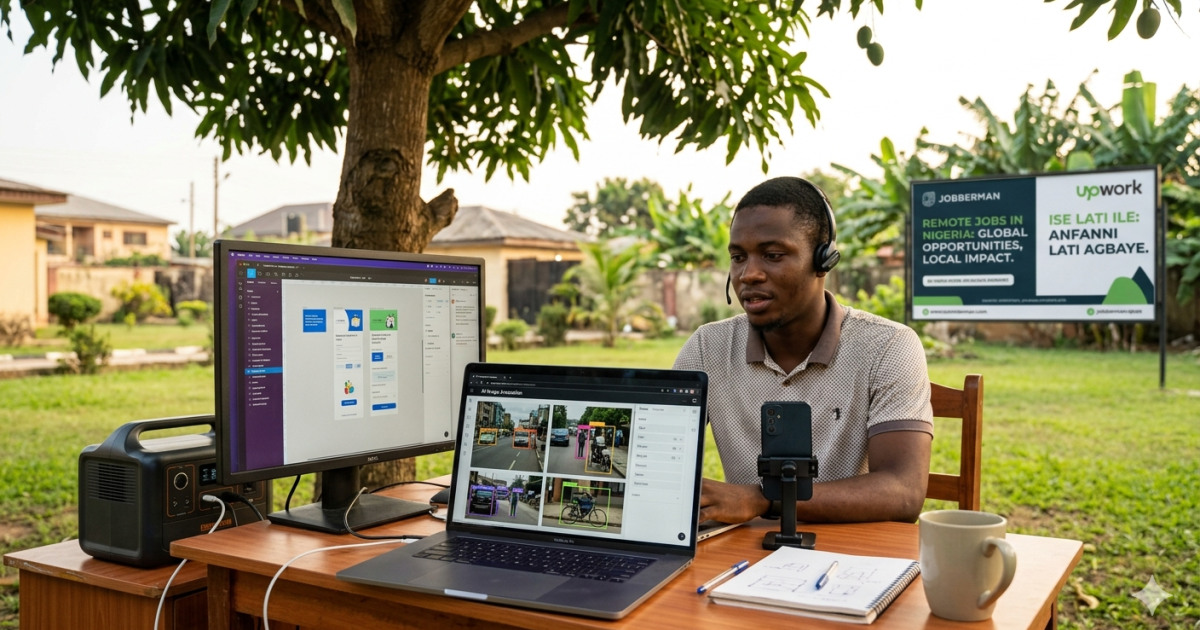
Let us do the maths quickly. The dollar to naira rate is sitting at approximately ₦1,420 today. A remote job paying $1,500 per month translates to ₦2,130,000 — before any fees. That is more than what many Nigerian senior managers earn in naira salaries at established companies. And you do it from your bedroom, or a café in Lekki, or your family house in Ibadan.
This is not a pipe dream. More Nigerians are breaking into the global workforce every year, landing legitimate full-time and freelance roles with companies in the US, UK, Canada, and Europe. The skills they are using — software development, content writing, digital marketing, UI/UX design, virtual assistance, customer support — are the same skills many Nigerians already have or can learn in 3–6 months.
This guide covers the 10 most reliable platforms for finding dollar-paying remote jobs in Nigeria in 2026, the in-demand skills you need, salary benchmarks, and — critically — how to actually receive those dollars in Nigeria without losing a chunk to fees and bad exchange rates.
Why Dollar-Paying Remote Jobs Are Life-Changing for Nigerians
Consider what earning in dollars means in practice. At today’s rate of ₦1,420/$:
| Monthly Dollar Earnings | Naira Equivalent (₦1,420/$) | Comparable to… |
|---|---|---|
| $500/month | ₦710,000 | Mid-level Lagos professional salary |
| $1,000/month | ₦1,420,000 | Senior manager at a mid-sized Nigerian firm |
| $2,000/month | ₦2,840,000 | Director-level salary at many Nigerian companies |
| $3,500/month | ₦4,970,000 | C-suite executive range |
| $5,000/month | ₦7,100,000 | Top-tier professional income |
According to data compiled by Dynamite Jobs in early 2026, the current average salary range for remote roles available to Nigerian applicants is $4,700 to $9,300 per month, with some senior technical roles paying as high as $35,000 per month. Those figures represent a once-in-a-generation wealth-building opportunity for skilled Nigerians who do not need to relocate abroad — they just need the right platforms, the right skills, and a reliable way to get paid.
The 10 Best Platforms for Remote Jobs Paying Nigerians in Dollars (2026)
1. Upwork — Best Overall for Freelancers
URL: upwork.com | Best for: Writers, developers, designers, marketers, VAs | Payment: USD via Payoneer, direct bank transfer | Competition: High | Beginner-friendly: Moderately
Upwork is the world’s largest freelance marketplace and the starting point for most Nigerian remote workers. Clients post jobs, you submit proposals, and if selected, you work under Upwork’s escrow payment protection — meaning your money is secured before you start. The platform pays in USD, and you can withdraw through Payoneer (the most common method for Nigerians) or direct bank transfer.
What works in Nigeria on Upwork: Content writing, copywriting, SEO, social media management, graphic design, web development (especially WordPress and Shopify), virtual assistance, data entry, video editing, and customer support. Nigerian freelancers consistently report landing their first contracts in these categories with 3–6 months of effort and a well-optimised profile.
Honest assessment: Upwork is competitive. The platform has millions of freelancers globally, and winning your first contract can take time. The key is a specialised niche (not “I do everything”), a compelling portfolio, and proposal personalisation. Upwork charges a service fee of 10% on earnings, which reduces to 5% once you exceed $10,000 with a single client.
2. Fiverr — Best for Beginners and Niche Services
URL: fiverr.com | Best for: Writers, designers, voiceover artists, animators, marketers | Payment: USD via Payoneer or bank transfer | Competition: Medium | Beginner-friendly: Yes
Unlike Upwork where you apply for jobs, Fiverr works the other way: you create “gigs” (service listings) and clients come to you. This passive approach makes it attractive for beginners. A well-written gig for “I will write SEO blog posts for your Nigerian business” or “I will design your Canva social media graphics” can generate enquiries without you having to pitch anyone.
Fiverr is particularly popular among Nigerian voiceover artists, graphic designers, video editors, and social media managers. The platform has a global client base, and because it serves international clients, all payments are processed in US dollars. Fiverr charges a 20% commission on earnings — higher than Upwork — but the inbound traffic it delivers can compensate for the higher cut.
3. Toptal — Best for Experienced Professionals ($$$)
URL: toptal.com | Best for: Senior developers, designers, finance professionals, product managers | Payment: USD via wire transfer | Competition: Very low (elite screening) | Beginner-friendly: No
Toptal is not for everyone — and that is precisely what makes it so valuable for those who qualify. The platform operates on an elite selection model: only the top 3% of applicants pass their screening, which involves an English assessment, a technical/skills evaluation, a live problem-solving session, and a test project. Clients include companies like Shopify, Motorola, and various US Fortune 500 firms.
If you pass, the rewards are exceptional: high-paying, long-term contracts with international companies, all paid in USD, with rates typically starting from $60–$100 per hour for technical roles. Several Nigerian developers, designers, and finance professionals have shared testimonials of securing $5,000–$15,000 per month contracts through Toptal. The Tribune Online noted in its 2026 remote work guide that Toptal “caters primarily to professionals in software development, design, finance, and product management” — making it ideal for experienced Nigerian tech and finance professionals who want the most lucrative remote contracts available.
4. LinkedIn — Best for Full-Time Remote Employment
URL: linkedin.com | Best for: All professionals seeking full-time remote employment | Payment: Depends on employer (USD, EUR, GBP) | Competition: High but targeted | Beginner-friendly: With the right profile
While Upwork and Fiverr are freelance-first, LinkedIn is where full-time, salaried remote jobs live. Thousands of US, UK, and European companies post fully remote positions on LinkedIn daily — roles in sales, marketing, customer success, product management, software engineering, data analysis, HR, and finance. Many explicitly state “open to international applicants.”
The key to LinkedIn success is profile optimisation: a professional headshot, a compelling headline (not just your job title but your value proposition), detailed experience descriptions that use keywords recruiters search for, and a portfolio or recommendations section that provides social proof. Workfromhome.ng reports that many Nigerians who succeed on LinkedIn combine regular posting about their area of expertise with direct outreach to recruiters — building visibility rather than waiting passively for applications to land.
Pro tip: Use LinkedIn’s “Open to Work” feature and set your location to “Remote” rather than “Nigeria.” International recruiters sometimes filter by location, and listing yourself as available for remote work globally significantly broadens your visibility.
5. We Work Remotely — Best Dedicated Remote Job Board
URL: weworkremotely.com | Best for: Tech, design, marketing, customer support | Payment: USD (employer-dependent) | Competition: Medium | Account required: No
We Work Remotely is one of the largest dedicated remote job boards in the world, featuring thousands of opportunities from companies that are actively looking for remote workers — not companies that have remote as an afterthought. The platform lists roles across technology, marketing, design, customer support, and operations, with many open to worldwide applicants.
One of the most practical advantages of We Work Remotely is that you can browse and apply to listings without creating an account — reducing friction significantly. Tribune Online’s 2026 remote work guide highlighted it as one of the most accessible platforms for Nigerians precisely because “the platform allows users to browse and apply to listings without creating an account, providing access to a large volume of roles from startups and established companies alike.”



0 Comments
No comments yet. Be the first to share your thoughts!