




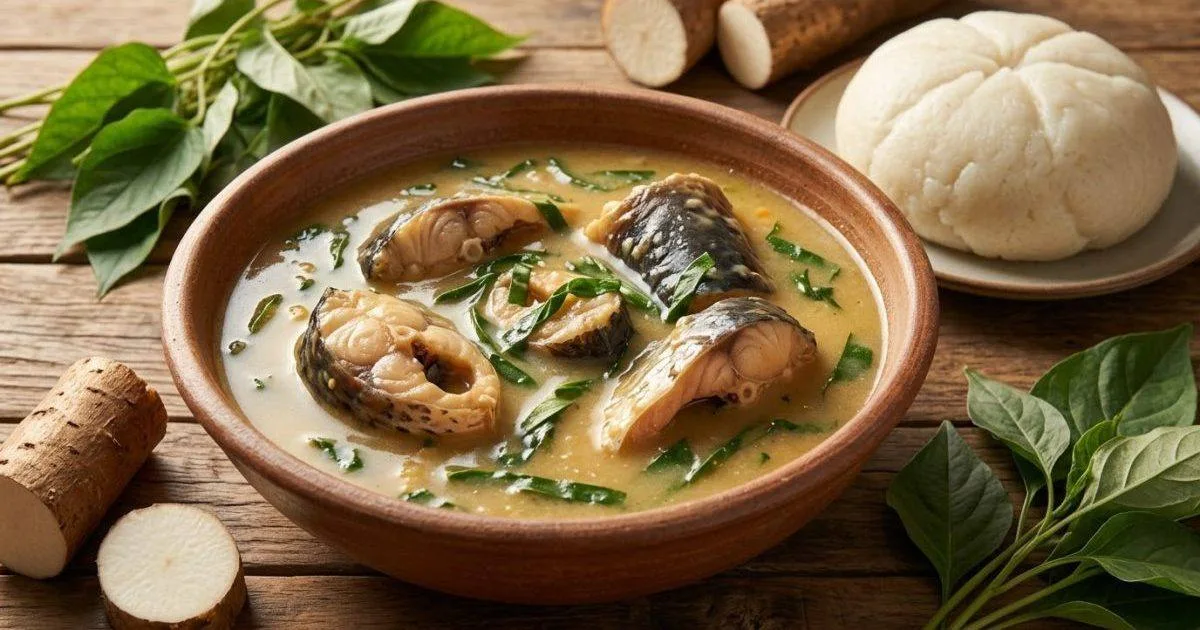
📌 Quick Summary: Nsala soup (ofe nsala) — also known as Nigerian white soup — is a light, clear Igbo soup from Anambra and Delta States, thickened with raw yam (or cocoyam) rather than palm oil. It has a delicate, pale golden broth with a distinctive, mildly peppery flavour from utazi leaves and pepper soup spices. It is most commonly made with catfish (fresh or dried), chicken, or goat meat. Prep and cook time: 45 to 60 minutes. Serves: 4 to 6. This recipe covers the yam thickener technique, the pepper soup spice blend that gives nsala its characteristic flavour, and how to achieve the clear, deeply flavoured broth that defines authentic ofe nsala.
Nsala soup holds a unique position in Nigerian culinary culture — it is the soup that sits between pepper soup and the oil-based soups of everyday Nigerian cooking, sharing the aromatic spice complexity of pepper soup but with a body and substance closer to a full meal soup. Its defining characteristic is the absence of palm oil — the thickening and richness come entirely from pounded or grated raw yam stirred into the broth, which creates a smooth, silky, pale golden texture that is completely distinct from any other Nigerian soup. Called ofe nsala in Igbo (ofe meaning soup), it originates from Anambra and Delta States and is particularly associated with the riverine Igbo communities where fresh catfish is abundant and the light, clean-flavoured soup style developed as a complement to freshwater fish.
Why No Palm Oil? The Philosophy of Nsala
The absence of palm oil in nsala is not a deprivation — it is the defining culinary choice that makes the soup itself. Palm oil colours everything it touches deep red-orange and contributes its characteristic rich, slightly fruity flavour. In nsala, removing palm oil allows the flavour of the protein (catfish, chicken, goat) to come to the centre of the soup without competition. The pepper soup spices — uda, utazi, ehuru — can develop their full aromatic complexity without being submerged under palm oil’s richness. The yam thickener creates a silky, clean-flavoured body that carries the spices, crayfish, and protein flavours more clearly than a palm oil-based soup can. The result is a soup that is simultaneously lighter (in the sense of being less oily and heavy) and more flavour-transparent — every ingredient is clearly identifiable in the taste. This makes nsala particularly good with strongly flavoured proteins like fresh catfish and fresh-killed chicken, where the fish or meat flavour itself is part of the experience.
Ingredients
| Ingredient | Quantity | Notes |
| Catfish (fresh preferred) or chicken pieces | 1 to 1.2kg | Catfish is the most traditional protein. Use fresh catfish for the best flavour — the soup showcases the fish. Chicken or goat are acceptable alternatives. |
| Raw yam (for thickening) | 150 to 200g | Peeled and cut into small pieces, then pounded or grated to a paste. This is the thickener — the equivalent of egusi in egusi soup or cocoyam in oha soup. |
| Utazi leaves (Gongronema latifolium) | 8 to 12 leaves | Sliced into strips. Provides the characteristic mildly bitter, aromatic note of nsala. Fresh preferred. |
| Uda pods (Negro pepper) | 3 to 4 pods | Seeds removed and lightly cracked. The signature pepper soup spice that defines nsala’s aroma. |
| Ehuru (calabash nutmeg) | 3 to 4 seeds | Lightly cracked. Warm, complex flavour. |
| Ground crayfish | 2 tablespoons | Freshly ground. |
| Scotch bonnet / habanero pepper | 1 to 2 whole or ground | Adjust to heat preference. |
| Onion | 1 medium | Roughly chopped. |
| Stock cubes | 1 to 2 | |
| Salt | To taste |
Step-by-Step Ofe Nsala Recipe
Step 1: Prepare the Yam Thickener
Peel the raw yam and cut into small cubes. Pound in a mortar until smooth, or grate finely on a box grater, or blend with a very small amount of water to form a smooth paste. The yam paste should have no lumps — lumpy yam paste produces a lumpy soup. Set aside.
Step 2: Cook the Protein
If using catfish: clean thoroughly, removing the slime by rubbing with salt, lemon juice, or alum, then rinsing. Cut into large pieces. Season with a pinch of salt and one stock cube. Add the onion, uda pods, ehuru seeds, and just enough water to cover — approximately 600ml to 800ml for 1kg of fish. Bring to a boil. Catfish cooks quickly — 8 to 12 minutes at a gentle boil is sufficient. Do not overcook or the fish will fall apart completely. If using chicken or goat: cook until tender (30 to 45 minutes for chicken, 45 to 60 minutes for goat), then proceed as below.
Step 3: Add the Yam Thickener
Once the protein is cooked, add the yam paste directly to the pot, stirring immediately and continuously to prevent lumps forming. The broth will begin to thicken as the raw yam starch cooks. Stir well and cook on medium heat for 5 to 7 minutes until the yam taste is fully cooked out — raw yam has a slightly bitter, starchy taste that must cook away completely. The soup should now have a smooth, slightly thickened, pale golden consistency.
Step 4: Season and Add Spices
Add the ground crayfish, ground or whole scotch bonnet pepper, and the remaining stock cube. Taste and adjust salt. The soup at this stage should have the clear, aromatic character of pepper soup combined with the silky body of the yam — deeply flavoured from the fish and spices, clean and broth-like rather than oily. Cook for a further 5 minutes.
Step 5: Add Utazi and Finish
Add the sliced utazi leaves. Stir to combine. Cook for just 2 to 3 more minutes — the utazi should wilt slightly but retain its fresh, slightly bitter flavour. Overcooking utazi destroys its aromatic contribution. Taste one final time. Nsala soup is ready when the broth is clear and pale golden, the yam thickening has made it silky rather than watery, the fish is tender, and the uda and utazi aromas are prominent and harmonious. Serve immediately — nsala is best eaten fresh and hot.
Serving Nsala Soup
Ofe nsala is served with pounded yam — the clean, silky broth coats the pounded yam in a way that is different from the oil-based soups and shows off both the soup and the swallow at their best. It can also be served with fufu or eba. In some riverine Igbo communities, nsala is eaten with fresh boiled yam rather than pounded yam, emphasising the soup’s origins in communities where both fresh yam and fresh catfish were staple daily foods rather than celebration foods. A bowl of nsala soup with pounded yam for a Nigerian who has not eaten it before is often one of those food moments that produces immediate and enthusiastic conversion — the clean, complex, aromatic depth of the broth is simultaneously familiar (the pepper soup spice notes) and completely new (the white, oil-free character of the soup itself).
Variations: Nsala with Different Proteins
While catfish is traditional and most celebrated in ofe nsala, several other proteins produce excellent results. Fresh chicken (local breeds preferred over broiler for flavour intensity): produces a golden, rich-flavoured broth. The longer cooking time required for local chicken develops deep flavour in the broth before the yam thickener is added. Ngolo (snail): a premium version of nsala with the distinctive flavour of fresh Nigerian giant snail (Archachatina marginata). Snail nsala is a special occasion dish. Assorted meats (a combination of goat, tripe, and offal): produces a richer, more complex broth than single-protein nsala. Dried fish and stockfish: while fresh fish is preferred, a combination of stockfish and dried catfish produces excellent nsala with a more intense, concentrated flavour — closer to the everyday version as opposed to the fresh-fish celebration version.
Frequently Asked Questions
Why is nsala soup called white soup?
Nsala is called white soup (or ofe ojii ocha — literally “white/clear soup” in some Igbo dialects) because of its pale golden, oil-free colour — in contrast to the deep red-orange of palm oil-based soups like egusi, oha, and bitterleaf soup that dominate Nigerian soup culture. The white colour comes directly from the absence of palm oil and the yam thickener that creates a pale, silky broth.
What makes nsala soup different from pepper soup?
Both nsala and pepper soup use uda (Negro pepper) and other pepper soup spices as aromatic foundations. The difference: pepper soup is a thin broth with no thickener, served as a liquid soup. Nsala is thickened with raw yam paste to create a silky body — it is a full meal soup served with a swallow, not a broth served alone. Nsala is also significantly more filling and protein-rich than a typical pepper soup.
Can I make nsala without utazi leaves?
Utazi is a key flavour component of nsala and is difficult to substitute directly. If completely unavailable, the soup will still be good but will lack the characteristic slightly bitter, aromatic note that utazi provides. The uda and ehuru spices are more critical to the identity of the dish than the utazi — ensure those are present even if utazi is unavailable.
Nsala Soup in Nigerian Restaurant Culture
Nsala soup has developed a strong following in Nigerian restaurants outside its Anambra and Delta State homeland, particularly in Lagos and Abuja where the cosmopolitan food culture has introduced the soup to a much wider audience than its original riverine Igbo community. Several reasons explain its particular success in the Nigerian restaurant market. Its visual distinctiveness — the pale, oil-free golden broth is immediately striking in contrast to the deep red-orange of most Nigerian soups — makes it memorable and identifiable at a glance. Its flavour profile appeals to diners who appreciate lighter, more broth-forward soups alongside or instead of the richer oil-based soups that dominate Nigerian restaurant menus. The catfish version specifically offers restaurant owners a high-perceived-value dish that can command premium pricing (fresh catfish is a premium protein) while using a soup base that is not particularly expensive to make. And importantly, it is genuinely delicious — the combination of fresh catfish, uda and ehuru spices, yam thickener, and utazi creates a flavour profile that experienced Nigerian food lovers consistently rank among the most sophisticated of Nigerian soups. Restaurants that do it well develop loyal regulars who will not order anything else when they visit, which is the highest form of culinary praise a dish can receive. Ofe nsala is, in every sense of the term, a complete expression of a culinary tradition — a soup that rewards the cook who sources good catfish, prepares fresh yam thickener rather than using a substitute, and takes the time to understand what makes each component of the soup what it is, rather than simply following steps without comprehension. Make it with the best catfish you can find, cook it with the care the recipe describes, and serve it to someone who has never eaten it — their reaction will confirm why this quietly magnificent soup deserves far wider recognition than it currently receives outside its Igbo homeland.
Ofe Nsala and the Igbo Soup Tradition
Ofe nsala sits within a broader Igbo soup tradition that values clarity, clean flavours, and the showcasing of high-quality protein — a different culinary philosophy from the rich, palm-oil-forward tradition of Yoruba soups or the intensely vegetable-laden tradition of Cross River soups. The Igbo soup canon includes oha soup (bitter leaf variant), ofe ede (cocoyam soup), egusi, ukwa, bitterleaf soup, and nsala — each with a distinct character and occasion. Nsala occupies a specific ceremonial niche: it is the soup made for guests who are of particular importance, for occasions that require showing one’s best culinary ability, and for new mothers in the post-partum period (the light, protein-rich broth without heavy palm oil is considered ideal for post-delivery recovery in traditional Igbo medicine). Understanding this cultural placement helps explain why nsala is made with particular care and why the quality of the protein — fresh, good-quality catfish or well-raised local chicken — matters so much. The soup is designed to showcase both the cook’s skill and the quality of their ingredients, and shortcuts are immediately detectable in the finished dish.
Sources
- Original recipe — NaijaSabi Lifestyle Desk, October 2026
Last updated: 1 October 2026 · NaijaSabi Lifestyle Desk.




0 Comments
No comments yet. Be the first to share your thoughts!