


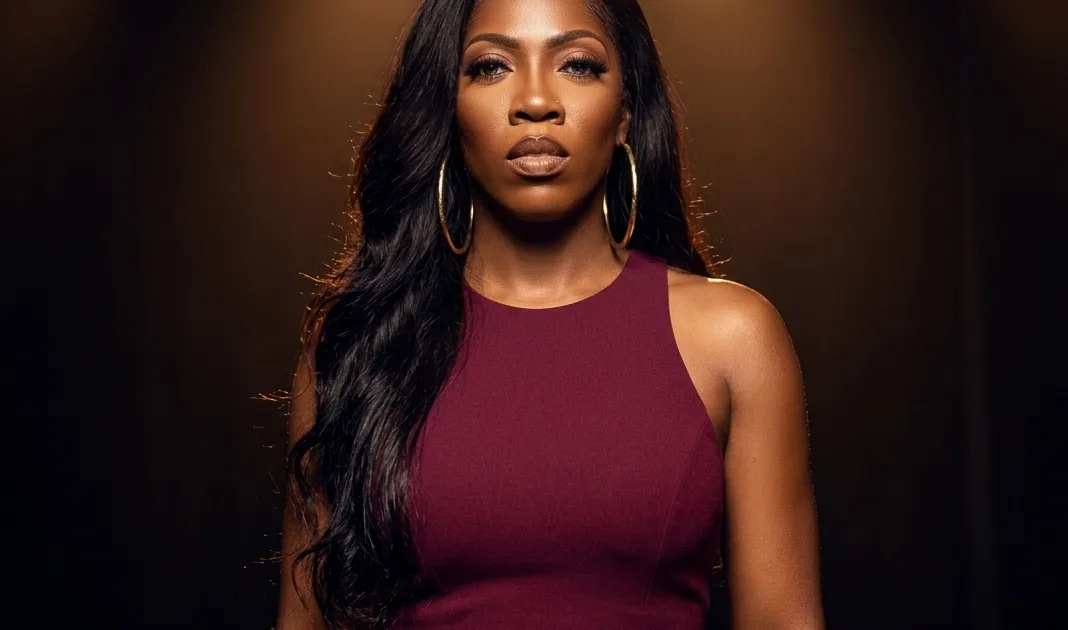
At sixteen years old, she was a backup singer for George Michael. At twenty-two, she was doing background vocals for Mary J. Blige, Chaka Khan and Kelly Clarkson. At twenty-six, she was studying at Berklee College of Music in Boston. At twenty-nine, she had a publishing deal with Sony/ATV. At thirty-two, she came home to Nigeria and signed with Mavin Records. At thirty-three, she released an album. At thirty-five, she was a single mother. At thirty-eight, she was the first woman to win the MTV Europe Music Award for Best African Act. At forty-one, she was blackmailed over a private video and refused to pay — choosing to speak about it publicly instead. At forty-five, she released This One Is Personal — her fourth studio album, her first on Empire Distribution, and perhaps the most aptly titled record of her career.
The story of Tiwatope Omolara Savage is not merely the story of a successful Nigerian musician. It is the story of a woman who has done everything the hard way — who built her career across two continents over three decades without shortcuts, who navigated a spectacular public marriage breakdown with her dignity intact, who faced blackmail and chose transparency over capitulation, and who has remained, through all of it, the most accomplished female artist in the history of Nigerian music.
She is the Queen of Afrobeats. This is her full biography.
Tiwa Savage Biography Facts at a Glance
| Full Name | Tiwatope Omolara Savage |
| Stage Name | Tiwa Savage |
| Date of Birth | February 5, 1980 |
| Age | 46 years old (as of 2026) |
| Place of Birth | Isale Eko, Lagos Island, Lagos State, Nigeria |
| State of Origin | Lagos State, Nigeria |
| Ethnicity / Tribe | Yoruba |
| Religion | Christianity |
| Father | Alhaji Savage (late) |
| Mother | Cecilia Savage |
| Siblings | Two older brothers — Wale Savage and Shola Savage |
| Education | Claremont High School, London; University of Kent (BA Accounting); Berklee College of Music, Boston (Professional Music, 2007) |
| Occupation | Singer, Songwriter, Actress, Entrepreneur, Activist |
| Genres | Afrobeats, R&B, Afropop, Pop, Hip-Hop, Soul |
| Record Labels | Mavin Records (2012–2019); Universal Music Group/Motown (2019–2024); Empire Distribution (2025–present) |
| Ex-Husband | Tunji “Tee Billz” Balogun (m. 2013; div. 2018) |
| Son | Jamil Balogun (born 2015, aka “Jam Jam”) |
| Major Awards | MTV Europe Music Award — Best African Act (2018; first woman to win); BET Award — Best New International Act (2014); multiple AFRIMMA, Headies awards |
| Net Worth (Estimated) | $9 million – $10 million USD (2026) |
| Nationality | Nigerian |
Early Life: Isale Eko, London and the Making of a Global Voice
Tiwatope Omolara Savage was born on February 5, 1980, in Isale Eko — the historic heart of Lagos Island, one of the oldest and most culturally significant communities in Lagos, where the Yoruba heritage of the city is most deeply embedded in daily life. She was the youngest of three children and the only daughter of Alhaji Savage and Cecilia Savage — a Yoruba family of upper-middle-class standing whose roots in Isale Eko gave Tiwa a grounding in the specific cultural traditions of Lagos Island that surfaces in her music as a consistent thread.
When Tiwa was eleven years old, her family relocated to London — a move that would prove transformative in ways that neither she nor her parents could have fully anticipated at the time. She attended Claremont High School in London, where she joined the school’s orchestra band as a trombone player — her first formal musical training and her first sustained engagement with Western musical structure. The trombone may seem an unlikely starting point for one of Africa’s most celebrated singers, but it speaks to the seriousness with which she approached music from childhood: not as entertainment but as a discipline.
Her entry into professional music came at an age that most aspiring musicians only dream about. She did backup vocals for English singer George Michael at the age of 16, and lent vocals to other musicians such as Mary J. Blige, Chaka Khan, Blu Cantrell, Emma Bunton, Kelly Clarkson, Andrea Bocelli, and Ms Dynamite. That list — covering British pop royalty, American R&B legends, and international classical artists simultaneously — represents one of the most extraordinary teenage musical apprenticeships in the history of any African artist. She was absorbing, at the highest professional level, the full range of what the Western music industry could teach her about vocal performance, studio craft, and the discipline required to sustain a music career in competitive markets.
In parallel with her music work, she pursued her formal education with equivalent seriousness. She graduated with a Bachelor of Arts in Accounting from the University of Kent — and briefly worked at The Royal Bank of Scotland before the music career made banking irrelevant. She then enrolled at Berklee College of Music in Boston, Massachusetts — one of the world’s most prestigious music schools — earning a degree in Professional Music in 2007. The combination of an accounting degree from a British university, a professional music degree from Berklee, and years of backup vocal experience with George Michael and Mary J. Blige gave her an artistic foundation that no amount of raw talent alone could have provided.
The X Factor and Sony/ATV: Testing the Western Market
Before returning to Nigeria, Tiwa Savage tested the Western music market directly. She participated in the UK edition of The X Factor — the Simon Cowell-produced talent competition that was at its peak of cultural influence in the mid-2000s. Her appearance did not produce a winner’s contract, but it gave her invaluable experience of mass-audience performance and exposure to the mainstream British music industry’s commercial machinery.
In 2009, she signed a publishing deal with Sony/ATV Music Publishing — one of the world’s largest music publishers, whose roster includes some of the most commercially significant songs in the history of recorded music. The publishing deal confirmed her standing as a songwriter of commercial value in the international market and gave her the professional credentials that would later inform her approach to the Nigerian industry’s increasingly sophisticated business structures.
But the Western market — despite her exceptional qualifications for it — was not where the opportunity was growing fastest. Nigeria was. The Afrobeats explosion of the early 2010s was transforming Nigerian music from a domestic industry into a global one, and the artists who positioned themselves at the centre of that transformation early would capture the momentum of a generational shift. Tiwa Savage saw it clearly and made a decision that changed her career entirely.
The Return: Mavin Records, “Kele Kele Love” and the Album That Announced a Queen
In 2012, Tiwa Savage returned to Nigeria and signed with Mavin Records — the label founded by producer and music executive Don Jazzy that was rapidly becoming the most creatively significant label in the Nigerian music industry. The signing was a statement of mutual recognition: Don Jazzy signing her acknowledged that she was the most accomplished female artist available to the Nigerian market; Tiwa signing with Mavin acknowledged that Nigeria was where the most exciting musical moment of her career would unfold.
She made her Mavin debut on the label’s 2012 compilation album Solar Plexus. Her debut solo single, “Kele Kele Love,” was an immediate national hit — a melodically irresistible, emotionally direct Afropop track that introduced her voice to the Nigerian mainstream with the impact of someone who had been preparing for this moment for twenty years, because she had been.
Her debut album, Once Upon a Time, was released on July 3, 2013. (cite index=”26-1″>The album had seven hit singles, including “Kele Kele Love” and “Eminado”. (cite index=”26-1″>It was nominated for Best Album of the Year at the 2014 Nigeria Entertainment Awards. The album won the BET Award for Best New International Act in 2014 — making her the first Nigerian female artist to win a BET Award — and established her, at thirty-three years old, as the most commercially formidable female voice in Nigerian music.
R.E.D, Sugarcane and the Rise to Continental Dominance
Her second album, R.E.D, was released in 2015 and featured hit singles including “My Darling,” “Eminado” (live version), and “If I Start to Talk.” The album deepened her commercial footprint and demonstrated a vocal and songwriting maturity that placed her in the conversation with the best Afropop album-makers of her generation.
The Sugarcane EP (2017) was a more intimate project — featuring the Wizkid collaboration “Ma Lo,” which became one of the defining songs of that year’s Afropop season. The EP confirmed that her sound was evolving — becoming more internationally oriented, more sonically adventurous, and more willing to occupy the cross-Atlantic space between Nigerian Afropop and global R&B that artists like Wizkid and Tems would subsequently colonise at even larger scale.
In 2018, she became the first woman to win the MTV Europe Music Award for Best African Act — (cite index=”22-1″>a trailblazer for women in African music and a recognition of a career that had accumulated commercial dominance, critical respect, and continental influence that no previous female African artist had achieved simultaneously.
Universal Music, Celia and the Move to Global Infrastructure
In May 2019, Tiwa Savage departed Mavin Records after seven years and signed a landmark deal with Universal Music Group (UMG) — (cite index=”30-1″>a seven-year publishing and distribution contract that made her the first African female artist to sign a major deal with UMG’s global infrastructure. The deal placed her on Universal’s Motown Records imprint in the United States and gave her access to the global distribution, marketing, and promotional infrastructure of the world’s largest music company.
Her third album, Celia, was released in July 2020 — named after her mother — and featured collaborations with Sam Smith, Naira Marley, and Stefflon Don, among others. The album reached international charts and further confirmed her standing as Africa’s most globally positioned female Afropop artist.
The Water & Garri EP (2021) featured one of her most celebrated collaborations: “Somebody’s Son” with American R&B legend Brandy — a song whose emotional depth and vocal interplay between the two artists generated significant international critical recognition. (cite index=”30-1″>In 2024, she released the film and soundtrack Water & Garri, where she starred in the lead — extending the creative universe she had built around that project into a full audiovisual experience.
This One Is Personal: The Album That Named Everything
(cite index=”28-1″>This One Is Personal is the fourth studio album by Tiwa Savage, released on 29 August 2025, via the independent record label Empire Distribution. The album comprises 15 tracks. (cite index=”28-1″>It was supported by the singles “You4Me” (released April 22, 2025) and “On the Low” (released July 29, 2025).
The album’s title is not merely descriptive — it is confessional. In the years between Celia and This One Is Personal, Tiwa Savage had lived through a divorce, a blackmail attempt, a sex tape scandal that she refused to allow to define her, the sustained challenge of single motherhood, and the relentless scrutiny that comes with being the most famous female musician in Nigeria for over a decade. The album named all of that — directly, in the way that only artists who have stopped caring what people think of their honesty can name things — and was received as the most emotionally mature work of her career.
The departure from Universal Music Group to Empire Distribution — an independent label and distribution company that has been central to the global distribution of African music — reflects her decision to exercise greater creative and commercial control over her output at a stage of her career when she has the leverage and the catalogue to do so on her own terms.
The Marriage, the Breakdown and Teebillz
Tiwa Savage married Tunji “Tee Billz” Balogun in a traditional wedding in Lagos in November 2013, followed by a white wedding in Dubai in April 2014. Tee Billz — a Lagos-born, US-educated talent manager — had been involved in her career management, and their relationship evolved from professional to romantic in a way that the Nigerian entertainment industry followed closely.
Their son, Jamil Balogun — affectionately known as “Jam Jam” — was born in 2015 and is a central and beloved presence in Tiwa’s social media and public life. Jamil is frequently photographed with his mother, travels with her to events and performances, and occupies the emotional centre of her personal narrative with a visible warmth that needs no performance.
The marriage began unravelling publicly in 2016, when Tee Billz posted a social media message that accused Tiwa of infidelity and described suicidal thoughts — a dramatic and painful public disclosure that exposed the private crisis of their marriage to Nigeria’s entire entertainment-consuming public. Tiwa responded in an interview that attributed the marriage’s collapse primarily to Tee Billz’s drug use and financial recklessness — allegations that he denied. The public breakdown of what had appeared to be one of Nigeria’s most glamorous celebrity marriages was received with the combination of voyeurism and genuine sympathy that such disclosures always generate.
Their divorce was finalised in 2018. Both have maintained their co-parenting commitment to Jamil with apparent sincerity, and the post-divorce relationship — while not publicly warm — has been managed with sufficient dignity that their son has been shielded from the worst of the public acrimony.
The Blackmail: Choosing Courage Over Capitulation
In October 2021, in one of the most remarkable acts of public personal courage by any Nigerian entertainer in recent memory, Tiwa Savage disclosed on American radio — Angie Martinez’s Power 105.1 show — that she had been the subject of a sex tape blackmail attempt. (cite index=”25-1″>Savage told Angie Martinez that she had been blackmailed over a leaked video of herself and her partner having sex. Savage’s partner unintentionally shared the footage on Snapchat and removed it nearly immediately. However, someone grabbed the footage before it was removed and threatened to release it if they weren’t paid. Savage declined to offer the guy money and instead chose to publicly discuss the leak.
The decision to disclose rather than pay — to refuse the blackmailer’s terms and instead remove the power of the secret by making it public herself — was extraordinary. In Nigeria’s socially conservative entertainment environment, where female artists face disproportionate scrutiny of their personal lives and sexual expression, the courage of that choice is difficult to overstate. She was not merely refusing to be extorted; she was making a statement about the right of a woman to live her life without her sexuality being weaponised against her by someone seeking to exploit it.
The response in Nigeria was mixed — as it inevitably is when a woman asserts control over a narrative involving her own body — but the weight of admiration for her handling of the situation has grown with time. It was, in retrospect, one of the most defining moments of her public career: not a song, not an award, not an album, but a radio interview in New York in which she chose truth over fear.
Tiwa Savage’s Net Worth in 2026
Tiwa Savage’s estimated net worth in 2026 is between $9 million and $10 million USD — (cite index=”34-1″>her wealth stems from multiple revenue streams, including music sales and streaming — hits like “Somebody’s Son” featuring Brandy and “All Over” have garnered millions of streams globally.
Her full income portfolio includes:
- Music streaming and royalties: A catalogue across four studio albums and multiple EPs, generating consistent global streaming revenue across Spotify, Apple Music, Audiomack, and Boomplay
- Brand endorsements: Long-term partnerships with major Nigerian and multinational brands — she has been one of Nigeria’s most commercially sought-after celebrity brand partners for over a decade, with deals spanning beauty, fashion, telecommunications, and lifestyle categories
- Live performances: Concert and festival fees across Africa, Europe, North America, and the UK — her stage presence is consistently ranked among the most commanding of any Nigerian female artist
- Film/audiovisual: Revenue from the Water & Garri film (2024) and associated soundtrack
- Empire Distribution deal: The new label arrangement provides more favourable revenue splits than major label deals, improving her per-stream and per-sale income
- Real estate: Lagos property investments including her residence at Richmond Estates in Lekki
Full Discography
| Year | Title | Type | Label | Key Achievement |
| 2013 | Once Upon a Time | Album | Mavin / Cooltempo | Debut album; BET Award Best New International Act 2014; “Kele Kele Love,” “Eminado” |
| 2015 | R.E.D | Album | Mavin / Cooltempo | “My Darling,” “If I Start to Talk”; consolidated commercial dominance |
| 2017 | Sugarcane | EP | Mavin / Cooltempo | “Ma Lo” ft. Wizkid; international breakthrough; “All Over” |
| 2018 | — | — | Mavin | First woman to win MTV EMA Best African Act |
| 2019 | — | — | UMG / Motown | Signs landmark 7-year deal with Universal Music Group |
| 2020 | Celia | Album | Motown / UMG | Named after her mother; ft. Sam Smith, Naira Marley, Stefflon Don; international chart entries |
| 2021 | Water & Garri | EP | Motown / UMG | “Somebody’s Son” ft. Brandy; “Tales by Moonlight”; October 2021: publicly discloses blackmail attempt on US radio |
| 2024 | Water & Garri (Film + Soundtrack) | Film/Album | UMG | Tiwa stars in lead role; audiovisual expansion of Water & Garri universe |
| August 2025 | This One Is Personal | Album | Empire Distribution | 4th studio album; 15 tracks; “You4Me” (Apr 2025) and “On the Low” (Jul 2025) as lead singles; most personal project of career |
Career Timeline
| Year | Milestone |
| 1980 | Born February 5 in Isale Eko, Lagos Island, Lagos State; youngest of three children |
| 1991 | Relocates to London with family aged 11; attends Claremont High School; plays trombone in school orchestra |
| 1996 | Aged 16 — becomes backup vocalist for George Michael; begins professional music career in London |
| ~1996–2005 | Background vocals for Mary J. Blige, Chaka Khan, Blu Cantrell, Emma Bunton, Kelly Clarkson, Andrea Bocelli, Ms Dynamite |
| ~2003 | Graduates from University of Kent with BA in Accounting; briefly works at The Royal Bank of Scotland |
| ~2004–2005 | Participates in UK X Factor; begins formal music industry development |
| 2005–2007 | Berklee College of Music, Boston — earns degree in Professional Music (2007) |
| 2009 | Signs publishing deal with Sony/ATV Music Publishing — first major international industry validation |
| 2012 | Returns to Nigeria; signs with Mavin Records (Don Jazzy); appears on Solar Plexus compilation; “Kele Kele Love” released |
| July 2013 | Debut album Once Upon a Time released; traditional wedding to Tee Billz (November 2013) |
| April 2014 | White wedding to Tee Billz in Dubai; BET Award — Best New International Act (first Nigerian female BET winner) |
| 2015 | R.E.D album released; son Jamil Balogun born |
| 2016 | Public marriage breakdown — Tee Billz posts crisis message; Tiwa gives interview attributing marriage collapse to drugs and financial recklessness |
| 2017 | Sugarcane EP released; “Ma Lo” ft. Wizkid becomes major hit |
| 2018 | Divorce from Tee Billz finalised; MTV Europe Music Award — Best African Act (first woman to win) |
| May 2019 | Exits Mavin Records; signs 7-year deal with Universal Music Group / Motown — first African female UMG global deal |
| July 2020 | Celia album released — named after her mother; international chart entries |
| August 2021 | Water & Garri EP released; “Somebody’s Son” ft. Brandy becomes critically acclaimed |
| October 2021 | Discloses blackmail over sex tape on Angie Martinez / Power 105.1 — chooses public disclosure over payment |
| 2024 | Water & Garri film and soundtrack released; stars in lead role |
| August 29, 2025 | This One Is Personal album released via Empire Distribution — 4th studio album; 15 tracks; most personal project of career |
| 2026 | Continues as Nigeria’s undisputed Queen of Afrobeats; net worth estimated $9–10 million; son Jamil growing up in the public eye |
Why Tiwa Savage Matters: The Standard Bearer for African Women in Music
The case for Tiwa Savage’s historical significance in Nigerian and African music is not difficult to make — but it is worth making carefully, because it operates on several levels simultaneously that are sometimes conflated.
She is the most commercially successful female Nigerian recording artist of her generation. That is a fact, measurable in album sales, streaming numbers, award wins, and the size of the stages she has headlined across Africa, Europe, and North America. It is also, by itself, insufficient to explain why she matters as much as she does.
What makes her genuinely significant is the combination: the commercial achievement, plus the pathway she took to it (the Berklee education, the George Michael apprenticeship, the Sony/ATV publishing deal, the deliberate and disciplined preparation for a career that she built across two decades before it reached its full commercial expression), plus the specific ways she has used her platform (the BET Award acceptance speeches, the MTV EMA landmark, the sex tape disclosure, the advocacy for female artists in an industry that has not always treated women with the respect their contributions deserve).
She is also, importantly, a reminder that Nigerian female artists existed and thrived before the current generation of Afrobeats stars made the genre globally prominent. She was winning BET Awards and MTV EMAs while the current generation was still developing. She created the commercial and cultural space that female Nigerian artists now occupy — not singlehandedly, but with a sustained, deliberate contribution that the subsequent generation built on.
She is 46. She has one son. She has four studio albums. She has a BET Award and an MTV EMA. She backed down from a blackmailer. She is still releasing music, still touring, still being the Queen. Not because the title was given to her — but because she earned it, over thirty years, one precise and disciplined choice at a time.
Frequently Asked Questions About Tiwa Savage
What is Tiwa Savage’s real name?
Tiwa Savage’s full real name is Tiwatope Omolara Savage. She was born on February 5, 1980, in Isale Eko, Lagos Island, Lagos State, Nigeria. She is of Yoruba ethnic heritage. The name Tiwatope means “my crown is sufficient” or “my crown is enough” in Yoruba — a name whose meaning her career has spent forty-six years vindicating. She has used the stage name Tiwa Savage throughout her professional music career.
How old is Tiwa Savage?
Tiwa Savage is 46 years old as of 2026. She was born on February 5, 1980, in Lagos, Nigeria. She relocated to London at age eleven and began her professional music career as a backup vocalist at sixteen. She has been professionally active in the music industry for thirty years.
Who is Tiwa Savage’s husband?
Tiwa Savage is divorced. She was married to Tunji “Tee Billz” Balogun — a Nigerian talent manager — from 2013 to 2018. Their traditional wedding was held in Lagos in November 2013, with a white wedding in Dubai in April 2014. The marriage ended following a public breakdown in 2016 involving Tee Billz’s social media crisis disclosure, with the divorce finalised in 2018. They have one son together, Jamil Balogun (born 2015), and have maintained a co-parenting relationship since their separation. Tiwa has not publicly confirmed a new marriage as of 2026.
How many children does Tiwa Savage have?
Tiwa Savage has one child — a son named Jamil Balogun, born in 2015 from her marriage to Tee Billz. Jamil — affectionately called “Jam Jam” by his mother and her fans — is a visible and beloved presence in Tiwa’s social media and public appearances. He is currently approximately eleven years old and growing up with the particular experience of being the son of one of Africa’s most famous women.
What is Tiwa Savage’s net worth in 2026?
Tiwa Savage’s estimated net worth in 2026 is between $9 million and $10 million USD. Her wealth comes from music streaming royalties across four studio albums and multiple EPs, brand endorsements with major Nigerian and international brands, live performance fees from concerts across Africa, Europe, and North America, revenue from the Water & Garri film (2024), and real estate investments in Lagos. Her deal with Empire Distribution for the This One Is Personal album (2025) is expected to increase her per-release income relative to her previous major label arrangements.
What is Tiwa Savage’s most famous song?
Several songs compete for this distinction across different eras of her career. “Kele Kele Love” (2012) was her breakthrough Nigerian hit. “All Over” (2017) became a continental Afropop anthem. “Ma Lo” featuring Wizkid (2017) was her most internationally successful collaboration to that point. “Somebody’s Son” featuring Brandy (2021) is perhaps her most critically acclaimed recording — a song whose vocal performance from both artists was widely praised as one of the finest R&B collaborations of the year.
What was the Tiwa Savage blackmail incident?
In October 2021, Tiwa Savage disclosed on Angie Martinez’s Power 105.1 radio show in New York that she had been the target of a sex tape blackmail attempt. Her partner had accidentally shared a private video on Snapchat and removed it almost immediately — but someone saved the footage before it was deleted and contacted her with a demand for payment in exchange for not releasing it. Tiwa Savage refused to pay. Instead, she chose to go public on US radio — removing the blackmailer’s power by making the secret public herself. The disclosure was widely praised as an act of personal courage, particularly in the context of Nigeria’s socially conservative attitudes toward female sexuality and public disclosure.
What is Tiwa Savage’s latest album?
Tiwa Savage’s most recent studio album is This One Is Personal, released on August 29, 2025, through Empire Distribution. It is her fourth studio album, comprising 15 tracks, and was supported by the singles “You4Me” (released April 22, 2025) and “On the Low” (released July 29, 2025). The album is widely regarded as her most emotionally candid work — a reflection on love, loss, motherhood, and resilience that draws on the personal experiences of the decade preceding its release.



0 Comments
No comments yet. Be the first to share your thoughts!