


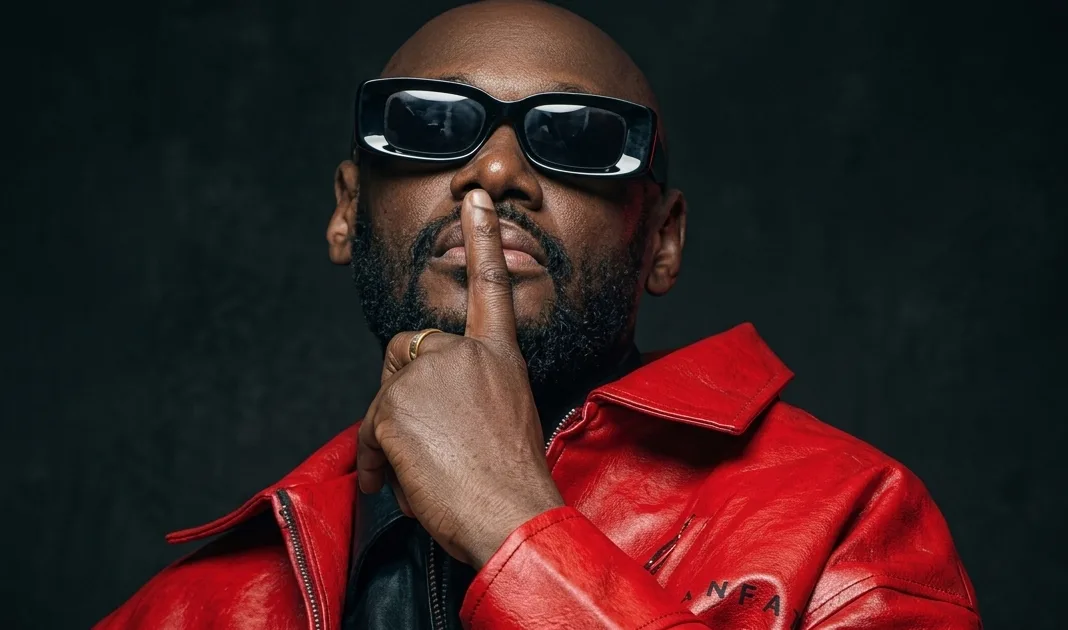
There is a song called “African Queen” that has been playing somewhere in the world, without interruption, since 2004. Not literally — but close enough that the distinction barely matters. It has been used in wedding videos and film soundtracks and viral social media compilations and quiet bedrooms where couples who met years after it was released have adopted it as their own. It has outlasted three Nigerian presidents, a global pandemic, and the entire commercial lifespan of several subsequent musical genres. It is, by any reasonable measure, one of the most enduring love songs ever recorded in Africa — and it was written and performed by a man from Benue State who dropped out of university and moved to Lagos with nothing but a voice and the absolute conviction that music was what he was for.
He is Innocent Ujah Idibia. The world knows him as 2Baba — formerly 2Face Idibia, and before that, simply Tuface. He is 50 years old. He has seven children. He divorced Annie Macaulay-Idibia in 2025 after twelve years of marriage. He immediately married Natasha Osawaru, an Edo State lawmaker, in a union that has been as publicly turbulent as anything in his personal life — and his personal life has rarely been free of turbulence. He has navigated all of it — the babymama controversies, the public apologies, the divorces, the family petitions, the viral arguments — with the particular combination of musical genius and personal complexity that makes him one of the most completely human figures in Nigerian public life.
He is not merely a singer. He is an institution. This is his full biography.
2Baba Biography Facts at a Glance
| Full Name | Innocent Ujah Idibia |
| Stage Names | 2Baba; 2Face Idibia; Tuface; Lord Elly; Tubaba |
| Date of Birth | September 18, 1975 |
| Age | 50 years old (as of 2026) |
| Place of Birth | Jos, Plateau State, Nigeria |
| State of Origin | Benue State, Nigeria |
| Ethnicity / Tribe | Idoma (Benue State) |
| Religion | Christianity |
| Education | Mount Saint Gabriel’s Secondary School, Makurdi; Institute of Management and Technology (IMT), Enugu (National Diploma, Business Administration — did not complete degree) |
| Occupation | Singer, Songwriter, Record Producer, Entrepreneur, Activist, Philanthropist |
| Genres | Afrobeats, R&B, Hip-Hop, Reggae, Gospel, Afropop |
| Record Label | Hypertek Digital (own label); formerly Kennis Music |
| Former Group | Plantashun Boiz (with Blackface and Faze) |
| First Wife | Annie Macaulay-Idibia (m. 2012; div. 2025) |
| Current Wife | Natasha Osawaru (m. July 2025; separated August 2026) |
| Children | Seven — including Noni (with Pero Adeniyi), Zion (with Pero Adeniyi), Justin (with Sumbo Ajaba), Chisom (with Sumbo Ajaba), Isabel (with Annie), Olivia (with Annie), baby boy (with Natasha, b. November 2025) |
| Net Worth (Estimated) | $10 million – $12 million USD (2026) |
| Nationality | Nigerian |
Early Life: Jos to Makurdi to Enugu — The Idoma Boy Who Found His Voice
Innocent Ujah Idibia was born on September 18, 1975, in Jos, Plateau State — one of Nigeria’s central highland cities, known for its cooler climate and its extraordinary cultural diversity. Though born in Jos, his roots and identity are firmly in Benue State — the home of the Idoma people, one of Nigeria’s most culturally rich ethnic groups, located in the Middle Belt region. He is Idoma, and the cultural identity of Benue — its music, its communal values, its specific relationship to land and belonging — runs through his work as a consistent undercurrent even when the surface sounds of his music are fully cosmopolitan Lagos Afrobeats.
He attended Mount Saint Gabriel’s Secondary School in Makurdi — the capital of Benue State — for his secondary education. It was here that he first encountered Ahmedu Augustine Obiabo, known professionally as Blackface Naija, who would become his bandmate, collaborator, and eventually his most persistent critic. The relationship that began in a secondary school in Makurdi would define and complicate a significant portion of 2Baba’s public narrative across the following three decades.
After secondary school, he enrolled at the Institute of Management and Technology (IMT) in Enugu — one of Nigeria’s established polytechnics — to study Business Administration and Management. At IMT, he met Chibuzor Oji, known as Faze — completing the trio that would eventually become Plantashun Boiz. He also began performing seriously: by 1996, he had already begun composing music and recording jingles, especially at the GB Fan Club at Enugu State Broadcasting Services (ESBS).
He did not complete his degree. 2Baba dropped out from school so as to pursue his musical career. He moved to Lagos, connected with Blackface Naija, and the three young men — two from Benue, one from Enugu — began building what would become one of the most celebrated groups in Nigerian music history.
Plantashun Boiz: The Group That Launched Nigerian R&B
Plantashun Boiz were formed in the late 1990s — a Nigerian hip-hop and R&B music group whose members were 2face Idibia, Faze, and Blackface. The group was formed during their college years in Enugu, at the Institute of Management and Technology. Under Nelson Brown’s Dove Records, they released two highly successful albums: Body and Soul (2000) and Sold Out (2003).
Both albums were commercial and critical successes that established the trio as one of the defining acts of the era of Nigerian music that preceded the Afrobeats explosion of the 2010s. Their sound — melodic R&B with Nigerian cultural elements, delivered with genuine vocal harmony and strong songwriting — was sophisticated for its time and created the foundation on which 2Baba’s solo career would be built.
The group reunited briefly in 2007 for a third album, Plan B — but by that point, 2Baba’s solo career had already made him the most commercially successful of the three by a considerable margin, and the reunion was more nostalgic than generative. The group formally disbanded, and the individual paths of its members diverged permanently — with 2Baba ascending to the status of one of Africa’s most celebrated solo artists, Faze building a respected independent career, and Blackface embarking on a years-long public dispute with 2Baba over the song that would define the latter’s legacy.
“African Queen” and the Debut That Made History
In 2004, 2Face Idibia released his debut solo album: Face 2 Face. The album announced, with immediate and overwhelming commercial impact, that what had been the most talented member of a successful group was an even more formidable solo artist. It produced hits including “Nfana Ibaga,” “Ole,” and the track that would change everything: “African Queen.”
“African Queen” is the song by which 2Baba will ultimately be remembered above all others — a love song of such melodic directness and emotional sincerity that it transcended the specific Nigerian market for which it was made and became a genuinely global phenomenon. It was featured in the 2005 Hollywood film Phat Girlz, starring Mo’Nique — giving it exposure in American cinemas and on American television that no Nigerian song had previously achieved at that scale. It became the calling card for a generation of Nigerians in the diaspora who used it as an introduction to their home culture. It made 2Face Idibia’s name recognisable in countries and communities far removed from Lagos.
The song also became the subject of one of the most protracted disputes in Nigerian music history. Following the split of Plantashun Boiz, former group member Blackface repeatedly accused 2Baba of stealing his song African Queen. Blackface also claimed that he was not given due credit for co-writing the song. Their dispute lasted for years, with legal threats and diss tracks exchanged between the two artists. 2Baba has maintained that the songwriting credits accurately reflect the actual creative contributions. The dispute has never been definitively resolved, though it has dimmed neither the song’s legacy nor 2Baba’s commercial standing.
The Solo Career: An Artist Who Built the Foundation Others Stand On
Following Face 2 Face, 2Baba released a succession of albums that maintained his status as one of Nigeria’s most commercially and artistically significant artists. Grass 2 Grace (2006) deepened his catalogue. The Unstoppable (2008) produced further hits and won multiple awards. The Ascension (2014) demonstrated continued relevance a decade into his solo career. Warriors (2017) and Indiginuity (2019) extended the catalogue further.
His most celebrated songs beyond “African Queen” include “True Love,” “Only Me,” “Implication,” “Gaga Shuffle,” “Ihe Neme,” “Oya Come Make We Go,” and “Rainbow.” The breadth of this catalogue — across Afrobeats, R&B, reggae, gospel, and hip-hop — reflects a musical intelligence that has never been content with a single sound or a single audience.
He founded his own label, Hypertek Digital, giving him the creative and commercial control over his output that his career’s longevity required. Hypertek has released his most recent solo work and serves as the institutional infrastructure of his music business.
In 2016, he officially changed his stage name from 2Face Idibia to 2Baba — a rebranding that signalled artistic maturity and a desire to move beyond the identity of his early career while retaining the cultural recognition that name had built over two decades.
The Protest That Almost Wasn’t: Taking on the Government
In February 2017, 2Baba announced via social media that he was organising a nationwide protest against the Nigerian government of President Muhammadu Buhari — citing economic hardship, government incompetence, and the deteriorating quality of life for ordinary Nigerians. The announcement generated enormous public excitement and significant political anxiety, with Nigerians across the country expressing willingness to participate in what would have been one of the largest civilian political protests in the country’s history.
The protest did not happen. 2Baba called it off at the last minute, citing concerns about the safety of participants and the risk of violence. The reversal generated significant controversy — with rumours circulating on social media alleging that the administration, through the DSS, had picked him up earlier that day and pressured him to cancel the planned protest. He denied these allegations but did not provide a detailed alternative explanation. The episode revealed both the genuine political influence he commands and the limits of what individual celebrity activism can accomplish in Nigeria’s specific governance context.
Annie Macaulay, the Marriage, the Divorce and a Nation’s Collective Pain
The love story between 2Baba and Annie Macaulay — the Nigerian actress and model who became his wife — was one of the most publicly followed relationships in Nigerian entertainment history. They had known each other since the early 2000s, when Annie was already a figure in the entertainment industry and 2Baba was beginning his rise. Their relationship survived his multiple other relationships and children born outside their union — a survival that Annie herself has described, in public and private, as having cost her enormously in terms of personal dignity and emotional wellbeing.
They married in a lavish ceremony in Lagos in January 2012, with a civil ceremony in Dubai in March 2013. They had two daughters together: Isabel Idibia (born December 2008, before the formal marriage) and Olivia Idibia (born January 2014). Their marriage, despite its visible tensions and the controversies surrounding his other children, became a reference point in Nigerian conversations about love, loyalty, and what women endure in relationships with powerful men.
In 2022, on the Netflix reality show Young, Famous & African, Annie broke down publicly — expressing the accumulated pain of years of humiliation, infidelity, and the experience of watching her husband father children with multiple women while she remained committed to the marriage. 2Baba publicly apologized to his wife and family, stating that he had been a terrible husband and father at times. The apology — which was genuine in its expression but did not fundamentally alter the underlying dynamics of their relationship — was received with a mixture of sympathy and scepticism by the Nigerian public.
On January 26, 2025, 2Baba announced on Instagram that he and Annie had been separated for some time and had commenced divorce proceedings. “The marriage hasn’t been working for a long time,” he said. Annie later publicly acknowledged the end of their marriage during the 17th edition of The Headies in Lagos in April 2025. The divorce, after more than two decades of a relationship that Nigeria had collectively invested in, was received with widespread sadness and generated an enormous amount of public commentary.
Natasha Osawaru: The New Marriage and the New Controversy
After announcing his separation from Annie, 2Baba publicly introduced Edo State lawmaker Natasha Osawaru as his new partner in February 2025. Natasha Osawaru is a member of the Edo State House of Assembly — a politician from the Igbinedion family dynasty — who was previously unmarried and without children. 2Baba publicly defended her against accusations of homewrecking, calling her “a young, brilliant and amazing woman” and stating clearly that she had nothing to do with his decision to end his marriage to Annie.
They held their traditional wedding in July 2025 and welcomed their first child together, a baby boy, in November 2025. The marriage brought 2Baba’s total number of children to seven — across three women — and triggered a new wave of public controversy that has been at least as dramatic as anything in his previous personal history.
2Baba’s family petitioned Inspector General of Police Kayode Egbetokun, calling for an investigation into claims against Osawaru — accusing her of bigamy, alleging she married 2Baba before his divorce from Annie was finalised, along with physical assault, financial misappropriation, and introducing the singer to harmful substances. 2Baba publicly denounced the petition, dismissing the allegations as false and harmful, revealing the severe personal toll the controversy had taken on him and his spouse.
By August 2026, the marriage appeared to be in serious difficulty. At Daddy Showkey’s 50 Years on Stage concert on August 9, 2026, 2Baba publicly described his marriage to Natasha as “trouble,” saying in Pidgin English: “Going forward, I don decide not to dey look for trouble again.” The statement was interpreted widely as a confirmation that the marriage had broken down — though no formal separation announcement had been made at the time of this writing.
2Baba’s Seven Children
2Baba is the father of seven children from three women — a family configuration that has been central to the public narrative of his personal life throughout his career:
- From Pero Adeniyi (his first known partner): Noni Idibia and Zion Idibia
- From Sumbo Ajaba Adeoye (now married to another man): Justin Idibia and Chisom Idibia
- From Annie Macaulay-Idibia (his first wife, divorced 2025): Isabel Idibia (born 2008) and Olivia Idibia (born 2014)
- From Natasha Osawaru (his second wife, married July 2025): one son (born November 2025; name not publicly confirmed)
He has spoken in interviews about his deep love for all his children and his commitment to their wellbeing, while acknowledging the complexity of the circumstances in which many of them were born. His children with Annie are among the most publicly recognised in Nigerian celebrity culture — appearing in family events, on social media, and at public occasions that document the highs and lows of a family navigating unusual public scrutiny.
Philanthropy: The 2Face Idibia Reachout Foundation
2Baba established an NGO called 2Face Idibia Reachout Foundation, with the motto “service to humanity.” The foundation has engaged in education, healthcare, and community development initiatives across Nigeria — particularly targeting vulnerable communities in Benue State and the broader Middle Belt region. In 2009, 2Baba was appointed as ambassador of the National Agency for Food and Drug Administration and Control (NAFDAC).
His activism extends beyond formal philanthropy. He has been a consistent voice — sometimes at considerable personal risk — on matters of Nigerian governance, economic inequality, and the rights of ordinary citizens. The 2017 protest episode demonstrated both his willingness to engage politically and the practical constraints on celebrity activism in Nigeria’s specific governance environment.
2Baba’s Net Worth in 2026
2Baba’s estimated net worth in 2026 is between $10 million and $12 million USD — a figure that reflects over two decades of earnings from music, endorsements, and business investments, moderated by the lifestyle costs and personal circumstances of a man who has financially supported multiple households across his career.
His income streams include:
- Music royalties: A catalogue spanning more than twenty years, including “African Queen” — one of the most streamed and licensed Nigerian songs in history — generating ongoing royalty income from streaming, synchronisation licensing, and public performance
- Hypertek Digital: Revenue from his label’s operations, artist development, and catalogue management
- Brand endorsements: Long-term partnerships with Nigerian and multinational brands — he has been one of Nigeria’s most sought-after celebrity endorsers for two decades
- Live performances: Consistent touring income from concerts across Nigeria and the Nigerian diaspora in the UK, United States, and Canada
- Real estate: Property investments in Lagos and other Nigerian cities
Full Discography
| Year | Title | Type | Label | Key Achievement / Notes |
| 2000 | Body and Soul (Plantashun Boiz) | Album | Dove Records | Group debut; established the trio nationally |
| 2003 | Sold Out (Plantashun Boiz) | Album | Dove Records | Second group album; continued commercial success |
| 2004 | Face 2 Face | Album | Kennis Music | Solo debut; “African Queen” becomes international phenomenon; featured in Hollywood film Phat Girlz (2005) |
| 2006 | Grass 2 Grace | Album | Kennis Music | “True Love,” “Nfana Ibaga (Refix)”; consolidates solo career |
| 2007 | Plan B (Plantashun Boiz) | Album | Dove Records | Group reunion album; final Plantashun Boiz project |
| 2008 | The Unstoppable | Album | Kennis Music | “Gaga Shuffle,” “Rain S’oro”; multiple award wins |
| 2010 | The Unstoppable Part 2 | Album | Kennis Music | Continuation of The Unstoppable series |
| 2014 | The Ascension | Album | Hypertek Digital | Major solo statement a decade into career; “Oya Come Make We Go” |
| 2017 | Warriors | Album | Hypertek Digital | “Rainbow”; politically conscious; released during protest period |
| 2019 | Indiginuity | Album | Hypertek Digital | Most recent full studio album; continued evolution |
Career Timeline
| Year | Milestone |
| 1975 | Born September 18 in Jos, Plateau State; Idoma family roots in Benue State |
| ~1988–1993 | Secondary education at Mount Saint Gabriel’s Secondary School, Makurdi; meets Blackface Naija |
| ~1993–1998 | IMT Enugu — meets Faze; begins performing; adopts stage name “Tuface” in 1996; records at ESBS; moves to Lagos |
| ~1998–2000 | Forms Plantashun Boiz with Blackface and Faze under Nelson Brown’s Dove Records |
| 2000 | Plantashun Boiz debut album Body and Soul released |
| 2003 | Plantashun Boiz second album Sold Out released |
| 2004 | Solo debut album Face 2 Face released; “African Queen” becomes international phenomenon |
| 2005 | “African Queen” featured in Hollywood film Phat Girlz — unprecedented global exposure for Nigerian music |
| 2006 | Grass 2 Grace released; “True Love” becomes enduring hit; founds Hypertek Digital |
| 2007 | Plantashun Boiz reunion album Plan B; Blackface begins African Queen songwriting dispute |
| 2008 | The Unstoppable released; Isabel born with Annie Macaulay |
| 2009 | Appointed NAFDAC brand ambassador; 2Face Idibia Reachout Foundation established |
| January 2012 | Marries Annie Macaulay in Lagos; civil ceremony in Dubai in March 2013 |
| 2014 | The Ascension released; Olivia born with Annie |
| 2016 | Changes stage name from 2Face Idibia to 2Baba |
| February 2017 | Announces nationwide anti-government protest; cancels at last minute amid DSS rumours and safety concerns |
| 2017 | Warriors album released; “Rainbow” becomes significant track |
| 2019 | Indiginuity released — most recent full studio album |
| 2022 | Annie breaks down on Young, Famous & African (Netflix) about marriage pain; 2Baba publicly apologises |
| January 26, 2025 | Announces separation from Annie on Instagram; divorce proceedings commence |
| February 2025 | Publicly introduces Natasha Osawaru as new partner; defends her against homewrecker allegations |
| April 2025 | Annie publicly acknowledges end of marriage at 17th Headies ceremony |
| July 2025 | Traditional wedding with Natasha Osawaru |
| November 2025 | Natasha gives birth to baby boy — 2Baba’s seventh child |
| December 2025 | 2Baba’s family petitions IGP against Natasha; 2Baba publicly denounces petition |
| August 2026 | Publicly describes marriage to Natasha as “trouble” at Lagos concert — suggests separation |
What 2Baba Means: The Song That Will Outlive the Conversation
The Nigerian public has spent significant portions of the last decade discussing 2Baba’s personal life — the babymamas, the apologies, the divorce, the new marriage, the family petitions, the nightclub confrontations. It has all been very human, very public, and very Nigerian in its combination of genuine emotion and spectacular drama.
But when the conversation about his personal life eventually quiets — as all such conversations do — what will remain is the music. “African Queen” will remain. “True Love” will remain. “Implication” and “Only Me” and “Ihe Neme” and “Rainbow” will remain. A catalogue of songs that captured specific moments in Nigerian emotional life so precisely that they have become permanent fixtures in the soundtrack of what it means to love someone, to grieve someone, to hope for something better in a country that tests hope daily.
He was the artist who proved, in 2004, that a Nigerian love song could be heard in Hollywood. He was the artist who built, through the late 1990s and early 2000s, the musical infrastructure on which contemporary Afrobeats partially rests. He was the man who, in 2017, came closer than almost any Nigerian artist to mobilising a genuine mass political protest — and whose failure to complete that act revealed as much about the courage required as about the difficulty of the attempt.
He is 50 years old. He has seven children. He has made some of the most beautiful music ever to come out of Africa. And “African Queen” is still playing somewhere in the world, right now, as you read this. That is what matters most.
Frequently Asked Questions About 2Baba
What is 2Baba’s real name?
2Baba’s real name is Innocent Ujah Idibia. He was born on September 18, 1975, in Jos, Plateau State, Nigeria. His family roots are in Benue State, where he belongs to the Idoma ethnic group. He has used various stage names throughout his career: Tuface, 2Face, 2Face Idibia, and since 2016, 2Baba. He is also known by the informal nicknames Tubaba and Lord Elly.
How old is 2Baba?
2Baba is 50 years old as of 2026. He was born on September 18, 1975, in Jos, Plateau State. He celebrated his 50th birthday on September 18, 2025 — a milestone that coincided with one of the most turbulent personal periods of his adult life, following his divorce from Annie Macaulay and his marriage to Natasha Osawaru.
Who is 2Baba married to now?
As of mid-2026, 2Baba’s marital status is complicated. He divorced his first wife, Annie Macaulay-Idibia, in 2025 after announcing their separation in January of that year. He subsequently married Natasha Osawaru — an Edo State House of Assembly member — in a traditional ceremony in July 2025. However, by August 2026, 2Baba publicly described their marriage as “trouble” at a Lagos concert — suggesting the union was in serious difficulty. No formal separation announcement had been confirmed at the time of writing.
How many children does 2Baba have?
2Baba has seven children from three women. From Pero Adeniyi: daughters Noni and Zion. From Sumbo Ajaba Adeoye: son Justin and daughter Chisom. From Annie Macaulay-Idibia (first wife): daughters Isabel (born 2008) and Olivia (born 2014). From Natasha Osawaru (second wife): one son (born November 2025). His multiple-relationship family structure has been one of the most discussed aspects of his public persona throughout his career.
What is 2Baba’s net worth in 2026?
2Baba’s estimated net worth in 2026 is between $10 million and $12 million USD. His wealth comes from over two decades of music royalties — including “African Queen,” one of Africa’s most licensed songs — brand endorsements across Nigerian and international brands, his Hypertek Digital label, live performance income, and real estate investments in Lagos.
What was Plantashun Boiz?
Plantashun Boiz were a pioneering Nigerian hip-hop and R&B group formed in the late 1990s in Enugu, comprising 2Face Idibia (2Baba), Blackface Naija, and Faze. Under Nelson Brown’s Dove Records, they released two successful albums — Body and Soul (2000) and Sold Out (2003) — that established the trio as one of the defining acts of early 2000s Nigerian music. The group disbanded after internal conflicts, reunited for a third album Plan B in 2007, and has not recorded together since. The group’s split was followed by a long-running public dispute between 2Baba and Blackface over songwriting credits for “African Queen.”
What is “African Queen” about?
“African Queen” (2004) is 2Baba’s signature song — a love song in which the narrator celebrates the beauty, strength, and irreplaceable value of the African woman he loves. The song’s melody, vocal delivery, and lyrical directness gave it an immediate emotional impact that has sustained its popularity for over two decades. It was featured in the 2005 American film Phat Girlz — giving it unprecedented international exposure. It is widely regarded as one of the greatest Nigerian songs ever recorded and one of the most enduring African love songs of the 21st century. A songwriting dispute over the track, initiated by former Plantashun Boiz member Blackface, has never been definitively resolved.
Why did 2Baba cancel the 2017 protest?
In February 2017, 2Baba announced a nationwide protest against the Buhari government’s handling of the Nigerian economy, generating widespread public support. He cancelled the protest at the last minute, citing safety concerns for participants. Rumours circulated that he had been detained by the Department of State Services (DSS) and pressured to cancel — allegations that were denied by the DSS and not confirmed by 2Baba. The episode revealed the genuine political influence he commands as one of Nigeria’s most beloved public figures and the practical constraints that Nigerian celebrity activists face when they attempt to translate cultural influence into direct political action.
0 Comments
No comments yet. Be the first to share your thoughts!