




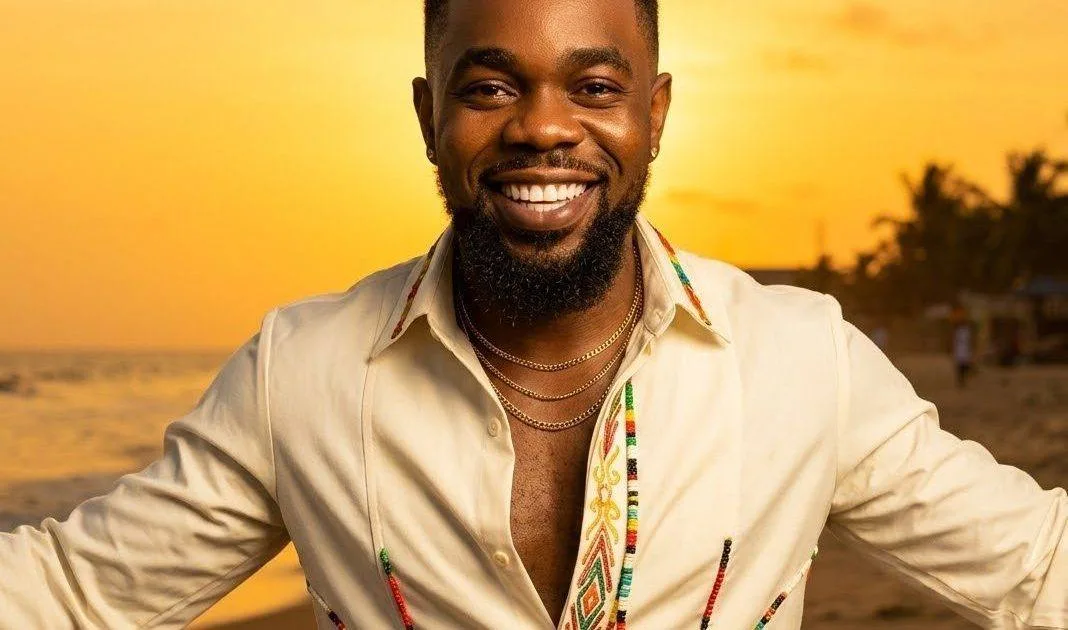
The stage name came from a Jamaican. That is where the story begins — not at a record label signing, not at a talent competition, but at Alpha Beach in Lagos, where a young man from Ijegun-Egba Satellite Town who had been performing as a carnival dancer and street jam artist met a Jamaican musician who heard something in his performance and gave him a name to perform under. Patoranking. The name stuck — and the man who received it went on to become the defining voice of Afro-dancehall in Nigeria, the artist who built the bridge between Jamaican reggae and Afrobeats with more consistency and more commercial success than anyone before him.
He is Patrick Nnaemeka Okorie. He was born in Lagos but his roots are in Ebonyi State. He started as a carnival dancer. He collaborated with Timaya and the song — “Alubarika” — opened the doors of the Nigerian music industry. He then released “Girlie O” with Tiwa Savage and became a national star. He performed at the FIFA World Cup Fan Festival in Qatar. He sold out the O2 Arena in London and the Barclays Center in Brooklyn. He collaborated with the late Bob Marley — posthumously — on a track that placed him in the lineage of reggae’s greatest. He has over 2 billion global streams. He released “Babylon” featuring Victony in 2023 — one of the most loved songs of that year. He named his second album after his daughter. He is still releasing music in 2026. This is his full biography.
Patoranking Biography Facts at a Glance
| Full Name | Patrick Nnaemeka Okorie |
| Stage Name | Patoranking |
| Date of Birth | May 27, 1990 |
| Age | 36 years old (as of 2026) |
| Place of Birth | Ijegun-Egba, Satellite Town, Lagos State, Nigeria |
| State of Origin | Ebonyi State (Onicha) |
| Ethnicity / Tribe | Igbo (Ebonyi State) |
| Religion | Christianity |
| Siblings | Sharon Okorie (sister); Raphael Okorie (brother) |
| Education | Citizen Comprehensive College, Epe, Lagos; Jibril Martin Memorial Grammar School, Iponri |
| Pre-music Career | Carnival and street jam dancer; underground music collaborations |
| Occupation | Singer, Songwriter, Dancer, Performer |
| Genres | Afro-dancehall, Reggae, Afrobeats, Afropop, Highlife, Soul |
| Musical Influences | Bob Marley, Buju Banton, Lucky Dube, Majek Fashek, Chaka Demus, Fela Kuti, 2Baba, Timaya |
| Record Labels | Igberaga Records (2010); Dem Mama Records; Foston Muzik (2014); VP Records (distribution, 2015); Amari Musiq (own label, 2019–present) |
| Partner | Leila Okorie |
| Children | Wilmer Okorie (daughter, born August 2018); Rapharanking Okorie (second child) |
| Global Streams | Over 2 billion |
| Live Milestones | O2 Arena London; Barclays Center Brooklyn; FIFA World Cup Fan Festival Qatar; 50+ countries |
| Bob Marley Collab | Posthumous collaboration — placed him in reggae’s royal lineage |
| Net Worth (Estimated) | $4 million – $6 million USD (2026) |
| Nationality | Nigerian |
Early Life: Ijegun-Egba, Satellite Town and a Carnival Dancer’s Beginning
Patrick Nnaemeka Okorie was born on May 27, 1990, in Ijegun-Egba, Satellite Town, Lagos State — a densely populated area in the Alimosho local government area of Lagos, on the city’s southwestern outskirts near the Lagos waterfront. Though born and raised in Lagos, his family roots are in Onicha, Ebonyi State — in southeastern Nigeria — making him Igbo by ethnic heritage despite being a product of the Lagos Yoruba-dominated street culture that pervades Satellite Town.
He grew up with his siblings — sister Sharon Okorie and brother Raphael Okorie — in circumstances of modest means in one of Lagos’s peripheral working-class communities. His secondary education was divided between two Lagos institutions: Citizen Comprehensive College in Epe, Lagos — the district on the eastern arm of Lagos Lagoon — and Jibril Martin Memorial Grammar School in Iponri, a more central Lagos location.
From his earliest years, he was drawn to performance — not merely to music but to the physical, embodied dimension of performance that dancing provides. He started his music career performing as a street jam and carnival dancer. Carnivals in Lagos — the annual community festivities that combine music, dancing, costuming, and street performance — are one of the city’s most vital cultural institutions, and they have historically been one of the pathways through which working-class Lagos talent has developed performance skills and public presence without the benefit of formal training or institutional support. Patoranking used that pathway fully, developing the stage energy and physical command that would later make his live performances among the most consistently compelling in Nigerian music.
His musical influences were formed by deep immersion in the reggae and dancehall tradition: Patoranking has cited Buju Banton, Bob Marley, Fela Kuti, Lucky Dube, Chaka Demus, Majek Fashek, Blackky, Blackface, 2Baba, and Marvelous Benjy as his key musical influences. The combination of Jamaican reggae royalty (Marley, Buju Banton, Chaka Demus), African reggae legends (Lucky Dube), and Nigerian music pioneers (Fela Kuti, Majek Fashek, 2Baba) produced a musical worldview that was simultaneously Jamaican-influenced and deeply African — the specific fusion that would define his artistic identity.
The stage name arrived in a moment that he has described as unexpected and significant. In a 2012 interview with Entertainment Express, he said his stage name was given to him by a Jamaican artist he met at Alpha Beach in Lagos. Alpha Beach — one of Lagos’s most beloved beach spots on the Atlantic coast — was a gathering point for musicians, dancers, and entertainers from across the city. The Jamaican artist who heard him perform there and gave him the name “Patoranking” set in motion a professional identity that has now sustained a seventeen-year career.
Underground Years: K-Solo, XProject and the Road to Timaya
Long before “Alubarika” or “Girlie O” made him a national name, Patoranking spent years in the underground music economy of Lagos — building his skills, his network, and his reputation through underground collaborations with artists such as XProject, Konga, Slam, and Reggie Rockstone. These collaborations — with artists whose names are less familiar today than his own — were the professional training ground in which he developed the vocal style, the songwriting approach, and the studio instincts that would power his commercial breakthrough.
In 2010, he signed his first record deal — with K-Solo’s Igberaga Records — and released his first official single, “Up in D Club.” The single did not generate the commercial breakthrough he needed, but it established his professional credentials and kept him in the industry network that would eventually lead him to the collaboration that changed everything.
In 2012, he released the single “Iya Bisi” featuring Qdot and Kbaj — a fusion of dancehall and fuji that demonstrated the specific sound he was developing: not purely Jamaican reggae, not purely Nigerian Afrobeats, but a synthesis of both that was creating a new musical category.
“Alubarika” and Timaya: The Breakthrough That Opened All the Doors
The turning point in Patoranking’s career came through his connection with Timaya — the Port Harcourt-born singer who had become Nigeria’s most successful indigenous dancehall artist and who operated through Dem Mama Records. Patoranking recorded the track “Alubarika” — a Yoruba word meaning “God’s blessings” — with Timaya, and the song became his genuine first hit.
He broke through in 2014 when Nigerian singer Timaya appeared on his bouncy reggae anthem “Alubarika,” the Story of the former carnival dancer’s rise from “nothing to something.” The lyrical subject matter of “Alubarika” — a man giving thanks for having come from nothing to something through God’s grace and his own persistence — was not merely a commercial hook but a genuine autobiographical statement. He had come from the street jam circuit of Satellite Town to a national hit with one of Nigeria’s biggest dancehall artists. The song was the reality of his life compressed into a radio-friendly anthem.
Patoranking described the song as a summary of his life as a musician as it opened doors for him in building a fan base and working with established musicians. It did exactly that — attracting the attention of Foston Muzik, a Lagos-based record label, which signed him in February 2014.
“Girlie O” and Tiwa Savage: National Stardom Achieved
The song that transformed Patoranking from a promising new artist into a genuine national star was “Girlie O” — released on February 4, 2014, produced by WizzyPro. The song is a chart-topping critically acclaimed single, and its remix followed a few months later, featuring Tiwa Savage.
The music video for “Girlie O” was shot in London — a significant production investment that signalled the label’s confidence in the song’s potential — and told the story of Patoranking freeing his next-door neighbor from domestic violence in the music video by expressing his natural feelings to her. The combination of the song’s melody, its social consciousness, and the London-shot video made it an immediate hit.
The Tiwa Savage remix extended the song’s commercial life and continental reach. Tiwa, in an interview, revealed that she fell in love with the original song and so reached out to Patoranking for a remix. Their collaboration turned out a huge success as it got massive airplay, and was listed on several music platforms across the country and Africa at large. The Tiwa Savage co-sign — at a point when Tiwa was emerging as Nigeria’s most commercially powerful female artist — confirmed Patoranking’s standing as a serious commercial force, not merely a dancehall niche artist.
In February 2015, he announced a distribution deal with VP Records on Instagram — VP Records being one of the world’s most respected Caribbean and reggae music distributors, whose roster includes artists from the entire history of Jamaican music. The VP Records deal confirmed Patoranking’s credibility within the global reggae and dancehall community beyond Nigeria — an important validation for an artist whose sound was explicitly positioned at the intersection of Jamaican and African musical traditions.
God Over Everything (2016): The Debut That Charted on Billboard
Patoranking released his debut studio album — God Over Everything (abbreviated G.O.E) — on August 1, 2016, through Foston Muzik. The album was the product of years of careful preparation: Patoranking revealed that the album’s release was delayed due to his uncertainty about his reach across Nigeria. While an album was ready after the success of “Girlie O,” Patoranking wanted to release singles to “get closer to the people” first.
The recording process for G.O.E spanned over three years, with “Stammerer” being recorded four years prior to the album’s release. Patoranking worked with various producers and collaborators to ensure the album reflected diverse musical styles and appealed to a wide demographic. The album’s diverse production credits — including Sarz, GospelOnDeBeatz, E Kelly, WizzyPro and others — reflected its sonic range: Afrobeats, reggae, Afropop, soul, dancehall, and highlife all coexisted across its tracks.
Key tracks included “This Kind Love” featuring Wizkid, “No Kissing Baby” featuring Ghanaian rapper Sarkodie, and “Killing Me.” The album debuted at number four on the Billboard Reggae Album Charts — a remarkable commercial achievement for a Nigerian artist’s debut album on a global genre chart, confirming the international resonance of his sound beyond the African market.
Wilmer (2019): An Album Named for His Daughter
Between his debut album and his second, Patoranking built his catalogue with a series of significant singles — including “Heal Da World,” “Available,” “Love You Die” featuring Diamond Platnumz, and “Confirm” featuring Davido — that maintained his commercial momentum and extended his pan-African reach through collaborations with artists from Tanzania, Ghana, and across the continent.
His second studio album, Wilmer, was released on May 24, 2019, through his own label Amari Musiq. The album carried perhaps the most emotionally significant title of any Nigerian album of its era — named after and dedicated to his daughter, Wilmer Okorie, born in August 2018. Wilmer is the daughter of Patoranking and his partner Leila Okorie.
>Patoranking’s 2019 album Wilmer, dedicated to his first child, debuted at No. 5 on the global Billboard Reggae Albums chart. (Named after and dedicated to his daughter, the album features guest appearances from mostly international and pan-African acts, with the only Nigerian act being Davido. The international roster — including Davido, Busiswa, Donae’o, and Dadju — reflected Patoranking’s growing reach beyond Nigeria and his comfort operating across the pan-African and diaspora music markets.
Three (2020), World Best (2023) and “Babylon”
His third studio album, Three, was released on August 28, 2020 through Amari Musiq — the title a simple declaration that he was delivering his third body of work, with features from Tiwa Savage, Flavour, Sauti Sol, and King Promise. The album’s lead single “Abule” became one of the most played Nigerian songs of the final quarter of 2020.
His fourth studio album, World Best, was released in 2023 — continuing his evolution as one of Nigeria’s most consistent album-delivering artists. From the World Best era came one of his most celebrated recent singles: “Babylon” featuring Victony — a song that generated (cite index=”51-1″>67 million plays on YouTube Music and became one of the defining Afro-dancehall tracks of 2023, demonstrating that his sound remained commercially vital a decade after “Girlie O” had first established him.
He has continued releasing singles in 2025 and 2026: “Grateful” featuring the Soweto Spiritual Singers (2025), “No Jonze” (2025), “African Soldier” featuring Buju Banton (2026) — a collaboration with the Jamaican reggae legend whose music had been a formative influence on Patoranking since childhood — and “Shake That” featuring Ruger (2026). The 2026 Buju Banton collaboration is particularly significant: it places him in explicit artistic conversation with one of the artists who shaped his sound, confirming the full arc of a career that began under Jamaican musical influence and has earned the right to collaborate with Jamaican royalty.
The Bob Marley Collaboration and Global Milestones
Among the most historically significant achievements of Patoranking’s career is his posthumous collaboration with Bob Marley — the Jamaican reggae legend whose music is among the most universally recognised in the history of recorded music. The collaboration placed Patoranking in the explicit lineage of reggae’s greatest figure and confirmed his standing as a representative of the African reggae tradition at its highest level.
His live milestones confirm the scale of his global reach. On stage, he has taken his message to over 50 countries, from London’s O2 Arena and Brooklyn’s Barclays Center to the FIFA World Cup Fan Festival in Qatar. The FIFA World Cup Fan Festival performance in Qatar (2022) was particularly significant — one of the largest global music audiences available to any artist, reaching World Cup viewers across the planet. The O2 Arena and Barclays Center performances confirmed his commercial viability in the two largest Nigerian diaspora markets outside Africa.
He comes with a much-coveted catalogue that boasts over 2 billion global streams, and Billboard-charting projects, from his 2016 debut album God Over Everything to 2023’s World Best. Two billion streams across a catalogue of four studio albums and a decade of singles represents one of the most substantial streaming footprints of any Nigerian artist outside the absolute top tier of the global Afrobeats market.
Personal Life: Leila, Wilmer and a Growing Family
Patoranking’s personal life centres on his relationship with his partner Leila Okorie and their children. Together they have two children: Wilmer Okorie — his daughter, born in August 2018, after whom he named his second studio album — and Rapharanking Okorie, his second child. The naming of his daughter “Wilmer” carries a significance he has spoken about publicly: she is not merely his child but the dedicatee of an entire album, the most public expression of paternal love available to a musician.
He has maintained a degree of privacy around his personal relationship with Leila — rumours of a separation have circulated but neither has publicly confirmed the end of their partnership. His public persona focuses almost entirely on his music, his faith (the album title *God Over Everything* is not merely commercial branding but a sincere expression of his religious worldview), and his family.
His sister Sharon Okorie is herself a known figure in Nigerian entertainment circles — a social media personality and actress whose presence in public life has sometimes placed the family in the entertainment spotlight beyond Patoranking’s own career.
Patoranking’s Net Worth in 2026
Patoranking’s estimated net worth in 2026 is between $4 million and $6 million USD — a figure that reflects seventeen years of consistent music industry activity, a catalogue with over 2 billion global streams, and the accumulated value of international touring, brand endorsements, and label revenue.
His income streams include:
- Streaming royalties: A catalogue anchored by “Girlie O” (76M+ YouTube Music plays for the Tiwa Savage remix), “Babylon” ft. Victony (67M+ plays), “No Kissing Baby” ft. Sarkodie (75M+ plays), and hundreds of millions of additional streams across his four studio albums
- Live touring: Headline shows across 50+ countries — his touring footprint is one of the most extensive of any Nigerian artist, extending from the O2 Arena and Barclays Center to festivals across Africa, Europe, North America, and the Caribbean
- VP Records distribution deal: Revenue from the global reggae market distribution partnership that gives his music reach into Caribbean and international reggae markets inaccessible to most Nigerian artists
- Amari Musiq: Label revenue from his own imprint, established with Wilmer in 2019
- Brand endorsements: Nigerian and international brand partnerships across consumer goods, telecommunications, and lifestyle categories
- FIFA World Cup / major event performance fees: His Qatar 2022 World Cup Fan Festival appearance and comparable major international event bookings command premium performance fees
Full Discography
| Year | Title | Type | Label | Key Achievement / Notes |
| 2010 | “Up in D Club” | Single | Igberaga Records | First official release; first record deal with K-Solo’s label |
| 2012 | “Iya Bisi” ft. Qdot, Kbaj | Single | Independent | Dancehall-fuji fusion; early signature sound development |
| 2013 | “Alubarika” ft. Timaya | Single | Dem Mama Records | Breakthrough hit; describes rise from “nothing to something”; opens industry doors |
| February 2014 | “Girlie O” (solo + remix ft. Tiwa Savage) | Single | Foston Muzik | National breakout; Tiwa Savage pursued remix after falling in love with original; massive airplay across Africa |
| 2014 | “Murda” with Seyi Shay, Shaydee | Single | — | Cross-artist collaboration; expanded audience |
| February 2015 | VP Records distribution deal | — | VP Records | International reggae/dancehall distribution; Caribbean market access |
| 2016 | “No Kissing Baby” ft. Sarkodie | Single | Foston Muzik | Pre-album single; 75M+ YouTube Music plays; pan-African collaboration |
| August 2016 | God Over Everything (G.O.E) | Album | Foston Muzik | Debut album; #4 Billboard Reggae Albums; ft. Wizkid, Sarkodie; “This Kind Love,” “Killing Me,” “Girlie O” |
| 2017 | “Love You Die” ft. Diamond Platnumz | Single | Amari Musiq | East-West Africa cross-border collaboration; major continental hit |
| 2018 | “Available,” “Heal Da World” | Singles | Amari Musiq | Soundcity MVP Best Video (“Heal Da World”); Viewers Choice winner (“Available”) |
| 2019 | “Confirm” ft. Davido | Single | Amari Musiq | Headies Best Video nomination; major Nigerian commercial collaboration |
| May 2019 | Wilmer | Album | Amari Musiq | Named after daughter Wilmer Okorie (b. August 2018); #5 Billboard Global Reggae Albums; ft. Davido, Busiswa, Donae’o, Dadju; rated 8.5/10 tooXclusive |
| August 2020 | Three | Album | Amari Musiq | Third album; “Abule” (lead single); ft. Tiwa Savage, Flavour, Sauti Sol, King Promise |
| 2022 | — | — | — | Performs at FIFA World Cup Fan Festival, Qatar; O2 Arena London; Barclays Center Brooklyn — career live milestones |
| 2023 | World Best | Album | Amari Musiq | Fourth album; “Babylon” ft. Victony (67M+ YouTube Music plays); “Abobi”; “TONIGHT” ft. Popcaan; Bob Marley posthumous collaboration |
| 2024–2025 | “Devil Wears White,” “Sober (Soo Bad),” “Grateful” ft. Soweto Spiritual Singers, “No Jonze” | Singles | Amari Musiq | Continued consistent output between albums |
| 2026 | “African Soldier” ft. Buju Banton; “Shake That” ft. Ruger | Singles | Amari Musiq | 2026 active release campaign; collaboration with formative influence Buju Banton; Ruger collab bridges Afro-dancehall generations |
Career Timeline
| Year | Milestone |
| 1990 | Born May 27 in Ijegun-Egba, Satellite Town, Lagos; family from Onicha, Ebonyi State; grows up in Lagos |
| ~2000–2008 | Citizen Comprehensive College, Epe; Jibril Martin Memorial Grammar School, Iponri; begins performing as street jam and carnival dancer |
| ~2008–2010 | Underground music collaborations with XProject, Konga, Slam, Reggie Rockstone; meets Jamaican artist at Alpha Beach who gives him the stage name “Patoranking” |
| 2010 | Signs first record deal with K-Solo’s Igberaga Records; releases “Up in D Club” |
| 2012 | “Iya Bisi” ft. Qdot and Kbaj released — dancehall-fuji fusion |
| 2013 | “Alubarika” ft. Timaya — breakthrough hit; becomes protégé of Dem Mama Records |
| February 2014 | Signs with Foston Muzik; “Girlie O” released (February 4); Tiwa Savage approaches for remix; national stardom secured |
| February 2015 | Announces VP Records distribution deal on Instagram — international reggae market access |
| August 2016 | God Over Everything debut album released — #4 Billboard Reggae Albums; ft. Wizkid, Sarkodie |
| 2017 | “Love You Die” ft. Diamond Platnumz — major pan-African hit |
| August 2018 | Daughter Wilmer Okorie born |
| May 2019 | Wilmer album released via Amari Musiq (own label) — named after daughter; #5 Billboard Global Reggae Albums |
| August 2020 | Three album released — “Abule” becomes major hit |
| 2022 | FIFA World Cup Fan Festival, Qatar — performs to one of the largest global music audiences; O2 Arena London sold out; Barclays Center Brooklyn sold out |
| 2023 | World Best album released — “Babylon” ft. Victony becomes defining song of the year; Bob Marley posthumous collaboration confirmed; 2B global streams milestone |
| 2024–2025 | Consistent single releases — “Devil Wears White,” “Sober,” “Grateful,” “No Jonze” |
| 2026 | “African Soldier” ft. Buju Banton; “Shake That” ft. Ruger — active 2026 release campaign; 36 years old; net worth $4–6 million |
Why Patoranking Matters: The Man Who Made Afro-Dancehall a Genre
Before Patoranking, Nigerian reggae and dancehall was a niche within a niche — a genre category occupied by artists like Timaya and the tradition of Majek Fashek before him, but one that had never produced a commercially dominant artist capable of sustaining a decade-long career at the highest level of the Nigerian music market while simultaneously connecting with the global reggae and dancehall community in a meaningful way.
Patoranking changed that. He did it not by abandoning either tradition — not by making reggae more Nigerian or Afrobeats more Jamaican — but by finding the precise synthesis of the two that created something new: Afro-dancehall, a sound that is fully at home in both traditions simultaneously. He depicted his music as an ethically slanted variety of reggae, dancehall and Afrobeat which also sees him referencing socio-political issues. That ethical dimension — the social consciousness, the Afropop uplift, the gospel-influenced positivity — gives his music a moral seriousness that distinguishes it from purely commercial Afrobeats production.
The collaboration with Bob Marley’s estate places him in the global reggae lineage in a way that no other Nigerian artist has achieved. The VP Records deal gives him Caribbean market access that no other Nigerian Afrobeats artist has matched. The 50-country touring footprint, the O2 Arena sold-out, the Barclays Center sold-out, the FIFA World Cup stage — these are not accidental achievements. They are the result of a specific strategy: build the African market first, then use it as the foundation for a global career that is credible in both the African and the international reggae markets simultaneously.
He is 36 years old. He has a daughter named Wilmer who has an album dedicated to her. He collaborated with Buju Banton in 2026. He is still releasing music. The stage name given to him by a Jamaican at Alpha Beach in Lagos has travelled to over fifty countries. Patoranking is not finished. He is in full flow.
Frequently Asked Questions About Patoranking
What is Patoranking’s real name?
Patoranking’s real name is Patrick Nnaemeka Okorie. He was born on May 27, 1990, in Ijegun-Egba, Satellite Town, Lagos State, Nigeria. He is of Igbo ethnic heritage from Onicha, Ebonyi State, though he was born and raised in Lagos. His stage name was given to him by a Jamaican artist he met at Alpha Beach in Lagos in approximately 2009–2010 — and it has remained his professional identity throughout his career. He is also known informally by his fans as “Pato” and “The Oga.”
How old is Patoranking?
Patoranking is 36 years old as of 2026. He was born on May 27, 1990, in Lagos State. He celebrated his 36th birthday on May 27, 2026. He has been professionally active in Nigerian music since approximately 2010 — a career of approximately sixteen years — having spent several prior years in carnival dancing and underground music collaborations.
Does Patoranking have children?
Yes. Patoranking has two children with his partner Leila Okorie. His daughter Wilmer Okorie was born in August 2018 — and was the inspiration for and dedicatee of his second studio album, Wilmer (2019). His second child is Rapharanking Okorie. Wilmer’s name on the album title was one of the most widely noted acts of paternal tribute in recent Nigerian music — a declaration, in the most public way available to him, of the central importance of his daughter to his life and his art.
What is Patoranking’s most famous song?
Several songs compete across different eras of his career. “Girlie O” (2014, and the remix featuring Tiwa Savage) is his most historically significant — the breakout hit that made him a national star and introduced his sound to Nigeria and Africa. “Alubarika” (2013) with Timaya was the breakthrough that opened industry doors. “No Kissing Baby” (2016) featuring Sarkodie became a pan-African anthem. “Babylon” (2023) featuring Victony — with 67 million YouTube Music plays — is his most celebrated recent hit and has introduced him to a new generation of Afrobeats listeners who may not have followed his earlier career.
What is Patoranking’s net worth in 2026?
Patoranking’s estimated net worth in 2026 is between $4 million and $6 million USD. His wealth comes from over 2 billion global streams across four studio albums and seventeen years of singles, international touring income from headline shows across 50+ countries including the O2 Arena and Barclays Center, his VP Records distribution deal, his Amari Musiq label revenue, brand endorsements, and major event performance fees including the FIFA World Cup Fan Festival in Qatar.
What is Patoranking’s religion?
Patoranking is Christian, and his faith is a visible and consistent dimension of his artistic identity. His debut album title — God Over Everything — is a direct expression of his religious worldview, and the album’s content reflects a moral and spiritual seriousness that goes beyond commercial branding. He has spoken in interviews about the role of faith in sustaining him through the long years of his pre-commercial career and about his understanding of his music as a form of service that goes beyond entertainment.
Has Patoranking performed at the World Cup?
Yes. Patoranking performed at the FIFA World Cup Fan Festival in Qatar during the 2022 FIFA World Cup — one of the largest global music performance platforms available to any artist. The Fan Festival events in Qatar attracted massive live and broadcast audiences from across the world, giving his performance global visibility at a scale matched by very few Nigerian artists. He has also performed at the O2 Arena in London and the Barclays Center in Brooklyn, New York — making him one of the most globally active Nigerian live performers of his generation.
Did Patoranking collaborate with Bob Marley?
Yes. Patoranking has collaborated posthumously with Bob Marley — the Jamaican reggae legend whose music was among the most formative influences on Patoranking’s own artistic development. The collaboration was executed through the Bob Marley estate and placed Patoranking in explicit artistic conversation with reggae’s most globally recognised figure — a connection that carries particular significance given that Patoranking’s career has been built on the synthesis of Jamaican reggae tradition with African musical culture. Bob Marley was among the artists Patoranking cited as a primary influence from the earliest years of his career.

0 Comments
No comments yet. Be the first to share your thoughts!