




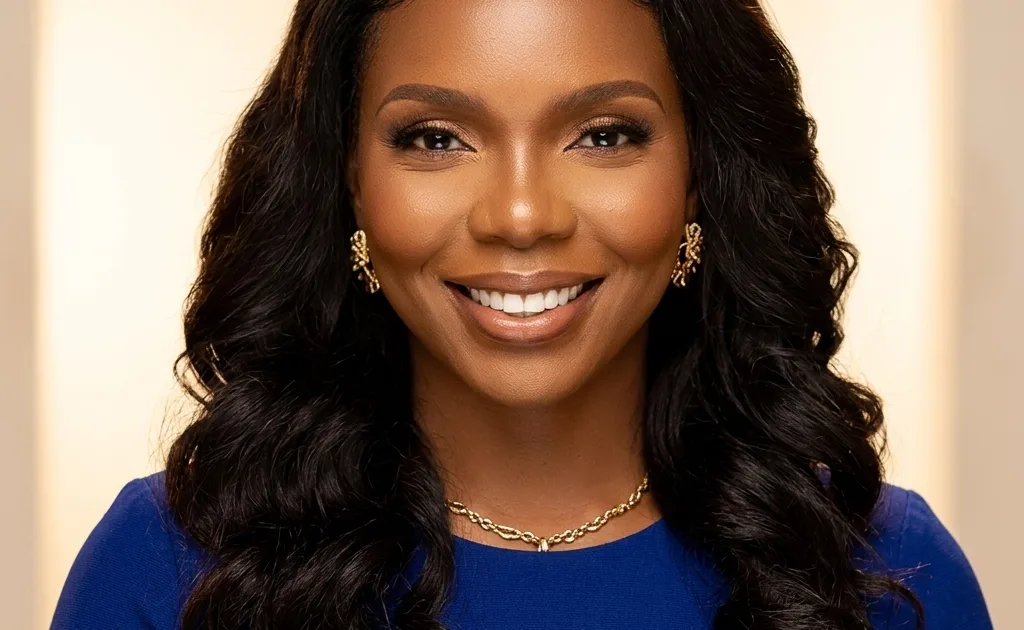
In the second week of March 2026, Yemi Alade pressed record on a “Get Ready With Me” video and told her fans something unusual. She had been struggling, she said, to choose a title for her forthcoming album — her seventh studio album, her tenth overall body of work, the next chapter of a career she has been building since a talent competition in 2009 made her famous. She was going to give the power of naming it to them. To the fans who had followed her since the beginning, through nine previous projects, through every evolution — “the privilege belongs to those who have been there from the beginning.”
The fans voted. The winner was the simplest possible choice: It’s Yemi Alade.
On September 11, 2026 — five days before this article was written — she released it. Sixteen tracks. Collaborations with Ferré Gola from the Congo, Don Jazzy, Bien and Sofiya Nzau from Kenya, Singuila, Spyro, and Jeriq. A guitar at the heart of everything. A love letter to her day-ones and a toast to new beginnings. Her name, stamped on a project with the confidence of someone who has spent seventeen years becoming so fully herself that the album could not be called anything else.
She is Yemi Eberechi Alade. She is 37 years old. She is Mama Africa. She is the Queen of African Pop. She is the first female African artist to cross 100 million YouTube views with a single video. She has performed in over thirty countries, released seven studio albums, sings in seven languages, and has never — not once in seventeen years — made the same album twice. This is her full biography.
Yemi Alade Biography Facts at a Glance
| Full Name | Yemi Eberechi Alade |
| Stage Name | Yemi Alade (also: Mama Africa; Queen of African Pop; Ghen Ghen Babe; Yoruba-Ibo Girl) |
| Date of Birth | March 13, 1989 |
| Age | 37 years old (as of 2026) |
| Place of Birth | Ondo State, Nigeria |
| Raised In | Lagos State, Nigeria |
| State of Origin | Ondo State (father) / Abia State (mother) |
| Ethnicity | Mixed — Yoruba (father, Ondo State) and Igbo (mother, Abia State) |
| Religion | Christianity |
| Father | James Alade (retired Police Commissioner, Ondo State) |
| Mother | Helen Uzoma Alade (businesswoman, Abia State) |
| Siblings | Fifth of seven children — four brothers and two sisters |
| Education | Saint Saviour’s British Primary School, Lagos; Victory Grammar School, Ikeja; University of Lagos (BSc Geography, 2010) |
| Occupation | Singer, Songwriter, Actress, Activist, Entrepreneur |
| Genres | Afropop, R&B, Highlife, Dancehall, World Music |
| Languages in Music | English, Yoruba, Igbo, Pidgin English, French, Swahili, Portuguese |
| Record Label | Effyzzie Music Group (own label) |
| Grammy Status | Grammy-nominated artist |
| Relationship Status | Single (no publicly confirmed partner as of 2026) |
| Children | None publicly confirmed |
| Net Worth (Estimated) | $5 million – $7 million USD (2026) |
| Nationality | Nigerian |
Early Life: The Yoruba-Ibo Girl From Lagos
Yemi Eberechi Alade was born on March 13, 1989, in Ondo State, Nigeria, but grew up in Lagos — raised in one of those Nigerian households where two distinct cultural traditions met and merged into something richer than either of its sources. Her father James Alade was a commissioner of police from Ondo State, the southwestern region of Nigeria, while her mother Helen Uzoma is a native of Abia State, the southeastern region of Nigeria. According to Alade, she taps from the Igbo and Yoruba ethnicities of her parents.
This dual heritage is not a biographical footnote but a central fact of who she is as an artist and as a person. She grew up speaking both Yoruba and Igbo, navigating two distinct sets of cultural references and traditions simultaneously, and developing the cross-cultural fluency that would later allow her to sing comfortably in seven languages and build a fanbase that extends from Nigeria across the entire African continent and into the Nigerian diaspora in Europe and North America. Her fans know her as the “Yoruba-Ibo Girl” — a nickname that started as a description of her heritage and became a statement of her pan-Nigerian, pan-African identity.
She is the fifth of seven children — four brothers and two sisters — in a household that was, from her description, saturated with music from her earliest years. She grew up listening to popular music of the late eighties and early nineties, began singing in her church choir at the age of twelve, and was known to have made melodies from everyday conversations. The choir gave her the same thing it gave so many Nigerian artists — a public performance platform, a musical community, and the experience of using her voice in front of people in a context where failure had low stakes and practice had immediate application.
Her father’s career as a police commissioner gave the family a comfortable, stable life in Lagos. She grew up in several Nigerian cities owing to her father’s job description — a mobility that, like Mercy Johnson’s military family relocations, gave her an exposure to different Nigerian communities and cultural contexts that enriched her human understanding without destabilising her fundamental identity.
She attended Saint Saviour’s British Primary School in Lagos, then Victory Grammar School in Ikeja for her secondary education — one of Lagos’s established secondary schools. After completing secondary school, she enrolled at the University of Lagos, where she studied and graduated with a Bachelor of Science in Geography in 2010. She was already performing professionally before graduation — the kind of dual-track existence that requires extraordinary time management and the absolute conviction that music is worth the sacrifice of a more conventional undergraduate experience.
The Peak Talent Show (2009): The Competition That Started Everything
Yemi Alade’s commercial breakthrough came not through a label signing or a viral video but through a television talent competition — the Peak Talent Show, a Nigerian singing competition sponsored by Peak Milk, held in 2009. She entered the competition as a University of Lagos undergraduate — scaling from the 174th position to emerge as winner of the maiden edition of the Peak Talent Show.
The arc of that competition — entering ranked 174th and winning — is a perfect encapsulation of the competitive spirit and the determined forward momentum that has characterised her entire subsequent career. She did not arrive as the favourite. She arrived as the underdog who simply refused to stop improving until she had become the best in the room. That is still how she competes.
The Peak Talent Show victory gave her the professional legitimacy and industry attention that led to her signing with Effyzzie Music Group — a Lagos-based independent music company that would become the institutional home of her career. Unlike many Nigerian artists who have signed to major labels or external distributors, Yemi Alade built her career primarily through Effyzzie — an arrangement that has given her unusual creative control and business independence across seventeen years of consistent output.
Early Singles and GhenGhenLove: Building the Foundation
Before “Johnny” made her famous across Africa, Yemi Alade spent several years releasing singles, building a local fanbase, and developing the sonic identity that would make her breakthrough record inevitable rather than accidental. In July 2012, she released “GhenGhenLove,” produced by the legendary OJB, which became a monster hit and also received a video directed by Gambit Pictures.
Her early singles — “GhenGhenLove,” “Bamboo,” “My Head O!!” — built a loyal Lagos audience and established the playful, culturally specific, emotionally direct voice that would later carry “Johnny” to continental dominance. She collaborated with artists including Ice Prince, Sasha P, Phyno, Chidinma, Selebobo, R2Bees, and Diamond Platnumz, expanding her network across the Nigerian and East African music industries simultaneously.
She also released an early collaborative single with Bovi — the Nigerian comedian — and Tangerine — that demonstrated her instinct for cross-format collaboration and her understanding that building an audience requires connecting with fans across multiple entertainment categories, not just within music.
“Johnny” (2014): The Song That Made Her Africa’s Queen
The song that changed Yemi Alade’s career — and changed what the world understood to be possible for a Nigerian female Afropop artist — was “Johnny.” Released in 2014, produced by Selebobo, it is a playfully devastating account of a woman demanding to know where her man has been — the kind of domestic confrontation that women across Nigeria and across Africa recognised immediately as their own lived experience, delivered with a melodic hook so insistent and so joyful that it was impossible not to dance to it even as it narrated something emotionally serious.
“Johnny,” produced by Selebobo, became a viral sensation across Africa and beyond. Despite being leaked online before its official release, the song topped charts in Tanzania, Kenya, Ghana, South Africa, Liberia, Uganda, Zimbabwe, and even the UK. The music video, released in 2014, became one of the most-watched African videos on YouTube, with over 100 million views.
The hundred million YouTube views milestone was not merely a number. Alade is also the second Nigerian and Afrobeats artist and the first female to hit 100 million views for a single video on YouTube after Davido. The fact that a Nigerian woman achieved this before any of the male artists who subsequently dominated the global Afrobeats conversation is a historical fact that is not discussed often enough — Yemi Alade reached a global digital audience of that scale before the current era of Afrobeats’ international mainstream commercial dominance. She was ahead of the curve that everyone else is now riding.
The song’s narrative — and the music video’s visual storytelling, which featured actor Alexx Ekubo as the errant boyfriend — became cultural touchstones across the continent. The song’s playful narrative and catchy chorus made it an anthem for women across the continent. It was adopted, covered, sampled, and referenced in ways that demonstrated genuine continental cultural penetration — the kind of impact that most artists pursue for entire careers and never quite achieve.
King of Queens, Mama Africa and Continental Domination
The commercial momentum of “Johnny” launched Yemi Alade’s debut studio album, King of Queens, released on October 2, 2014. The album produced further hits and established her as the dominant female voice in Nigerian Afropop — a position she has never relinquished. World tours followed its release, taking her to Kenya, Ghana, South Africa, and beyond.
Her second album, Mama Africa, was released on March 25, 2016 — and with it came a title and an identity that would define the next decade of her public persona. Mama Africa was not merely an album title but a declaration of continental ambition: she was not making music for Nigeria alone but for the entire African continent, in all its linguistic, cultural, and sonic diversity. She said she recorded the album to “capture all of Africa on a CD.” The album combined highlife, Afropop, R&B, hip-hop, and pop into a genuinely pan-African sound — one that could be heard with recognition and pleasure in Lagos, Nairobi, Accra, Dakar, and Johannesburg simultaneously.
In 2016, she debuted on Billboard at number 4 on the Next Big Sound Chart. She won the MTV Africa Music Awards for Best Female in 2015 and 2016 consecutively — making her the first female to win the MAMAs Best Female consecutively twice — and was nominated for Artist of the Year in 2015. These back-to-back MTV MAMA wins confirmed that the critical and commercial establishment of African music had recognised what fans across the continent already knew: she was the continent’s premier female Afropop artist.
Black Magic, Woman of Steel and Empress: Seven Years of Evolution
The period from 2017 to 2020 produced three further studio albums that demonstrated Yemi Alade’s consistent refusal to repeat herself creatively. Black Magic (December 15, 2017) pushed into darker, more atmospheric sonic territory. Woman of Steel (August 30, 2019) — released through Effyzzie and Universal Music Africa — was her most explicitly activist album, a statement about female resilience and resistance that reflected her growing engagement with issues of gender justice and women’s rights across Africa. Empress (November 20, 2020) continued her sonic evolution with a palette of sounds that incorporated global influences without losing the African roots that define her identity.
Across this period, she released landmark collaborative singles: “Africa” with Kenyan group Sauti Sol — a pan-African anthem that became one of the most played African songs of 2017; “Nakupenda” with Kenyan artist Nyashinski; and collaborations with artists from across the continent that demonstrated her commitment to building genuine pan-African musical relationships rather than merely performing pan-African rhetoric.
She also performed at some of the continent’s and world’s most significant stages: the FIFA World Cup 2018 closing ceremony in Moscow, the ONE Campaign concert at the G7 summit in France, and headline shows in France, Germany, the United States, and Canada. Her live performances became increasingly celebrated for their energy, theatricality, and the specificity of her connection with audiences — she is, by universal acknowledgment, one of the most commanding live performers in contemporary African music.
Rebel Queen (2024) and It’s Yemi Alade (September 2026)
After a period of EPs and singles — including the Queen Don Com EP (2021), the African Baddie EP (2022), and the Mamapiano EP (December 2023) — Yemi Alade returned to full studio album mode with Rebel Queen, released on July 26, 2024. The album extended her sonic and thematic range further into global sounds while maintaining the African core that has always been her artistic foundation.
Then, on September 11, 2026, she released what may be her most personally significant album to date: It’s Yemi Alade. Her seventh studio album and tenth overall body of work, featuring 16 tracks and collaborations with Ferré Gola, Don Jazzy, Singuila, and Jeriq.
The 16-track project brings together several African artists, including Kenyan singers Bien, Sofiya Nzau, and Njerae. The album’s title came directly from her fans: she told her fans she had been struggling to settle on a title for her forthcoming album and, in an unusual gesture, decided to hand the power of naming it over to them. When the votes were counted, “It’s Yemi Alade” had won — the simplest, most confident possible statement of identity as album title.
One of the album’s most talked-about moments is “Coco na Yam,” a collaboration with Congolese singer-producer Ferré Gola. The track leans fully into rumba, with French and Lingala vocals sitting over a sweet, repeating two-note guitar figure that feels unhurried and warm. The collaboration with Ferré Gola — the Democratic Republic of Congo’s most celebrated musician — extends Yemi Alade’s pan-African reach into Francophone central Africa, a market that most Anglophone Nigerian artists have never seriously engaged.
Pre-release singles included “Don’t Be Shy” with Kenyan artist Bien, and “Ala Bekee” with Don Jazzy — the latter’s music video, released in early September 2026, featured a wedding-themed concept with playful rivalry between the two artists that generated significant social media engagement ahead of the album’s release.
Activism, the UN and Her Humanitarian Work
Yemi Alade’s career has always extended beyond music into genuine social and political engagement. She is one of Nigeria’s most vocal entertainment advocates for women’s rights, environmental sustainability, and African unity — causes she has championed not merely through public statements but through sustained institutional engagement.
She has worked with the United Nations on campaigns related to gender equality and African development — performing at UN events and participating in high-level discussions about the role of African culture in global development conversations. She performed at the G7 summit concert in France — one of the most prestigious non-entertainment stages available to a music artist. She is a consistent advocate for the wearing of African designers and the celebration of African aesthetic traditions, using her fashion platform to promote continental craft and design in addition to her musical platform.
Her philanthropic activities include education initiatives in Nigeria, and she has spoken consistently in interviews about the responsibility that comes with her continental platform — the obligation to use her visibility in service of communities and causes that the music industry does not typically address.
Personal Life: Deliberately Private, Deliberately Herself
Yemi Alade is one of the most deliberately private public figures in Nigerian entertainment. Despite seventeen years of extreme public visibility, she has maintained a near-total separation between her professional public persona and her romantic personal life. She has not publicly confirmed a romantic relationship or a partner as of 2026. She has no publicly confirmed children.
She has spoken in interviews about the specific challenges of being a Nigerian female musician in an industry that has historically been male-dominated and that has subjected female artists to disproportionate scrutiny of their personal and romantic lives. Her decision to maintain privacy around these dimensions of her life is a deliberate and principled one — a refusal to allow her romantic life to become the story when her music is the story.
Her public persona is built around her music, her fashion, her activism, and her relationship with her fans — the “Yemi Alade Fan-mily” that she addressed directly in the Instagram post announcing It’s Yemi Alade. That relationship, built over seventeen years of consistent output and genuine engagement, is one of the most loyal and active artist-fan communities in Nigerian entertainment.
Yemi Alade’s Net Worth in 2026
Yemi Alade’s estimated net worth in 2026 is between $5 million and $7 million USD — a figure that reflects seventeen years of earnings from music, touring, endorsements, and acting, alongside her ownership of the Effyzzie Music Group label infrastructure.
Her income streams include:
- Music streaming and royalties: A catalogue of seven studio albums, multiple EPs, and 58+ singles generating consistent global streaming revenue — “Johnny” alone remains one of the most-streamed Nigerian songs ever recorded
- Live touring: Headline shows across more than 30 countries, with consistent European, North American, and African tour income — she is one of the highest-grossing African female touring artists
- Brand endorsements: Major partnerships with Nigerian and international brands including Pepsi, telecommunications companies, fashion brands, and beauty products
- Acting: Appearances in Nigerian and African film and television productions
- Effyzzie Music Group: Label revenue from her own releases and any artists signed to the label
- Music videos: YouTube advertising revenue from a catalogue of 51+ music videos, anchored by “Johnny” which crossed 100 million views and continues generating significant income
Full Discography
| Year | Title | Type | Label | Key Achievement / Notes |
| 2014 | King of Queens | Album | Effyzzie Music Group | Debut studio album; “Johnny” (100M+ YouTube views; first African female to reach milestone); “Kissing,” “Tangerine”; BET nomination |
| 2016 | Mama Africa | Album | Effyzzie Music Group | “Ferrari,” “Tumbum”; Billboard Next Big Sound #4 (2016); MTV MAMA Best Female 2015 & 2016 (first female to win consecutively) |
| 2017 | Mama Afrique | EP | Effyzzie Music Group | Pan-African EP; “Africa” ft. Sauti Sol; performed at FIFA World Cup 2018 ceremony |
| 2017 | Black Magic | Album | Effyzzie Music Group | Third studio album; darker sonic territory; “How I Feel,” “Oga” |
| 2019 | Woman of Steel | Album | Effyzzie / Universal Music Africa | Fourth studio album; activist themes; “Temptation,” “Lonely”; G7 concert performance |
| 2020 | Empress | Album | Effyzzie Music Group | Fifth studio album; Grammy-nominated era; “Shekere,” “True Love” |
| 2021 | Queen Don Com | EP | Effyzzie Music Group | “Deceive,” “Booty”; extended pan-African sound |
| 2022 | African Baddie | EP | Effyzzie Music Group | Fashion-forward Afropop EP; consolidated streaming audience |
| 2023 | Mamapiano | EP | Effyzzie Music Group | Amapiano-influenced EP; “Bounce,” “Wahala” |
| July 2024 | Rebel Queen | Album | Effyzzie Music Group | Sixth studio album; continued sonic evolution; “Shawa Shawa” pre-release single |
| September 11, 2026 | It’s Yemi Alade | Album | Effyzzie Music Group | Seventh studio album; 10th body of work; 16 tracks; ft. Ferré Gola, Don Jazzy, Bien, Sofiya Nzau, Njerae, Spyro, Singuila, Jeriq; title chosen by fans; “Alhaja,” “Coco Na Yam,” “Don’t Be Shy,” “Ala Bekee” |
Career Timeline
| Year | Milestone |
| 1989 | Born March 13 in Ondo State, Nigeria; raised in Lagos; fifth of seven children; Yoruba father, Igbo mother |
| ~1998–2001 | Joins church choir aged 12; begins singing competitively in church and school environments |
| ~2001–2007 | Victory Grammar School, Ikeja — secondary education; Saint Saviour’s British Primary School earlier |
| 2007–2010 | University of Lagos — BSc Geography; releases early singles while an undergraduate |
| 2009 | Wins Peak Talent Show — entering ranked 174th and winning the maiden edition; signs with Effyzzie Music Group |
| 2010 | Graduates from University of Lagos (BSc Geography) |
| July 2012 | “GhenGhenLove” (produced by OJB) becomes national hit; music video crosses 20,000 YouTube views in first month |
| 2013 | Early singles and collaborations with Phyno, Chidinma, Selebobo, R2Bees, Diamond Platnumz build fanbase |
| 2014 | “Johnny” released — crosses 100 million YouTube views (first African female to achieve milestone); King of Queens debut album; top charts in Nigeria, Ghana, Kenya, Tanzania, South Africa, UK |
| 2015 | MTV MAMA Best Female; BET Award nomination; world tour across Africa, Europe, North America |
| 2016 | Mama Africa album released; MTV MAMA Best Female second consecutive win (first female to achieve); Billboard Next Big Sound #4 |
| 2017 | Black Magic album released; “Africa” ft. Sauti Sol becomes pan-African anthem |
| 2018 | Performs at FIFA World Cup 2018 closing ceremony in Moscow; “Nakupenda” ft. Nyashinski released |
| 2019 | Woman of Steel album released via Universal Music Africa; performs at G7 summit concert in France |
| 2020 | Empress album released; Grammy nomination era; COVID-19 limits touring but digital presence expands |
| 2021–2023 | Queen Don Com EP, African Baddie EP, Mamapiano EP — sustained creative output across EP releases |
| July 2024 | Rebel Queen (sixth studio album) released |
| March 2026 | Asks fans to vote on title for seventh album — “It’s Yemi Alade” wins the vote |
| November 2025 | “Shawa Shawa” released as pre-album single |
| September 2026 | “Don’t Be Shy” ft. Bien and “Ala Bekee” ft. Don Jazzy released as pre-album singles |
| September 11, 2026 | It’s Yemi Alade (seventh studio album, tenth body of work) released — 16 tracks, pan-African collaborations |
| 2026 | 37 years old; 17 years of professional music; seven studio albums; one of Africa’s most globally recognised artists |
What Yemi Alade Means: Seventeen Years of Refusing to Be Small
The conversation about Yemi Alade’s place in African music history is one that has been happening for a decade and that grows more significant with every album she releases. She was the first African female artist to cross 100 million YouTube views with a single video — before Afrobeats was a global mainstream phenomenon. She was the first female artist to win the MTV MAMA Best Female award in consecutive years. She has performed at the FIFA World Cup, at the G7 summit, in thirty countries across six continents. She sings in seven languages. She has released seven studio albums and ten overall bodies of work across seventeen years without a single period of commercial or creative stagnation.
And she did all of this without the institutional infrastructure of a major label — working through Effyzzie Music Group, the independent label she has built as the home of her output, with a creative control and business independence that most artists twice her commercial scale do not possess.
Yemi Alade, musician, entrepreneur, actor and humanitarian, has moved through several evolutions over the course of her career, each one revealing new dimensions of an artist who has always been more than the sum of her hits. She is Mama Africa not because she claimed the title but because she earned it — by showing up, in every country, in every language, with every album, for seventeen years — and by making music that women across Africa recognised as their own truth made beautiful.
She is 37 years old. Her seventh studio album dropped five days ago. It is called It’s Yemi Alade. Her fans named it. There is nothing more to add.
Frequently Asked Questions About Yemi Alade
What is Yemi Alade’s real name?
Yemi Alade’s full real name is Yemi Eberechi Alade. She was born on March 13, 1989, in Ondo State, Nigeria, and grew up in Lagos. Her father James Alade is a retired police commissioner from Ondo State (Yoruba), and her mother Helen Uzoma is from Abia State (Igbo). This dual Yoruba-Igbo heritage earned her the fan nickname “Yoruba-Ibo Girl” — a descriptor she has embraced as a celebration of her cross-cultural identity. She is also known as Mama Africa and the Queen of African Pop.
How old is Yemi Alade?
Yemi Alade is 37 years old as of 2026. She was born on March 13, 1989. She celebrated her 37th birthday on March 13, 2026 — the same year she released her seventh studio album, It’s Yemi Alade, on September 11, 2026. She has been professionally active in Nigerian and African music since winning the Peak Talent Show in 2009 — a career of seventeen years.
Is Yemi Alade married?
Yemi Alade is not publicly married and has not confirmed a romantic partner as of 2026. She has chosen to keep her personal and romantic life intensely private throughout her seventeen-year career — a deliberate stance that she has described in interviews as a protection of the personal space that public visibility otherwise consumes. She has no publicly confirmed children. The most persistent romantic rumour of her career linked her to actor Alexx Ekubo — who played the boyfriend in the “Johnny” music video — a connection both parties have not publicly confirmed beyond their professional collaboration.
What is Yemi Alade’s net worth in 2026?
Yemi Alade’s estimated net worth in 2026 is between $5 million and $7 million USD. Her wealth comes from seventeen years of music streaming royalties (anchored by “Johnny” — one of the most-streamed African songs in YouTube history), touring income from headline shows across more than 30 countries, brand endorsements with major Nigerian and international brands, acting work, and her Effyzzie Music Group label infrastructure. The release of It’s Yemi Alade in September 2026 is expected to generate significant new streaming and touring income.
What is Yemi Alade’s most famous song?
“Johnny” (2014) is Yemi Alade’s most famous and most commercially significant song — the track that crossed 100 million YouTube views, making her the first African female artist to reach that milestone; that topped charts in Nigeria, Kenya, Tanzania, Ghana, South Africa, Zimbabwe, Liberia, Uganda, and the UK simultaneously; and that became a continental anthem for women across Africa. Other major hits include “Ferrari,” “Tumbum,” “Africa” (feat. Sauti Sol), “Nakupenda” (feat. Nyashinski), and “Temptation.” Her 2026 singles “Don’t Be Shy” (feat. Bien) and “Ala Bekee” (feat. Don Jazzy) are among her most recent hits.
What is Yemi Alade’s latest album?
Yemi Alade’s latest album is It’s Yemi Alade, released on September 11, 2026 through Effyzzie Music Group. It is her seventh studio album and tenth overall body of work. The 16-track project features collaborations with Ferré Gola (Congo), Don Jazzy (Nigeria), Bien, Sofiya Nzau, and Njerae (Kenya), Singuila, Spyro, and Jeriq. The album’s title was chosen by her fans through a public vote announced on her Instagram in March 2026. Key tracks include “Alhaja,” “General Market,” “Coco Na Yam” (feat. Ferré Gola), “Little Kiss (E Good),” and “Yemi Mi Lova” (feat. Spyro).
Where is Yemi Alade from?
Yemi Alade was born in Ondo State, Nigeria, and raised in Lagos State. Her father James Alade is from Ondo State (Yoruba ethnic group) and served as a police commissioner, while her mother Helen Uzoma is from Abia State (Igbo ethnic group) and works as a businesswoman. She is therefore of mixed Yoruba-Igbo heritage — a dual identity that her fans celebrate through the nickname “Yoruba-Ibo Girl” and that she herself has described as the foundation of her pan-Nigerian and pan-African artistic identity. She is the fifth of seven children.
How many albums has Yemi Alade released?
As of September 2026, Yemi Alade has released seven studio albums: King of Queens (2014), Mama Africa (2016), Black Magic (2017), Woman of Steel (2019), Empress (2020), Rebel Queen (2024), and It’s Yemi Alade (September 11, 2026). In addition to these studio albums, she has released four EPs — Mama Afrique (2017), Queen Don Com (2021), African Baddie (2022), and Mamapiano (2023) — making her tenth overall body of work the self-titled 2026 release. She has also released 58+ singles and 51+ music videos across her career.




0 Comments
No comments yet. Be the first to share your thoughts!