




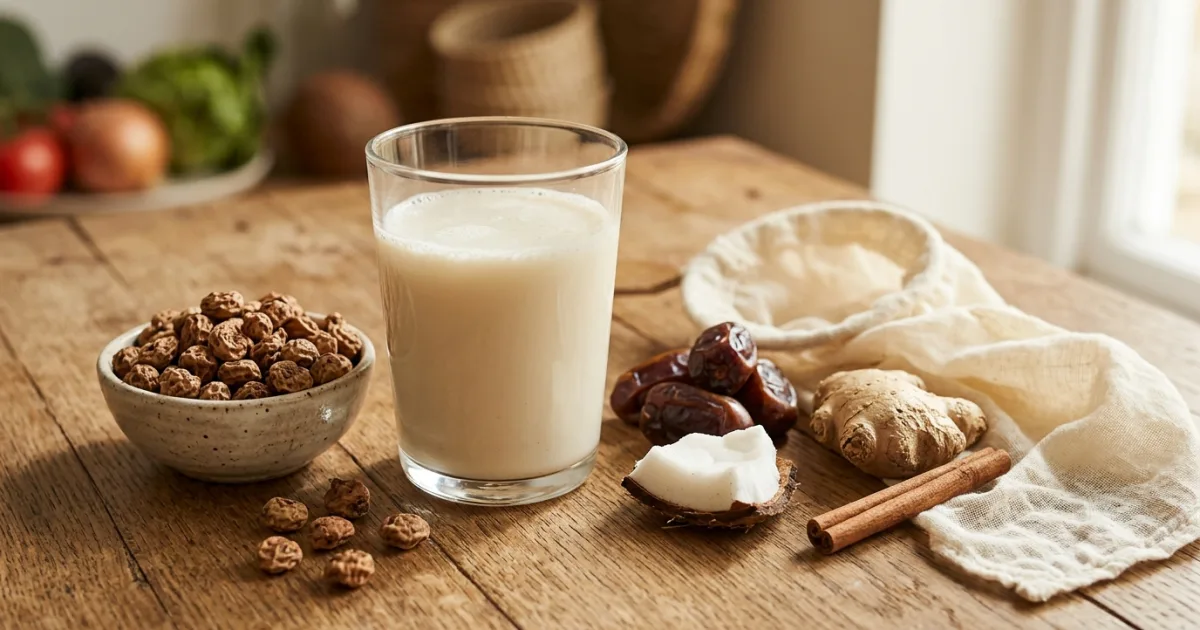
📌 Quick Summary: Tiger nut drink (kunu aya in Hausa, ose oji drink in Igbo) is made from soaked tiger nuts blended with water, dates, coconut, and spices — strained into a smooth, creamy, naturally sweet milk-like drink. A batch using 500g of dried tiger nuts makes approximately 1.5 to 2 litres of finished drink. Tiger nuts must be soaked for 24 to 48 hours before blending. The drink is lactose-free, rich in resistant starch, iron, and magnesium, and has become one of Nigeria’s fastest-growing health beverages. A tiger nut drink business selling 50 bottles per day at ₦500 to ₦1,000 per 500ml bottle earns ₦750,000 to ₦1,500,000 monthly gross revenue. This guide covers the complete recipe, variations, shelf life, NAFDAC requirements, and how to build a tiger nut business.
Tiger nut drink sits at the intersection of two of Nigeria’s strongest consumer trends in 2026: the rising demand for natural, plant-based health foods and the growing interest in traditional West African foods that have genuine nutritional value. Tiger nuts (Cyperus esculentus) — called aya or ofio in Hausa, imumu in Yoruba, and aki awusa in Igbo — are not actually nuts but small, wrinkled tubers with a naturally sweet, earthy flavour. They have been consumed across West Africa and the Mediterranean for thousands of years and were recently rediscovered by the global health food market (sold as “chufa” in Spain, where horchata de chufa is a national beverage). In Nigeria, tiger nuts have been sold at market stalls for generations as a snack food — but the tiger nut drink (kunu aya) business has emerged only recently as a commercially significant product, driven by the fitness and wellness movement and by the lactose-intolerant and dairy-free market that has no satisfying Nigerian alternative to cow’s milk.
Tiger Nut Nutritional Profile: Why Nigerians Are Drinking It
Tiger nuts have a nutritional profile that explains the enthusiasm among Nigeria’s health-conscious community. Per 100g of dried tiger nuts: approximately 400 calories, 9g protein, 24g fat (primarily oleic acid — the same heart-healthy fat in olive oil), 44g carbohydrates (of which a large portion is resistant starch and dietary fibre), significant quantities of vitamin E, vitamin C, potassium, phosphorus, magnesium, zinc, and iron. The resistant starch content is particularly significant — resistant starch feeds beneficial gut bacteria, supports blood sugar regulation, and produces a sustained energy release rather than the blood sugar spike of refined carbohydrates. For Nigerians managing blood sugar, the resistant starch content of tiger nut drink is a genuine functional benefit, not marketing language. The iron content (approximately 5.1mg per 100g) is relevant for Nigerian women, of whom a significant percentage are iron-deficient. Tiger nut drink is naturally lactose-free and suitable for people who cannot tolerate dairy milk — a population that is significant in Nigeria where adult lactase persistence is less common than in European populations.
Tiger Nut Drink Ingredients — Makes 1.5 to 2 Litres
| Ingredient | Quantity | Notes |
| Dried tiger nuts | 500g | Available at Nigerian markets year-round — look for clean, dry, uniformly sized tubers. Avoid black or mouldy tiger nuts. |
| Water for soaking | Enough to cover by 5cm | |
| Water for blending | 1.5 to 2 litres cold water | Cold water produces better flavour than warm water |
| Dates (medjool or regular) | 6 to 8, pitted | Natural sweetener — adds depth. Substitute with honey (2 tablespoons) if dates are unavailable. |
| Fresh coconut (flesh only) | Quarter of a medium coconut | Optional but highly recommended — adds creaminess and complementary flavour |
| Ginger (fresh) | 1 small piece (2cm) | Adds warmth and preservative quality |
| Cinnamon stick or powder | ½ teaspoon powder or 1 small stick | Optional — adds aromatic complexity |
| Vanilla extract | ½ teaspoon | Optional — enhances the natural sweetness |
| Salt | A very small pinch | Enhances flavour — do not omit |
Step-by-Step Recipe
Step 1: Soak the Tiger Nuts (24 to 48 Hours)
This is the most important step and the one most beginners rush. Dried tiger nuts are hard, dense, and fibrous — their starch is largely inaccessible until they have been properly rehydrated. Place the dried tiger nuts in a bowl and cover with cold water by at least 5cm. Leave to soak for a minimum of 24 hours — 48 hours produces a significantly better result: the tiger nuts become plumper, softer, and their natural sweetness becomes more pronounced. Change the soaking water once after the first 24 hours. After 48 hours, the tiger nuts should be swollen, noticeably softer when bitten, and sweet. If your tiger nuts are still hard after 48 hours, they were very old or very dry — continue soaking for another 12 to 24 hours. Drain and rinse the soaked tiger nuts before blending.
Step 2: Blend in Batches
Place the drained soaked tiger nuts in a blender with 500ml of cold water, the pitted dates, the coconut flesh, the ginger, cinnamon, vanilla, and the pinch of salt. Blend on high speed for 2 to 3 minutes until as smooth as possible. The tiger nut does not fully liquify — you will have a thick, slightly grainy mixture at this stage. Add the remaining water gradually (in 200ml additions) and continue blending. The goal is maximum extraction of the tiger nut’s natural sugars, starch, and oils into the liquid. Blend for a total of 4 to 5 minutes.
Step 3: Strain Thoroughly — The Critical Step
Pour the blended mixture through a fine muslin cloth, nut milk bag, or very fine sieve into a large bowl or pot. This step separates the smooth tiger nut milk from the fibrous pulp. Squeeze the cloth or press the pulp firmly to extract as much liquid as possible — most of the nutritional goodness is in the strained liquid, not the pulp. For commercial production, a hydraulic press or centrifuge separator produces more efficient extraction than hand-squeezing. Taste the strained liquid: it should be smooth, creamy, naturally sweet, and slightly earthy. Strain a second time through a finer cloth if you want the smoothest possible result — commercial tiger nut drink is typically strained twice.
Step 4: Taste and Adjust
Taste the finished milk and adjust: if too thick, add more cold water and stir. If not sweet enough, blend a few more dates or add honey and stir to combine. If the earthy flavour is too strong, a small additional amount of vanilla extract or a squeeze of lime juice brightens it. The flavour of tiger nut drink changes significantly with temperature — taste it chilled before making final adjustments, as the sweetness and creaminess are more pronounced cold.
Step 5: Bottle and Refrigerate
Pour the finished tiger nut milk into clean glass or food-grade plastic bottles. Refrigerate immediately. Shake well before serving — tiger nut milk separates on standing, with the denser starch particles settling at the bottom. This is natural and does not indicate spoilage. Serve cold, over ice, or as part of a smoothie.
Shelf Life and Storage
Freshly made homemade tiger nut drink: 3 to 4 days in the refrigerator. The natural starch and sugars provide a medium for bacterial growth — consume within this window and do not leave at room temperature for more than 2 hours. Commercial tiger nut drink with proper pasteurisation and packaging: 7 to 14 days refrigerated; 6 to 12 months if aseptically packaged and shelf-stable. For the business model, this short shelf life is the primary operational constraint — production must be matched to sales cycle, and cold chain management (refrigerated storage and delivery) is essential for retail sales.
Tiger Nut Drink Variations
The base recipe adapts well to several popular variations that expand your product range for commercial sales. Spiced kunu aya (traditional northern Nigerian version): add more ginger, a pinch of cloves, and black pepper to the blend — producing the warmer, more intensely spiced version sold at northern Nigerian markets. Chocolate tiger nut milk: add 2 tablespoons of raw cacao powder or unsweetened cocoa to the blend — produces a chocolate milk alternative that is hugely popular with children and health-conscious adults. Turmeric tiger nut milk: add 1 teaspoon of turmeric powder to the blend — anti-inflammatory marketing angle that resonates strongly with the health-conscious Nigerian consumer segment. Tiger nut and coconut milk blend: increase the coconut flesh quantity and reduce the water slightly — produces a richer, creamier, higher-calorie version suitable for post-workout recovery or as a meal replacement supplement.
The Tiger Nut Business: Building a Profitable Operation
Tiger nut drink is one of Nigeria’s most commercially compelling food and beverage business opportunities in 2026. The raw material (dried tiger nuts) costs approximately ₦600 to ₦1,200 per kilogram at Nigerian markets — 500g produces approximately 1.5 litres of finished drink. At a retail selling price of ₦500 to ₦1,000 per 500ml bottle, 1.5 litres (3 bottles) generates ₦1,500 to ₦3,000 in revenue from ₦300 to ₦600 in raw tiger nut cost — a gross margin of 80 to 85 percent before packaging and labour. The business model that most Nigerian tiger nut entrepreneurs find sustainable: produce in daily batches of 20 to 50 litres (serving 40 to 100 bottles per day), and sell through a combination of direct customer delivery (WhatsApp orders), gym partnerships, health food stores, and social media marketing on Instagram and TikTok. NAFDAC registration is required for any tiger nut drink sold commercially with labelling — specifically NAFDAC’s Small Scale food registration pathway. Invest in attractive, professional labelling and clear nutrition information from the start: the tiger nut drink market in Nigeria is increasingly competitive, and professional presentation is a significant differentiator.
Frequently Asked Questions
What is tiger nut drink good for?
Tiger nut drink provides resistant starch (which feeds beneficial gut bacteria and supports blood sugar regulation), heart-healthy oleic acid fats, iron, magnesium, potassium, vitamin E, and is naturally lactose-free and dairy-free. It is a good milk alternative for people who cannot tolerate dairy, and its resistant starch content makes it useful for blood sugar management when consumed as part of a balanced diet.
How long do I need to soak tiger nuts?
Minimum 24 hours — 48 hours produces the best result. Under-soaked tiger nuts produce a grainier, less sweet, harder-to-blend drink with reduced nutritional extraction. There is no practical benefit to soaking beyond 72 hours.
Can I make tiger nut drink without dates?
Yes — substitute with honey (2 tablespoons per 500g tiger nuts), agave nectar, or simply add sugar to taste. Dates are recommended because they add depth of flavour and fibre alongside sweetness, but any natural sweetener works.
How much does a tiger nut business make in Nigeria?
A tiger nut drink business producing 50 bottles per day (500ml each) at ₦700 per bottle generates ₦35,000 daily or approximately ₦700,000 monthly gross revenue on raw material costs of approximately ₦100,000 to ₦150,000 monthly — producing gross profit of ₦550,000 to ₦600,000 monthly before packaging, labour, and delivery costs.
Sources
- Original recipe — NaijaSabi Lifestyle Desk, September 2026
- Nigerian culinary tradition — tiger nut drink preparation documented across Hausa, Yoruba and Igbo food traditions
Last updated: 16 September 2026 · NaijaSabi Lifestyle Desk.
Tiger Nut Drink and Nigerian Health Culture in 2026
The rise of tiger nut drink in Nigeria’s urban food and beverage market reflects a broader shift in how Nigerian consumers — particularly in the 25 to 45 age bracket — think about what they drink. The fitness culture that the Prima News analysis confirmed as one of Nigeria’s fastest-growing search categories is driving demand for functional beverages: drinks that taste good and provide a measurable health benefit beyond hydration. Tiger nut drink fits this category precisely — it is naturally sweet without added sugar, creamy without dairy, energising without caffeine, and backed by genuine nutritional research rather than marketing claims. The Instagram-based Nigerian health food community (a significant and growing audience in Lagos, Abuja, and Port Harcourt) has adopted tiger nut drink alongside zobo, kunu, and fresh fruit juices as the alternative to carbonated drinks and commercially sweetened beverages. For the tiger nut entrepreneur, this cultural moment is a genuine commercial tailwind — the target customer is already looking for exactly what tiger nut drink provides and is increasingly willing to pay a premium price for a product that is naturally produced, professionally packaged, and credibly positioned as a functional food. The entrepreneurs who are building tiger nut drink brands in Nigeria in 2026 — with proper packaging, consistent quality, and clear nutritional messaging — are doing so in a market that is growing rather than saturated, with a product whose supply chain is entirely domestic and whose raw material cost is low relative to the retail selling price they command.


0 Comments
No comments yet. Be the first to share your thoughts!