




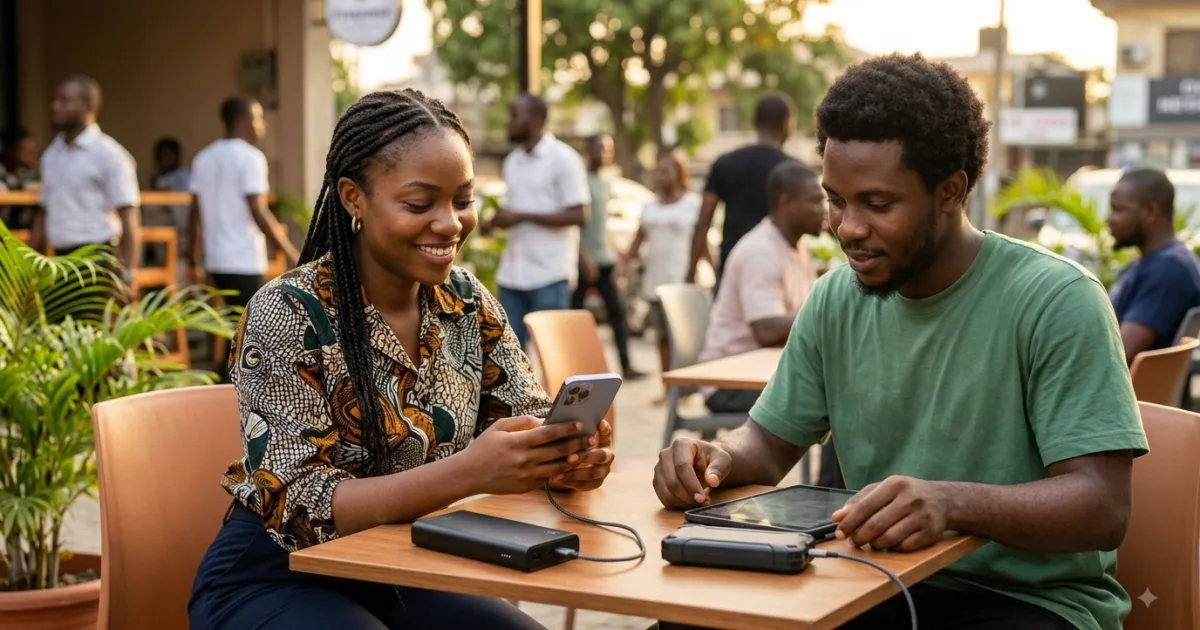
In Nigeria, a power bank isn’t a gadget — it’s a survival tool. When NEPA takes light for hours and your phone is your business, your bank, your map and your lifeline, a reliable portable charger is the difference between staying connected and going dark. The good news: 2026’s power banks are bigger, faster and better value than ever, from pocket 10,000mAh units to 30,000mAh+ beasts that charge a laptop.
But the market is also crowded and full of fakes that lie about capacity or quietly damage your phone. This guide cuts through it: what capacity you actually need, how fast charging really works, the brands and prices worth knowing, and exactly how to avoid the counterfeits. Buy smart once, and you’ll never be caught powerless again.
📌 The quick answer: for most Nigerians, a 20,000mAh power bank with fast charging is the sweet spot — enough to charge a phone several times, not too heavy, and widely available from around ₦12,000–₦16,000. Go 10,000mAh (from ~₦8,000) if you want pocketable and light; go 27,000–30,000mAh+ (₦19,000–₦33,000) if you face long blackouts, travel a lot, or need to charge a laptop. Whatever you buy, prioritise fast charging and buy genuine from a trusted store.
What Capacity Do You Actually Need?
Capacity (measured in mAh) decides how many times you can recharge. Match it to your life, not to the biggest number:
10,000mAh — pocketable and light, charges most phones roughly 2 times. Great as an everyday carry, a backup, or for light users who just need insurance against a flat battery. Prices start from around ₦8,000.
20,000mAh — the sweet spot for most Nigerians. Charges a typical phone several times, handles a long day or a short blackout, and still fits in a bag without much bulk. Commonly ₦12,000–₦16,000+ depending on brand, wattage and display. If you’re unsure, buy this.
27,000–30,000mAh — heavy-duty. Charges a phone six to eight times, powers multiple devices at once, and lasts through extended outages or trips. Heavier, but built for serious power needs. Roughly ₦19,000–₦33,000.
40,000mAh and above — for travellers, content creators, field workers, or charging laptops. Big and weighty, but a genuine power station in your bag. Prices climb accordingly.
A note on real-world capacity: a power bank never delivers its full rated mAh to your phone — voltage conversion and efficiency losses mean usable capacity is lower. That’s normal. Extremely low output, though, can signal a fake.
Fast Charging: Why It Matters More in Nigeria
Capacity is half the story; charging speed is the other half — and it matters more here than almost anywhere, because power windows are short. Two speeds count: how fast the power bank recharges itself when NEPA is on, and how fast it charges your phone.
Look for fast-charging support — measured in watts (W) — such as 18W, 22.5W, or higher, and standards like USB Power Delivery (PD) and Quick Charge (QC). A higher-wattage power bank refills itself quickly during a brief power window and tops up your phone fast when you’re in a hurry. For a country where you might only get an hour of light, a fast-recharging power bank is far more useful than a slow giant. Also check the ports — USB-A, USB-C, and whether it has the cables/outputs your devices need.
Brands & Prices Worth Knowing in 2026
A few brands dominate the Nigerian market at different price points:
Oraimo — the value king. Hugely popular, widely available, reliable for phones and small devices, with friendly pricing. Typical range ₦12,000–₦30,000+ across capacities. The default safe choice for most students and workers.
Anker — the premium pick. A globally respected brand known for build quality, battery safety and advanced fast charging. Costs more — roughly ₦25,000–₦45,000+ — but you’re paying for durability and reliable output.
Xiaomi — sleek design and dependable performance, typically ₦18,000–₦35,000.
Baseus — high-capacity units with modern features like digital displays and fast charging, around ₦20,000–₦40,000.
itel, Infinix, Tecno, New Age, Romoss — also commonly listed, often at competitive prices across the 20,000–50,000mAh range. As always, the brand matters less than buying a genuine unit from a trusted seller.
How to Avoid Fake Power Banks
This is where people lose money — and sometimes damage their phones. Counterfeits of popular brands (Oraimo, Romoss and others) are common in open markets, and they often lie about capacity, charge dangerously slowly, or overheat. Protect yourself:
Buy from trusted retailers — official brand stores, authorised dealers, or reputable e-commerce platforms with buyer protection, not random roadside sellers. Be suspicious of “too cheap” — a 50,000mAh power bank at a 10,000mAh price is a fake. Check the build and packaging — genuine units feel solid with clean printing; fakes feel light and cheap. Test the output — extremely poor charging performance suggests a counterfeit. Mind the heat — warm during fast charging is normal; too hot to hold is not — stop and check the cable, charger and unit. A genuine power bank from a trusted source is one of the best gadget investments you can make; a fake is money burned and a risk to your phone.
Care Tips: Make Your Power Bank Last
Treat it well and it’ll serve you for years. Don’t charge it in extreme heat (car dashboard, direct sun, hot shop counter) — heat kills batteries. Use good cables — a bad cable causes slow charging that people wrongly blame on the power bank. Avoid constantly draining to 0% — lithium batteries last longer when you don’t deep-discharge every time. Keep it partially charged if storing it unused. And charge it during power windows so it’s always ready when the light goes. A well-treated power bank holds its capacity far longer than a neglected one.
FAQ: Power Banks in Nigeria 2026
1. What’s the best power bank capacity to buy?
For most people, 20,000mAh — it charges a phone several times, isn’t too heavy, and is widely available from around ₦12,000–₦16,000. Go bigger only if you face long blackouts, travel a lot, or need to charge a laptop.
2. How much does a good power bank cost in Nigeria?
Roughly: 10,000mAh from ~₦8,000; 20,000mAh ₦12,000–₦16,000+; 27,000–30,000mAh ₦19,000–₦33,000; premium brands and bigger capacities cost more. Prices vary by brand, wattage and store.
3. Which power bank brand is best in Nigeria?
Oraimo is the value leader and a safe default; Anker is the premium choice for build quality and safety; Xiaomi and Baseus are strong mid-range options. Buying genuine matters more than the brand.
4. Why doesn’t my power bank give the full mAh it claims?
Voltage conversion and efficiency losses mean usable capacity is always lower than the rated figure — this is normal. Extremely low output, however, can indicate a fake.
5. Does fast charging matter for a power bank?
Yes, a lot — especially in Nigeria. Fast charging (higher wattage, PD/QC support) lets the power bank refill itself quickly during short power windows and top up your phone faster.
6. Can a power bank charge a laptop?
High-capacity units (often 27,000mAh+ with USB-C Power Delivery and enough wattage) can charge many laptops. Check the power bank supports your laptop’s charging requirements.
7. How do I avoid buying a fake power bank?
Buy from official stores, authorised dealers or reputable e-commerce with buyer protection. Avoid suspiciously cheap “huge capacity” units, check build quality, and test the output.
8. Is it bad if my power bank gets warm?
Warm during fast charging is normal. Too hot to hold comfortably is not — stop using it and check the cable, charger and environment, as overheating can signal a problem or a fake.
9. How many times can a 20,000mAh power bank charge my phone?
Typically several full charges for an average phone, depending on your phone’s battery size and the power bank’s efficiency — enough for a long day or a short blackout.
10. How do I make my power bank last longer?
Avoid charging it in extreme heat, use good cables, don’t drain it to 0% every time, keep it partially charged when stored, and top it up during power windows.
The Bottom Line
A reliable power bank is one of the smartest gadget buys in Nigeria — your insurance against the blackout. For most people, a 20,000mAh unit with fast charging (₦12,000–₦16,000) is the perfect balance of capacity, portability and price. Drop to 10,000mAh for pocketable backup, or climb to 27,000–30,000mAh+ for long outages, travel or laptop charging.
Whatever you choose, prioritise fast charging, pick a trusted brand like Oraimo or Anker for your budget, and — above all — buy genuine from a reputable seller. Do that, and the next time NEPA takes light, your phone stays alive, your business keeps moving, and you stay connected.
Related reading on NaijaSabi:
- Best Phones for Battery Life in Nigeria 2026 — pair a big-battery phone with a good power bank
- Best Budget Phones Under ₦200,000 in Nigeria 2026 — the phones worth keeping charged
- How to Spot a Fake Phone in Nigeria 2026 — the same vigilance applies to accessories
Editorial standards. This article is independently researched and compiled from Nigerian retailer pricing and gadget-market reporting. Prices move with the exchange rate and vary by store, capacity and promotions — figures here are indicative ranges, so confirm before buying. Buy only from trusted retailers to avoid counterfeits. We receive no payment from any brand for inclusion or ranking. If you spot an error or have a correction, please write to editorial@naijasabi.com.ng.
Last reviewed and updated: 18 June 2026 · NaijaSabi Tech Desk · Prices reviewed monthly.




0 Comments
No comments yet. Be the first to share your thoughts!