




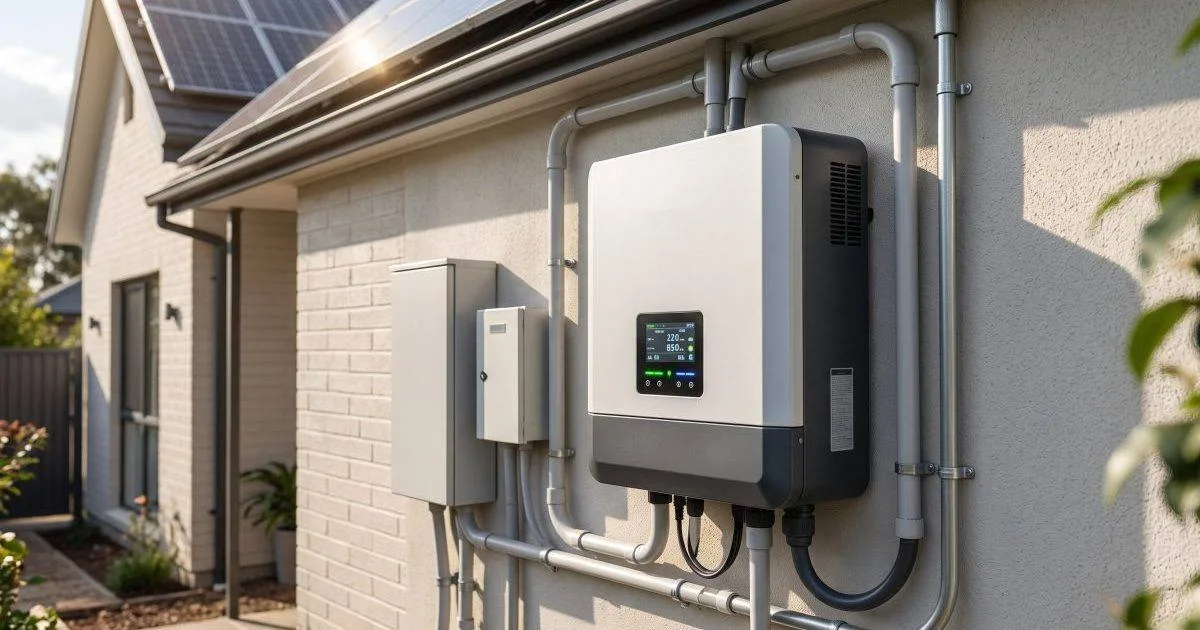
📌 Quick Summary: A complete home solar system in Nigeria in 2026 typically costs about ₦850,000 to ₦1.2 million for an entry-level 1–2 kVA setup, ₦2 million to ₦3 million for a 3–4 kVA system and ₦3.5 million to ₦5.5 million for a 5–8 kVA home or small-business system, according to a 2026 BusinessDay analysis. A June 2026 Mobility.com.ng guide gives a wider range of roughly ₦1 million to ₦8 million or more for a full household setup with lithium batteries. Batteries are the biggest cost (35–45% of the total), followed by panels and the inverter. Prices move with the exchange rate, so get itemised quotes from at least three installers, size the system from your own appliance list and check the warranty before you pay.
Nigerians are not going solar because it is trendy. They are going solar because grid supply is unreliable, fuel for generators is expensive and a home that stays powered through the blackouts is simply worth more. Nigeria installed 803 megawatts of new solar capacity in 2025 — up 141% on the year before and the second-largest solar market in Africa, according to the Global Solar Council’s February 2026 Africa Market Outlook cited by BusinessDay. This NaijaSabi guide explains what home solar and inverter systems really cost, what each size can power, how to size your own and how to buy without being overcharged.
| System size | Typical total installed cost (BusinessDay, 2026) | Rough guide (varies with your appliances) |
| Entry-level 1–2 kVA | ₦850,000 – ₦1.2 million | Lights, fans, TV, phone charging, a laptop; a one- or two-bedroom flat with light use |
| Mid-range 3–4 kVA | ₦2 million – ₦3 million | A two- to three-bedroom home with a fridge or freezer and ordinary appliances |
| Large home or small business 5–8 kVA | ₦3.5 million – ₦5.5 million | A bigger home or duplex, or a small business with heavier loads |
| Commercial 10 kW and above | ₦10 million – ₦50 million or more | Shops, offices, small factories |
| Other 2026 estimate (Mobility.com.ng, June) | Roughly ₦1 million (entry) to ₦8 million or more (full household with lithium storage) | Wider range reflecting component quality and battery type |
Treat all prices as indicative. Mobility.com.ng notes that solar panel prices in Nigeria are not fixed and will keep moving with the exchange rate and global supply conditions. Sizes, brands and installers differ widely, which is why the ranges above are so wide.
Why More Nigerians Are Switching to Solar in 2026
BusinessDay reports that Nigeria’s cumulative solar capacity reached nearly 1.19 gigawatts by the end of 2025, up from around 385 megawatts in 2024, citing the Global Solar Council. The practical reasons for households are straightforward: solar removes your dependence on fuel for the hours it covers, cuts generator noise and maintenance and does not run out when the grid or the petrol queue fails. The trade-off is the upfront cost, which is why understanding what you are paying for matters. To compare the running cost of your generator, check current fuel prices on NaijaSabi’s prices page and do the arithmetic with your own weekly litres.
Inverter Backup vs Full Solar System — Know the Difference
Nairametrics explains that there are two broad kinds of system:
- An inverter backup system is an inverter plus batteries. It stores grid power and releases it when the grid fails. It can work with no solar panels at all, which means that when the grid is absent for long periods, the batteries do not recharge.
- A complete solar system adds solar panels (and a charge controller) so the batteries are recharged from the sun. This is what gives you real independence from the grid and from fuel.
A backup-only setup is cheaper to start but depends on grid power to recharge. Many buyers start with a solar-ready inverter and add panels later — ask the installer whether your inverter can take solar input.
What You Are Paying For — Where the Money Goes
BusinessDay’s 2026 analysis breaks down a typical system’s cost as follows:
| Component | Share of total cost | Notes |
| Batteries | About 35–45% | The largest single cost. Lithium batteries cost three to four times more upfront than lead-acid, but most solar professionals now recommend them as the more economical long-term choice, especially for round-the-clock power |
| Solar panels | About 25–30% | Individual panels range from about ₦45,000 to ₦250,000 depending on wattage and technology (BusinessDay); Mobility.com.ng’s June 2026 guide gives about ₦20,000 for a basic 100W panel up to about ₦165,000 for a 550W high-efficiency unit |
| Inverter | About 20–25% | The “heart” of the system — arguably the most critical single component, according to BusinessDay |
| Installation, cables, mounting, protection | The rest | Varies by installer and roof; do not skip proper protection and earthing |
Inverter prices. Mobility.com.ng’s 2026 guide notes that inverter-only prices shift with the exchange rate and import costs. For example, it lists a 5.5 kVA solar hybrid inverter at about ₦550,000 to ₦850,000 for the unit alone. It lists brands such as Luminous, Growatt and Deye among those sold in Nigeria, and says Jinko is the most widely sold panel brand. A hybrid inverter accepts solar input, manages battery charging from both solar and the grid and often includes a built-in solar charge controller (MPPT).
What Can Each System Size Power?
Techpoint’s guide to solar costs for the average household gives rough sizing guidance. It describes smaller systems as enough for a one- to two-bedroom apartment and a two- to three-bedroom home, and says installers recommend about 5 kVA for a full duplex or a three- to four-bedroom home. The exact capacities for the smaller tiers were not clear in the text available, so confirm them with your installer:
- Entry-level systems: enough for a one- to two-bedroom apartment with lights, fans, a TV and chargers.
- Mid-range systems: sufficient for a two- to three-bedroom home, depending on which appliances you prioritise, and can include a fridge or freezer.
- Around 5 kVA: installers recommend this capacity for a full duplex or a three- to four-bedroom home, particularly if you run an inverter air conditioner and several appliances.
These are guides, not guarantees. What matters is your actual load. Air conditioners, electric kettles, pressing irons, water heaters and pumping machines draw far more power than lights and fans, and a few heavy appliances can push you up a size or two. Be honest with your installer about everything you want to power.
How to Size Your Own System (Illustrative Example)
One Nigerian homeowner’s guide suggests a simple method: add up the energy your appliances use in a day, divide by the average daily sunlight hours where you live to find the minimum panel capacity, then add a safety margin of roughly 30% before dividing by the wattage of the panels you plan to buy.
The numbers below are invented to show the method. Use your own appliance wattages (check the labels) and ask your installer for the sunlight hours to use for your location.
| Appliance | Power | Hours per day | Energy per day |
| 6 LED bulbs | 6 × 10 W = 60 W | 5 | 300 Wh |
| 2 fans | 2 × 60 W = 120 W | 8 | 960 Wh |
| TV and decoder | 120 W | 5 | 600 Wh |
| Phone and laptop charging | 80 W | 4 | 320 Wh |
| Refrigerator (average running power) | 100 W | 24 | 2,400 Wh |
| Total daily energy | 4,580 Wh |
Suppose your location gets about 5 usable sunlight hours a day (illustrative). Minimum panel capacity is 4,580 ÷ 5 = 916 W; adding about 30% gives roughly 1,190 W of panels. With 300 W panels, that is about four panels. Your battery bank and inverter size then depend on how many hours you want to run at night and the highest total power you will use at once. An installer will complete that calculation properly, but now you can check whether their proposal is in the right range instead of taking it on trust.
How to Buy Solar Safely in Nigeria
- List your appliances first — power in watts and hours of daily use — and decide what you must run at night.
- Get at least three itemised quotations. Each should list panel brand and wattage, number of panels, inverter brand and kVA, battery type, capacity and number, charge controller, cables, protection, mounting and labour. Compare like with like. A lower total often means smaller or cheaper batteries.
- Ask about the battery. Ask whether it is lithium or lead-acid, its capacity, its warranty and its expected life. Batteries are the biggest cost and the part most often cut in cheap quotations.
- Check that the inverter is right for the job. Ask whether it is a pure sine wave inverter, whether it takes solar input directly (hybrid) and whether it can grow if you add more panels or batteries.
- Insist on a written warranty for each component and for the installation, and confirm who to call if something fails.
- Use a competent installer and check references. Ask to see previous installations or speak to past customers. Poor wiring and missing protection are fire risks, not just performance problems.
- Pay in stages if you can, and test the system under real load before releasing the final payment.
- Beware of prices that look too good. Panels and batteries that are dramatically cheaper than the ranges above may be low quality, second-hand or not what the label claims.
Financing and Paying in Instalments
Techpoint notes that several solar-financing startups in Nigeria have recently raised substantial funding to support renewable energy projects, so some installers and platforms offer instalment plans. If you consider one, compare the total you will pay, any interest and fees, the length of the plan, what happens if you miss a payment and who owns the equipment until you finish paying. Use NaijaSabi’s Loan Calculator to see what an instalment plan really costs before you sign.
Can You Sell Surplus Solar Power to the Grid?
Nigeria’s electricity regulator has introduced net billing rules that let some solar users sell excess power to distribution companies for bill credits, but not everyone qualifies. NaijaSabi’s guide to the NERC net billing rules and who qualifies explains the details before you plan around it.
Solar vs Generator — How to Compare Honestly
A generator is cheaper to buy but costs fuel, oil and servicing every week. A solar system costs more upfront and very little to run. To compare, add up your real monthly generator spending (fuel plus servicing) and divide your solar quotation by that figure to get a rough payback period in months. For example, a ₦2.5 million system replacing ₦100,000 a month of fuel and servicing would take about 25 months to pay back on those assumptions. Plug in your own numbers; do not rely on anyone else’s.
Frequently Asked Questions — Solar and Inverter Systems in Nigeria 2026
How much does a home solar system cost in Nigeria in 2026?
According to a 2026 BusinessDay analysis, an entry-level 1–2 kVA home system costs about ₦850,000 to ₦1.2 million installed, a 3–4 kVA system about ₦2 million to ₦3 million and a 5–8 kVA home or small-business system about ₦3.5 million to ₦5.5 million. A June 2026 Mobility.com.ng guide gives a wider range of roughly ₦1 million to ₦8 million or more for a full household setup with lithium batteries. Prices vary with component quality, battery type and the exchange rate, so get itemised quotes from several installers.
What is the difference between an inverter and a solar system?
An inverter backup system is an inverter plus batteries, which store grid power and release it during outages and can work without solar panels. A complete solar system adds panels so the batteries recharge from the sun, giving independence from the grid and from fuel. Many buyers start with a solar-ready hybrid inverter and add panels later, so ask your installer whether the inverter accepts solar input.
How many solar panels do I need for my house?
It depends on your daily energy use and the sunlight hours at your location. A simple method is to add up the energy each appliance uses in a day, divide by the average sunlight hours to get the minimum panel capacity and add roughly 30% as a safety margin, then divide by the wattage of the panels you plan to buy. As rough sizing, Techpoint’s guide describes smaller systems as enough for a one- to two-bedroom flat or a two- to three-bedroom home, and installers suggest about 5 kVA for a duplex or three- to four-bedroom home with heavier appliances. Ask an installer to check your own calculation.
Which is better: lithium or lead-acid batteries for solar?
BusinessDay’s 2026 analysis says lithium batteries cost three to four times more upfront, but most solar professionals now recommend them as the more economical long-term choice, particularly for round-the-clock power needs. Lead-acid batteries cost less to buy but are typically replaced sooner. Because batteries make up about 35–45% of total system cost, compare the type, capacity, warranty and expected life in each quotation, not just the total price.
Can solar power run an air conditioner or a freezer in Nigeria?
It can, but you need a system sized for the load. Techpoint’s guide suggests a roughly 5 kVA system for a duplex or three- to four-bedroom home with an inverter air conditioner and several appliances, while smaller systems suit lights, fans, a TV and a fridge or freezer. Air conditioners, kettles, pressing irons and water heaters draw a lot of power, so tell your installer exactly what you want to run and ask them to show the calculation behind the recommended size.
Is solar cheaper than a generator in Nigeria?
Solar costs more upfront but usually less to run, so it depends on how much you spend on fuel and servicing. To check for yourself, add up your monthly generator spending and divide the solar quotation by that figure to estimate the payback period in months. Fuel prices and exchange rates change, so redo the sum with current prices. Many buyers also value having reliable power without noise, fumes and fuel queues.
Last updated: 13 October 2026 · NaijaSabi Tech Desk. Prices change with the exchange rate and supply conditions; all figures are indicative and the sizing example uses invented numbers. This article is general information, not professional electrical or engineering advice — use a competent, certified installer and get written quotations and warranties. NaijaSabi is not affiliated with any brand, installer or organisation mentioned.




0 Comments
No comments yet. Be the first to share your thoughts!