




Ask the internet about Nigerian tourism and it serves you Lagos on repeat — beaches, brunch, Detty December. But Nigeria’s most breathtaking experiences live far beyond the third mainland bridge: a mountain resort with Africa’s longest cable car ride, a 2,244-square-kilometre wilderness with over 300 elephants, a seven-tier waterfall known since the 12th century, a UNESCO sacred forest, and a coastal city that throws Africa’s biggest street party every December.
This guide curates ten destinations across the country that genuinely reward the journey — with the practical details (costs, best seasons, what to actually do) that most listicles skip. Whether you’re planning a weekend escape, a family holiday, or showing a diaspora relative that Nigeria’s beauty isn’t a rumour, start here.
📌 The quick version: for mountains and cool weather, Obudu Mountain Resort (Cross River — cable car ₦15,000–₦20,000, entry ₦2,000–₦3,000, 18–25°C year-round). For wildlife, Yankari National Park (Bauchi — safaris among 300+ elephants, plus the crystal-clear Wikki Warm Springs). For waterfalls, Erin-Ijesha’s seven tiers (Osun — entry ₦500–₦1,000) and Awhum’s cliff-drop falls with a monastery (Enugu). For hills and history, Idanre Hills’ ~660 ancient steps (Ondo, UNESCO tentative) and Olumo Rock’s war-time fortress (Abeokuta). For culture, the Osun-Osogbo Sacred Grove (UNESCO World Heritage) and Calabar’s museums plus its December carnival. Add Ikogosi’s warm-and-cold twin springs (Ekiti) and an Abuja-plus-Zuma-Rock city break, and you’ve got a year of trips. Best season for most: November–March (dry, clear); waterfalls are fullest April–October. Travel by day, confirm prices locally, and check your route’s current situation before setting out.
🏔️ Obudu Mountain Resort (Cross River) — Nigeria’s Rooftop
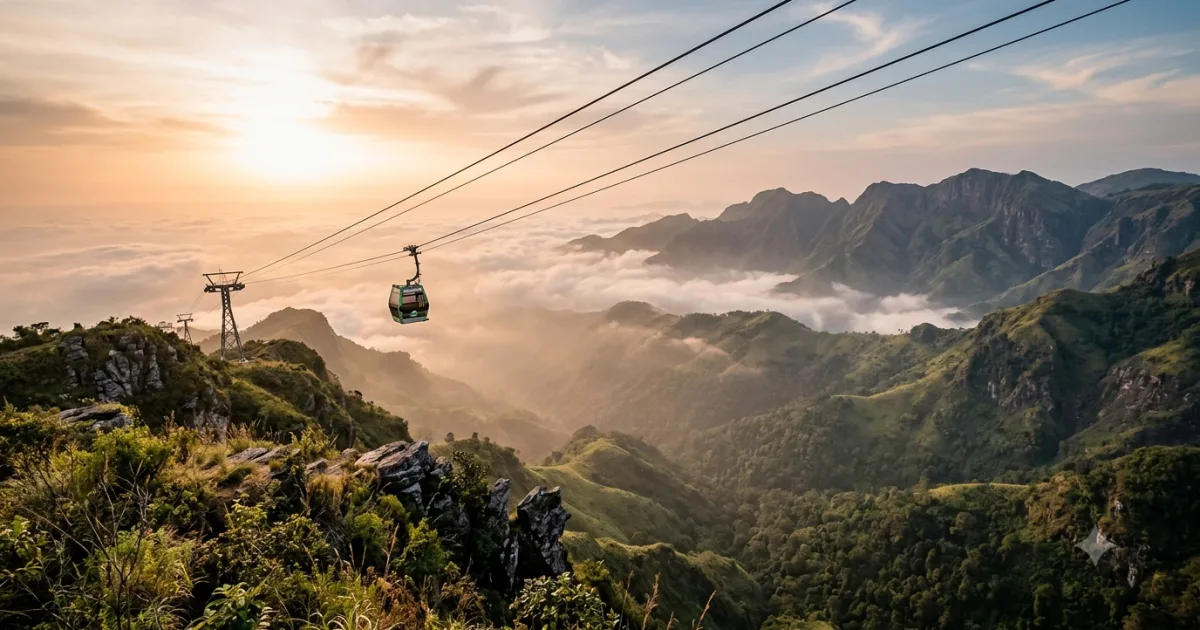
If one destination proves Nigeria’s range, it’s Obudu. Perched 1,575 metres up on the Obudu Plateau and established back in 1951, the resort enjoys a genuinely temperate 18–25°C climate year-round — cardigan weather in Nigeria. The star attraction is Africa’s longest cable car ride (about 1.8km, climbing some 870 metres) floating you over forested slopes; below it wait hiking trails, horse riding, birdwatching (the surrounding Becheve Nature Reserve shelters rare species), a water park, and the magical Grotto waterfall with its natural pool. Practicalities: entry around ₦2,000–₦3,000, cable car roughly ₦15,000–₦20,000, chalets on-site; the drive is long (about 5–6 hours from Enugu), so plan an overnight stay minimum. Best months: November–March for clear skies, December–February for the coolest air.
🐘 Yankari National Park (Bauchi) — The Safari You Didn’t Know Nigeria Had
Nigeria’s largest wildlife sanctuary sprawls across 2,244 km² of savannah and forest, home to one of West Africa’s largest elephant populations — over 300 — alongside lions, buffalo, hippos, baboons, antelope and 350+ bird species. Morning safari drives put you metres from wild elephants; afternoons belong to the park’s second miracle, the Wikki Warm Springs — a crystal-clear natural pool that stays warm year-round, essentially a spa carved by nature. Lodges inside the park make an overnight easy, and the surrounding communities add cultural tours. For families and eco-tourists, this is the country’s definitive nature trip — go in the dry season (November–April) when animals cluster at water points and roads behave.
💦 The Waterfall Circuit: Erin-Ijesha and Awhum
Erin-Ijesha (Olumirin) Waterfalls, Osun State — known since around 1140 AD — cascades down seven levels, each a stage of a cool, misty climb through rainforest. Levels one and two suit families; levels three to seven demand real scrambling and reward it with solitude and views. Practicalities: entry about ₦500–₦1,000 (plus a small camera fee), open roughly 8am–6pm, thirty minutes from Ilesa; the falls run fullest April–October, while November–March gives safer, drier climbing. Across the country in Enugu State, Awhum Waterfall drops from a high rock cliff amid green hills — serene, reputedly spiritual, and neighboured by a working monastery that deepens the calm; pair it with the nearby Ngwo Pine Forest for one of the South-East’s loveliest day trips.
⛰️ Hills, Rocks and History: Idanre and Olumo
Idanre Hills, Ondo State — a UNESCO tentative-list landscape — asks a price of roughly 660-plus ancient stone steps and pays it back with one of Nigeria’s great summits: the abandoned old Idanre town, centuries-old shrines, the old court and belfry, the mysterious Agboogun footprint, and panoramic views that explain why civilisations chose this perch. Hikers, photographers and history lovers all leave converted. Olumo Rock, Abeokuta (Ogun State) compresses history into an afternoon: the natural fortress that sheltered the Egba people through the 19th-century Yoruba wars, now climbable via carved steps (with an elevator alternative), topped with sweeping views over Abeokuta’s rusted roofs and the Ogun River. It’s an easy day trip from Lagos or Ibadan — the gateway drug to Nigerian domestic travel.
🌿 Culture Deep-Dives: Osun-Osogbo Grove and Calabar
The Osun-Osogbo Sacred Grove (Osun State) is one of Nigeria’s two cultural UNESCO World Heritage sites — a dense, primeval forest along the Osun River, dotted with shrines, sculptures and sanctuaries honouring the river goddess. Walking it (with a guide) is the closest thing to stepping inside Yoruba cosmology; visit during the Osun-Osogbo Festival (August) and the grove becomes a global pilgrimage. Calabar (Cross River) offers the polished urban version of heritage: the poignant Slave History Museum, the Marina Resort waterfront, day trips toward Cross River National Park and Agbokim Falls, arguably Nigeria’s best food scene (seafood, ekpang nkukwo, afang) — and every December, the Calabar Carnival, “Africa’s biggest street party,” when the city becomes one long costumed parade. Pair Calabar with Obudu for the ultimate Cross River double.
♨️ Ikogosi Warm Springs (Ekiti) — The Geological Wonder
Ikogosi’s claim is simple and strange: a warm spring and a cold spring flow side by side, meeting at a confluence where each somehow keeps its temperature — a geological marvel that has puzzled visitors for decades. The surrounding resort adds chalets, a spring-fed swimming pool, and gentle hiking trails through lush hills. It’s the South-West’s best “soft adventure”: romantic enough for couples, easy enough for parents, curious enough for kids — and it slots neatly into a circuit with Erin-Ijesha and Idanre for a spectacular three-stop Yoruba-heartland road trip.
🏙️ Abuja + Zuma Rock — The Capital Break
Don’t sleep on the capital as a leisure destination: Millennium Park’s manicured green, Jabi Lake’s waterfront, the arts-and-crafts village, viewpoints toward Aso Rock, and a growing restaurant scene make Abuja Nigeria’s most relaxed big-city weekend. The non-negotiable add-on is Zuma Rock — the brooding 725-metre monolith on the Madalla road (Niger State) whose “face” watches every traveller into the capital — and, in the rainy months, Gurara Falls an hour away, thundering at full width. Abuja is also the country’s easiest logistics: fly in, see everything by ride-hailing, no ferry or trek required.
Planning Your Trip: The Practical Layer
A few rules make all these trips better. Season smartly: November–March is the universal sweet spot (dry roads, clear skies, cool harmattan mornings), while waterfall-chasers get maximum drama April–October — just avoid the July–September flood peak for long road trips. Budget honestly: entry fees are modest (₦500–₦3,000 at most sites), but transport and lodging are the real costs — confirm current prices locally, as they change often. Move wisely: fly the long legs where possible and finish by road; leave early, arrive before dark, and use reputable transport. Go guided: at groves, caves, hills and parks, local guides are cheap, mandatory in places, and transform what you see. Check the moment: conditions and security vary by route and season — a two-minute check of recent local information before departure is part of the itinerary, not paranoia.
FAQ: Visiting Nigeria Beyond Lagos
1. What’s the best destination for a first domestic trip?
Olumo Rock (Abeokuta) or Ikogosi (Ekiti) for an easy taste; Obudu Mountain Resort for the full showcase trip if you have 3+ days.
2. When is the best time to travel within Nigeria?
November–March for most destinations (dry season, clear skies, passable roads). Waterfalls are fullest April–October; the Calabar Carnival is December; the Osun-Osogbo Festival is August.
3. How much do attractions cost?
Entry fees are modest: roughly ₦500–₦1,000 at Erin-Ijesha, ₦2,000–₦3,000 at Obudu (cable car ₦15,000–₦20,000 extra). Transport and accommodation dominate the budget — confirm current prices locally.
4. Is Obudu’s cable car really Africa’s longest?
Its roughly 1.8km ride climbing about 870 metres is widely cited as Africa’s longest cable car journey — and the views over the plateau justify the fame.
5. Can families with kids do these trips?
Yes — Yankari (safari + warm springs), Ikogosi, Olumo Rock (elevator available), Abuja and Calabar are family-friendly. Erin-Ijesha’s upper levels and Idanre’s steps suit older children and adults.
6. Which destinations are UNESCO-recognised?
The Osun-Osogbo Sacred Grove is a full UNESCO World Heritage site; Idanre Hills sits on the UNESCO tentative list.
7. Do I need guides?
At most natural and sacred sites, yes — they’re inexpensive, often required, and hugely enriching (history, safety, the paths you’d never find alone).
8. What should I know about getting there safely?
Travel by day, leave early, use reputable transport or run full vehicle checks, share your itinerary, and check current route conditions before departure — our road-safety guide covers the full playbook.
9. What’s the single most underrated destination?
Awhum Waterfall with the Ngwo Pine Forest (Enugu) — a serene, photogenic South-East pairing that most Nigerians have never visited.
10. Can diaspora visitors manage these trips?
Absolutely — fly into Abuja, Calabar or Akure/Ibadan legs where possible, book accommodation ahead, use local guides, and build day-travel-only itineraries. Domestic tourism infrastructure is imperfect but entirely workable with planning.
The Bottom Line
Nigeria’s beauty is not a rumour — it’s just badly marketed. Within this one country you can ride Africa’s longest cable car above cloud forest, watch wild elephants before soaking in a natural warm spring, climb a 900-year-old waterfall and the steps of an abandoned hilltop kingdom, walk a UNESCO sacred forest, and dance through Africa’s biggest carnival — all without a visa, all in naira.
Pick one trip this quarter: an easy starter (Olumo, Ikogosi), a family showcase (Yankari, Calabar), or the bucket-list flagship (Obudu). Time it for the dry season, budget for transport more than tickets, hire the guide, travel by day — and go see the country everyone else is only posting about.
Related reading on NaijaSabi:
- How to Travel Safely by Road in Nigeria 2026 — the safety playbook for every journey here
- Cheapest Domestic Flights in Nigeria 2026 — flying the long legs for less
- Lagos to Abuja: Flight vs Road vs Train 2026 — comparing options on the busiest corridor
Editorial standards. This article is independently researched and compiled from Nigerian travel and tourism sources. Entry fees, opening hours and facility conditions change frequently and vary by season — confirm current details locally or with the destination before travelling, and check the security situation along your route. Prices quoted are recent indicative figures, not guarantees. We receive no payment from any destination for inclusion. If you spot an error or have a correction, please write to editorial@naijasabi.com.ng.
Last reviewed and updated: 3 July 2026 · NaijaSabi Travel Desk.




0 Comments
No comments yet. Be the first to share your thoughts!