


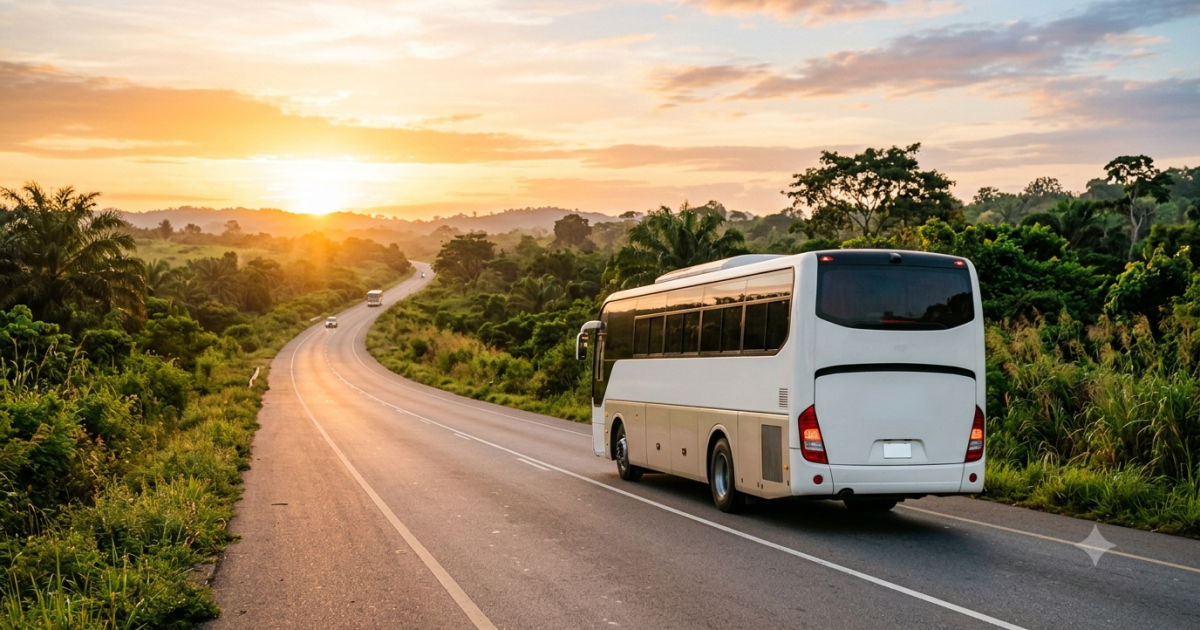
Most Nigerian journeys still happen by road — students heading home, families travelling for festivities, traders moving between markets, workers shuttling between cities. And while headlines focus on the dramatic, the everyday truth is this: most road tragedies are preventable, caused by night travel, bad vehicles, tired or reckless drivers, and journeys begun without a plan. The proof that prevention works came this very season — the FRSC recorded a 25.65% drop in road crashes during the 2026 Eid-el-Kabir travel period after intensive patrols and public education.
You can run the same playbook personally. This guide covers the decisions that actually change your odds: when to travel, how to choose a transport company, the vehicle checks that prevent breakdowns, rainy-season driving, personal security habits, and the emergency numbers to save before your next trip.
📌 The quick version: the single biggest safety upgrade is travelling by day — leave early (6–7am) and plan to arrive before dark, because night journeys multiply every risk from crashes to crime. Use reputable transport companies operating from proper terminals with passenger manifests; refuse overloaded or visibly worn vehicles and impaired-looking drivers. Driving yourself? Run the pre-trip check: tyres (including the spare — worn tyres also attract a ₦3,000 FRSC fine), brakes, lights, wipers and fluids, plus your fire extinguisher and C-caution triangle. Share your itinerary and live location with family, keep valuables out of sight, carry a charged power bank, and save the numbers now: FRSC 122 and the national emergency line 112 (both toll-free on any network), plus NEMA 0800-22-55-63-62 for disasters. In the rainy season, slow down, never drive through moving floodwater, and treat every water-covered stretch as hiding damage.
Rule One: Own the Clock (Travel by Day)
If you take one thing from this guide, take this: the hour you travel matters more than almost anything else. Night travel stacks every danger — fatigued drivers, invisible potholes and broken-down trucks, poor lighting on most highways, scarce help after a breakdown, and elevated crime risk on lonely stretches. The discipline that fixes it is simple: leave early in the morning (the 6–7am departure is a Nigerian travel institution for good reason) and plan the journey to arrive at your destination before dark, with buffer for traffic and stops.
Two supporting habits: check your route’s current situation before departure — recent news, road-condition reports and, where relevant, security advisories for the corridors you’ll pass — and build in flexibility: if delays mean you’d finish the trip at night, stopping over in a safe town beats pressing on in darkness. No appointment is worth arriving at midnight on an unlit highway.
Choosing How You Travel: Parks, Companies and Common Sense
For most travellers, safety is decided at the motor park. Choose deliberately: use established transport companies that operate from proper terminals, keep passenger manifests (your name on a record matters if anything goes wrong), maintain their fleets, and have reputations to protect — the modest premium over roadside “along” pickups buys real accountability. At boarding, inspect with your eyes: a vehicle with balding tyres, cracked windscreens or doors held by rope is telling you its maintenance culture; believe it and choose another. Refuse overloading — extra passengers and roof-high cargo destroy a vehicle’s handling and braking. And watch the driver: signs of exhaustion, aggression or anything suggesting intoxication are grounds to step off before departure, not regrets to nurse afterwards. Booking with companies that travel in the morning and run non-stop reputable routes completes the picture.
Driving Yourself: The Pre-Trip Check That Prevents Most Breakdowns
Private drivers control their own risk — which means owning the checklist. Before any long journey: tyres — tread depth, pressure, sidewall condition, and a serviceable spare with jack and wheel spanner (worn tyres aren’t just a blowout waiting to happen; they attract a ₦3,000 FRSC fine); brakes — any softness, noise or pulling gets fixed before, not after; lights and wipers — all functional (rainy season makes wipers safety-critical); fluids — engine oil, coolant, brake fluid; battery and belts; and the legally required kit: fire extinguisher and C-caution triangle, plus your driver’s licence and vehicle papers (checkpoints go smoothly when documents are complete).
On the road, the disciplines that keep families whole: seatbelts for everyone, front and back; no phone use while driving — pull over to take that call; respect speed limits and resist the “empty road” temptation; rest every 2–3 hours on long trips — fatigue behind the wheel is as deadly as drink; and drive defensively — assume the danfo will swerve, the truck’s brake lights are dead, and the okada will appear from nowhere, and you’ll rarely be surprised.
Personal Security on the Road
A few quiet habits dramatically reduce your exposure. Tell someone your plans — share your itinerary, vehicle details and departure time with family, and use your phone’s live location sharing for the journey. Keep valuables invisible — phones, laptops, jewellery and cash stay out of sight, especially at parks and rest stops, and avoid discussing money, business or travel plans with strangers. Stay reachable — travel with a fully charged phone and power bank, and airtime/data on a network with good route coverage. Handle stops wisely — use busy, recognised rest points rather than isolated stretches, keep the vehicle locked, and don’t leave belongings visible in a parked car. At checkpoints, slow down calmly, comply politely, and keep documents handy. None of this is paranoia — it’s the same low-cost vigilance that keeps you safe in any busy Nigerian city, applied to the highway.
Rainy Season Driving (Read This Before July–September Trips)
Nigeria’s mid-year rains transform road risk, and this needs its own rules. Slow down and double your following distance — wet roads can double stopping distances, and speeding into standing water causes aquaplaning, where your tyres stop touching the road entirely. Lights on, wipers working in any downpour; if visibility collapses, pull safely off the road and wait it out — a 30-minute delay beats a collision. Never drive through moving floodwater — it takes far less water than people believe to float or sweep a car, and flooded stretches hide washed-out surfaces and open gullies; turn around and find another route. Treat water-covered potholes as craters — because they often are. And check the weather and flood outlook for your route before setting out during peak rains; some journeys are better postponed by a day than attempted through a flood corridor.
When Things Go Wrong: Breakdowns, Crashes and the Numbers to Save
Preparation includes knowing exactly what to do when trouble comes. Save these now: FRSC — 122 (toll-free from any network, for crashes, dangerous driving and highway emergencies: give your state, nearest town and landmarks clearly); National emergency — 112 (toll-free, routes to police and other services); NEMA — 0800-22-55-63-62 (toll-free, for floods and large-scale disasters). If you break down: get the vehicle as far off the carriageway as possible, hazard lights on, place your C-caution triangle well behind the vehicle (a generous distance — especially on high-speed roads), keep occupants away from the traffic side, and call for help rather than accepting rescue from random strangers where avoidable. If you witness or are in a crash: call 122 immediately with precise location details, don’t move seriously injured people unless there’s fire or danger, and keep updating responders until help arrives. A small first-aid kit, torch, drinking water and basic tools in the boot turn emergencies into inconveniences.
FAQ: Road Travel Safety in Nigeria 2026
1. What is the single most important road safety rule?
Travel by day. Leave early morning and plan to arrive before dark — night travel multiplies crash, breakdown and security risks more than any other factor.
2. What number do I call in a road emergency?
FRSC on 122 — toll-free from any network. Give your state, nearest town and landmarks. The national emergency line 112 also works, and NEMA’s 0800-22-55-63-62 covers floods and disasters.
3. How do I choose a safe transport company?
Use established companies at proper terminals with passenger manifests and maintained fleets. Inspect the vehicle before boarding, refuse overloaded vehicles, and don’t travel with a driver who looks exhausted or impaired.
4. What should I check on my car before a long journey?
Tyres (plus spare, jack and spanner), brakes, lights, wipers, fluids, battery — and carry your fire extinguisher, C-caution triangle, licence and vehicle papers. Worn tyres also attract a ₦3,000 FRSC fine.
5. How often should I rest when driving long distances?
Every 2–3 hours. Driver fatigue is one of the deadliest and most underestimated causes of highway crashes.
6. Is it safe to drive through flooded roads?
No — never through moving water, and treat standing water with suspicion. Shallow-looking floods float cars and hide washed-out road surfaces. Turn around and reroute.
7. What personal security habits matter most?
Share your itinerary and live location with family, keep valuables out of sight, avoid discussing plans or money with strangers, use busy rest stops, and travel with a charged phone and power bank.
8. What do I do if my vehicle breaks down on the highway?
Get fully off the carriageway, hazards on, place your caution triangle a generous distance behind the vehicle, keep everyone away from traffic, and call 122 with your precise location.
9. Should I keep documents handy for checkpoints?
Yes — driver’s licence, vehicle papers and ID. Complete documents plus calm compliance make checkpoint stops brief and uneventful.
10. What should be in my road-trip emergency kit?
First-aid kit, torch, drinking water, basic tools, phone power bank, fire extinguisher and C-caution triangle — plus snacks and any personal medication for long routes.
The Bottom Line
Road travel in Nigeria doesn’t have to be a gamble — the FRSC’s own 2026 numbers prove that discipline moves the statistics. Your personal version of that discipline: own the clock (day travel, early departure, arrive before dark), choose accountable transport or run the full vehicle check yourself, rest and drive defensively, keep your security habits quiet and consistent, respect the rainy season’s special rules, and carry the emergency numbers and kit that turn a crisis into a delay.
Save 122 in your phone before your next trip, share your journey with someone who loves you, and make the boring, careful choices at every step. The destination will still be there — make sure you arrive to see it.
Related reading on NaijaSabi:
- Lagos to Abuja: Flight vs Road vs Train 2026 — comparing your options on Nigeria’s busiest corridor
- Cheapest Domestic Flights in Nigeria 2026 — when flying makes more sense
- Best Places to Visit in Nigeria Beyond Lagos — destinations worth the safe journey
Sources & References
- Federal Road Safety Corps — official portal (mandate, services, safety education). Available at: frsc.gov.ng
- FRSC Nigeria (official) — 2026 Eid-el-Kabir operations: 25.65% crash reduction announcement. Available at: x.com/FRSCNigeria
- Health Emergency Initiative — “FRSC Emergency Number: How to Use It Effectively” (calling 122 with location details). Available at: hei.org.ng
- UK FCDO — Nigeria travel advice: safety and security (route awareness and advisories). Available at: gov.uk
Editorial standards. This article is independently researched and compiled from FRSC guidance, official emergency directories and reputable safety sources. Road conditions and security situations vary by route and change quickly — check current local information before travelling and follow official advisories. In any emergency call FRSC on 122 or the national line 112 (toll-free). This is practical general advice, not a guarantee of safety. If you spot an error or have a correction, please write to editorial@naijasabi.com.ng.
Last reviewed and updated: 3 July 2026 · NaijaSabi Travel Desk.



0 Comments
No comments yet. Be the first to share your thoughts!