


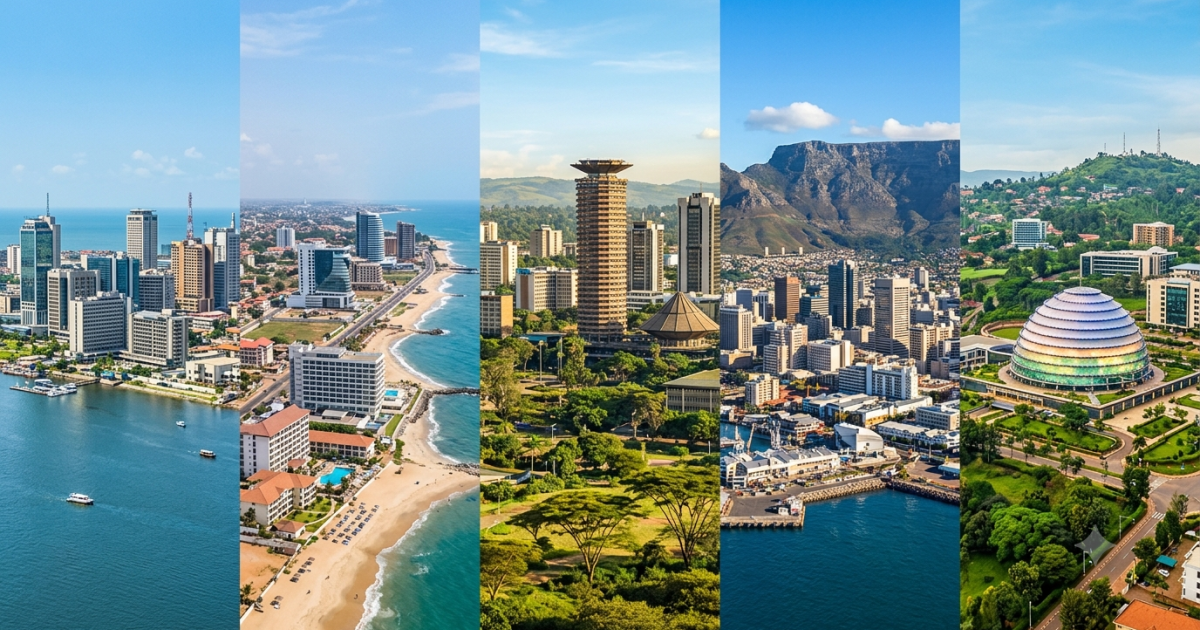
Where in Africa does your money stretch furthest? It is a question more Nigerians are asking than ever before — whether you are a remote worker earning in dollars and choosing a base, a business owner eyeing expansion across the continent, a family weighing a move, or simply curious how Lagos stacks up against its rivals.
The answer is not obvious. Lagos, despite the daily complaints about its cost, is not even the most expensive of these five cities by every measure. Cape Town offers first-world infrastructure at a price to match. Kigali quietly delivers the best value for families on the continent. Nairobi has become East Africa’s tech and remote-work magnet. And Accra has grown so attractive to multinationals and the diaspora that its rents are now climbing faster than almost anywhere.
This is an honest, Nigeria-anchored comparison of what it actually costs to live in five of Africa’s most important cities in 2026 — rent, food, transport, internet, utilities and earning power — and a clear verdict on which city wins for which kind of person. All figures are in US dollars, because with African currencies moving as much as they have, the dollar is the only fair common yardstick.
📌 A note on the numbers: Cost-of-living figures are estimates compiled from aggregators like Numbeo and Expatistan and from local reporting. They vary widely by neighbourhood and lifestyle — an expat-oriented district can cost two to three times a local one. Treat these as directional guides, not exact quotes.
The Quick Verdict
If you just want the headline, here is how the five cities rank by approximate monthly cost of living for a single person living moderately (rent included), from most to least expensive in 2026:
| Rank | City | Country | Approx. Monthly Cost (single, USD) | Character |
|---|---|---|---|---|
| 1 | Cape Town | South Africa | $1,050 – $1,400 | Highest cost, best infrastructure |
| 2 | Lagos | Nigeria | $900 – $1,100 | Expensive, import-driven, chaotic energy |
| 3 | Accra | Ghana | $800 – $950 | Rising fast, expat-driven rents |
| 4 | Nairobi | Kenya | $750 – $900 | Tech hub, strong value, great internet |
| 5 | Kigali | Rwanda | $700 – $850 | Cheapest, cleanest, best family value |
The gap between the most and least expensive is real but not enormous — roughly 1.5 to 2x. What differs far more dramatically is what you get for the money: infrastructure, safety, power reliability, and quality of life vary enormously between these cities, and that, more than the raw cost, is the real story.
How We Compare (and the Honest Caveats)
A few things to keep in mind before the city-by-city breakdown:
- Neighbourhood matters more than city. Living in Ikoyi (Lagos) or Camps Bay (Cape Town) costs multiples of living in a modest local district. The figures here assume a comfortable-but-not-luxury lifestyle.
- Exchange rates move. The naira, cedi, shilling, rand and franc have all shifted significantly. Dollar figures smooth this out but are themselves snapshots.
- “Cost” and “value” are different. Cape Town is expensive but delivers reliable power, clean water and excellent roads. Lagos is expensive partly because residents must privately provide what the state does not — generators, boreholes, security.
- Local vs expat pricing. These figures lean toward how a middle-class local or budget-conscious newcomer lives, not how a corporate expat on a housing allowance lives.
City-by-City Breakdown
Lagos, Nigeria 🇳🇬
Lagos is Africa’s most frenetic megacity and Nigeria’s economic engine. It is also, surprisingly to outsiders, one of the most expensive cities on the continent — driven not by quality of life but by import dependency (an estimated 80 per cent of consumer goods are imported), expensive fuel, and a housing market in crisis.
The Lagos rental system is uniquely punishing: landlords routinely demand one to two years’ rent upfront, a structural feature that makes moving here a major capital event rather than a monthly expense. A luxury two-bedroom apartment in prime areas like Ikoyi, Banana Island or Victoria Island can run close to $19,000 a year. Analysts have described the current Lagos market as a full-blown rental boom with steep increases and declining affordability — with a significant share of Nigerians spending more than half their income on rent.
What pushes the cost up: imported goods, fuel, and the hidden “infrastructure tax” of running your own generator, water and security. What keeps it bearable: cheap local food, an enormous informal economy, and unmatched business and cultural energy.
Accra, Ghana 🇬🇭
Accra has quietly become one of West Africa’s most desirable cities — and its prices reflect it. Ghana’s relative stability, growing expat and diaspora community, and appeal to multinational firms have driven a rental boom, particularly in the premium segment where dollar-denominated housing allowances inflate prices. Accra has ranked among Africa’s most expensive cities for luxury rent.
For everyday living, though, Accra remains more affordable than Lagos for many people — local markets offer cheaper groceries, and the overall monthly cost for a single person sits comfortably below Lagos. The trade-off Ghanaians know well is power: while improved, electricity reliability has historically been a concern (“dumsor”). Accra’s appeal is its blend of relative calm, cultural richness, and a strong diaspora-friendly atmosphere.
Nairobi, Kenya 🇰🇪
Nairobi is East Africa’s powerhouse and the continent’s most established tech and remote-work hub outside South Africa. It offers genuinely strong value: a one-bedroom in a decent area costs noticeably less than Lagos, eating out is cheaper, and — crucially for the modern economy — Nairobi has fast, affordable fibre internet that puts much of the continent to shame.
Nairobi’s cost of living for a single person sits below Lagos and Accra, while offering arguably better infrastructure and a more developed services economy than Lagos. Its thriving startup scene (“Silicon Savannah”), excellent connectivity, and large international community make it a magnet for digital nomads and pan-African professionals. The downsides are traffic and pockets of security concern, but on pure value-for-infrastructure, Nairobi is hard to beat.
Cape Town, South Africa 🇿🇦
Cape Town is the most expensive city on this list — and the one that most resembles a developed-world city in infrastructure and lifestyle. Reliable power (load-shedding challenges notwithstanding), clean water, world-class roads, excellent restaurants and stunning natural beauty come at a premium. A restaurant meal costs several times what it would in Nairobi.
For the money, you get the highest baseline quality of life of any city here: developed utilities, strong healthcare, and an unrivalled lifestyle for those who can afford it. The trade-offs are a higher cost across nearly every category, distance from the rest of the continent, and significant inequality. For remote workers earning in hard currency, Cape Town offers a developed-world life at a fraction of London or New York prices.
Kigali, Rwanda 🇷🇼
Kigali is the quiet winner for value and quality of life. It is the cheapest of the five cities for overall living costs, yet consistently ranks as the best value for families on the continent. The reasons are striking to anyone arriving from Lagos: clean streets, remarkably low crime, reliable power, affordable healthcare, good international schools, and fast internet.
Kigali offers something rare in African urban life — order and predictability at a low price. The trade-offs are a smaller economy and fewer of the explosive opportunities (and chaotic energy) of Lagos or Nairobi. But for families, remote workers, and anyone prioritising safety and stability over hustle, Kigali punches far above its weight.
Head-to-Head: Rent
Housing is the largest expense in every city and varies by as much as 5x depending on neighbourhood. Approximate monthly rent for a one-bedroom apartment in a decent (non-luxury) area, 2026:
| City | One-bed, decent area (USD/month) | Notable feature |
|---|---|---|
| Cape Town | $450 – $700 | Highest, but reliable infrastructure |
| Lagos | $400 – $600+ | 1–2 years’ rent demanded upfront |
| Accra | $280 – $450 | Dollar-denominated in premium areas |
| Nairobi | $315 – $450 | Good value, modern apartments |
| Kigali | $300 – $450 | Clean, safe, reliable power included |
The Lagos upfront-payment system deserves emphasis: needing one to two years’ rent at once is a fundamentally different financial burden from paying monthly, even if the headline figure looks comparable.
Head-to-Head: Food and Groceries
| City | Restaurant meal (mid-range, USD) | Monthly groceries (single, USD) |
|---|---|---|
| Cape Town | $12 – $18 | $200 – $300 |
| Lagos | $8 – $12 | $150 – $250 |
| Accra | $6 – $10 | $130 – $220 |
| Nairobi | $4 – $8 | $120 – $200 |
| Kigali | $5 – $9 | $120 – $200 |
Local markets everywhere are far cheaper than supermarkets — in Ghana and Kenya, shopping local can save up to 30 per cent over supermarket prices. Lagosians benefit from cheap street and local food despite high imported-goods costs.
Head-to-Head: Transport
| City | Public transport (per trip, USD) | Notes |
|---|---|---|
| Lagos | $0.30 – $1.00 | Danfo buses, BRT, ride-hailing; fuel ~$0.80/litre |
| Accra | $0.30 – $0.80 | Trotro minibuses dominate |
| Nairobi | ~$1.00 | Matatus; ride-hailing widely available |
| Cape Town | $1.00 – $2.00 | MyCiTi bus, minibus taxis, Uber |
| Kigali | $0.30 – $0.80 | Clean buses, moto-taxis, very orderly |
Head-to-Head: Internet and Utilities
This is where the cities diverge most sharply — and it matters enormously for remote workers.
- Nairobi and Kigali lead with fast, affordable, reliable fibre internet.
- Cape Town has strong connectivity but contends with periodic load-shedding affecting power-dependent services.
- Accra has improving but historically inconsistent power.
- Lagos has widely available internet but the worst power reliability of the five — most homes and businesses budget heavily for generators, inverters or solar, a hidden cost that does not appear in headline figures but is very real.
For anyone whose income depends on staying online, Nairobi and Kigali offer the best combination of speed, affordability and reliability.
Head-to-Head: Salaries and Earning Power
Cost of living means little without income context. Approximate average monthly salaries (local employment, after tax, 2026 estimates):
| City | Average monthly salary (USD) | Office/professional roles (USD) |
|---|---|---|
| Cape Town | $900 – $1,500 | $1,500 – $3,000+ |
| Lagos | $200 – $600 | $600 – $1,500 |
| Accra | $250 – $600 | $600 – $1,200 |
| Nairobi | $300 – $600 | $500 – $1,200 |
| Kigali | $200 – $500 | $500 – $1,000 |
Cape Town stands apart with the highest local salaries, roughly matching its higher costs. The West and East African cities cluster more closely — which is precisely why earning in foreign currency changes everything.
The Remote Work Angle: Earning in Dollars
Here is the insight that reframes the entire comparison. A remote salary of $2,000 a month — modest by Western standards — stretches three to four times further in Kigali, Nairobi or Accra than in London. Suddenly the cost differences between these cities shrink to irrelevance, and what matters becomes infrastructure, safety, internet and lifestyle.
This is why Nairobi, Accra, Cape Town and Kigali have all emerged as serious digital-nomad and remote-work hubs. A Nigerian earning in dollars has, in effect, a continent of affordable, high-quality bases to choose from. For this group:
- Best internet + value: Nairobi or Kigali
- Best lifestyle (if budget allows): Cape Town
- Best for family + safety: Kigali
- Best diaspora/cultural fit for West Africans: Accra
Best City For…
- Best overall value: Kigali — cheapest, safest, most reliable.
- Best for families: Kigali — safety, schools, healthcare, order.
- Best for remote workers: Nairobi — internet, community, value.
- Best for business and opportunity: Lagos — the energy, scale and market are unmatched despite the cost.
- Best for developed-world lifestyle: Cape Town — if you can pay for it.
- Best West African base outside Nigeria: Accra — stable, diaspora-friendly, culturally close.
What This Means for Nigerians
For Nigerians specifically, this comparison carries a few practical lessons. First, Lagos is genuinely expensive by African standards — your complaints are valid, and a comparable or better quality of life is available more cheaply elsewhere on the continent. Second, the brutal upfront-rent system is a Lagos-specific burden; cities like Nairobi and Kigali offer more humane monthly arrangements. Third, for the growing number of Nigerians earning remotely in dollars, relocating within Africa — to Kigali, Nairobi or Accra — can dramatically improve quality of life without the immigration hurdles, cultural distance and expense of moving to Europe or North America.
The “japa” conversation in Nigeria is almost always about leaving the continent. This comparison suggests a quieter, underrated option: moving within Africa, where a dollar income and a well-chosen city can deliver safety, infrastructure and savings that are hard to find at home — and far easier to access than a UK or Canadian visa.
FAQ: Cost of Living in African Cities 2026
1. Which is the cheapest city to live in among these five?
Kigali, Rwanda is the cheapest overall, with a single person’s monthly cost of roughly $700–$850 including rent — while also offering the best safety and infrastructure value.
2. Is Lagos more expensive than Nairobi?
Yes. Lagos is meaningfully more expensive than Nairobi across rent, groceries and overall cost, while Nairobi generally offers better internet and infrastructure value.
3. Which African city is best for remote workers?
Nairobi and Kigali lead for remote work thanks to fast, affordable, reliable fibre internet, strong international communities and good value. Cape Town wins on lifestyle if budget is no concern.
4. Why is Lagos so expensive despite low salaries?
Lagos costs are driven by heavy import dependency (around 80% of consumer goods), expensive fuel, a housing crisis with upfront rent demands, and the hidden cost of privately providing power, water and security.
5. Which city is best for raising a family?
Kigali consistently ranks as the best value for families in Africa — clean, safe, with reliable power, affordable healthcare and good international schools.
6. How much do you need to live comfortably in these cities?
For a single person living moderately: roughly $700–$850 in Kigali, $750–$900 in Nairobi, $800–$950 in Accra, $900–$1,100 in Lagos, and $1,050–$1,400 in Cape Town per month.
7. Is Accra cheaper than Lagos?
For everyday living, generally yes — Accra’s overall monthly cost for a single person sits below Lagos, though premium expat housing in Accra has become very expensive.
8. Can a Nigerian relocate easily to these cities?
Within ECOWAS (Ghana), movement is relatively easy for Nigerians. Kenya, Rwanda and South Africa have their own visa and residency requirements, though several have become more open to remote workers and pan-African professionals.
9. Which city has the best infrastructure?
Cape Town has the most developed infrastructure overall; Kigali leads on cleanliness, order and reliability relative to cost; Nairobi leads on internet and tech ecosystem.
10. Where does the dollar stretch furthest?
In Kigali and Nairobi, a dollar-denominated income goes furthest while still offering strong infrastructure — making them the best value bases for anyone earning in hard currency.
The Bottom Line
The cost of living across Africa’s major cities is closer than the constant complaints suggest — the gap between the cheapest (Kigali) and most expensive (Cape Town) is only about 1.5 to 2x. What truly separates them is value: what your money buys in safety, power, internet, and quality of life.
For Nigerians, the lesson is twofold. Lagos is genuinely expensive, and you are not imagining the squeeze. But the continent offers real alternatives — Kigali for value and family life, Nairobi for remote work, Accra for a familiar West African base, Cape Town for a developed-world lifestyle. And for the rising number of Nigerians earning in dollars, moving within Africa may be the most underrated upgrade available: cheaper, safer, better-connected, and far easier to access than the visa queues of London or Toronto.
Wherever you choose, go in with open eyes and real numbers. Your money — and your quality of life — depend on the difference.
Related reading on NaijaSabi:
- How to Open a Dollar Account in Nigeria 2026 — earning and saving in dollars
- Remote Jobs for Nigerians Paying in Dollars 2026 — the income that makes relocation work
- Cheapest Airlines from Nigeria to UK and USA 2026 — if you’re weighing leaving the continent instead
Sources & References
- Numbeo — Cost of Living Index and city comparisons (2026). Available at: numbeo.com/cost-of-living
- Expatistan — Cost of Living Comparisons (2026). Available at: expatistan.com/cost-of-living
- Livingcost.org — City cost-of-living estimates (2026). Available at: livingcost.org/cost
- The Nation Nigeria — “Lagos rent hits N26.8 million yearly, says report” (April 2026). Available at: thenationonlineng.net
- World Bank Open Data — economic and price indicators for Nigeria, Ghana, Kenya, South Africa and Rwanda. Available at: data.worldbank.org
- Wikipedia — List of cities in Africa by population (2026 estimates). Available at: en.wikipedia.org
Editorial standards. This article is independently researched and compiled. All cost figures are 2026 estimates drawn from cost-of-living aggregators and reporting; they vary by neighbourhood, lifestyle and exchange rate, and are presented in USD as a common comparison currency. If you spot an error or have a correction, please write to editorial@naijasabi.com.ng.
Last reviewed and updated: 17 May 2026 · NaijaSabi · Next scheduled review: November 2026.




0 Comments
No comments yet. Be the first to share your thoughts!