


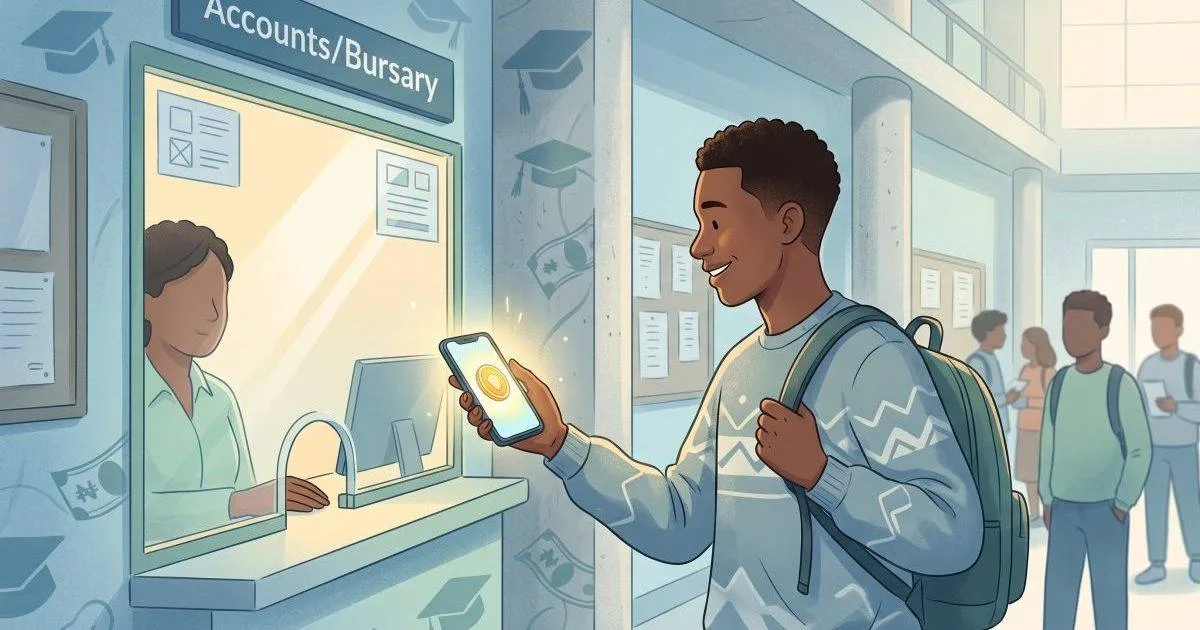
The Nigerian Education Loan Fund (NELFUND) has announced plans for a digital token tuition payment system that would change how student loan money reaches schools. Instead of NELFUND sending tuition directly to institutions, students would receive a token on their phones and use it to pay at the school bursary. Here is what has been announced, why NELFUND wants the change, and what is still unclear.
What Is the NELFUND Digital Token System?
NELFUND’s managing director, Akintunde Sawyerr, explained the idea in an interview reported in early July 2026. In his words, the student would effectively hold the funds as a token on their phone and, when they go to the bursary, push a button that makes the payment, after which they can carry on with classes. He said that once the upgrade is completed, NELFUND will no longer pay schools directly. The student pays the school, but through a token.
In short, the money for tuition would still come from the loan, but the student would trigger the release of the funds at the point of payment.
Why NELFUND Wants to Change the System
1. Double payments
NELFUND received many complaints from students whose institutions got tuition from both the student and the fund. Mr Sawyerr attributed this to timing in the first year of the scheme: many students paid their fees to meet registration and exam deadlines before their loan applications had been processed, and NELFUND later paid the same fees to the school.
2. Keeping tuition money for tuition
NELFUND says it deliberately avoided paying tuition into students’ bank accounts so that the money would not be diverted to other uses. A token that can only be redeemed at the school’s bursary is meant to keep that protection while giving the student more control over when payment is made.
3. Aligning with the academic calendar
The fund says it is also aligning its application and disbursement cycles with academic calendars, which together with the token system should reduce overlaps in future sessions.
How Is It Expected to Work?
NELFUND has described the concept only in broad terms so far. Based on its public statements and media reports:
- A student’s loan application is verified and approved.
- The tuition amount is made available to the student as a digital token on their mobile device.
- At the institution’s bursary, the student activates the payment.
- The school receives the payment and the student can register and continue with academic activities.
Some technology outlets have gone further and described extra steps, such as unredeemed tokens being routed back to NELFUND or triggering a refund prompt. These are third-party descriptions, not confirmed NELFUND procedures. The fund has not yet published a full user guide, so treat the finer details as unconfirmed.
What Stays the Same: Upkeep Allowance
The token system applies to tuition. NELFUND has said students will continue to receive their upkeep stipends directly. Upkeep is paid to students, while institutional fees go to schools.
Has It Been Launched Yet?
As of mid-October 2026, NELFUND had announced plans but had not publicly confirmed a start date or a pilot list of institutions. A report published on 4 October 2026 still described the token system as a plan announced in July. Watch NELFUND’s official website and social media pages for updates, and ignore any person or page that claims to sell “early access” to a token.
NELFUND by the Numbers
NELFUND’s disbursement report generated on 3 October 2026, covering payments up to 29 September 2026, shows:
- ₦372.62 billion disbursed in total since the student loan portal launched in May 2024
- ₦192.89 billion paid as institutional fees
- ₦179.73 billion paid directly to students as upkeep
- 1,659,853 applications processed
Applications for the 2026/2027 session are under way at many institutions, with some schools telling students that the portal is open.
What Students Should Do Now
- Apply through NELFUND’s official portal only and keep your login details private.
- Do not pay tuition twice. If your school allows payment by NELFUND, check with the bursary before paying out of pocket.
- Keep your phone number and email on your NELFUND profile up to date, as tokens are expected to be delivered to your mobile device.
- Keep receipts. If a school receives both your payment and NELFUND’s, request a refund in writing from the institution.
- Remember that repayment under the Student Loans Act starts two years after the National Youth Service, through deductions from earnings.
Open Questions
- When will the token system start, and will it be tested at a few schools first?
- What happens if a token is not used before the session ends?
- How will students with basic phones or poor data access redeem tokens?
- How will schools be paid and how quickly?
NELFUND has not answered these questions publicly yet. We will update this article when it does.
Frequently Asked Questions
What is the NELFUND digital token?
It is a planned mobile-phone token that represents a student’s tuition loan, which the student uses to pay tuition at the school bursary.
Will NELFUND still pay my school directly?
Once the token system is fully in place, NELFUND says it will stop paying schools directly.
Is the token system already live?
No launch date has been announced publicly, as far as reports show.
Will tuition money be paid into my bank account?
No. NELFUND says it deliberately avoids this to prevent diversion of funds.
Does it affect my monthly upkeep?
No. Upkeep allowances continue to go directly to students.
How do I stop double payment problems?
Confirm your loan status before paying fees yourself and ask your bursary for refunds in writing if both you and NELFUND have paid.



0 Comments
No comments yet. Be the first to share your thoughts!