





📌 Quick Summary: A tailoring business in Nigeria requires startup capital of ₦150,000 to ₦500,000 for an industrial sewing machine, overlocker, pressing iron, and first fabric stock. Service rates: ₦3,000 to ₦15,000 per outfit for regular sewing; ₦20,000 to ₦150,000 for wedding and event wear; ₦5,000 to ₦25,000 for aso-ebi and uniform production. A tailoring business sewing 15 to 25 outfits per week earns approximately ₦200,000 to ₦600,000 monthly gross revenue. The fastest path to growth: event wear and corporate uniform contracts. This complete guide covers startup equipment, pricing, service types, apprenticeship vs formal training, how to find clients, and how to build a profitable fashion brand.
Tailoring is one of Nigeria’s oldest and most democratically distributed skilled trades — practiced in virtually every Nigerian neighbourhood, from urban fashion ateliers in Victoria Island to roadside tailoring shops in Kano and Onitsha. It is a business that Nigerians have always respected — the skilled tailor (master tailor, in Nigerian parlance) occupies a position of genuine community esteem, particularly around owambe season when the quality and speed of a tailor’s work becomes the difference between a client’s pride and embarrassment at a major event. In 2026, the tailoring business in Nigeria sits at the intersection of tradition and transformation: demand for custom-made Nigerian clothing continues to grow as aso-ebi culture expands, corporate uniform contracts become more formalised, and the global appetite for African fashion creates export opportunities that did not exist a decade ago. This guide covers how to build a tailoring business that captures these opportunities.
Types of Tailoring Services and Rates
| Service | Rate Range (Lagos/Abuja 2026) | Notes |
| Regular female outfits (blouse, skirt, dress) | ₦3,000 – ₦10,000 per outfit | Most common tailoring work; everyday staple |
| Men’s senator outfit / agbada | ₦8,000 – ₦25,000 per outfit | Agbada is more complex; higher rate justified |
| Aso-ebi for events (per outfit) | ₦5,000 – ₦15,000 per outfit | High volume per event — 20 to 100+ outfits from one wedding party is not unusual |
| Wedding dress / bride’s attire | ₦30,000 – ₦500,000+ | Wide range based on complexity and tailor’s brand positioning |
| Corporate uniforms (per set) | ₦5,000 – ₦20,000 per uniform set | Schools, hospitals, companies, government agencies. Contract volumes of 100 to 1,000 units |
| Children’s wear | ₦2,000 – ₦6,000 per outfit | Fast to make; volume opportunity around school resumption and events |
| Alterations and repairs | ₦500 – ₦3,000 per item | Lower rate per item but quick turnover; fills quiet periods |
| Ankara fashion pieces (bags, accessories) | ₦2,000 – ₦8,000 per item | Good for social media marketing — visually striking product photos |
Essential Equipment and Startup Costs
| Equipment | Cost (2026) | Notes |
| Industrial sewing machine (Butterfly, Singer, or Jack brand) | ₦60,000 – ₦150,000 | Industrial machines are faster and more durable than domestic machines. The foundation of any professional tailoring business. Buy new if capital allows — secondhand machines can be unreliable. |
| Overlocker (serger) | ₦45,000 – ₦120,000 | Finishes fabric edges and prevents fraying. Essential for professional quality output. Many clients can tell the difference between overlocked and hand-finished seams. |
| Heavy-duty steam iron and ironing board | ₦20,000 – ₦50,000 | Professional pressing is one of the most visible quality signals in tailoring. A well-pressed outfit looks significantly more professional than an un-pressed one of identical construction quality. |
| Measuring tape, tailor’s chalk, scissors (professional set) | ₦8,000 – ₦15,000 | Good scissors are important — dull scissors produce uneven cuts that affect garment quality |
| Dress form / mannequin | ₦15,000 – ₦40,000 | Essential for fitting and displaying finished work for marketing photos |
| Sewing notions (thread, buttons, zips, needles — starter stock) | ₦15,000 – ₦30,000 | |
| Work table and cutting surface | ₦10,000 – ₦30,000 | A large, sturdy table for cutting fabric is necessary — cutting on the floor produces inaccurate cuts |
| Initial fabric stock (optional at start) | ₦30,000 – ₦100,000 | Stocking a small selection of commonly requested fabrics (ankara, cotton, lace) allows you to service clients who do not bring their own fabric |
| Minimum startup (home-based) | ₦158,000 – ₦385,000 |
Learning the Trade: Apprenticeship vs Fashion School
Two main pathways to tailoring skill in Nigeria. The apprenticeship model: spending 2 to 5 years as an apprentice under an established master tailor, learning the trade through observation and gradually increasing responsibility. This is the traditional Nigerian pathway and still the most common route into the trade. The advantage: you learn while earning (apprentices typically receive a small stipend), develop a professional network within the trade, and learn the practical business aspects alongside technical skill. The disadvantage: quality of learning depends entirely on your master tailor — some are excellent teachers, others are protective of their techniques and deliberately withhold knowledge. Fashion school / vocational training: formal fashion design and tailoring programmes at institutions including LFDSS (Lagos Fashion Design and Sewing School), FASHPA, NABTEB accredited programmes, and state vocational training institutes. Advantages: structured curriculum, business and design training alongside technical skill, and a formal certificate. Disadvantages: cost (₦150,000 to ₦500,000+ for quality programmes), and variable quality across institutions. For the business-focused aspiring tailor in 2026: combine the technical foundation of apprenticeship or vocational training with active YouTube skill development (international fashion YouTube channels provide world-class free instruction) and deliberate practice on challenging garments.
The Most Profitable Tailoring Specialisations in Nigeria
Generalist tailors compete with every other tailor in their neighbourhood on price. Specialist tailors command premium rates and build loyal client bases. The most profitable current specialisations in Nigeria’s tailoring market. Bridal wear: the most lucrative specialisation — a skilled bridal wear tailor commands ₦50,000 to ₦500,000 per wedding dress, with repeat clients referring every engaged friend. Requires excellent craftsmanship, patience with demanding clients, and strong photography for portfolio building. Corporate uniform production: schools, hospitals, banks, hotels, airlines, government agencies, and manufacturing companies all require large quantities of staff uniforms annually. A single corporate uniform contract for 500 staff sets at ₦8,000 per set is ₦4,000,000 in revenue from one contract. This specialisation requires production capacity (multiple machines and staff) but provides stable, predictable, high-volume revenue. Children’s event wear: a growing niche driven by the increasingly elaborate Nigerian children’s party culture — matching family outfits, themed birthday party clothes, christening gowns, and occasion wear for children. Parents pay premium prices for well-made children’s event wear and share photos extensively on social media — creating organic marketing for the tailor. African fashion for export: the global market for authentic African fashion is growing — particularly in the UK, USA, Canada, and Australia Nigerian diaspora communities. Tailors producing distinctive, high-quality Ankara and African print fashion pieces and selling through Instagram, Etsy, or direct diaspora community networks are accessing price points (in dollars and pounds) that domestic Nigerian market prices cannot match.
How to Get Your First Tailoring Clients
Five client acquisition strategies that work specifically for Nigerian tailoring businesses. First: offer free or heavily discounted work to 3 to 5 people in your immediate network in exchange for detailed social media reviews and referrals. Your work, photographed well, is your best marketing tool — invest in beautiful photos of your first 10 completed outfits before approaching any paying client. Second: approach aso-ebi sellers at major markets (Lagos — Balogun, Eko Market; Abuja — Wuse Market, Garki Market). Aso-ebi sellers frequently refer customers to tailors — a commission arrangement (5 to 10 percent of your fee for each referred client who completes a job) motivates sellers to recommend you consistently. Third: build an Instagram and TikTok presence focused on the process of making outfits — before and after videos, cutting and sewing process clips, happy client reveals. Nigerian fashion content performs extremely well on social media and generates organic following and enquiries. Fourth: contact schools directly about uniform supply — school uniform contracts are reliable annual revenue. Fifth: join Nigerian tailoring and fashion WhatsApp groups and cooperatives — these communities share work during busy seasons and refer overflow clients to trusted members.
Frequently Asked Questions
How much does it cost to start a tailoring business in Nigeria?
Home-based setup with industrial sewing machine, overlocker, and basic tools: ₦150,000 to ₦400,000. Adding a shop rental (₦100,000 to ₦500,000 per year depending on location) and shop fitting increases total startup to ₦300,000 to ₦900,000.
How much do tailors charge per outfit in Nigeria?
Regular female outfit: ₦3,000 to ₦10,000. Men’s senator/agbada: ₦8,000 to ₦25,000. Event and wedding wear: ₦20,000 to ₦500,000+. Rates vary significantly by the tailor’s skill level, location, and brand positioning.
Do I need formal training to start tailoring in Nigeria?
Not formally — many of Nigeria’s most successful tailors are self-taught through apprenticeship and practice. However, formal vocational training or fashion school accelerates skill development, teaches construction techniques not always shared in apprenticeships, and provides business and design knowledge alongside technical skill. The tailor who manages delivery dates with the same discipline as sewing quality earns not just repeat business but the specific kind of referral that builds a sustainable premium brand: the referral from a client who says not just “she sews beautifully” but “she actually delivers on time” — a combination that is rare enough in the Nigerian tailoring market to be genuinely differentiating. In a trade as personal and relationship-dependent as tailoring, reputation is the only brand that ultimately matters — and reputation in Nigeria travels faster through WhatsApp messages between friends than through any paid advertisement.
Sources
- Original business guide — NaijaSabi Business Desk, September 2026
Last updated: 16 September 2026 · NaijaSabi Business Desk. Service rates reflect Lagos and Abuja market pricing as at September 2026.
Building Your Tailoring Brand on Social Media
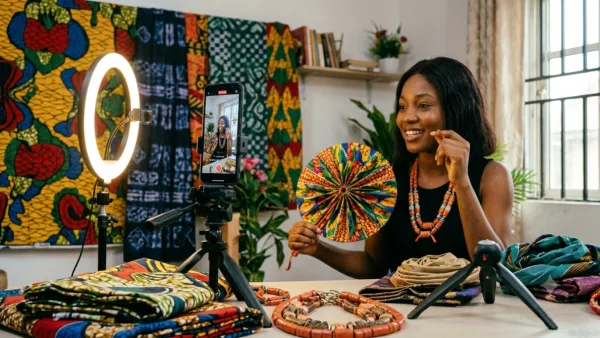
In 2026, a Nigerian tailor without a social media presence is invisible to the largest and fastest-growing segment of potential clients — urban professionals and event planners who discover service providers through Instagram and TikTok rather than through market visits or word of mouth. Building a tailoring social media presence requires understanding what content performs well in the Nigerian fashion space: process videos (cutting fabric, sewing, fitting, finishing — short TikTok-style clips that show your skill in action) consistently outperform static photos of finished outfits. The before-and-after format — showing raw fabric or a client’s plain outfit alongside the finished custom piece — is one of the highest-engagement content formats in Nigerian fashion content. Client reveal videos — filming the moment a client first sees their completed outfit — generate emotional, shareable content that builds genuine brand affinity. The practical Instagram and TikTok strategy for a new Nigerian tailoring business: post 3 to 5 times per week, always showing process and results, always with clear location tags and a call to action (DM to order). Consistency over 3 to 6 months builds a following of local potential clients who see your work regularly and message when they have an upcoming event. The Nigerian tailors who have successfully built premium brands and command ₦50,000 to ₦500,000 per outfit — instead of the ₦5,000 to ₦15,000 of the neighbourhood tailor — have almost universally done so through consistent social media positioning that built perceived value before the client ever visited the atelier.
Managing Client Relationships and Deliveries
The most damaging reputation problem in Nigerian tailoring is not poor sewing quality — it is missed delivery dates. Nigerian clients have learned to expect that tailors will not deliver on the promised date, and this expectation of lateness has become so culturally embedded that clients routinely give tailors an earlier deadline than they actually need the outfit, anticipating the delay. Breaking this expectation — delivering on time, every time, or communicating proactively when a delay is unavoidable — is the single most powerful reputation differentiator available to a Nigerian tailor. The operational discipline required: never take on more orders than you can complete by the promised dates; maintain a physical order book or digital calendar with every client’s delivery date visible; begin each outfit at least 3 days before the delivery date, not the night before; and if a delay is unavoidable, call the client at least 48 hours in advance. Clients who receive their outfit on time, every time, refer every engaged friend and every event-bound relative. Clients who experience repeated late deliveries leave and never return, regardless of how beautifully the finished outfit looks.

0 Comments
No comments yet. Be the first to share your thoughts!