




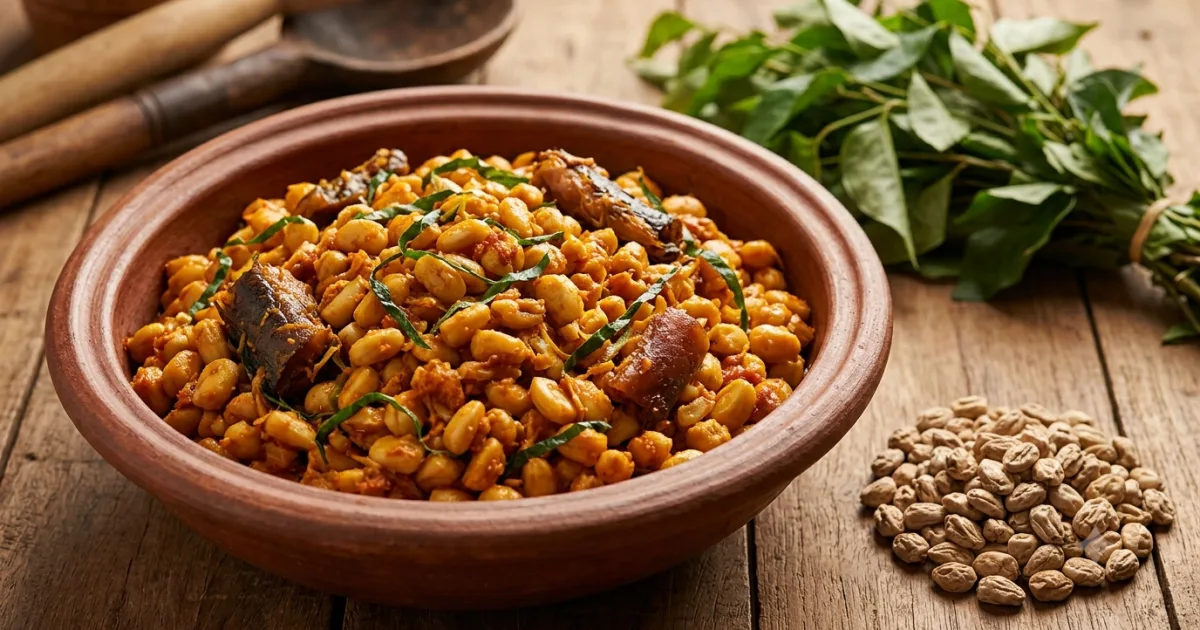
📌 Quick Summary: Ukwa (African breadfruit, Treculia africana) is a beloved Igbo delicacy — seeds from the large breadfruit tree that are soaked overnight, boiled for several hours until very soft, then seasoned with palm oil, crayfish, uziza leaves, and pepper. A pot of ukwa uses 500g of dry ukwa seeds, takes 3 to 4 hours of total cooking time, and serves 6 to 8 people. The most important step is the overnight soak and long cooking — ukwa is notoriously difficult to soften without adequate soaking and extended boiling. This guide covers the complete recipe, how to reduce cooking time, uziza leaf preparation, the ukwa and fish variation, and how to identify good quality ukwa seeds.
Ukwa holds a unique place in Igbo food culture — it is one of those foods that Nigerians raised in Igbo households associate viscerally with home, with their mother’s cooking, with specific family memories. The African breadfruit tree (Treculia africana) grows wild and in cultivated form across the forest zones of West and Central Africa, producing large, melon-sized fruits packed with hundreds of small, cream-coloured seeds. These seeds — known as ukwa in Igbo, breadfruit seeds in English, and by various names across Nigeria’s other ethnic groups — are the edible part. When prepared correctly, ukwa has a dense, starchy, slightly nutty texture and absorbs the flavours of palm oil, crayfish, uziza, and pepper into a dish of genuine complexity. When prepared incorrectly — undersoaked or undercooked — ukwa is hard, gritty, and indigestible. This guide ensures you get it right.
Understanding Ukwa: The Seed, the Soak, and the Cook
Ukwa seeds are extremely dense — much harder than beans or lentils. This density is the primary challenge of ukwa cooking: adequate hydration (soaking) and sufficient cooking time are both non-negotiable. The seed’s tough outer coat prevents water penetration during cooking unless the seed has been properly softened through extended soaking first. Nigerians who report that their ukwa never gets soft are almost always under-soaking (hours instead of overnight) or under-cooking (one hour instead of three or four). A pressure cooker reduces cooking time significantly — from 3 to 4 hours in a regular pot to 45 to 60 minutes under pressure — and is the single most impactful equipment investment for anyone who cooks ukwa regularly.
Buying and Preparing Ukwa Seeds
Ukwa seeds are sold in three forms in Nigerian markets. Fresh seeds: available seasonally (when the breadfruit trees produce — typically September to November in southeastern Nigeria). Fresh seeds are cream-coloured, moist, and ready to soak without additional preparation. Dried seeds: the most commonly available form outside southeastern Nigeria. Cream to pale tan coloured, slightly shrunken. Require overnight soaking before cooking. Pre-cooked and canned: available at some Igbo-oriented food stores, particularly in Lagos and online. Most convenient but often sacrifices some texture quality. For the best ukwa, buy dried seeds from a market with high turnover — old, poorly stored dried ukwa seeds require significantly longer soaking and cooking, and may never fully soften. Good quality dried ukwa should be uniformly pale cream coloured, dry but not desiccated, with no black spots or mould.
Ingredients — Serves 6 to 8
| Ingredient | Quantity | Notes |
| Dry ukwa seeds | 500g | Soaked overnight for a minimum of 8 hours — 12 hours is better |
| Palm oil | ¼ cup (60ml) | Red palm oil — gives the characteristic colour and richness |
| Ground crayfish | 3 tablespoons | Generous — crayfish is essential to ukwa’s flavour |
| Uziza leaves | 1 cup, washed and shredded | The traditional leaf for ukwa. Uziza adds a distinctive peppery, aromatic quality. Do not substitute with another leaf. |
| Scotch bonnet pepper | 2 to 3, blended or sliced | |
| Onion | 1 medium, sliced | |
| Smoked fish or dried stockfish (optional) | 200g, picked | Adds depth. Traditional ukwa is sometimes made without fish for a cleaner, more nutty flavour. |
| Potash (akanwu/kaun) | A small piece (quarter of a thumbnail) | Traditional softening agent — alkaline compound that helps soften ukwa seeds faster. Use very sparingly. Dissolved in 2 tablespoons of water — use the liquid, discard the undissolved solids. |
| Seasoning cubes | 2 | |
| Salt | To taste |
Step-by-Step Recipe
Step 1: Soak Overnight (8 to 12 Hours)
Wash the dry ukwa seeds in two to three changes of water. Place in a large bowl and cover with water by at least 8cm — ukwa absorbs significant water during soaking and the water level will drop considerably. Soak for a minimum of 8 hours — overnight is the standard. After soaking, drain and rinse. The seeds should be noticeably swollen and slightly softer than before soaking.
Step 2: First Long Boil (1.5 to 2 Hours in Regular Pot)
Place the soaked, drained ukwa seeds in a large pot. Cover with fresh water by at least 5cm. Add the potash solution (dissolved potash liquid only). Bring to a boil, then reduce to a steady medium boil and cook for 1.5 to 2 hours, adding more water as needed to keep the seeds covered. The potash accelerates softening — without it, expect 30 to 45 additional minutes. Test at 1.5 hours: the seeds should be significantly softer — you should be able to pierce one with your fingernail with moderate pressure. If still very hard, continue cooking. Drain when the seeds are approximately 70 to 80 percent soft — they will finish softening in the seasoned stage.
Step 3: Season and Complete the Cooking
In a separate wide pot or the same pot (drained), add the palm oil over medium heat. Add the sliced onion and fry for 2 to 3 minutes. Add the blended scotch bonnet pepper and cook for 5 minutes. Add the par-cooked ukwa seeds, ground crayfish, crumbled seasoning cubes, and salt. Stir well to coat the seeds in the seasoned palm oil base. Add enough water to just cover the seeds (approximately 2 cups). Cover and cook on medium heat for a further 45 to 60 minutes, stirring occasionally, until the seeds are completely soft throughout — no hard centre when you bite one — and the sauce has thickened and reduced around the seeds. Add the smoked fish or stockfish pieces in the final 20 minutes.
Step 4: Add Uziza Leaves and Finish
Wash the uziza leaves, remove the tough stems, and shred the leaves into thin strips. Add to the pot in the final 5 minutes of cooking. Stir to combine. Taste and adjust seasoning. The finished ukwa should have completely soft seeds with a dense, starchy texture, coated in a thick, deeply flavoured palm oil and crayfish sauce, with visible shredded uziza leaves throughout.
Pressure Cooker Method: Cut Cooking Time by 60%
If you have a pressure cooker (jiko or pressure pot): soak the ukwa overnight as above. After soaking, place in the pressure cooker with water to cover, the potash solution, and pressure cook for 35 to 45 minutes. Release pressure, drain, and proceed with the seasoning stage (Step 3 above) in a regular pot. Total active cooking time: approximately 1.5 hours instead of 3.5 to 4 hours.
Ukwa and Smoked Fish: The Classic Combination
The most beloved ukwa preparation adds generous quantities of smoked catfish or smoked mackerel to the pot in the final 20 minutes of cooking. The smoked fish flavour infuses through the ukwa seeds and the sauce, creating a dish where every seed carries both the nuttiness of the breadfruit and the smoky depth of the fish. Remove the skin and large bones from the smoked fish and break into large pieces before adding. The fish should be flavourful enough to season the entire pot — taste and reduce the seasoning cube quantity if using heavily smoked, already-salty fish.
Frequently Asked Questions
How long does it take to cook ukwa?
3 to 4 hours total in a regular pot after overnight soaking. 1.5 to 2 hours with a pressure cooker. The most common ukwa cooking failure is insufficient cooking time — ukwa requires patience.
Why is my ukwa hard even after long cooking?
The most common causes: insufficient soaking (less than 8 hours), very old dried seeds, or not using potash during the initial boiling stage. Ensure overnight soaking, use fresh-stock dried seeds, and add potash to accelerate softening.
What leaf goes with ukwa?
Uziza (Piper guineense) leaves are the traditional leaf used in ukwa — their peppery, aromatic quality is specifically matched to the starchy, rich flavour of the breadfruit seeds. Do not substitute with bitter leaf, ugu (fluted pumpkin), or other leaves — the flavour combination will be wrong.
Where can I buy ukwa seeds in Nigeria?
Fresh ukwa seeds are available in southeastern Nigerian markets (Enugu, Owerri, Onitsha, Aba, Abakaliki, Umuahia) between September and November. Dried ukwa seeds are available year-round in Igbo-oriented food markets in Lagos (Ladipo, Mushin) and Abuja. For diaspora Nigerians, dried ukwa is available at African food stores in the UK, USA, and Canada. Ukwa is a food worth the patience it requires — a dish that rewards the cook who soaks it properly, cooks it long enough, seasons it generously, and adds the uziza leaves at exactly the right moment. When it is right, it is unmistakably right: rich, starchy, deeply aromatic, and unmistakably Igbo in the best possible sense of a food that carries an entire cultural identity in its flavour.
Ukwa in Igbo Celebrations and Cultural Events
Ukwa is not an everyday food in most Igbo households — it is ceremonial in the sense that its preparation requires significant time and effort, which means it appears at occasions worth that investment: new yam festivals, traditional marriage ceremonies, titled men’s gatherings (Ozo and Nze title functions), Christmas and Easter family reunions, and burial ceremonies where the deceased’s favourite foods are served. At these occasions, a pot of well-made ukwa signals seriousness — the host has invested real time in the kitchen, or someone in the household has. For Igbo people living in diaspora — in Lagos, in London, in Houston, in Toronto — making ukwa is a deliberate act of cultural connection, often triggered by the arrival of dried ukwa seeds sent from home by family, or discovered at an African food store and brought home with the specific intention of recreating a specific memory. The recipe in this guide is the foundation for those acts of connection. Get the soaking right, cook it long enough, use real uziza, season generously, and the result will carry that specific combination of flavour and memory that only the original can produce. That is what makes ukwa worth the hours it demands — not just the nutrition, not just the taste, but the thread it maintains between where Igbo Nigerians are now and where they came from.
Sources
- Original recipe — NaijaSabi Lifestyle Desk, September 2026
- Igbo culinary tradition — ukwa preparation documented across southeastern Nigerian cooking practices
Last updated: 17 September 2026 · NaijaSabi Lifestyle Desk.
Ukwa’s Nutritional Profile: Why It Belongs in the Nigerian Diet
Beyond its cultural significance, ukwa has a nutritional profile that deserves more attention from Nigerian health and wellness conversations. African breadfruit seeds are rich in protein (approximately 17 to 20 percent by weight — comparable to soybeans and significantly higher than most Nigerian staple carbohydrates), dietary fibre, healthy fats (predominantly unsaturated), and micronutrients including calcium, potassium, magnesium, phosphorus, zinc, and B vitamins. The seeds also contain significant quantities of lysine — an essential amino acid that is limited in many African cereal-based diets. For Nigerians looking to increase protein intake from plant sources, ukwa is one of the most credible options available: genuinely nutritious, domestically produced, culturally embedded, and able to be prepared without any imported ingredient or expensive supplement. The starchy density of ukwa also produces a sustained, slow-release energy profile — the combination of complex carbohydrates, protein, and fibre keeps blood sugar stable over several hours after eating, which is consistent with the traditional Igbo practice of serving ukwa as a main meal rather than a side dish. Incorporating ukwa into the Nigerian conversation about plant-based protein and food-as-medicine is both nutritionally justified and commercially interesting for food brands looking to position traditional Nigerian foods in the wellness market.


0 Comments
No comments yet. Be the first to share your thoughts!