




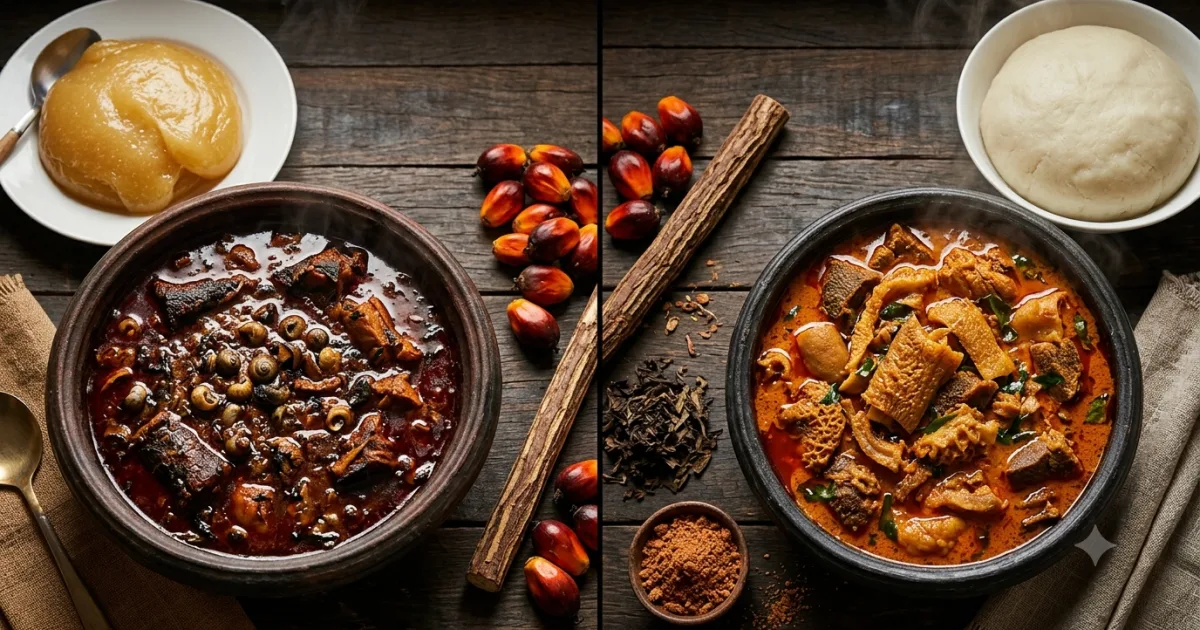
📌 Quick Summary: Banga soup is a rich Nigerian soup made from fresh or canned palm fruit extract (banga concentrate), seasoned with banga spices — oburunbebe stick, dried beletete, atama leaves, and dried osha — along with assorted meat, fish, crayfish, and stockfish. There are two major versions: the Delta/Urhobo version served with starch (amala-like cassava starch), and the Igbo version (ofe akwu) served with pounded yam. A pot serving 8 to 10 uses 2 tins of banga concentrate or 2kg fresh palm fruit. This complete guide covers both versions, the spice blend, how to extract palm fruit at home, and the most common mistakes.
Banga soup carries a distinct identity in Nigerian cuisine. Unlike egusi or efo riro — which are eaten and loved across all regions — banga soup has a strong geographic and cultural signature. In the Niger Delta, it is the soup of celebration, the soup of homecoming, the soup that defines what it means to eat well. The Delta version — dark, intensely spiced, served over cassava starch that glistens with palm oil — is unlike anything else in the Nigerian food landscape. The Igbo version — ofe akwu — is richer and more straightforward, built on the same palm fruit base but spiced differently and served with pounded yam. Both deserve to be understood and made correctly.
Banga Soup vs Ofe Akwu: Understanding the Two Versions
| Feature | Delta/Urhobo Banga Soup | Igbo Ofe Akwu |
| Origin | Delta State, Urhobo, Ijaw, Itsekiri people | Igbo-speaking Southeast Nigeria |
| Primary spices | Oburunbebe stick, beletete, atama leaves, osha, dried pepper | Uziza leaves or scent leaves, ehuru, uda — simpler spice profile |
| Protein emphasis | Freshwater fish, periwinkles, dried fish, assorted meat | Assorted meat, stockfish, dried fish, snails (optional) |
| Vegetables | Atama leaves (essential), dried uziza | Uziza or utazi leaves (optional) |
| Served with | Starch (cassava starch swallow) — the traditional pairing | Pounded yam, eba, or semovita |
| Colour | Very deep reddish-brown — almost maroon from the concentrated palm fruit and spices | Deep orange-red — rich but slightly lighter |
| Flavour profile | Complex, intensely aromatic, slightly bitter from atama | Rich, fruity palm oil base, cleaner spice profile |
The Banga Spice Blend: What Makes It Unique
The Delta banga soup spice blend is what separates it from every other Nigerian palm-based soup — including ofe akwu. The spices are specific to this regional tradition and not interchangeable with other Nigerian spice blends.
| Spice | Local Name | Role |
| Oburunbebe stick | Obenetete (Urhobo) | The defining banga spice — a dried bark with a distinctive earthy, slightly resinous flavour. No substitute. |
| Dried beletete | Beletete | Adds bitterness and complexity to the base |
| Atama leaves (dried) | Atama | The signature leaf of Delta banga soup — bitter, aromatic, essential |
| Dried osha (Cameroon pepper) | Osha | Aromatic heat, distinct from atarodo |
| Dried uziza leaves | Uziza | Peppery, aromatic — used in both versions |
These spices are sold pre-packaged as “banga spice mix” in Delta State markets and in major Nigerian markets in Lagos (Mile 12 and Mile 2 markets carry them consistently). If you are outside Nigeria, specialty African food stores in the UK, USA, and Canada typically carry banga spice kits. The banga spice mix is not interchangeable with pepper soup spice — they share some components but produce distinctly different flavour profiles.
Palm Fruit: Fresh vs Canned Concentrate
| Option | How to Use | Flavour | Availability |
| Fresh palm fruit (banga) | Boil until soft (30 min), pound to extract juice, strain through a sieve. The extracted liquid is your banga base. | Most vibrant, most authentic flavour — the fresh fruit sweetness comes through | Best from markets in Delta, Rivers, and southeastern states. Available seasonally in other markets. |
| Canned banga concentrate (Devon King’s, Ayoola, etc.) | Open tin, add directly to pot. No extraction needed. | Very good — significantly more convenient. Slightly less fresh than extracted. | Available nationwide in Nigerian supermarkets and online for diaspora |
| Palm nut cream (imported) | Used in diaspora cooking — dilute with water before using | Acceptable substitute when neither fresh nor canned is available | African stores abroad |
Recipe 1: Delta/Urhobo Banga Soup — Serves 8 to 10
Ingredients
| Ingredient | Quantity |
| Banga concentrate (canned) or fresh palm fruit extract | 2 tins (800ml) or 2kg fresh palm fruit, boiled and extracted |
| Assorted meat (beef, goat, pomo, shaki) | 700g, cooked and seasoned |
| Fresh or dried fish (catfish, panla, or titus) | 300g |
| Periwinkles (optional but traditional) | 1 cup, cleaned |
| Stockfish | 150g, soaked |
| Ground crayfish | 3 tablespoons |
| Oburunbebe stick | 1 medium piece (approx. 5cm) |
| Dried beletete | 1 teaspoon, ground |
| Atama leaves (dried) | 2 tablespoons, ground or crushed |
| Dried osha | ½ teaspoon |
| Dried uziza leaves | 1 tablespoon |
| Scotch bonnet or dried red pepper | To taste |
| Seasoning cubes | 2 |
| Salt | To taste |
| Water | As needed to adjust consistency |
Method
- Prepare the palm fruit base. If using fresh palm fruit: boil the fruit for 30 to 40 minutes until the flesh is very soft. Pound in a mortar to release the orange liquid and separate the fibres from the seeds. Add warm water gradually while pounding, then strain through a fine sieve or muslin cloth — pressing the fibres firmly to extract maximum liquid. Discard the fibres and seeds. If using canned concentrate: open and pour directly into your pot.
- Bring the banga base to a boil. Pour the palm fruit extract or concentrate into a large pot. Bring to a boil over medium-high heat, stirring occasionally. The extract will thicken slightly as it heats. Add 1 to 2 cups of water if the consistency is too thick — banga soup should be thick but pourable.
- Add the banga spices. Add the oburunbebe stick whole (it will infuse the soup throughout cooking and is removed before serving), ground beletete, crushed atama leaves, osha, and dried uziza. Stir well. The soup will immediately begin to smell distinctly of the Delta spice tradition — an intense, slightly bitter, deeply aromatic fragrance.
- Add proteins. Add the cooked assorted meat, stockfish, dried fish, and periwinkles (if using). Add ground crayfish and crumbled seasoning cubes. Stir to combine.
- Season and adjust. Add scotch bonnet or ground pepper to taste. Taste the soup — it should be rich, deeply spiced, slightly bitter from the atama, and well-seasoned. Add salt as needed. The bitter note from the banga spices is characteristic and correct — it should be present but balanced, not overwhelming.
- Simmer until well incorporated. Reduce heat to medium-low and simmer for 20 to 30 minutes, stirring occasionally. The soup will darken significantly as the spices infuse. Remove the oburunbebe stick before serving.
- Serve with starch. Delta banga soup is traditionally served with cassava starch — a swallow made from cassava starch powder, prepared similarly to eba but with a more elastic, slightly translucent texture. Starch is available in Delta and Rivers state markets and in specialist shops in Lagos.
Recipe 2: Igbo Ofe Akwu (Banga Soup) — Serves 8 to 10
Ingredients
| Ingredient | Quantity |
| Banga concentrate or fresh palm fruit extract | 2 tins or 2kg fresh |
| Assorted meat and offal | 800g |
| Stockfish | 200g, soaked |
| Dried fish | 2 pieces |
| Snails (optional) | 4 to 6, cleaned |
| Ground crayfish | 3 tablespoons |
| Uziza leaves | A small handful, shredded |
| Ehuru (calabash nutmeg) | 3 seeds, ground |
| Uda (Negro pepper) | 2 pods, ground |
| Scotch bonnet | 2 to 3 |
| Seasoning cubes | 2 |
| Salt | To taste |
Method
- Extract or prepare the palm fruit base as above.
- Boil the extract and add spices. Bring palm fruit extract to a boil. Add ground ehuru, uda, and scotch bonnet pepper. These simpler spices (compared to the Delta version) give ofe akwu a cleaner, more directly palm-forward flavour.
- Add proteins and crayfish. Add cooked meat, stockfish, dried fish, snails if using, and ground crayfish. Season with cubes and salt. Stir well.
- Simmer for 20 to 25 minutes. The soup should be thick, richly orange-red, and aromatic. Taste and adjust seasoning.
- Add uziza leaves last. Stir in shredded uziza leaves in the final 3 to 5 minutes. Serve with pounded yam.
Common Mistakes
1. Using Too Much Water in the Extract
Over-diluted banga base produces a thin, pale soup with weak flavour. Use as little water as possible during palm fruit extraction — the concentrate should be thick and deeply coloured.
2. Skipping the Banga Spices for the Delta Version
Oburunbebe, beletete, and atama are not optional for authentic Delta banga soup. Without them, you are making a palm nut soup — not banga soup. The spices are what make it banga.
3. Overcooking the Atama Leaves
Dried atama added early becomes very bitter after long cooking. Add it with 20 to 30 minutes remaining — not at the start of a long simmer.
Frequently Asked Questions
What is the difference between banga soup and ofe akwu?
Both are made from palm fruit extract. Banga soup (Delta version) uses a specific regional spice blend including oburunbebe stick, beletete, and atama leaves — producing an intensely complex, slightly bitter soup served with starch. Ofe akwu (Igbo version) uses simpler spices (ehuru, uda, uziza) and is served with pounded yam. Different flavour profiles from the same base ingredient.
Can I use canned banga concentrate instead of fresh palm fruit?
Yes — canned banga concentrate (Devon King’s, Ayoola, and other brands) produces excellent banga soup. The flavour difference from fresh is noticeable but not significant enough to justify avoiding the soup when fresh palm fruit is unavailable.
What swallow do you eat with banga soup?
Delta banga soup is traditionally eaten with cassava starch. Ofe akwu is eaten with pounded yam, eba, or semovita. Either version can be eaten with white rice for a less traditional but equally satisfying meal.
Where can I buy banga spices in Lagos?
Mile 12 market, Mile 2 market, and Oyingbo market in Lagos carry oburunbebe, beletete, atama, and other Delta banga spices. Ask for “banga spice” or “Delta soup spice” and vendors will recognise what you need. Pre-packaged banga spice kits are also available at some Nigerian supermarkets.
Sources
- Original recipe — NaijaSabi Lifestyle Desk, September 2026
- Niger Delta culinary tradition — banga soup preparation documented across Delta, Rivers, Bayelsa and Urhobo cooking practices
Last updated: 9 September 2026 · NaijaSabi Lifestyle Desk.
Banga Soup and Nigerian Cultural Identity
Few soups in Nigeria carry as much cultural weight as banga. In Delta State — particularly among the Urhobo, Ijaw, and Itsekiri peoples — banga soup is not simply a meal. It is the soup served at the most important moments: the arrival of a distinguished guest, the celebration of a new birth, the gathering of family after a long absence. The combination of banga soup with starch is so culturally specific to the Delta that it functions almost as a regional identity marker — one taste and a Delta person anywhere in the world knows exactly where they are, in memory if not in geography. The Nigerian diaspora in the UK and USA has driven significant demand for canned banga concentrate and pre-packaged banga spice kits precisely because of this emotional connection — the soup is a portal back to a place and a people. For non-Delta Nigerians encountering banga soup for the first time, the experience is often surprising: the depth of the spicing, the slightly bitter complexity of the atama leaves, the colour that is darker and richer than any other Nigerian palm-based soup. It is a soup that rewards patience — patience in sourcing the right spices, patience in the extraction of the palm fruit, patience in the long simmer that integrates the spices into the base. That patience is what the Delta brought to Nigerian cuisine, and it is why banga soup — made correctly — is one of the most distinctive and rewarding soups in the entire Nigerian food tradition. Learning to make it well is not just a cooking achievement. It is an act of cultural preservation — keeping alive a regional culinary heritage that deserves to be known, made, and celebrated far beyond the banks of the Niger Delta.
How to Make Cassava Starch: The Traditional Pairing for Delta Banga Soup
Cassava starch (simply called “starch” in Delta State) is the traditional swallow served with Delta banga soup. It is made from cassava starch powder — lighter and more translucent than eba, with a slightly elastic, gel-like texture that pairs uniquely well with the rich, thick banga base. To make starch: dissolve cassava starch powder in cold water to a smooth paste (ratio of approximately 1 cup powder to 1.5 cups water). Bring a separate pot of water to a full boil. Stir the dissolved starch paste into the boiling water gradually, stirring continuously and vigorously over medium heat until the starch thickens to a smooth, translucent swallow. It sets faster than eba — once it reaches the right consistency, remove from heat immediately and serve. Cassava starch powder is available in Delta State markets and in specialist stores in Lagos. If unavailable, ofe akwu (the Igbo version) is equally served with pounded yam — an excellent alternative that requires no specialist ingredient.



0 Comments
No comments yet. Be the first to share your thoughts!