



There is no sport that belongs to Nigeria the way football does.
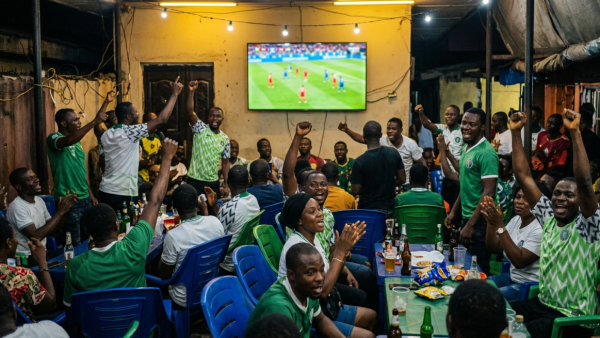
Cricket is played in the Caribbean. Basketball is America’s heartbeat. Rugby owns New Zealand’s soul. But in Nigeria — in the crowded streets of Lagos and the quiet evenings of Maiduguri, in the school playgrounds of Enugu and the sandy lots of Kano — football is the language everyone speaks. It is the first game a child learns. The argument that keeps friends awake past midnight. The source of the deepest national pride and the sharpest collective heartbreak.
To tell the history of Nigerian football is, in many ways, to tell the story of Nigeria itself — its colonial beginnings, its triumphant independence, its complicated relationship with its own potential, its capacity for producing extraordinary talent in the most unlikely circumstances, and its endless, frustrated search for the institutional stability that would allow that talent to truly flourish.
This is that story. From the Red Devils of 1949 to the Super Eagles of 2026. From the first hesitant steps on English grass to the thunder of Rashidi Yekini’s celebration in Dallas. From Stephen Keshi lifting the AFCON trophy as both player and manager, to Victor Osimhen running defences ragged in the Champions League. From the golden morning of Atlanta 1996 to the painful nights of Rabat 2025.
Pull up a chair. This is a long story, and it is worth every word.
📋 In This Article
- The Colonial Origins: Football Arrives in Nigeria
- The Red Devils: Nigeria’s First National Team (1949)
- Independence and the Birth of the Green Eagles
- First Glories: All-Africa Games Gold and AFCON 1980
- The Golden Generation: Building Towards 1994
- USA ’94: Nigeria Shocks the World
- Atlanta 1996: The Greatest Moment in Nigerian Football
- The Post-Golden Era: Promise Without Consistency (1998–2006)
- South Africa 2010: Kaita, Yakubu and the Open Goal That Broke Nigeria
- Stephen Keshi’s Miracle: AFCON 2013 and Brazil 2014
- The Legends Who Built the Foundation
- The Modern Era: 2015 to 2026
- What Nigerian Football History Tells Us
🏆 Nigeria’s All-Time Football Honours Board
- AFCON titles: 3 — (1980, 1994, 2013)
- AFCON runner-up: 4 times — (1984, 1988, 1990, 2000)
- AFCON third place: A record 9 times — including 2025
- FIFA World Cup appearances: 6 — (1994, 1998, 2002, 2010, 2014, 2018)
- World Cup Round of 16: 3 times — (1994, 1998, 2014) — joint-best African record
- Olympic gold medal: 1 — Atlanta 1996
- Olympic silver medal: 1 — Beijing 2008
- Highest FIFA ranking: 5th (April 1994) — still the best ever by an African team
- Most goals by an African nation at the World Cup: 23 goals in 21 games
- Jay-Jay Okocha’s record: Most dribbles in a single World Cup match since 1966 — 15 vs Italy, 1994
Part 1: The Colonial Origins — Football Arrives in Nigeria
Football did not arrive in Nigeria with fanfare or ceremony. It came quietly, on the boots of British colonial administrators and sailors who brought their favourite game with them to West Africa in the early years of the twentieth century. There are no records of when the very first game was played on Nigerian soil — the game was informal, casual, played in the evenings after work or on Sunday afternoons in the shade of colonial clubs — but by the 1920s, football had taken root in Lagos and was spreading steadily across the country.
The Nigerians who first played the game did not inherit it passively. They adopted it, adapted it, and — as with everything — made it their own. By the 1930s, a network of local clubs had emerged in Lagos, drawing players from different communities, professions, and neighbourhoods. In 1933, a report in the Daily Times recorded an invitation to a public meeting at the Health Office on Broad Street, Lagos — the founding meeting of what would eventually become the Nigeria Football Federation. That gathering, quiet and unassuming, planted the institutional seed from which the Super Eagles would eventually grow.
By 1945, the Nigeria Football Association had been formally inaugurated, with the country’s first structured national competition — the Governor’s Cup — providing a stage for the best clubs across Lagos and beyond. Early stars of this era included Dan Anyiam, Peter Anieke, and Teslim Balogun — the latter becoming Nigeria’s first-ever professional football export when he signed for Peterborough United in England following the first national tour abroad in 1949.
Part 2: The Red Devils — Nigeria’s First National Team Tour (1949)
In the summer of 1949, Nigeria sent a representative national team on a tour of England — an extraordinary undertaking for a country still under British colonial rule, and a moment that deserves to be remembered with far more fanfare than it typically receives.
The squad arrived in Liverpool on August 29, 1949. They wore red jerseys — a colour associated with their early strip — and were quickly christened the “Red Devils” by the British press. The name stuck. Over the course of their tour, they played against amateur sides including Marine AFC, South Liverpool, Dulwich Hamlet, and Bishop Auckland — clubs that were, in that era, among the best non-professional outfits in English football. The results were mixed. The Nigerian side lost several matches but won the admiration of crowds who had never seen African players compete at this level.
On the return voyage home, the touring party stopped in Freetown, Sierra Leone. There, on October 8, 1949, Nigeria played and won their first-ever official competitive international match, defeating Sierra Leone 2–0. The result barely registered in the wider football world at the time. But it was the beginning of something that would, within 45 years, reach the FIFA World Cup and rank fifth on the planet.
Nigeria joined CAF — the Confederation of African Football — in 1959, and joined FIFA itself in 1960, the year of independence. These institutional affiliations were not merely bureaucratic formalities. They were declarations that Nigeria intended to compete — properly, officially, at every level — in the global game.
Part 3: Independence and the Birth of the Green Eagles
When Nigeria gained independence from Britain on October 1, 1960, almost everything changed. The Red Devils jersey would eventually go too. The turning point came in 1960 when Nigeria played Egypt in a qualifying match for the Rome Olympics — and lost heavily. In the aftermath, the team was made to change into green rather than red for their next fixture. The symbolism was unavoidable: green, the colour of Nigeria’s new national flag. Red was colonial. Green was independent.
The team was renamed the Green Eagles — honouring the eagle on Nigeria’s coat of arms. It was a name they would carry for nearly three decades, through the early continental competitions, through the development of the domestic league, and through a period of steady if slow improvement on the African stage.
Nigeria’s first AFCON appearance came in 1963, when Ghana hosted the tournament. The Green Eagles exited in the first round, losing 6–3 to Egypt and 4–0 to Sudan — honest, painful early lessons in the gap between aspiration and preparation. But the tournament experience was valuable. Every match added to the pool of knowledge, and Nigeria’s football culture — already growing rapidly at club level — was building the base from which future generations would launch their achievements.
Through the 1960s, the domestic game grew in sophistication. Clubs like Stationery Stores, Enugu Rangers, and Shooting Stars developed into genuine footballing institutions with passionate fan bases and a standard of play that was beginning to attract serious attention from across the continent. The next generation of national team players would emerge from these clubs — harder, better prepared, and hungrier than anything that had come before.
Part 4: First Glories — All-Africa Games Gold and AFCON 1980
The 1970s were the decade in which Nigerian football first announced itself to Africa with genuine authority.
In 1973, Nigeria hosted the 2nd All-Africa Games in Lagos — and the football team seized the home advantage with both hands. Playing before their own crowds at the National Stadium, the Green Eagles won the gold medal, defeating other African nations in a tournament that, while not the AFCON, carried real continental prestige. It was Nigeria’s first major international football trophy. The streets of Lagos celebrated. A new generation of footballers had announced their arrival, and the country’s confidence in what the national team could achieve began to rise in earnest.
Third-place finishes at the 1976 and 1978 Africa Cup of Nations confirmed that Nigeria was competitive at the continental level — consistent enough to reach the semi-finals, but not quite ready to go all the way. That final step came in 1980.
Nigeria hosted the 12th Africa Cup of Nations, and the atmosphere in Lagos was electric. Christian Chukwu captained the side — a commanding central defender who would go on to manage the national team decades later. The Green Eagles tore through the competition with a combination of physical power, technical quality, and the unstoppable energy of a home crowd roaring them forward at every turn.
In the final, Nigeria faced Algeria. In front of a packed, thunderous National Stadium in Lagos, Nigeria won 3–0. The country erupted. The Green Eagles were African Champions for the first time. It was the dawn, as football historians have described it, of Nigeria’s dominance in African football. For the first time, the potential that had always been there — in the streets, in the clubs, in the sheer talent and passion of Nigerian people for the game — had been converted into continental gold.
Part 5: The Golden Generation — Building Towards 1994
The 1980s were a decade of transition and construction. Nigeria reached the AFCON final in 1984 and 1988 — losing both, but establishing themselves as consistent contenders. In 1988, the team was managed by the German coach Manfred Höner and featured a squad that included Peter Rufai, Stephen Keshi, and Henry Nwosu. They lost 1–0 to Cameroon in the final — a painful result, but one that was almost immediately overshadowed by an extraordinary off-pitch development.
At the reception held in Lagos to welcome the team home, an announcement was made that changed the name of Nigeria’s football team forever. The “Green Eagles” were dead. Long live the “Super Eagles.” The new nickname — adopted to reflect the growing ambition and stature of the team — was the right name at the right time. A new era was coming, and it needed a name that felt as big as the dreams.
The architect of what came next was a Dutch coach named Clemens Westerhof. Appointed in 1989, Westerhof was a tactically disciplined, demanding manager who combined European technical training with the raw natural talent that Nigeria produced in abundance. He was also, crucially, a man of strong opinions and strong management — players respected him, sometimes feared him, and almost always delivered for him.
Under Westerhof, Nigeria finished runners-up at the 1990 AFCON and third at the 1992 AFCON. They were building. Refining. Learning from every final and semi-final experience. And then, in February 1994 in Tunisia, everything came together.
Nigeria won the 1994 Africa Cup of Nations. Emmanuel Amuneke scored both goals in a 2–1 final victory over Zambia. Stephen Keshi — veteran captain, leader, backbone — lifted the trophy as a player, a moment he would recreate nineteen years later as a manager. The Super Eagles were champions of Africa again. And they were heading to the World Cup.
Part 6: USA ’94 — Nigeria Shocks the World
There are before and after moments in sporting history — moments so significant that everything that follows is divided into two categories: the era before it happened, and the era after. For Nigerian football, June 21, 1994 is that moment.
Cotton Bowl Stadium, Dallas, Texas. Nigeria vs Bulgaria. The Super Eagles’ first-ever World Cup match, in front of 63,998 spectators and a watching global audience that had heard very little about these green-clad West Africans.
What they saw over the next 90 minutes was a revelation. Nigeria were fast, inventive, technically brilliant, and physically formidable. Rashidi Yekini — the greatest striker Nigeria had produced since the game came to the country — opened the scoring, drilling the ball into the net and immediately grabbing the back of the net in a celebration of pure, uncontained joy that became one of the most iconic images in World Cup history. The tears streaming down his face. The net gripped in both fists. A man who had waited his whole career for this moment, and was not going to let it pass quietly.
Nigeria won 3–0. They followed it with a 1–0 victory over Greece and qualified for the Round of 16 as group winners ahead of Argentina, Bulgaria, and Greece — three of the most decorated footballing nations on earth. In April 1994, just before the tournament began, Nigeria had been ranked 5th in the FIFA World Rankings — the highest ranking ever achieved by an African team, a record that still stands to this day.
The Round of 16 against Italy is remembered as one of the World Cup’s great what-ifs. Nigeria led 1–0 with minutes remaining, seemingly on the verge of a quarter-final against Spain. Then Italy equalised through Roberto Baggio. Then, in extra time, Baggio — that same ghost-like Italian forward — scored again from the penalty spot after Augustine Eguavoen’s foul. Nigeria were out. 2–1.
The defeat was devastating. But the tournament had changed everything. The world now knew who the Super Eagles were. Jay-Jay Okocha — 20 years old, playing in just his first World Cup — had set a record of 15 completed dribbles in a single World Cup match against Italy, a record that still stands as the most dribbles in any World Cup game since 1966. Yekini, Amuneke, Keshi, Rufai — these names became part of global football’s vocabulary. Nigeria had not just competed. They had dazzled.
Part 7: Atlanta 1996 — The Greatest Moment in Nigerian Football History
If USA ’94 announced Nigeria to the world, then Atlanta 1996 cemented the country’s place among football’s truly elite nations — if only briefly — in a way that no tournament result before or since has matched.
The 1996 Olympic Games football tournament, held in Atlanta, Georgia, has a special status in Nigerian sporting consciousness. Nigeria arrived with a team of players aged 23 and under, supplemented by three senior players as the Olympic rules at the time allowed. What they produced over the course of the tournament was football that transcended sport. It became something approaching the miraculous.
Nigeria beat Mexico. They beat Brazil — one of football’s eternal superpowers — in what is still remembered in Lagos, Abuja, and Port Harcourt as the match that defined the meaning of the word “belief.” Then came the semi-final against Brazil again. Then — the final.
The final was against Argentina. In front of 86,117 people at Sanford Stadium in Athens, Georgia, Nigeria found themselves 3–1 down with 12 minutes remaining. The gold medal was Argentina’s to lose. They were not going to lose it from here. Nobody — certainly not the Argentine players, coaches, or supporters — was prepared for what happened.
Nigeria scored. Then scored again. Nwankwo Kanu — the same player who had won the Champions League with Ajax the previous year, playing on the grandest stage his country had ever set foot upon — delivered an assist of staggering precision for Emmanuel Amuneke to level at 3–3 with seconds of normal time remaining. In extra time, Kanu took a cross on his chest, let it drop, and with his back half-turned to goal and two defenders converging, swept a volley past the Argentine goalkeeper that drew an immediate standing ovation from neutrals across the stadium and a roar from every Nigerian watching that shook the earth.
Nigeria 4–3 Argentina. Olympic gold medal.
The celebrations in Nigeria that night were unlike anything the country had ever seen. Streets filled. Horns blared. People wept openly. For the first time in history, an African nation had won an Olympic football gold medal. And they had done it by coming back from 3–1 down in the final against one of the greatest footballing nations on earth, with the world watching.
It remains, to this day, the single greatest achievement in the history of Nigerian football. And it may never be surpassed.
Part 8: The Post-Golden Era — Promise Without Consistency (1998–2006)
The years that followed Atlanta were, on paper, still strong by any reasonable international standard. Nigeria qualified for the 1998 World Cup in France, defeating Spain 3–2 in a group stage match that demonstrated the attacking firepower still at the team’s disposal. But the Round of 16 defeat to Denmark — 4–1, the worst margin Nigeria had ever conceded in a World Cup knockout match — felt like a step backward from the promise of 1994.
The 2002 World Cup in South Korea and Japan brought further disappointment. Drawn in a group with Argentina, England, and Sweden, Nigeria managed a creditable draw against England but failed to advance. The early exit prompted soul-searching — and a familiar pattern was beginning to emerge: brilliant individuals, inconsistent teamwork, and an administrative environment that could not reliably convert talent into titles.
The mid-2000s were a genuinely difficult period. Nigeria missed the 2006 World Cup — their first absence in three tournaments — eliminated by Angola on away goals after a home draw at the National Stadium in Abuja. The coaching staff at the time, the preparation, and the team’s collective performance in the qualifiers were all heavily criticised, and with justice. It felt like the hangover from the golden generation had finally arrived.
AFCON performances in this period were similarly frustrating. Third place in 2002, 2004, and 2006 — consistent enough to suggest the talent was still present, insufficient to suggest the team could translate it into trophies. The runners-up finishes of 1984, 1988, 1990, and 2000 and the title drought between 1994 and 2013 was a source of growing national frustration.
Part 9: South Africa 2010 — Kaita, Yakubu and the Open Goal That Broke Nigeria
The 2010 World Cup in South Africa had been eagerly anticipated by Nigerian supporters as a homecoming of sorts — an African World Cup, with Nigeria among the continent’s most experienced teams, finally competing on home soil.
What happened instead was one of Nigerian football’s most traumatic experiences.
Nigeria lost their opening match against Argentina. Then came the game against South Korea — a match that Nigeria needed to win to stay in the tournament. With the score at 2–2, the ball fell to Yakubu Aiyegbeni six yards from goal. An open net. No goalkeeper. An almost geometrically impossible chance to miss.
Yakubu toed the ball wide. It did not go in. The stadium fell silent. Nigerian fans watching in viewing centres across the country reacted with a shared national disbelief that no words could adequately capture. Yakubu redeemed himself with a later penalty to make it 2–2, but the draw was not enough. Earlier in the same tournament, midfielder Sani Kaita had been sent off against Greece after a moment of inexplicable aggression that handed the Greeks a numerical advantage they used to score twice and win 2–1.
South Africa 2010 was a tournament of individual errors compounding into collective failure. Coach Lars Lagerbäck resigned after the group-stage exit. President Goodluck Jonathan briefly and controversially suspended the Super Eagles from international competition — a suspension that FIFA quickly challenged as unprecedented interference by a government in a national football federation. The whole episode was deeply embarrassing, and it reflected the extent to which Nigerian football’s problems extended far beyond the pitch.
Part 10: Stephen Keshi’s Miracle — AFCON 2013 and Brazil 2014
And then came Stephen Keshi — and with him, one of the most extraordinary chapters in the entire history of Nigerian football.
The Big Boss, as he was universally known, had already cemented his legend as a player: AFCON champion in 1994, a commanding captain for over a decade, one of the first Nigerians to play professional football in Belgium and France, a man whose presence on the pitch commanded the kind of respect that is reserved for the truly great. But what he achieved as a manager was, in its own way, even more remarkable.
Appointed as Nigeria’s head coach in 2011, Keshi faced a dressing room that contained some outstanding individuals but lacked the cohesion, discipline, and belief that winning teams require. He imposed structure. He demanded accountability. He made bold calls — including selecting Sunday Mba, a domestic league player from Warri Wolves who had never been capped before the tournament — that his critics laughed at and that history would vindicate completely.
At the 2013 AFCON in South Africa, Nigeria played with a collective spirit that had been absent from the national team for years. Every player fought for every ball. The togetherness in the squad was visible and palpable. And when the final against Burkina Faso arrived at the FNB Stadium in Johannesburg, it was Sunday Mba — the domestic league player nobody had heard of six months earlier — who scored the only goal of the match, a long-range strike that settled into the bottom corner and sent Nigeria into delirium.
Nigeria 1–0 Burkina Faso. AFCON 2013. The Super Eagles were African Champions for the third time.
And Keshi — who had won it as a player in 1994 — became only the second person in AFCON history to win the tournament as both player and coach. The achievement was staggering. The man was staggering. The country celebrated as it had not celebrated since Atlanta 1996.
Brazil 2014 followed with a round-of-16 run that included a famous 3–2 victory over Bosnia and Herzegovina in the group stage, a stylish 1–0 win over Argentina (a result that will always carry special meaning in Nigeria), and an agonising 0–2 defeat to France in the last 16 — a result that flattered France but could not diminish the dignity of Nigeria’s tournament.
Keshi had restored pride, cohesion, and results to a team that had been in desperate need of all three. His death in June 2016 from a cardiac arrest, at the age of 54, was mourned across Nigeria and across the continent as the passing of a man who had given everything to the game that defined his life.
Part 11: The Legends Who Built the Foundation
No history of Nigerian football is complete without pausing to honour the men who built the foundation on which all subsequent success was built. These are the players who gave everything — who, in many cases, received little formal recognition or financial reward by modern standards — but who created the legacy that Victor Osimhen and Ademola Lookman now inherit.
| Legend | Position | Era | Greatest Achievement |
|---|---|---|---|
| Teslim Balogun | Forward | 1949–1956 | Nigeria’s first professional export — signed by Peterborough United |
| Christian Chukwu | Defender | 1973–1985 | Captained AFCON 1980 title; one of Africa’s greatest defenders |
| Rashidi Yekini | Striker | 1984–1998 | Nigeria’s all-time top scorer; iconic 1994 World Cup first goal celebration |
| Stephen Keshi | Defender | 1981–1994 | AFCON winner as player (1994) AND coach (2013) — one of only two ever |
| Peter Rufai | Goalkeeper | 1981–1998 | Nigeria’s greatest goalkeeper; AFCON 1994 and two World Cups |
| Jay-Jay Okocha | Midfielder | 1993–2006 | Most dribbles in a World Cup game since 1966; PSG legend; Bolton icon |
| Nwankwo Kanu | Forward | 1994–2010 | Champions League winner (Ajax); FA Cup twice (Arsenal); Olympic gold |
| Finidi George | Winger | 1994–2002 | Champions League winner (Ajax 1995); La Liga winner (Real Betis) |
| Taribo West | Defender | 1994–2004 | UEFA Cup winner (Inter Milan 1998); iconic dreadlocked defender |
| John Obi Mikel | Midfielder | 2006–2019 | Champions League winner (Chelsea 2012); AFCON bronze 2019 |
| Odion Ighalo | Striker | 2008–2021 | AFCON top scorer 2019; fulfilled dream of playing for Manchester United |
Rashidi Yekini deserves particular attention, because his story is Nigerian football at its most human. Born in 1963 in Kaduna, he grew up in poverty and worked his way through the Nigerian domestic league before finding success in Portugal, Spain, Greece, and Switzerland. He became Nigeria’s all-time top scorer and won the African Footballer of the Year award in 1993. And then — at the age of 31, in what should have been the middle years of a celebrated retirement — his mental health deteriorated. He withdrew from public life. Friends reported he was unwell, isolated, possibly suffering from an undiagnosed psychiatric condition. He died on May 4, 2012, at 48 years old, in circumstances that the football world found deeply uncomfortable to confront.
Yekini’s tragedy is a reminder that football’s legends are human beings, not monuments — and that the systems around athletes, particularly in countries where mental health stigma runs deep, have a responsibility that extends beyond the final whistle. Nigeria still has not fully reckoned with how one of its greatest sons was allowed to decline so quietly and so painfully. That reckoning is overdue.
Part 12: The Modern Era — 2015 to 2026
The years between Stephen Keshi’s AFCON triumph and the present day have been a study in Nigerian football’s most enduring contradiction: world-class talent undermined by institutional dysfunction.
Nigeria qualified for the 2018 World Cup in Russia — the first African team to qualify for that edition — wearing a Nike kit that became one of the most commercially successful football shirts in history. Three million kits were sold within 24 hours of their release, a global phenomenon driven by the stunning visual design that recalled the classic green of the 1994 era. But the football inside the shirt was less inspiring. Nigeria were eliminated in the group stage after a cruel 86th-minute Marcus Rojo goal handed Argentina the victory they needed to progress, shattering Nigerian hearts for the second time in two World Cups against the same opponent.
The coaching carousel that followed — Gernot Rohr (appointed 2016, dismissed 2021), then Austine Eguavoen (interim), then José Peseiro (2022–2024), then Finidi George (four months), then Austin Eguavoen (interim again), then Eric Chelle (2024–present) — reflected the NFF’s persistent inability to build the coaching stability that translates individual talent into team performance. Each transition cost time, chemistry, and continuity. Each cost goals, points, and results that Nigeria could not afford to drop.
And yet, through all of it, the talent kept coming. Victor Osimhen, Ademola Lookman, Raphael Onyedika, Calvin Bassey, Wilfred Ndidi — a generation of players whose quality places them at the absolute top of global football. The same talent that reached the AFCON 2024 final under Peseiro. The same talent that reached the AFCON 2025 semi-final and won bronze under Chelle. The same talent that, for the second consecutive time, failed to qualify for the World Cup — not because they were not good enough, but because the system around them was not stable enough.
The 2026 World Cup absence — back-to-back, for the first time since 1994 — is the most painful moment in Nigerian football since the 2010 open goal. It will take years to fully digest. But Nigerian football has absorbed painful moments before. It has always come back. The question, as it has been for decades, is whether it will come back with the structural reforms that the talent deserves, or simply with the same cycle repeating itself.
Part 13: What Nigerian Football History Tells Us
Step back far enough from the individual tournaments, the individual matches, the individual heartbreaks and triumphs, and the history of Nigerian football reveals a shape that is hard to look away from.
Nigeria is, by any objective measure, one of Africa’s most consistently successful footballing nations. Three AFCON titles, six World Cup appearances, a record nine third-place continental finishes, an Olympic gold medal, a FIFA ranking of fifth — no other African country has accumulated a record quite like it. The raw numbers speak of a nation that has been, across eight decades of serious international football, genuinely great.
And yet. The nagging, persistent feeling that Nigerian football has consistently underachieved — that the talent has always exceeded the trophies, that the potential has always outrun the results — is not paranoia or ingratitude. It is honest. For a country of 230 million people producing players of Osimhen’s and Lookman’s calibre, three AFCON titles is not the natural ceiling. For a country that ranked fifth in the world in 1994, two consecutive World Cup absences is not the natural floor.
The gap between what Nigerian football is and what it could be is, fundamentally, a governance gap. Every other ingredient is present. The talent pipeline has never been stronger. The passion of the fans is undiminished. The financial rewards available from prize money, sponsorships, and kit deals have never been greater. What is missing is the institutional will — at the NFF and across the domestic football structure — to build a system that deserves and sustains this talent.
Morocco’s remarkable rise to World Cup semi-finalists in 2022 — achieved through a decade of deliberate, government-backed investment in football infrastructure, youth academies, and coaching education — shows what is possible when a football federation and a government decide, together, that building a winning football culture is a genuine national priority. Nigeria has the talent Morocco had to develop carefully. Imagine what Nigeria could achieve with Morocco’s system behind it.
That is the dream. That is the potential that lies coiled in the history of 77 years of competitive Nigerian football — from Teslim Balogun’s quiet signing by Peterborough in 1949, to Rashidi Yekini’s tears at the Cotton Bowl in 1994, to Nwankwo Kanu’s impossible volley in Atlanta in 1996, to Stephen Keshi lifting the AFCON trophy in both capacities, to Victor Osimhen’s ferocity in the Champions League in 2025.
Nigeria has always been capable of producing the extraordinary. The next chapter of this history — the one being written right now, with Osimhen and Lookman and Onyedika and Ilenikhena and the next generation not yet known — could be the greatest chapter of all.
But only if the system, finally, does justice to the talent. That is where the history of Nigerian football has always been heading. It has not arrived yet. But the road, at least, has never been clearer.
🦅 Nigerian Football History — Key Milestones Timeline
- 1933: Nigeria Football Association founded — first meeting at Broad Street, Lagos
- 1949: First national team tour of England; Red Devils defeat Sierra Leone 2–0 in first official game
- 1960: Nigeria joins FIFA; team renamed Green Eagles after independence
- 1963: Nigeria’s first AFCON appearance — exit in Round 1
- 1973: Gold medal at All-Africa Games — Nigeria’s first major football trophy
- 1980: First AFCON title — 3–0 vs Algeria in Lagos. Christian Chukwu captain
- 1988: Team renamed “Super Eagles” at post-AFCON reception in Lagos
- 1994: AFCON title in Tunisia; World Cup debut in USA — ranked 5th in the world
- 1996: Olympic gold medal in Atlanta — 4–3 vs Argentina in the final (Kanu’s iconic winner)
- 1998: Second World Cup — defeat to Denmark 4–1 in Round of 16
- 2013: Third AFCON title (Stephen Keshi); Sunday Mba’s winning goal vs Burkina Faso
- 2014: World Cup Round of 16 — defeated 0–2 by France in Brazil
- 2018: Nike World Cup kit sells 3 million units in 24 hours; group stage exit
- 2024: AFCON final appearance — lost to Ivory Coast on penalties
- 2025: AFCON bronze medal — Nwabali saves Salah’s penalty vs Egypt
- 2026: Second consecutive World Cup miss — DR Congo defeat on penalties
naijasabi.com.ng/ — your home for Nigerian football history, Super Eagles news, NPFL coverage, and everything that matters in the beautiful game.

0 Comments
No comments yet. Be the first to share your thoughts!