




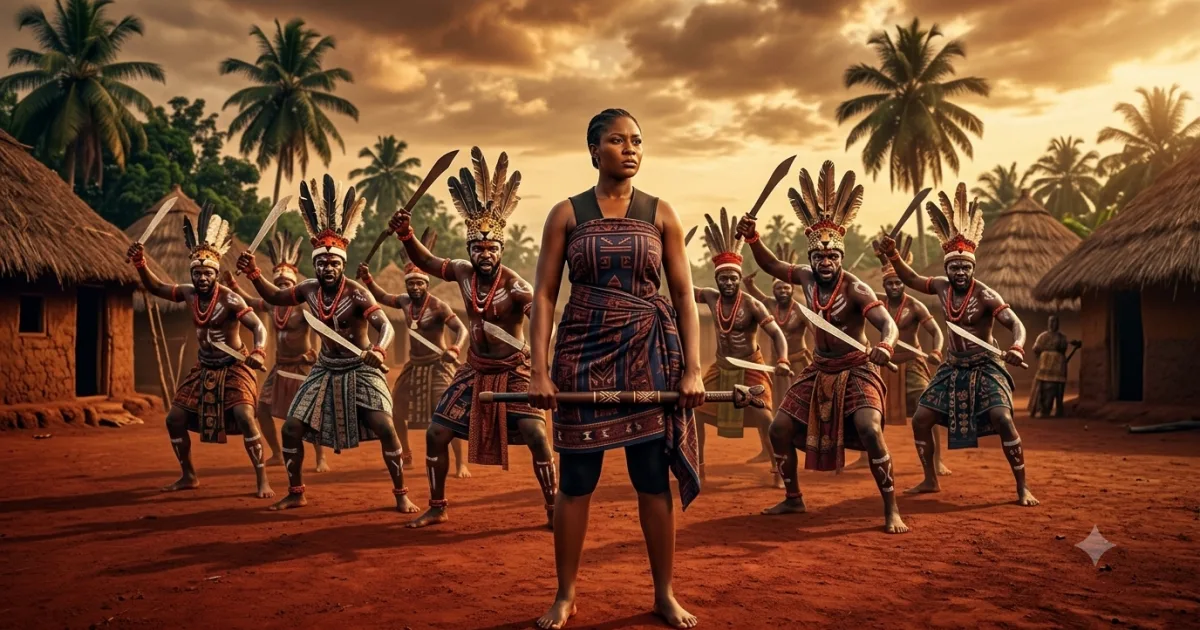
🎬 Quick Summary: Nne Mgbafor is a Nollywood historical epic written and directed by Edward Uka, inspired by the warrior traditions of the Ohafia people of Abia State in southeastern Nigeria. The film opens in Nigerian cinemas on 4 September 2026, distributed by Blue Pictures. It follows a woman named Mgbafor who challenges the traditions of her community and fights to change the destiny of her people. The confirmed cast includes Femi Branch, Zubby Michael (born 1 February 1985 in Anambra State), and Sam Dede. It opens on the same day as Properties of the Gods — making 4 September 2026 the most significant single day for Igbo-themed Nollywood in recent memory.
Two Igbo historical epics opening on the same day. One about the Osu caste system — the inherited social classification that divided communities for centuries. One about the Ohafia warrior tradition — one of the most extraordinary and least-known chapters in Igbo cultural history. Both in cinemas today, 4 September 2026. For anyone who has ever wondered why Nollywood does not tell more stories about the deep wells of Igbo culture, today is the day to show up and register your answer at the box office. Here is everything you need to know about Nne Mgbafor before you walk in.
Nne Mgbafor — Key Facts
| Detail | Information |
|---|---|
| Title | Nne Mgbafor |
| Director / Writer | Edward Uka |
| Distributor | Blue Pictures |
| Genre | Historical epic / Drama |
| Setting | Ohafia, Abia State — southeastern Nigeria |
| Nigeria Cinema Release | 4 September 2026 — nationwide |
| Confirmed Cast | Femi Branch, Zubby Michael, Sam Dede |
| Core Theme | A woman who challenges tradition and fights to change the destiny of her people |
| Cultural Inspiration | Ohafia warrior traditions — Abia State, southeastern Nigeria |
What Is Nne Mgbafor About?
The title itself — Nne Mgbafor — is a woman’s name. Nne means “mother” in Igbo; Mgbafor is an Igbo female name meaning “born on Afor market day” — carrying connotations of blessing, community, and the particular strength associated with market-day births in Igbo tradition. The film follows a woman of this name who, within the warrior traditions of Ohafia — a community historically defined by masculine courage, military prowess, and a specific code of honour built around combat — decides to challenge the traditions that define what her people can become.
(cite index=”15-1″>Edward Uka’s Nne Mgbafor is a historical epic inspired by the warrior traditions of Ohafia in Abia State. Starring Femi Branch, Zubby Michael and Sam Dede, the film follows a woman who challenges tradition and fights to change the destiny of her people. That framing — a woman inside a warrior tradition defined by male authority — is the film’s central tension. The Ohafia people are known across Igboland and beyond for the ferocity of their ancestral warriors and the specific ceremony, dance, and cultural practice that grew from that warrior identity. A woman who challenges that tradition is not just an individual making a personal decision. She is challenging the entire architecture of identity that her community has built its sense of self upon. That is a story worth telling — and a story that most of Nollywood has never approached.
Who Are the Ohafia Warriors? — The Cultural Context You Need
Ohafia is a town and local government area in Abia State in southeastern Nigeria, approximately 50 kilometres from the state capital Umuahia. (cite index=”16-1″>The ancestors of the Ohafia people were renowned as mighty warriors — this aspect of Ohafia’s history remains fundamental to the people’s sense of identity. Their warrior tradition is embodied in two defining cultural practices that make Ohafia unlike any other community in Igboland.
The first is the Iri Agha — literally “to eat war” — (cite index=”17-1″>a ceremony that celebrates a warrior’s achievement, rooted in the tradition of beheading fallen enemies. A human skull was proof of a man’s courage and strength. Only those who brought home a human head could join the Ogbu-Isi society and wear an eagle’s plume — a symbol of courage. The second is the Ikpirikpi Ogu — the Ohafia War Dance — (cite index=”17-1″>performed by muscular men in commemoration of their strength in fighting and winning wars. The group of dancers is headed by a leader carrying the Oyaya — a basket of human skulls — while holding a short cutlass, with fellow dancers miming the cutting off of human heads. What began as a genuine warrior practice has become, over generations, a powerful cultural performance — still performed at festivals, ceremonies, and celebrations of achievement, now as a living link to an ancestor tradition rather than a literal preparation for combat.
(cite index=”19-1″>Being a warrior in Ohafia was not just about fighting. It was about honour, pride, and duty. A true warrior was someone who protected his people, showed strength, and followed tradition. That definition — warrior as protector, as standard-bearer, as community representative — is precisely what makes Nne Mgbafor’s story so charged. If the warrior role is defined by community protection and honour rather than purely by male anatomy, then a woman who steps into that role is not violating tradition. She is embodying its deepest values. Whether the film takes that position or a more complicated one is something only the cinema screen can answer.
The Full Cast — Who Is Confirmed
Femi Branch
Femi Branch is one of the most consistently working Nollywood character actors of 2026 — he appears in King Kosoko, Colours of Fire, The Night of June 7th, and now Nne Mgbafor across a single year. That level of casting across completely different films and genres speaks to a quality that directors keep reaching for: the ability to bring specific authority to any role without overwhelming the story around him. In Nne Mgbafor, set in the warrior traditions of Ohafia, his physical presence and dramatic weight are natural assets.
Zubby Michael
Zubby Michael — born Azubuike Michael Egwu on 1 February 1985 in Anambra State, with a degree in Mass Communication from Nnamdi Azikiwe University — is one of Nollywood’s most commercially successful actors and one of its most prolific. He also appears in Ikenga: The Last Festival this August. His natural intensity and physicality make him a recurring choice for historical period drama, and his Igbo cultural fluency adds authenticity to a film rooted in the traditions of the Igbo southeast.
Sam Dede
Sam Dede (born 17 October 1962 in Rivers State) is a veteran Nollywood actor and politician — he served as Commissioner for Information and Communications in Rivers State — whose screen presence combines dignity, authority, and a specific moral gravity that makes him ideal for the elder or community-figure roles that historical epics demand. His presence in Nne Mgbafor alongside Femi Branch and Zubby Michael gives the film a cast with genuine dramatic range across generations.
The Director: Edward Uka
Edward Uka is a Nigerian filmmaker with roots in the southeast of the country whose previous work has engaged with Igbo cultural material. Nne Mgbafor represents his most ambitious undertaking in terms of historical scope and cast scale. The choice to set a film in Ohafia specifically — rather than the more broadly familiar Igbo communities of Anambra, Imo, or Enugu — signals a filmmaker who is interested in the specific rather than the generalised, in the parts of Igbo culture that even other Nigerians rarely see on screen.
Why September 4 Is the Most Important Day for Igbo Nollywood in Years
The fact that Nne Mgbafor and Properties of the Gods open on the same day is not a scheduling coincidence that either production would have chosen. It is the reality of a Nollywood calendar that has become crowded with ambitious projects competing for the same cinema screens and the same audiences. But for Igbo audiences specifically — and for anyone who values cultural depth over entertainment formula — the presence of two serious Igbo-themed historical productions on the same day is an extraordinary moment. One film addresses the Osu caste system: inherited identity, social exclusion, forbidden love across a boundary that has cost generations of people their full humanity. The other addresses the Ohafia warrior tradition: a woman who refuses the boundaries of gender in a community built around a very specific idea of what strength looks like. Both are films about people who exist at the boundary of what their tradition allows. Both are worth your time today.
Where to Watch Nne Mgbafor in Nigeria
Nne Mgbafor opens in Nigerian cinemas nationwide on 4 September 2026, distributed by Blue Pictures. It is showing at major cinema chains across Lagos, Abuja, Port Harcourt, Aba, Umuahia, Enugu, Onitsha, and other Nigerian cities. Check the Blue Pictures social media pages or your nearest cinema’s app for specific showtimes. No streaming date has been announced — this is a cinema-exclusive release. For audiences in Abia State and the broader southeast, this is a film that speaks directly to the cultural heritage of their region in a way that mainstream Nollywood rarely does.
Frequently Asked Questions
What is Nne Mgbafor about?
Nne Mgbafor is a Nollywood historical epic directed by Edward Uka, inspired by the warrior traditions of the Ohafia people of Abia State in southeastern Nigeria. The film follows a woman named Mgbafor who challenges the traditions of her community and fights to change the destiny of her people. In the context of Ohafia’s warrior culture — historically one of the most formidably martial communities in Igboland — a woman challenging tradition is a story about identity, courage, and what it means to be a warrior beyond gender boundaries. It opens in Nigerian cinemas on 4 September 2026, distributed by Blue Pictures.
Who is in the cast of Nne Mgbafor?
The confirmed cast of Nne Mgbafor includes Femi Branch, Zubby Michael (born 1 February 1985 in Anambra State), and Sam Dede (born 17 October 1962 in Rivers State). The film is directed by Edward Uka and distributed by Blue Pictures. Additional cast members have not been confirmed in publicly available production materials as of 3 September 2026.
Who are the Ohafia warriors and why are they important in Nne Mgbafor?
The Ohafia people are a community in Abia State, southeastern Nigeria, historically renowned as some of the fiercest warriors in Igboland. Their warrior tradition is expressed through the Iri Agha ceremony — celebrating warriors who proved their courage in battle — and the Ikpirikpi Ogu, the Ohafia War Dance, performed by men miming combat in celebration of ancestral military achievement. This warrior identity remains fundamental to how Ohafia people understand themselves today. Nne Mgbafor is set within this warrior tradition and follows a woman who challenges it — making the Ohafia cultural context essential to understanding the film’s stakes.
When does Nne Mgbafor open in cinemas in Nigeria?
Nne Mgbafor opens in Nigerian cinemas nationwide on Thursday 4 September 2026, distributed by Blue Pictures. It opens on the same day as Properties of the Gods — making September 4 an extraordinary day for Igbo-themed Nollywood. Check Blue Pictures’ social media or your nearest cinema chain’s app or website for showtimes near you.
Is Nne Mgbafor on any streaming platform in Nigeria?
No. As of 3 September 2026, Nne Mgbafor has not announced a streaming deal or digital release date. It is a cinema-exclusive release, opening nationwide on 4 September 2026 through Blue Pictures. If the film follows the pattern of recent Nollywood historical epics, a streaming deal may be announced after the theatrical run — but no platform or timeline has been confirmed.
Is Nne Mgbafor based on a true story?
Nne Mgbafor is described as being inspired by the warrior traditions of the Ohafia people of Abia State — meaning the cultural and historical framework of the film is drawn from real Ohafia history and practice. The specific character of Mgbafor and the story she inhabits are presented as a dramatic narrative inspired by that real cultural context rather than a biographical account of a specific documented historical figure. Edward Uka has not publicly confirmed the film as based on a specific true story.
Stay Updated
Follow NaijaSabi for Nollywood cinema guides, cultural explainers, and the stories behind Nigeria’s most important films — updated daily from Lagos.
Sources
- What Kept Me Up — “New in Nigeria: Movies and TV Shows to Watch this September 2026” — whatkeptmeup.com — September 1, 2026
- Wikipedia — “Ohafia” — en.wikipedia.org — Retrieved September 2026
- Wikipedia — “Ohafia War Dance” — en.wikipedia.org — Retrieved September 2026
- Nnewi City — “The Ohafia Warrior: Brave Men of Igbo History” — nnewicity.com — 2025
Last updated: 5 September 2026 · NaijaSabi Entertainment Desk



0 Comments
No comments yet. Be the first to share your thoughts!