




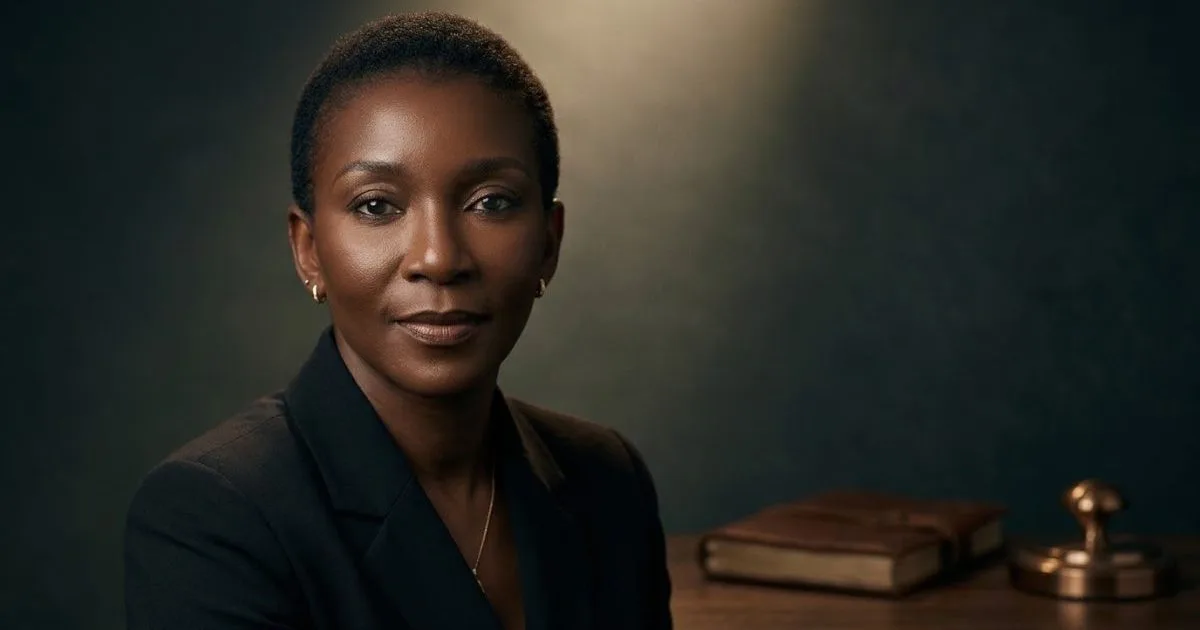
She began acting at eight years old. She did not choose it — she was chosen for it, cast in Ripples, the popular Nigerian television soap opera, by a director who saw in a child from Surulere something that the camera would confirm. Eleven years later, in 1998, she made her Nollywood film debut in Most Wanted, and from that point, she built one of the most remarkable careers in the history of African cinema with a consistency and a quality of work that the industry has never quite seen matched. By the early 2000s she was Nollywood’s biggest star. By 2005 she was its first major awards winner at an international ceremony. By 2015 she was a producer. By 2018 she was a director — and Lionheart, her directorial debut, was the first Nigerian film ever submitted to the Oscars and the first Nigerian film acquired by Netflix.
Then she disappeared. Between 2018 and 2026, Genevieve Nnaji stepped away from public life with a totality that no Nigerian entertainment figure of comparable prominence had previously managed. Speculation was intense. Concern was genuine. In 2022, social media erupted with reports — which her team did not confirm and did not deny — that she was navigating serious personal and health challenges. In 2025, in a rare interview, she addressed the silence directly: “Yes, I took time away. And I’m not ashamed of that.”
In May 2026, the news arrived that the Nigerian entertainment world had been waiting eight years to receive: Genevieve Nnaji has been cast in BBC Studios’ upcoming thriller series Wahala — a six-part drama set in London, based on Nikki May’s debut novel, produced by Firebird Pictures for BBC One and BBC iPlayer. Her first television series role since Ripples in 1987. Her first screen appearance since Lionheart in 2018. The return, when it came, was not to a local project or a tentative comeback vehicle but to a major British broadcasting institution — a statement of intent that only Genevieve Nnaji could make.
She is 47 years old. She has one daughter. She has over 200 films. She is the Queen of Nollywood. And she is back. This is her full biography.
Genevieve Nnaji Biography Facts at a Glance
| Full Name | Genevieve Nnaji |
| Date of Birth | May 3, 1979 |
| Age | 47 years old (as of 2026) |
| Place of Birth | Mbaise, Imo State, Nigeria |
| Raised In | Surulere / Egbeda, Lagos State, Nigeria |
| State of Origin | Imo State (Mbaise) |
| Ethnicity / Tribe | Igbo (Mbaise, Imo State) |
| Religion | Christianity (Catholic) |
| Father | Theophilus / Benedatte Nnaji (engineer) |
| Mother | Thelma / Jennifer Nnaji (nursery school teacher) |
| Siblings | Fourth of eight children; seven siblings |
| Education | Kemstar Elementary School, Surulere; Methodist Girls’ College, Yaba; University of Lagos (Creative Arts — did not complete) |
| Occupation | Actress, Film Producer, Film Director, Entrepreneur, Philanthropist |
| Acting Debut | Ripples TV soap opera (1987, aged 8); Nollywood debut: Most Wanted (1998) |
| Films | Over 200 Nollywood films |
| Most Notable Film | Lionheart (2018) — directorial debut; Nigeria’s first Oscar submission; first Nigerian film on Netflix |
| Return Project | Wahala (BBC Studios / BBC One / BBC iPlayer, 2026) — first TV role since Ripples (1987) |
| Daughter | Chimebuka Theodora Nnaji (born 1996; makeup artist; owns NAJ Makeup Studio) |
| Marital Status | Single (never publicly married) |
| Major Awards | AMAA Best Actress in a Leading Role (2005 — first ever winner); Member of the Order of the Federal Republic (MFR, 2011); City People Best Actress (2001) |
| Honours | Chieftaincy title “Eze Adaemoji of Amuzu Nweafor” (Imo State); featured by CNN, Oprah’s O Magazine, Forbes Africa; selected by Oprah as most well-known African talent |
| Net Worth (Estimated) | $10 million – $15 million USD (2026) |
| Nationality | Nigerian |
Early Life: Mbaise, Surulere, and a Child Who Was Born for the Camera
Genevieve Nnaji was born on May 3, 1979, in Mbaise, Imo State — a densely populated local government area in southeastern Nigeria that is known for producing, in disproportionate numbers, some of Nigeria’s most accomplished professionals across fields ranging from academia to medicine to entertainment. She is Igbo, from the specific Mbaise cultural community whose members are noted across Nigeria for their entrepreneurial drive and educational ambition.
The fourth of eight children, she was brought up in a middle-class environment. Her father worked as an engineer and her mother worked as a teacher. The family settled in Surulere — one of Lagos’s most established residential neighbourhoods and historically one of its most culturally active communities — where Genevieve grew up surrounded by the specific Lagos middle-class environment that has produced so many of Nigeria’s most significant artists, intellectuals, and professionals.
The family’s circumstances were not always stable. At one point, her family had to relocate to Egbeda due to her father’s job loss, which forced her and her siblings to assist their mother in trading. The experience of financial instability in childhood — helping her mother trade while maintaining her school life and her growing passion for performance — gave her the specific combination of resilience and hunger that sustained the extraordinary work ethic of her subsequent career.
Her formal education began at Kemstar Elementary School in Surulere, followed by Methodist Girls’ College in Yaba — one of Lagos’s established secondary schools. She subsequently gained admission to the University of Lagos to study Creative Arts — a course that aligned directly with the career she was already pursuing. Unable to juggle schooling with acting, Genevieve Nnaji dropped out of university in the late 90s — a decision whose wisdom the subsequent decades have comprehensively vindicated, in the same way that university dropouts from Bill Gates to Steve Jobs to Don Jazzy have demonstrated that the formal academy and the specific intelligence required for certain forms of creative excellence are not always compatible.
The Child Actress: Ripples (1987) and the Beginning of Everything
Genevieve Nnaji’s acting career did not begin at nineteen with a Nollywood audition. It began at eight years old — in 1987 — when she was cast in Ripples, a popular Nigerian television soap opera produced by Zeb Ejiro that was one of the most watched programmes on Nigerian television during the late 1980s. The casting of an eight-year-old in a serious drama series is unusual under any circumstances; what made it significant was that the child who was cast was immediately, undeniably right for the camera in a way that directors recognise and cannot manufacture through training alone.
She was also featured in several commercials, some of which included Pronto beverage and Omo detergent. These early commercial appearances — standard work for child performers in Lagos’s active advertising market — gave her professional experience in front of cameras and with film crews that most adult actors do not accumulate until years into their careers. By the time she made her Nollywood film debut in 1998 at nineteen, she had already spent eleven years performing professionally.
The Nollywood Ascent: Most Wanted, Yesterday and 200+ Films
In 1998, at the age of 19, she made her debut in the growing Nigerian film industry with the movie “Most Wanted.” The Nollywood of 1998 was the industry of the VHS home video era — producing hundreds of films annually on modest budgets with rapid turnaround times, distributing them through market traders and video rental shops across Nigeria and the Nigerian diaspora. It was an industry of enormous creative vitality and commercial energy, and it rewarded actors who could deliver consistent, compelling performances across multiple productions annually.
Genevieve Nnaji was perfectly suited to it. Her subsequent movies include Last Party, Mark of the Beast, and Ijele, which is still considered to be one of her best epic performances to date. By the early 2000s, she had become one of Nollywood’s leading actresses, part of the “golden generation” of Nigerian film. She was among the cohort of actors — alongside Omotola Jalade Ekeinde, Richard Mofe-Damijo, Ramsey Nouah, Nkem Owoh, and others — who defined Nollywood’s commercial and cultural identity in the 2000s and whose work constitutes the artistic foundation on which the contemporary industry is built.
The film that consolidated her critical standing was Yesterday — a drama that earned her widespread critical recognition and solidified her position as a top-tier actress. Her performance in Yesterday was the one that the industry pointed to when making the case for her as not merely Nollywood’s most commercially reliable star but its most genuinely accomplished dramatic actress.
In 2004, she was among the group of Nollywood A-list actors — the G8, including Omotola Jalade Ekeinde, Richard Mofe-Damijo, Emeka Ike, Ramsey Nouah, Nkem Owoh, Stella Damasus, and Jim Iyke — who were banned for charging excessively high fees. The ban, as with Mercy Johnson’s later equivalent experience, was a measure of the commercial indispensability that comes with being the most bankable actress in the most commercially active film industry in Africa. You are only banned when your absence is genuinely felt.
In 2004, she also signed a recording contract with EKB Records and released her debut music album One Logologo Line — demonstrating a creative range that extended beyond acting into music. The album was a commercial experiment rather than a primary career direction, but it demonstrated the restless ambition of someone who was always going to push beyond the boundaries of whatever category she was placed in.
That same year, she became the face of Lux soap in a highly lucrative sponsorship deal — one of the most prestigious brand partnerships in Nigerian advertising at the time and the beginning of an endorsement career that would make her one of Nigeria’s most commercially sought-after celebrity faces.
The First AMAA (2005): History Made
In 2005, at the inaugural Africa Movie Academy Awards (AMAA) — held in Bayelsa State, Nigeria — Genevieve Nnaji won the Best Actress in a Leading Role award. She won the Africa Movie Academy Award for Best Actress in a Leading Role in 2005, making her the first actor to win the award. Being the first winner of an award that would go on to become the most prestigious acting recognition in African cinema is a historical distinction that no subsequent career development can diminish.
The 2005 AMAA victory was followed by a string of further recognitions that established her not merely as Nigeria’s most popular actress but as Africa’s most acclaimed: the City People Best Actress of the Year Award, multiple Nollywood Movies Award nominations and wins, and the sustained critical consensus that her work represented the highest standard of dramatic acting that the African film industry was producing.
In 2011, the Nigerian government awarded her the Member of the Order of the Federal Republic (MFR) — a national honour for her contributions to Nollywood. Her hometown in Imo State bestowed upon her the Chieftaincy title “Eze Adaemoji of Amuzu Nweafor.” International recognition followed: Oprah Winfrey put extra feathers in Genevieve’s bonnet by claiming that Nnaji was selected because their study unveiled her as the most well-known African talent. She was profiled by CNN, Forbes Africa, and Elle Magazine — the latter including her in its 2013 list of International Superstars to watch as Next Big Crossover Acts.
Road to Yesterday, Lionheart and the Transition to Filmmaker
In November 2015, Genevieve Nnaji made her debut as a film producer with Road to Yesterday — a Nigerian road romantic drama film directed by Ishaya Bako, with Nnaji as producer and lead actress. Road to Yesterday later won Best Movie Overall — West Africa at the 2016 Africa Magic Viewers’ Choice Awards. The film demonstrated that her creative ambitions extended behind the camera — that she was not content to be merely the talent but intended to shape the stories being told and the way they were being told.
The full realisation of that ambition came with Lionheart — her directorial debut, released on September 7, 2018 at the Toronto International Film Festival and subsequently worldwide on Netflix on January 4, 2019.
Lionheart is Nigeria’s first Oscar submission and a Netflix original. Netflix acquired Lionheart ahead of its debut at the 2018 Toronto Film Festival. The film — in which Nnaji plays Adaeze, a woman who steps up to run her father’s struggling transportation company when he falls ill — is a story about female competence and resilience in a male-dominated corporate environment, set entirely in Nigeria with a cast that included Nollywood legends Nkem Owoh, Pete Edochie, Kanayo O. Kanayo, and the late Onyeka Onwenu.
Its journey to and through the Oscars was as significant as the film itself. When the news broke in October 2019 that the Nigerian Oscars Selection Committee (NOSC) had picked Lionheart as the country’s submission to the Best International Feature Film category of the 2020 Oscars, the film industry stakeholders and film lovers alike were glad for the feat. It was Nigeria’s first ever Oscar submission — a historic moment for Nollywood and for African cinema.
Then came the disqualification. Lionheart was disqualified by the Academy for falling short of the non-English dialogue quota, per the category’s requirements. The film is predominantly in English with only about 12 minutes of the film’s 95-minute run time in Igbo. Genevieve responded publicly and with characteristic dignity: “This movie represents the way we speak as Nigerians. This includes English which acts as a bridge between our over 500 languages.” American filmmaker Ava DuVernay supported her on Twitter, noting that English is Nigeria’s official language. The Oscar’s International Film Executive Committee co-chair called the situation “less of a controversy, and more of a misunderstanding.”
The disqualification did not diminish the achievement. Lionheart remained on Netflix, continued to be watched globally, and stands as one of the most technically accomplished and emotionally mature films ever produced in Nigeria. That it was the first Nigerian film to enter the Oscar conversation at all — regardless of the outcome — is a legacy that belongs to Genevieve Nnaji alone.
The Hiatus (2018–2026): The Silence, the Speculation and the Return
After Lionheart‘s global release in January 2019, Genevieve Nnaji gradually withdrew from public life. By 2022, the withdrawal had become total — her Instagram was wiped clean of posts, public appearances ceased, and neither she nor her team was providing any explanation.
Fans first became worried in 2022, when popular blogs and media outlets reported that the actress had been battling mental health issues and was allegedly receiving treatment abroad. Rumours circulated about rehabilitation, about breakdown, about locations in the United States where she was supposedly seeking treatment. Despite the rumours gaining momentum, neither Genevieve nor her team gave any official statement.
The Nigerian entertainment community responded with a mixture of genuine concern and the specific fever of speculation that attaches to anyone who steps away from the public eye without explanation. Tributes began appearing — the kind of appreciative retrospectives that are usually reserved for people who have died or retired permanently. She had done neither.
In August 2023, a first signal of professional re-engagement: Nnaji returned to production work as an executive producer on the feature film “I Do Not Come To You By Chance.” It was not a screen appearance but it was a return to the industry — a signal that the withdrawal was not permanent.
Then, in 2025, in what sources described as a rare and emotionally resonant interview, she addressed the silence directly. “Yes, I took time away. And I’m not ashamed of that,” she said. The statement — brief, composed, unapologetic — was the first public acknowledgment that the years of absence had been a deliberate choice, whatever the specific circumstances that had made it necessary. The Nigerian public received it with the warmth of people who had been genuinely worried about someone they loved and were relieved to hear her voice again.
The full return came in May 2026. After nearly eight years away from acting, veteran Nollywood actress Genevieve Nnaji is making a major return to the screen with a lead role in BBC Studios’ upcoming thriller series, Wahala.
Wahala (BBC Studios, 2026): The Return That Nollywood Has Been Waiting For
Wahala is a six-part thriller adapted by BAFTA-nominated screenwriter Theresa Ikoko from Nikki May’s debut novel of the same name. The series will be broadcast on BBC One and available for streaming on BBC iPlayer. The production features a high-profile female-led cast, including Adelayo Adedayo, Deborah Ayorinde, Cush Jumbo, and Susan Wokoma, alongside Nnaji.
The plot follows the lives of four Nigerian-British women in modern-day London as they balance their careers and families while dealing with long-buried secrets. Genevieve’s specific role in the series has not been fully detailed publicly, but her inclusion in a cast of this calibre — alongside established British television names — confirms that her return is not to a comfort zone but to the most ambitious level of the global English-language television industry.
The significance of the casting goes beyond the professional milestone. This marks her first television series role since she appeared as a child actress on the Nigerian soap opera Ripples in the late 1980s — nearly forty years between her first television appearance and her second. The symmetry is striking: she began on Nigerian television as a child, built the greatest career in the history of Nollywood cinema, disappeared for eight years, and returned to television — this time to the BBC.
Reacting to the project, Nnaji said: “I’m very happy to be joining Wahala and to be working with such a brilliant team. It’s an intriguing story and I’m excited to be a part of it.”
Personal Life: Chimebuka, Single Motherhood and the Art of Privacy
Genevieve Nnaji has never publicly married. She is one of the most deliberately private public figures in Nigerian entertainment — maintaining a separation between her professional persona and her personal life that most celebrities of equivalent fame find impossible to sustain.
She has one daughter: Chimebuka Theodora Nnaji, born in 1996 when Genevieve was seventeen years old. Nnaji has a daughter, Theodora Chimebuka Nnaji, who is fondly referred to as Dora. She was born in 1996. Genevieve raised Chimebuka as a single mother — navigating the simultaneous demands of early motherhood and an accelerating acting career with the discipline and focus that characterises everything she has done professionally.
Chimebuka studied Mass Communication while at university but opted for another career. She opened up a makeup school when she was still in school. Today, she is a makeup artist who works with celebrities. She owns NAJ Makeup Studio, which is located in Yaba, Lagos. Theodora is also a wife and mother — making Genevieve Nnaji, as of 2026, a grandmother — a status she has neither confirmed nor denied publicly, consistent with her lifelong approach to personal privacy.
The father of Chimebuka has never been publicly identified, and Genevieve has not spoken about him in any interview. She has spoken about motherhood in general terms — describing it as the most important role of her life — but has consistently declined to discuss the circumstances of Chimebuka’s birth or the relationships of her personal life.
She launched the charitable fashion line St. Genevieve in 2008 — a clothing brand whose proceeds supported charitable causes — demonstrating the philanthropic dimension of her public identity that sits alongside her acting and producing work.
Genevieve Nnaji’s Net Worth in 2026
Genevieve Nnaji’s estimated net worth in 2026 is between $10 million and $15 million USD — a figure reflecting over two decades as the highest-paid actress in Nollywood, endorsement deals, production ventures, and strategic investments.
Her wealth has been accumulated across:
- Acting fees: Over 200 film appearances across a career spanning from 1998 to the present — as Nollywood’s highest-paid actress for more than two decades, her per-film fee has been among the highest in the industry throughout that period
- Film production: Revenue from Road to Yesterday (2015) and Lionheart (2018) — the latter generating Netflix licensing income and ongoing streaming royalties as one of the platform’s most-watched African titles
- Brand endorsements: Long-term partnerships beginning with the landmark Lux soap deal in 2004, and extending across telecommunications, fashion, beauty, and lifestyle brands throughout her career
- St. Genevieve fashion line: Revenue from her charitable clothing brand
- Real estate: Property investments in Lagos that have appreciated significantly over two decades
- BBC Wahala: Her return to screen in a BBC Studios production commands a fee commensurate with her global profile and the significance of her comeback
Selected Filmography
| Year | Title | Role / Notes |
| 1987 | Ripples (TV soap opera) | Child actress; first professional screen appearance aged 8 |
| 1998 | Most Wanted | Nollywood feature film debut aged 19 |
| ~1999–2004 | Last Party, Mark of the Beast, Ijele, numerous productions | Rapid ascent to A-list; Ijele considered one of her best epic performances |
| 2004 | One Logologo Line (music album) | Debut music album — EKB Records; Lux soap brand ambassador deal |
| ~2004–2010 | Yesterday, Sharon Stone, Blood Sisters (various), numerous productions | Peak of Nollywood commercial dominance; 200+ films accumulated across career |
| 2005 | Yesterday | Career-defining dramatic performance; AMAA Best Actress in a Leading Role win |
| 2010 | Ijé: The Journey | Major crossover Nigerian-American production |
| November 2015 | Road to Yesterday (Producer + Lead Actress) | Producer debut; AMVCA Best Movie Overall — West Africa 2016 |
| September 2018 | Lionheart (Director + Producer + Lead Actress) | Directorial debut; premiered TIFF 2018; Nigeria’s first Oscar submission; first Nigerian Netflix Original; streams globally on Netflix |
| August 2023 | I Do Not Come To You By Chance (Executive Producer) | First post-hiatus professional credit; return to production behind camera |
| 2026 | Wahala (BBC Studios / BBC One — cast announced May 2026) | First TV series role since Ripples (1987); first screen appearance since Lionheart (2018); marks full return from eight-year hiatus |
Career Timeline
| Year | Milestone |
| 1979 | Born May 3 in Mbaise, Imo State; raised in Surulere, Lagos; fourth of eight children |
| 1987 | Aged 8 — cast in Ripples TV soap opera; begins professional acting career |
| ~1987–1997 | Child and teenage acting; Kemstar Elementary School; Methodist Girls’ College, Yaba |
| 1996 | Daughter Chimebuka Theodora Nnaji born; Genevieve is seventeen years old |
| 1998 | Nollywood feature film debut: Most Wanted; enrols at University of Lagos (Creative Arts) |
| ~1999–2003 | Drops out of UNILAG to focus on acting; rapid ascent through Nollywood; Last Party, Mark of the Beast, Ijele |
| 2001 | City People Awards Best Actress of the Year — first major industry recognition |
| 2004 | Banned by Nollywood G8 group for high fees (ban subsequently lifted); Lux soap brand ambassador; music album One Logologo Line released |
| 2005 | Wins AMAA Best Actress in a Leading Role at inaugural ceremony — first ever winner; Yesterday becomes defining dramatic performance |
| 2008 | Launches St. Genevieve charitable fashion line |
| 2010 | Stars in Ijé: The Journey — major crossover Nigerian-American production |
| 2011 | Awarded Member of the Order of the Federal Republic (MFR) by Nigerian government; Chieftaincy title from Imo State; selected by Oprah as most well-known African talent |
| 2013 | Elle Magazine International Superstars: Next Big Crossover Acts list |
| November 2015 | Road to Yesterday released as producer debut; wins AMVCA Best Movie Overall West Africa 2016 |
| September 7, 2018 | Lionheart premieres at Toronto International Film Festival — directorial debut |
| January 4, 2019 | Lionheart released globally on Netflix — first Nigerian film on Netflix |
| October 2019 | Selected as Nigeria’s first-ever Oscar submission (Best International Feature Film) |
| November 5, 2019 | Lionheart disqualified by Academy — predominantly English dialogue; Genevieve responds publicly; Ava DuVernay publicly supports her |
| 2019–2022 | Gradual withdrawal from public life; last social media presence before hiatus |
| May 2022 | Instagram wiped clean; reports of mental health challenges and treatment abroad emerge; no official statement from Genevieve or team |
| August 2023 | Returns to production as executive producer of I Do Not Come To You By Chance — first professional credit since Lionheart |
| 2025 | Rare interview: “Yes, I took time away. And I’m not ashamed of that.” — first public acknowledgment of the hiatus |
| May 2026 | Cast in BBC Studios’ Wahala (6-part thriller, BBC One / BBC iPlayer) — first TV series role since Ripples (1987); first screen appearance since Lionheart (2018); co-stars with Adelayo Adedayo, Deborah Ayorinde, Cush Jumbo, Susan Wokoma |
| 2026 | 47 years old; net worth $10–15 million; the Queen of Nollywood is back |
Why Genevieve Nnaji Matters: The Standard Nobody Has Matched
The case for Genevieve Nnaji’s historical significance in African cinema is not complicated to make — but it is important to make it completely rather than partially, because the partial version underestimates what she has actually done.
She is not merely Nollywood’s most commercially successful actress of her generation. She is the actress who demonstrated, at the highest possible level across a career of over two decades, that Nigerian filmmaking was capable of producing performances of world-class dramatic quality — before the infrastructure, the budgets, or the international distribution existed to confirm it. She won the first AMAA Best Actress award in 2005 when the African film industry had no equivalent to the Oscars or the BAFTAs and was building its critical institutional framework from scratch. She produced and directed Lionheart — Nigeria’s first Oscar submission and first Netflix acquisition — from within an industry that had never previously reached either milestone. She then stepped away from that achievement, at the height of her global relevance, to attend to her own wellbeing — and returned, eight years later, to the BBC.
Her journey from child actress to Netflix pioneer reflects not just personal success, but the entire evolution of Nollywood. That is not hyperbole. It is a precise description of what her career represents: the arc from VHS home videos to streaming platform originals, from local industry to global cinema, from African talent to internationally recognised filmmaker — and she walked every step of that arc herself, first.
She is 47 years old. She has one daughter and at least one grandchild. She has over 200 films and two produced features. She is about to appear on BBC One. The Queen of Nollywood is not done. She is just getting to the part of the story where it gets really interesting.
Frequently Asked Questions About Genevieve Nnaji
What is Genevieve Nnaji’s real name?
Her full name is simply Genevieve Nnaji — she has not adopted a stage name or professional alias. She was born on May 3, 1979, in Mbaise, Imo State, Nigeria. She is of Igbo ethnic heritage from the Mbaise community of Imo State, and grew up in Surulere and later Egbeda in Lagos. She is the fourth of eight children. Her father worked as an engineer and her mother as a nursery school teacher. She is known by several honorary titles: “The Queen of Nollywood,” “The Julia Roberts of Africa,” and she holds the Chieftaincy title “Eze Adaemoji of Amuzu Nweafor” bestowed by her hometown in Imo State.
How old is Genevieve Nnaji?
Genevieve Nnaji is 47 years old as of 2026. She was born on May 3, 1979. She celebrated her 47th birthday on May 3, 2026 — the same year that her BBC Studios casting in Wahala was announced, marking her return to screen after an eight-year hiatus. She began acting professionally at age eight in 1987 and has been in the entertainment industry for nearly forty years.
Does Genevieve Nnaji have a daughter?
Yes. Genevieve Nnaji has one daughter, Chimebuka Theodora Nnaji (commonly known as Dora), born in 1996 when Genevieve was seventeen years old. Chimebuka is now 30 years old and has built an independent career as a makeup artist — she owns NAJ Makeup Studio in Yaba, Lagos, and works with Nigerian celebrities. She is married with at least one child of her own — making Genevieve Nnaji a grandmother, though she has not publicly confirmed this status. The father of Chimebuka has never been publicly identified by Genevieve.
What is Genevieve Nnaji’s net worth in 2026?
Genevieve Nnaji’s estimated net worth in 2026 is between $10 million and $15 million USD. Her wealth reflects over two decades as Nollywood’s highest-paid actress, revenue from her two produced films (Road to Yesterday and Lionheart), Netflix licensing income from Lionheart‘s ongoing global availability, brand endorsements across her career including the landmark Lux soap deal, her St. Genevieve fashion line, and real estate investments in Lagos. Her BBC Wahala casting in 2026 is expected to generate additional income from a major international broadcasting contract.
What is Lionheart about?
Lionheart (2018) is a Nigerian drama film written by C.J. Obasi and directed by and starring Genevieve Nnaji. Nnaji plays Adaeze, a woman who steps in to run her father’s struggling company and keep it away from rival businessmen in a male-dominated environment. The film co-stars Nkem Owoh, Pete Edochie, Kanayo O. Kanayo, and the late Onyeka Onwenu. It premiered at the Toronto International Film Festival in September 2018, was acquired by Netflix and released globally on January 4, 2019 — making it the first Nigerian film ever acquired by Netflix — and was subsequently selected as Nigeria’s first-ever Oscar submission for Best International Feature Film, before being disqualified by the Academy for having predominantly English dialogue.
Why was Genevieve Nnaji away for so long?
Genevieve Nnaji stepped away from public life gradually after 2019 and was completely absent from public view by 2022. In 2022, reports — unconfirmed by her or her team — suggested she was dealing with mental health challenges and seeking treatment abroad. Her official response during the hiatus was silence. In 2025, in a rare interview, she addressed it for the first time: “Yes, I took time away. And I’m not ashamed of that.” She has not provided additional detail about the specific nature of her challenges. In August 2023, she returned to production work as executive producer of I Do Not Come To You By Chance, and in May 2026, her casting in BBC’s Wahala confirmed her full return to screen acting.
What is the BBC show Wahala that Genevieve Nnaji is in?
Wahala is a six-part BBC Studios drama series produced by Firebird Pictures, adapted by BAFTA-nominated screenwriter Theresa Ikoko from Nikki May’s debut novel of the same name. The plot follows the lives of four Nigerian-British women in modern-day London as they balance their careers and families while dealing with long-buried secrets. The series will broadcast on BBC One and stream on BBC iPlayer. Co-stars include Adelayo Adedayo, Deborah Ayorinde, Cush Jumbo, and Susan Wokoma. Genevieve Nnaji’s casting was announced in May 2026 — her first television series role since Ripples in 1987 and her first screen appearance since Lionheart in 2018. A release date has not yet been confirmed.
Has Genevieve Nnaji ever been married?
Genevieve Nnaji has never publicly married. She is single and has consistently maintained total privacy around her romantic personal life across a public career of nearly four decades. She became a mother at seventeen — her daughter Chimebuka was born in 1996 — but has never identified Chimebuka’s father publicly. Despite enormous public curiosity and persistent media speculation across her career, she has not confirmed any romantic relationship publicly. She has spoken about her commitment to privacy as a deliberate and principled choice — a refusal to allow her personal life to become the story when her professional work is the story that matters.




0 Comments
No comments yet. Be the first to share your thoughts!