


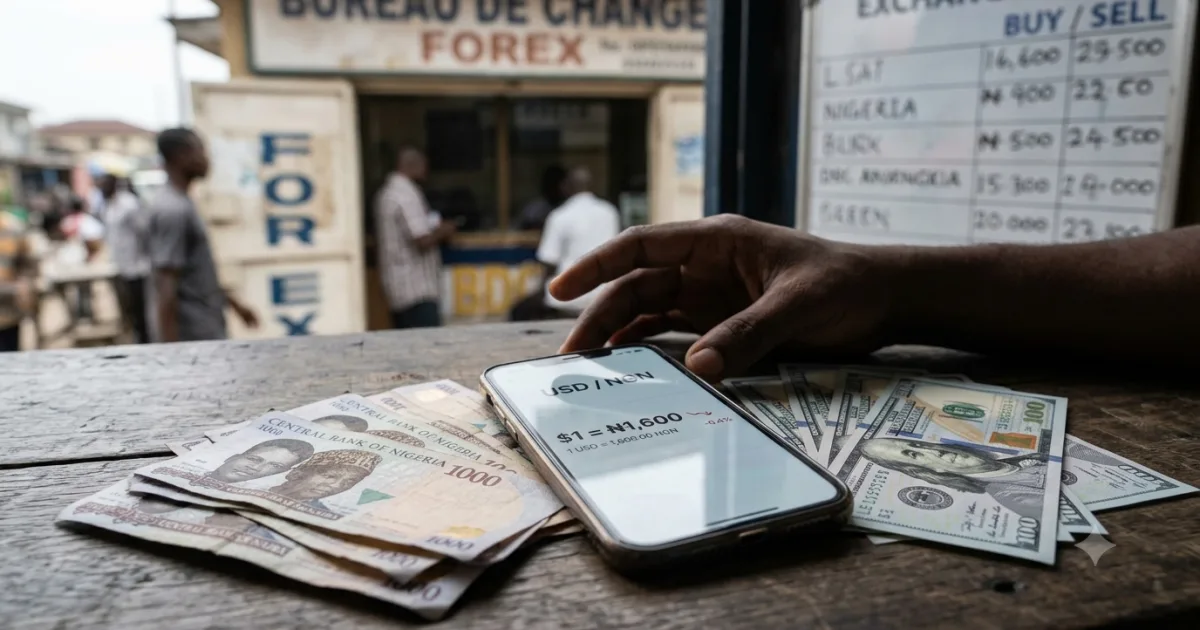
📌 Quick Summary: As of 15 September 2026, the CBN official dollar to naira rate is approximately ₦1,580 to ₦1,610 per dollar. The parallel market (black market) rate is approximately ₦1,620 to ₦1,680 per dollar. The pound to naira rate is approximately ₦2,000 to ₦2,080. The euro to naira rate is approximately ₦1,740 to ₦1,810. The naira has been broadly stable since early 2026 but faces pressure from the US dollar’s global rally following hawkish Fed signals. This guide covers where to check the live rate, why the CBN and parallel market rates differ, how to get the best rate as a Nigerian, and what to expect for the naira in the rest of 2026.
The dollar to naira exchange rate is Nigeria’s most searched financial query — every single day, millions of Nigerians check the rate to make decisions about business transactions, school fee payments, diaspora remittances, online dollar purchases, travel budgets, and import costs. September 2026 has brought renewed pressure on the naira as the US Federal Reserve signals another interest rate hike — global dollar strength is a recurring challenge for all emerging market currencies including the naira. This guide explains the current rate, where to check it reliably, and how to navigate the gap between the official and market rates.
Dollar to Naira Rate Today — 15 September 2026
| Rate Type | USD/NGN | Source |
| CBN Official Rate (NAFEM window) | ₦1,580 – ₦1,610 | CBN official portal — abokifx.com/cbn |
| Parallel Market (Bureau de Change / street) | ₦1,620 – ₦1,680 | Aboki FX — abokifx.com |
| Bureau de Change average (licensed BDC) | ₦1,595 – ₦1,645 | Licensed BDC operators |
| Bank wire transfer rate (outward remittance) | ₦1,575 – ₦1,605 | GTBank, Zenith, Access, First Bank |
| Domiciliary account funding rate | ₦1,580 – ₦1,615 | Commercial banks |
Other Major Currency Rates — 15 September 2026
| Currency Pair | CBN Rate | Parallel Market Rate |
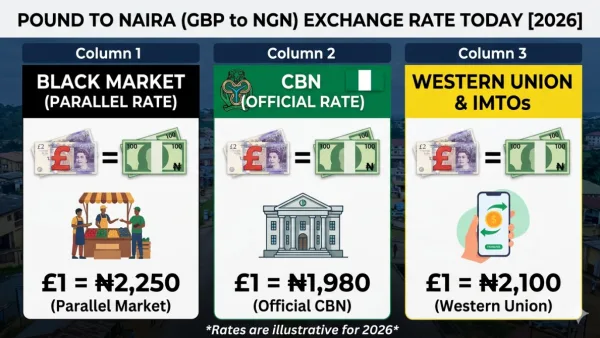
| Pound (GBP) to Naira | ₦2,000 – ₦2,040 | ₦2,040 – ₦2,080 |
| Euro (EUR) to Naira | ₦1,740 – ₦1,775 | ₦1,775 – ₦1,810 |
| Canadian Dollar (CAD) to Naira | ₦1,150 – ₦1,185 | ₦1,175 – ₦1,215 |
| Australian Dollar (AUD) to Naira | ₦1,040 – ₦1,075 | ₦1,060 – ₦1,100 |
| UAE Dirham (AED) to Naira | ₦430 – ₦445 | ₦440 – ₦460 |
| Saudi Riyal (SAR) to Naira | ₦420 – ₦435 | ₦430 – ₦450 |
| South African Rand (ZAR) to Naira | ₦85 – ₦92 | ₦87 – ₦95 |
Why Are There Two Different Dollar Rates in Nigeria?
Nigeria operates a dual exchange rate system — a source of consistent confusion for everyday Nigerians. The CBN official rate is the rate at which the Central Bank of Nigeria sells dollars to commercial banks and authorised dealers through the Nigerian Autonomous Foreign Exchange Market (NAFEM). This rate applies to official transactions: importing goods, international money transfers through banks, school fee remittances, and business foreign exchange purchases. The parallel market rate — also called the black market rate or BDC rate — is the rate at which licensed Bureau de Change operators and informal currency traders buy and sell dollars outside the official banking channel. The parallel market rate is typically higher than the CBN rate because demand for dollars in Nigeria consistently exceeds the supply that the CBN makes available through official channels. When Nigerians cannot access dollars at the official rate through their bank (due to limits, documentation requirements, or simply insufficient forex supply), they turn to Bureau de Change operators — and the higher demand in that market pushes the parallel rate above the official rate. The gap between the two rates fluctuates — narrowing when the CBN increases dollar supply to the market, widening when dollar supply tightens or when global dollar strength increases demand.
Where to Check the Dollar to Naira Rate Daily
| Source | URL | What It Shows |
| Aboki FX | abokifx.com | Live parallel market rates — the most widely used source for black market dollar rate in Nigeria |
| CBN Official Portal | cbn.gov.ng/rates/ExchRates.asp | Official CBN NAFEM rate — updates daily |
| Nairametrics | nairametrics.com/category/forex | Both official and parallel rates with analysis |
| Google Finance | google.com — search “USD to NGN” | Reflects official/interbank rate — not parallel market |
| Your bank’s mobile app | GTBank, Zenith, Access etc. | Bank’s applied rate for your specific transaction — most relevant for actual banking |
The Naira in September 2026: Why the Pressure Is Building
The naira has held broadly stable in 2026 compared to the extreme volatility of 2023 and 2024 — the CBN’s NAFEM unification, removal of fuel subsidy, and tighter monetary policy have all contributed to a more stable rate environment. However, September 2026 brings renewed pressure from two global factors. First: US Federal Reserve hawkishness. Markets are pricing in another Fed rate hike following strong US economic data, pushing the US dollar stronger against all emerging market currencies globally — not just the naira. When the dollar strengthens globally, it strengthens against the naira as part of a broader pattern. Second: crude oil prices above $104 per barrel. While higher oil prices benefit Nigeria as a crude oil exporter (boosting government revenue and foreign exchange inflows), the Dangote Refinery’s expanded operations have reduced Nigeria’s need to export crude for refining and reimport petrol — changing the dynamics of how oil revenues flow through the Nigerian foreign exchange system. The immediate September 2026 naira trajectory: broadly stable with moderate weakness pressure from the global dollar rally. Analysts cited in Nairametrics and BusinessDay are not projecting a return to the 2024-level naira crisis, but are cautioning that the ₦1,600 to ₦1,700 range for the dollar is likely the trading band for the rest of 2026 in the absence of significant new CBN intervention or oil price collapse.
How to Get the Best Dollar Rate as a Nigerian
For Nigerians who need to buy or sell dollars, five approaches that consistently produce better rates than simply accepting the first quote. First: use a licensed Bureau de Change rather than an informal street trader — BDC operators are regulated, accountable, and typically offer rates 1 to 3 percent better than street traders who price in a risk premium for their unregulated status. Find registered BDC operators near you through the CBN’s licensed operator registry at cbn.gov.ng. Second: for large amounts (above $500), call at least three BDC operators and compare rates — the 1 to 2 percent difference between quotes compounds significantly on large transactions. Third: for receiving dollar remittances from abroad, compare the effective naira payout rate across remittance platforms — WorldRemit, LemFi (formerly LemCal), Grey, and Wise all offer different effective naira rates that can vary by 3 to 8 percent on the same dollar amount. Fourth: for international online purchases (school fees, software subscriptions, online shopping), compare your bank’s international transaction rate against a dollar virtual card from Chipper Cash, Grey, or Eversend — the fintech platforms frequently offer better effective rates than commercial bank international transaction rates. Fifth: time your currency exchange to avoid the end of the business day when BDC operators have depleted their dollar supply and quote less competitive rates — morning transactions at BDC counters that have just received supply typically command better rates.
Naira to Dollar: Sending Money to Nigeria from Abroad
For diaspora Nigerians sending money home, the effective naira payout rate is the number that matters — not the exchange rate in isolation. In September 2026, the most competitive naira payout platforms for diaspora remittances are LemFi (offers some of the best effective rates for UK-to-Nigeria transfers), Grey (competitive for US-to-Nigeria), Sendwave (competitive for large amounts from US/UK/EU), and WorldRemit (widely used, competitive on mid-range amounts). Transfer fees matter as much as the exchange rate — a platform with a better rate but a high flat transfer fee may be inferior to a platform with a slightly lower rate and zero or low transfer fee, depending on the amount being sent. For amounts above $500, the effective rate after all fees is the correct comparison metric — calculate it specifically for the amount you are sending rather than comparing the headline exchange rate.
Frequently Asked Questions
What is the dollar to naira rate today September 2026?
As of 15 September 2026, the CBN official rate is approximately ₦1,580 to ₦1,610 per dollar. The parallel market (black market) rate is approximately ₦1,620 to ₦1,680 per dollar. Rates change daily — check abokifx.com for the current parallel market rate and cbn.gov.ng for the official rate.
What is the black market dollar rate in Nigeria today?
The parallel market dollar rate on 15 September 2026 is approximately ₦1,620 to ₦1,680 per dollar. This rate is tracked in real time on abokifx.com and nairametrics.com.
Why is the black market dollar rate higher than the CBN rate?
Because demand for dollars in Nigeria exceeds the supply the CBN makes available through official channels. Nigerians who cannot access dollars at the official bank rate — due to limits, documentation requirements, or insufficient supply — buy at the parallel market, where higher demand pushes the rate above the official level.
What is the best way to send money to Nigeria from the UK?
LemFi and Sendwave typically offer the most competitive effective naira payout rates for UK-to-Nigeria transfers in 2026. Compare the total naira received (after all fees and at the platform’s applied exchange rate) rather than comparing exchange rates alone. The naira story is, at its core, the story of Nigeria’s oil dependency — and the degree to which the country can diversify its foreign exchange earnings through agriculture, technology exports, creative industry earnings, and diaspora remittances will determine whether the naira of 2030 is stronger or weaker than the naira of September 2026. Every Nigerian who earns in dollars, euros, or pounds — through freelancing, diaspora employment, or export business — is individually contributing to the foreign exchange supply that supports the naira, a fact that is rarely acknowledged but structurally important. Nigeria earns the foreign exchange it has — and Nigerians who earn abroad and send it home are, in a very direct and measurable sense, one of the pillars holding the naira at its current level.
Sources
- Aboki FX — parallel market rates — abokifx.com — 15 September 2026
- CBN — official NAFEM exchange rates — cbn.gov.ng — 15 September 2026
- LiteFinance — “US Dollar Rally Gains Momentum as Markets Price in Hawkish Fed” — 15 September 2026
Last updated: 18 September 2026 · NaijaSabi Finance Desk. Exchange rates change continuously — always verify current rates at abokifx.com or your bank before transacting. This guide is for information purposes and does not constitute financial advice.
The History of the Dollar to Naira Rate: From Fixed to Floating
Understanding where the naira is today requires brief context on where it has been. Nigeria maintained a managed or pegged exchange rate for decades — at various points the naira was fixed at ₦1 to $1 (early 1980s), ₦22 to $1 (early 2000s), ₦197 to $1 (2016), and ₦360 to $1 (2021). Multiple devaluations, parallel market premiums, and periodic forex crises characterised the managed exchange rate era. The pivotal shift came with the Tinubu administration’s June 2023 decision to unify the exchange rate through the NAFEM window — effectively floating the naira and allowing market forces to determine the rate for the first time in Nigeria’s modern economic history. The immediate consequence was a severe devaluation — the naira moved from approximately ₦460 to over ₦1,500 per dollar within months, producing significant economic pain for Nigerians whose income is in naira but whose costs for imported goods, fuel, and electronics are dollar-denominated. The subsequent period — 2024 to 2026 — has seen the CBN implement policies to stabilise the rate: clearing the legacy FX backlog owed to foreign investors, building foreign reserves through oil revenue and diaspora remittances, and tightening monetary policy to reduce naira-denominated speculation. The ₦1,580 to ₦1,680 trading range of September 2026 represents a naira that is cheaper than at any point in the fixed-rate era but significantly more stable than the crisis period of mid-2023 to early 2024. The central challenge for the naira in the medium term remains what it has always been: whether Nigeria can earn sufficient foreign exchange through oil exports, non-oil exports, and diaspora remittances to meet the country’s import demand without depleting reserves or requiring further devaluation.

0 Comments
No comments yet. Be the first to share your thoughts!