


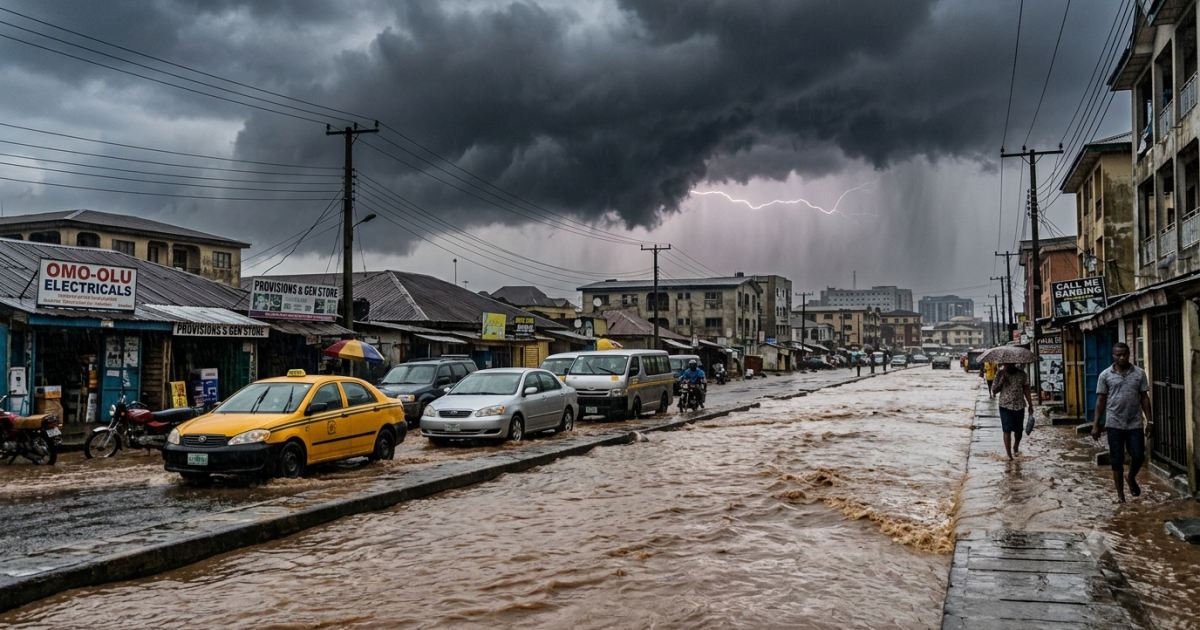
📌 Quick Summary: The Nigerian Meteorological Agency (NiMet) has issued a 3-day severe weather alert with flash flood advisories across multiple Nigerian states. Here is which states are most at risk, what to expect, and how to stay safe during the forecast period.
The Nigerian Meteorological Agency (NiMet) has released a severe weather alert covering a 3-day forecast period — with flash flood advisories that affect multiple states across Nigeria’s South-South, Southeast, Southwest, and parts of the North-Central zones. For Nigerians in affected states, this is not a routine weather update. Flash floods in Nigerian urban centres and rural areas have caused loss of life, displacement of communities, and significant property damage in recent years — and the NiMet advisory carries official weight that demands attention.
NiMet Weather Alert: Key Details
| Alert Type | Severe Weather Warning with Flash Flood Advisory |
| Issuing Agency | Nigerian Meteorological Agency (NiMet) |
| Forecast Period | 3 days from date of issuance |
| Most At-Risk Zones | South-South, Southeast, Southwest, North-Central |
| Primary Risk | Flash flooding, strong winds, heavy rainfall |
| Advisory Channel | nimet.gov.ng and NiMet social media |
Which States Are Most at Risk?
Nigeria’s flood risk pattern during the August–September period consistently affects certain states more than others. Based on NiMet’s established risk mapping and the current advisory, the states with the highest alert levels include:
South-South (Highest Risk): Rivers State (Port Harcourt and surrounding areas), Bayelsa State (low-lying coastal terrain makes it consistently Nigeria’s most flood-vulnerable state), Delta State, Cross River State, Akwa Ibom State, and Edo State.
Southeast: Anambra State (particularly communities along the Niger flood plain), Imo State, Abia State, Enugu State lowland areas.
Southwest: Lagos State (Mainland flood corridors, Ojo, Badagry, Alimosho LGAs historically most affected), Ogun State, Ondo State coastal areas.
North-Central: Kogi State (Lokoja, at the confluence of the Niger and Benue rivers, faces severe annual flooding), Benue State, Niger State riverine communities.
What Causes Flash Flooding in Nigeria
Flash flooding in Nigeria during August is driven by a combination of factors that converge at this time of year. Tropical rainfall intensity increases significantly in August as the Intertropical Convergence Zone (ITCZ) moves northward — the rains become heavier and more sustained than the lighter showers of May and June. Nigeria’s urban drainage infrastructure — particularly in Lagos, Port Harcourt, Benin City, and Onitsha — is chronically under-maintained and overwhelmed by the volume of water that intense August rainfall generates. Upstream dam releases — particularly from the Lagdo Dam in Cameroon, which releases water during its peak capacity period — have caused catastrophic flooding in Benue, Anambra, and Kogi states in multiple years. NiMet’s advisory system is specifically designed to give communities advance warning of the conditions that produce these events.
Flash Flood Safety: What Nigerians Should Do Now
If you are in a flood-prone area: Move valuable documents (certificates, land papers, identification), electronics, and irreplaceable items to higher ground or upper floors immediately — do not wait until water is at the door. Identify your evacuation route and designated emergency assembly point before flooding begins. Keep emergency contacts — NEMA (National Emergency Management Agency) and your State Emergency Management Agency (SEMA) — saved on your phone. If you are driving: Never attempt to drive through flooded roads. The depth of water in flooded Nigerian roads is extremely difficult to judge — vehicles are routinely swept off roads in flash flood conditions that appear manageable. Turn around, not drown. If you are in Lagos: The Lagos State Emergency Management Agency (LASEMA) operates a 24-hour hotline — 767 — for flood emergencies. Know this number. For rural communities near rivers: Move livestock and farm equipment to higher ground. Avoid river banks during heavy rainfall. Monitor river levels — rising water in upstream areas typically arrives at downstream communities with 6–24 hours of lead time.
The Lagdo Dam Factor: What Nigeria Must Watch
Nigeria’s most dangerous annual flood event is not caused by rainfall alone — it is caused by water releases from the Lagdo Dam in Cameroon’s Adamawa Region. When Lagdo Dam releases water during its peak operational period (typically August–November), the additional volume flows into the Benue River and downstream into Kogi, Anambra, and Delta states. The 2022 Lagdo release caused Nigeria’s worst flooding in a decade — displacing over 600,000 people. NiMet and NEMA monitor Lagdo Dam release schedules and issue specific alerts when releases are imminent. If you are in any state on the Niger or Benue river corridors, follow NiMet and NEMA advisories specifically for Lagdo Dam updates throughout August and September.
How to Check NiMet Weather Updates
NiMet publishes weather forecasts and severe weather alerts through multiple channels: the official NiMet website (nimet.gov.ng), NiMet’s official X (Twitter) account (@NiMetNigeria), and the NiMet weather app available on Android and iOS. For specific regional forecasts, NiMet regional offices in Lagos, Kano, Port Harcourt, and Abuja also publish localised forecasts. During severe weather events, NEMA (nema.gov.ng) and state SEMAs coordinate emergency responses and publish evacuation notices.
Frequently Asked Questions
Which states are under NiMet flood alert in August 2026?
Rivers, Bayelsa, Delta, Cross River, Akwa Ibom, Anambra, Imo, Lagos, Kogi, and Benue are among the states with the highest flash flood risk based on NiMet’s August 2026 severe weather advisory.
How do I check the NiMet weather forecast for my state?
Visit nimet.gov.ng or follow @NiMetNigeria on X for official weather forecasts and severe weather advisories. The NiMet weather app is also available for download.
What should I do if my area is flooding?
Move to higher ground immediately. Avoid flooded roads. Call LASEMA (767) in Lagos or your state SEMA for emergency assistance. Call NEMA on 0800-CALL-NEMA for national emergency support.
Why does flooding happen every year in Nigeria?
Heavy August-September rainfall, inadequate urban drainage infrastructure, Lagdo Dam releases from Cameroon, and building on flood plains all contribute to Nigeria’s annual flooding problem.
Is the Lagdo Dam releasing water in 2026?
Monitor NiMet (nimet.gov.ng) and NEMA (nema.gov.ng) for specific Lagdo Dam release advisories. These agencies issue specific alerts when releases are confirmed or imminent.
What is NiMet Nigeria?
NiMet (Nigerian Meteorological Agency) is Nigeria’s official national weather forecasting and climate services agency, operating under the Federal Ministry of Aviation and Aerospace Development.
Sources
- NiMet — nimet.gov.ng
- NEMA — nema.gov.ng
- NaijaSabi Civic Desk research — August 2026
Last updated: 18 August 2026 · NaijaSabi Civic Desk.
Follow NaijaSabi for More
Nigeria’s biggest stories break every single day — across entertainment, civic affairs, finance, education, sport, and lifestyle. NaijaSabi covers them all with the speed, depth, and Nigerian perspective our millions of readers deserve. Bookmark naijasabi.com.ng/ and subscribe to our Morning Brief newsletter, trusted by over 52,000 daily subscribers across Nigeria and the diaspora. Whether you are tracking the BBNaija drama, watching the exchange rate, following a JAMB admission update, or keeping up with the Super Eagles — NaijaSabi is where Nigeria comes first to understand what is happening and why it matters to your life today. Share this article. Drop your thoughts in the comments. Return for updates as the story develops. From Lagos to London, Abuja to Atlanta, Kano to Toronto — wherever Nigerians are building their lives, NaijaSabi keeps them informed, engaged, and ahead of every story that shapes the country they love. We are independent, we are Nigerian, and we are here every single day for you.


0 Comments
No comments yet. Be the first to share your thoughts!