


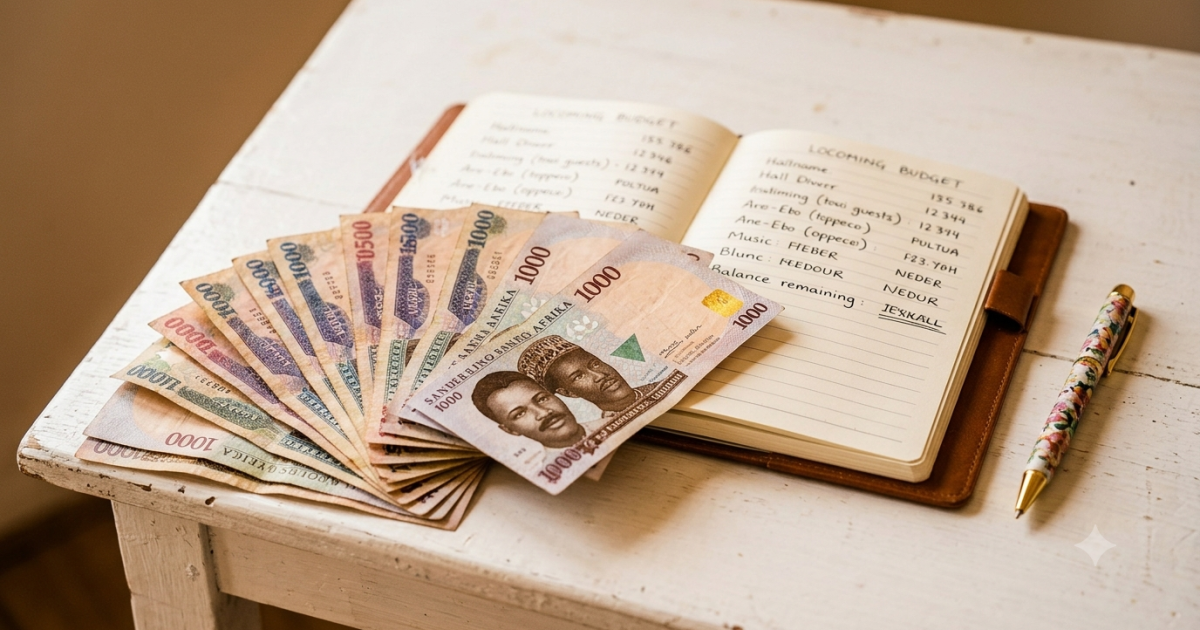
📌 Quick Summary: A Cowrywise report reveals that young Nigerian couples now spend an average of ₦13 million to organise a wedding — breaking down as approximately ₦8.9 million for the white wedding, ₦3.3 million for the traditional ceremony, and ₦600,000 for the proposal. The total range spans from ₦200,000 for small intimate ceremonies to over ₦20 million for luxury celebrations. Nigeria’s wedding industry is estimated at ₦1.2 trillion annually. Here is the complete honest cost breakdown — every line item, every hidden cost, and how to plan a wedding that does not ruin your finances.
₦1.2 trillion. That is the estimated annual value of Nigeria’s wedding industry. Not the budget for a single celebrity owambe — the yearly total generated by ordinary Nigerian couples, families, and the vendors who make these events happen. If you divided that figure by the number of weddings in Nigeria each year, you would understand why every Nigerian couple planning their day eventually reaches the same moment of quiet panic: this is going to cost far more than we planned. A ceremony that might have cost a total of ₦5 million in 2018 now routinely runs to ₦15 million or more for a mid-range Lagos celebration. Inflation has not spared the wedding industry. Neither has the cultural expectation that the day must be grand enough to satisfy both families, their extended networks, and the judgement of 500 people who will discuss it at every gathering for the next three years. This article gives you every number honestly — no vendor estimates, no aspirational ranges. Real 2026 costs.
The Average Nigerian Wedding Cost in 2026: What the Data Actually Shows
According to data from Cowrywise, the average Nigerian couple spends around ₦13 million across the full wedding process. That breaks down roughly as ₦8.9 million for the white wedding, ₦3.3 million for the traditional ceremony, and ₦600,000 for the proposal. This is the middle-class Lagos figure — the reference point for urban, working, aspirational couples who are not wealthy enough for truly luxury celebrations but who are not willing to sacrifice the occasions that mark the most significant transition of their adult lives.
| Wedding Stage | Average Cost (2026) | Budget Range | Luxury Range |
| Proposal (ring + dinner) | ₦600,000 | ₦150,000–₦500,000 | ₦1,000,000+ |
| Court/Registry Wedding | ₦50,000–₦150,000 | ₦20,000–₦60,000 | ₦100,000–₦300,000 |
| Traditional Wedding | ₦3,300,000 | ₦800,000–₦2,000,000 | ₦5,000,000–₦15,000,000 |
| White Wedding Reception | ₦8,900,000 | ₦2,000,000–₦5,000,000 | ₦15,000,000–₦50,000,000+ |
| TOTAL | ~₦13,000,000 | ₦3,000,000–₦7,000,000 | ₦20,000,000–₦65,000,000+ |
Traditional Wedding Costs: The Full Breakdown
Nigerian weddings often cost between ₦2 million and ₦3 million for a traditional affair in 2026. But that headline figure conceals several cost categories that couples often underestimate or discover only after vendors have been engaged:
Bride Price and Traditional Items List
The bride price — the payment from the groom’s family to the bride’s family — varies enormously by ethnic group, family, and geography. Yoruba bride prices typically involve a combination of cash, fabric, jewellery, food items, and palm wine. Igbo traditional weddings include an exhaustive items list (known as the iku-aka list or ikú list depending on the specific community) that can run to hundreds of items worth ₦500,000–₦2,000,000 depending on the family’s expectations. Hausa/Fulani sadaki (dowry) payments are structured differently, often involving negotiated cash amounts. In 2026, the groom and his family are traditionally expected to bear the largest share of expenses, including the bride price and traditional items list. Budget separately for this before planning any ceremony.
Traditional Ceremony Venue and Catering
In Lagos, event venues on the mainland that accommodate 300-500 guests cost upwards of ₦1.5 million to ₦2.5 million on average, while Lagos Island venues range from ₦3 million to ₦10 million for a single-day event. Traditional weddings typically involve home compounds, family houses, or community halls — lower-cost than dedicated event centres but requiring additional logistics: tent and canopy hire (₦300,000–₦800,000), catering equipment rental, and the cooking itself. Catering for a traditional wedding of 300 guests typically costs ₦1,200,000–₦2,500,000 depending on the menu — jollof rice, fried rice, egusi soup, pounded yam, assorted protein — with full-service catering including service staff.
White Wedding Costs: The Complete Line-Item Breakdown
The white wedding is where most of the ₦13 million average goes. Here is every major cost category with 2026 Lagos prices:
| Item | Budget | Mid-Range | Premium |
| Event venue (hall hire) | ₦500,000–₦1,500,000 | ₦1,500,000–₦3,500,000 | ₦5,000,000–₦15,000,000 |
| Catering (per head: ₦3,000–₦8,000) | ₦600,000–₦1,500,000 (200 guests) | ₦1,500,000–₦3,500,000 | ₦5,000,000+ |
| Photography (stills) | ₦150,000–₦300,000 | ₦300,000–₦600,000 | ₦800,000–₦2,000,000 |
| Videography | ₦100,000–₦250,000 | ₦250,000–₦500,000 | ₦600,000–₦1,500,000 |
| Bridal dress and accessories | ₦200,000–₦600,000 | ₦600,000–₦1,500,000 | ₦2,000,000–₦10,000,000 |
| Groom’s suit and accessories | ₦80,000–₦200,000 | ₦200,000–₦500,000 | ₦600,000–₦2,000,000 |
| Decoration and floral | ₦200,000–₦600,000 | ₦600,000–₦1,500,000 | ₦2,000,000–₦8,000,000 |
| Live band or DJ | ₦100,000–₦300,000 | ₦300,000–₦800,000 | ₦1,000,000–₦5,000,000 |
| MC (Master of Ceremonies) | ₦80,000–₦200,000 | ₦200,000–₦500,000 | ₦500,000–₦2,000,000 |
| Wedding cake | ₦80,000–₦150,000 | ₦150,000–₦350,000 | ₦400,000–₦1,000,000 |
| Makeup artist (bride) | ₦50,000–₦150,000 | ₦150,000–₦350,000 | ₦400,000–₦1,000,000 |
| Event planner/coordinator | ₦150,000–₦400,000 | ₦400,000–₦800,000 | ₦1,000,000–₦5,000,000 |
| Printing (invites, programmes) | ₦50,000–₦100,000 | ₦100,000–₦250,000 | ₦300,000–₦600,000 |
| Generator hire (NEPA insurance) | ₦150,000–₦300,000 | ₦300,000–₦600,000 | ₦600,000–₦1,500,000 |
| Transportation (couple + bridal train) | ₦100,000–₦250,000 | ₦250,000–₦500,000 | ₦600,000–₦2,000,000 |
| Souvenirs (give-aways) | ₦100,000–₦250,000 | ₦250,000–₦600,000 | ₦700,000–₦2,000,000 |
The Hidden Costs Nigerian Couples Never Budget For
The line-item table above covers the obvious costs. What follows are the costs that experienced Nigerian wedding planners consistently warn about — the ones that transform a carefully constructed ₦10 million budget into a ₦13 million reality:
Generator Fuel and Load Shedding
Generator hire is non-negotiable for any Nigerian party. For a full-day event with a 6-hour reception, generator fuel and rental can cost ₦150,000–₦600,000 depending on the size of the generators needed for sound, lighting, and catering equipment. Even if the venue quotes a generator in the package price, verify what that covers — sound and lighting only? Or catering equipment too? A poorly powered kitchen on a wedding day is a catering disaster.
Aso-Ebi: The Budget That Multiplies
Aso-ebi — the matching fabric distributed to guests as a symbol of solidarity and celebration — is one of the most misunderstood costs in Nigerian wedding planning. The couple typically subsidises the fabric cost, selling it to family and friends below market price and absorbing the difference. For a 200-person aso-ebi distribution at ₦15,000 per couple’s subsidy, the cost is ₦3 million — before a single yard is sewn. Elaborate aso-ebi packages at ₦50,000–₦80,000 per set, distributed to hundreds of guests, can single-handedly blow a modest wedding budget.
Spraying
The Yoruba and South-South tradition of spraying — placing or throwing naira notes at the couple or performers during the reception — is a deeply embedded cultural practice. A couple should budget for their own spraying of performers (live band, praise singer, DJ) which can run ₦200,000–₦500,000 for a properly festive reception. They will also receive spraying from guests — but never count on incoming spraying to fund outgoing obligations.
Post-Wedding Bills
No list of Nigerian wedding costs is complete without acknowledging that the financial relationship between families, vendors, and the couple does not end when the last guest leaves. Outstanding balances on deposits, vendor final payments triggered by delivery of photos/videos, post-wedding thank you gifts, and the honeymoon itself all arrive in the weeks after the day. Budget a “post-wedding contingency” of at least 10–15% of your total wedding budget to absorb these without crisis.
How to Have a Nigerian Wedding Without Destroying Your Finances
How to Cut Nigerian Wedding Costs Without Cutting the Experience
The most effective cost-cutting decisions happen before vendors are engaged — not during negotiation, when you have already created expectations. Reducing your guest list from 400 to 200 does not halve the celebration; it concentrates the experience among people who genuinely matter to you and your families. That reduction alone saves approximately ₦600,000–₦1,200,000 in catering costs at 2026 Lagos prices. Choosing a venue outside Lagos Island — Mainland event centres in Ikeja, Surulere, or Ikorodu — saves ₦1,000,000–₦3,000,000 on hall hire without reducing the event’s quality. Booking in the January–March low season (the post-December wedding valley) secures discounts of 20–30% from most Lagos vendors desperate to fill quiet calendars. And getting competing quotes from at least three vendors per category — photographer, caterer, decorator, band — routinely reduces individual line-item costs by 15–25% through competitive market pressure. None of these decisions reduce the joy of the day. They only reduce the debt that follows it.
For Nigerians in the diaspora planning a traditional or combined wedding back home, the cost calculation is complicated by exchange rate, travel, and the need to manage vendors from abroad. A mid-range Lagos wedding coordinated from London or Houston typically costs 15–25% more than an equivalent locally-planned wedding — because diaspora couples cannot physically monitor vendors, are more vulnerable to price gouging, and must factor in flights and accommodation for themselves and immediate family travelling from abroad. The strong Nigerian naira trend of 2026 — with the exchange rate moving from ₦1,900 to ₦1,359 per dollar over 18 months — has actually reduced the dollar or pound cost of Nigerian weddings for diaspora couples relative to their 2024 equivalents. A wedding that cost £20,000 in naira terms at the 2024 exchange rate now costs approximately £14,000 at the August 2026 rate — a meaningful saving for diaspora couples who earn in sterling or dollars. For cross-continental wedding planning, engage a Lagos-based wedding coordinator with verifiable reviews before committing to any vendor deposit from abroad.
The most important financial decision a Nigerian couple can make is to determine their wedding budget from what they actually have — not from what they hope to receive in gifts, or from what their parents are planning to contribute. Contributions from families are generous but never guaranteed to arrive in full, on time, or without conditions. The couple who builds their wedding budget on confirmed, available savings will never be in debt on their honeymoon.
Five practical money decisions that the most financially smart Nigerian couples make: set a firm guest list cap before engaging any vendor (every additional guest adds ₦3,000–₦8,000 in catering alone); negotiate all vendor contracts with a payment schedule that protects you if quality is not delivered; choose a weekday or off-season date for 20–30% venue and vendor discounts; skip the aso-ebi entirely or limit it to immediate family only; and allocate 15% of your total budget as a contingency buffer that you treat as spent from day one.
Frequently Asked Questions
How much does a Nigerian wedding cost in 2026?
The average Nigerian wedding costs approximately ₦13 million in 2026, according to Cowrywise research. This breaks down as ₦8.9 million for the white wedding, ₦3.3 million for the traditional ceremony, and ₦600,000 for the proposal. Budget weddings start from ₦2–₦3 million; luxury Lagos weddings can exceed ₦50 million.
How much does a traditional Nigerian wedding cost?
Nigerian traditional weddings cost between ₦2 million and ₦3 million on average in 2026, covering the bride price and items list, venue, catering for 300+ guests, fabric and aso-ebi, and traditional entertainment. Costs vary significantly by ethnic group, state, and family expectations.
How much does a Nigerian wedding venue cost in Lagos?
Lagos mainland event venues accommodating 300–500 guests cost ₦1.5 million to ₦2.5 million. Lagos Island venues range from ₦3 million to ₦10 million for a single-day event. Off-peak (weekday) bookings attract 20–30% discounts at most venues.
How much is aso-ebi for a Nigerian wedding?
Aso-ebi costs depend entirely on the fabric quality and number of sets distributed. Budget ₦8,000–₦30,000 per yard of fabric, with a standard set typically requiring 6–8 yards. For 100 sets at ₦15,000 subsidy per set, the total aso-ebi cost to the couple is approximately ₦1.5 million.
How do I budget for a Nigerian wedding on a low income?
Set a firm guest count cap of 100–150 people and build your entire budget from available savings. A well-planned Nigerian wedding for 100 guests can be executed for ₦2–₦4 million. Eliminate aso-ebi, choose a mainland venue on a weekday, use a trusted amateur photographer rather than a premium vendor, and keep catering simple with two food options.
Does the groom or bride’s family pay for a Nigerian wedding?
The groom and his family are traditionally expected to bear the largest share of expenses, including the bride price and traditional items. The bride’s family hosts and funds the traditional ceremony. The couple jointly funds the white wedding reception, with both families contributing proportionally to catering, decor, and entertainment.
Last updated: 23 August 2026 · NaijaSabi Finance Desk.



0 Comments
No comments yet. Be the first to share your thoughts!