


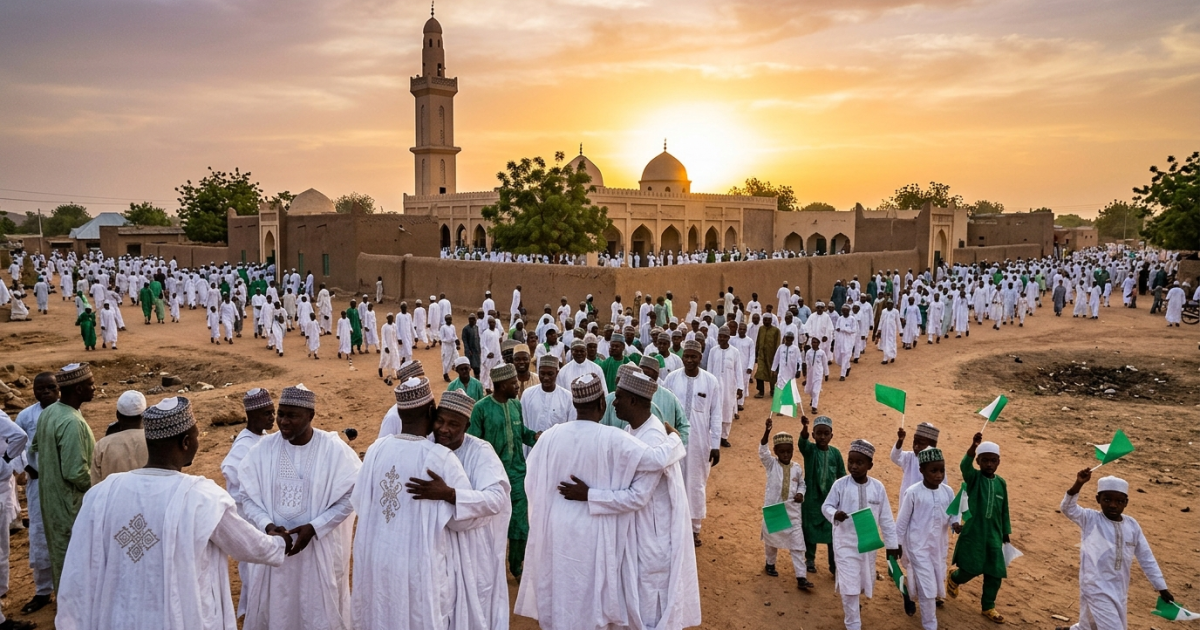
📌 Quick Summary: Eid-el-Maulud 2026 falls on Wednesday 26 August 2026 in Nigeria — a federal public holiday marking the birthday of Prophet Muhammad (SAW) on the 12th of Rabi al-Awwal, 1448 AH. The Federal Government declared Tuesday 25 August as the public holiday. All government offices, schools and most businesses are closed. This complete guide covers the date, meaning, history, how Nigerian Muslims celebrate across all regions, the scholarly debate, state-by-state traditions, and the 2027 projected date.
Every year, as the Islamic lunar calendar reaches the 12th of Rabi al-Awwal, millions of Nigerian Muslims pause to commemorate the birthday of the Prophet Muhammad (SAW). In 2026, that date falls in late August, bringing a public holiday that affects every Nigerian through office closures, market activities, and the distinctive celebratory atmosphere that Eid-el-Maulud creates in cities and towns across the north and southwest. Whether you are observing with prayer, trying to understand what it means, or planning around the holiday, this is the complete guide.
Eid-el-Maulud 2026: Key Facts
| Official Name | Eid-el-Maulud / Mawlid an-Nabi / Eid Milad-un-Nabi / Maulud Nabiyy |
| What It Commemorates | Birthday of Prophet Muhammad (SAW) |
| Islamic Date | 12th of Rabi al-Awwal, 1448 AH |
| 2026 Gregorian Date | Wednesday, 26 August 2026 |
| Public Holiday Declared | Tuesday 25 August 2026 |
| Offices and Schools | Closed nationwide |
| 2027 Projection | Saturday 14 August 2027 (subject to moon-sighting confirmation) |
What Is Eid-el-Maulud? The Meaning Behind the Name
The word “Maulud” is Arabic for “birth” — specifically the nativity of Prophet Muhammad (SAW). Nigerian Muslims use several names interchangeably: Eid-el-Maulud, Eid Milad-un-Nabi, Maulud Nabiyy, Id el Maulud — all the same occasion. For approximately 99 million Nigerian Muslims — roughly half the country’s population — Eid-el-Maulud is not merely a birthday celebration. It is a time of spiritual reflection, an annual opportunity to revisit the life, teachings, and character of the Prophet (SAW) and recommit to his example of compassion, justice, and service to community.
Who Was Prophet Muhammad? The Life the Day Commemorates
Prophet Muhammad (SAW) was born in Mecca in 570 CE. Muslims believe he was the final prophet and messenger of Allah. He received the first revelation of the Quran at age 40 during a period of meditation in the Cave of Hira. He spent 23 years spreading Islam — first in Mecca where his followers faced persecution, then in Medina where the first Muslim community was established. He died in 632 CE at approximately 62 years old. The religion he founded now has approximately 1.9 billion adherents worldwide, making Islam the world’s second-largest religion.
Why Eid-el-Maulud Falls on a Different Date Every Year
Unlike Christmas — fixed on 25 December — Eid-el-Maulud shifts approximately 11 days earlier on the Gregorian calendar every year. The Islamic calendar is purely lunar, totalling approximately 354 days per year — 11 days shorter than the Gregorian solar calendar. Islamic holidays therefore cycle through all four seasons over a 33-year period.
| Year | Eid-el-Maulud Date | Day |
| 2023 | 27 September 2023 | Wednesday |
| 2024 | 16 September 2024 | Monday |
| 2025 | 4 September 2025 | Thursday |
| 2026 | 26 August 2026 | Wednesday |
| 2027 | 14 August 2027 (projected) | Saturday |
| 2028 | 3 August 2028 (projected) | Thursday |
The Sunni and Shia Difference
Sunni Muslims observe Eid-el-Maulud on the 12th of Rabi al-Awwal — the date Nigeria’s public holiday follows. Shia Muslims observe on the 17th of Rabi al-Awwal, based on a different historical tradition. Communities influenced by the Islamic Movement of Nigeria in Zaria and parts of Kaduna State may therefore celebrate on a different day from the federal public holiday. Both observe the same event; the variation reflects longstanding differences between Sunni and Shia Islamic scholarship.
How Nigerian Muslims Celebrate Eid-el-Maulud
Mosque Gatherings and Seerah Lectures
The day begins with Fajr (dawn) prayers, followed by special congregational gatherings where Islamic scholars deliver lectures on the seerah — the biography of Prophet Muhammad (SAW). These cover his moral character, treatment of family, neighbours, and enemies, commercial ethics, and the relevance of his teachings to contemporary Nigerian life. In major northern cities including Kano, Sokoto, Kaduna, and Maiduguri, large outdoor gatherings draw thousands of worshippers.
Nasheeds and Devotional Poetry
The recitation of nasheeds — Islamic devotional poetry and songs praising the Prophet — is one of the most distinctive features of Mawlid celebrations. In Yoruba-speaking Southwest Nigeria, celebrations feature recitation of the Burdah — the famous 13th-century Arabic poem by Imam al-Busiri — alongside Yoruba-language devotional poetry. In the North, Hausa-language nasheeds and Quranic recitations fill the air around mosques throughout the day.
Food Sharing and Community Generosity
Eid-el-Maulud is a day of generosity. Families prepare tuwo shinkafa, jollof rice, fried chicken, moin moin, and other dishes, distributing generously to neighbours, the poor, and orphans. This distribution reflects the Prophet’s emphasis on caring for the vulnerable and is among the most spiritually meritorious acts of the day.
Processions and Public Celebrations
In cities including Kano, Lagos, and Ibadan, colourful processions of Muslims in their finest traditional attire walk through streets in celebration. In Kano, the Emir leads a grand Durbar — richly dressed horsemen parading through ancient city streets in a spectacle recognised internationally as one of Africa’s most visually spectacular cultural events, preserving a Hausa-Fulani court tradition centuries old.
Eid-el-Maulud Across Nigeria’s Regions
In Sokoto — seat of the Sultan of Sokoto, Nigeria’s supreme Islamic authority — the day is marked with prayers, scholarly lectures, and the Sultan’s public blessings. In Lagos and Ibadan, the Yoruba Muslim tradition emphasises the Burdah recitation alongside large family gatherings combining prayer, food sharing, and community socialising. In Kano, the Durbar celebration transforms the ancient city into a living exhibition of Hausa-Fulani cultural heritage. In Abuja, the FCT’s diverse Muslim population draws on both northern and southwest traditions, with mosques hosting lectures in multiple Nigerian languages.
The Scholarly Debate: Is Mawlid Permitted in Islam?
Not all Muslims celebrate Eid-el-Maulud. Scholars who argue against it point out that the Prophet did not celebrate his own birthday, the Companions (Sahaba) did not establish the practice, and it therefore lacks a Quranic or authentic Sunnah basis — a position held by Wahhabi and Salafi scholars, which is why Saudi Arabia and Qatar do not observe Mawlid as a public holiday. In Nigeria, communities influenced by the Izala movement do not celebrate. The majority of Nigerian Muslims do observe it, arguing that expressing joy at the Prophet’s birth is a legitimate devotion, the practice has deep historical roots dating to the Fatimid dynasty of the 11th century, and the occasion serves the valuable educational function of teaching Muslims — especially children — about the Prophet’s life.
2026 Tributes From Nigerian Leaders
Ogun State Governor Dapo Abiodun urged Muslims to embrace the Prophet’s teachings of peace and compassion. Senate President Godswill Akpabio and Deputy Senate President Barau Jibrin called on Nigerians to promote peace and unity. Senator Natasha Akpoti-Uduaghan similarly urged national reflection on the occasion’s significance. The Federal Government’s message urged all Nigerians — Muslim and non-Muslim — to use the occasion to pray for Nigeria’s peace, progress, and unity.
What Eid-el-Maulud Means for Nigeria in 2026
In a year when Nigeria has faced significant economic hardship — fuel price increases, naira devaluation, and rising food costs — the message at the heart of Eid-el-Maulud carries unusual practical weight. The Prophet Muhammad (SAW) was known for his concern for the poor, his insistence on fair dealing in commerce, his protection of orphans and widows, and his teaching that no believer truly believes until they want for their neighbour what they want for themselves. These are not abstract theological points for 2026 Nigeria — they are daily challenges. The Nigerian Muslim community that uses Eid-el-Maulud as an annual recommitment to justice, generosity, and communal responsibility honours the occasion as scholars across every tradition of Islamic thought would recognise. Eid Mubarak to all Nigerian Muslims observing today.
Frequently Asked Questions
When is Eid-el-Maulud 2026 in Nigeria?
Eid-el-Maulud 2026 falls on Wednesday, 26 August 2026 — the 12th of Rabi al-Awwal, 1448 AH. The Federal Government declared Tuesday 25 August 2026 as the public holiday.
Is Eid-el-Maulud a public holiday in Nigeria?
Yes. Eid-el-Maulud is a federal public holiday in Nigeria. Government offices, schools, and most businesses are closed nationwide on the declared date.
What is the difference between Eid-el-Maulud and Mawlid an-Nabi?
They are the same occasion with different names. Eid-el-Maulud is the Anglicised Nigerian name. Mawlid an-Nabi, Eid Milad-un-Nabi, and Maulud Nabiyy all refer to the same celebration of Prophet Muhammad’s birthday.
Why does Eid-el-Maulud change date every year?
The Islamic calendar is lunar — approximately 11 days shorter than the Gregorian solar calendar. Islamic holidays therefore shift approximately 11 days earlier on the Gregorian calendar each year, cycling through all four seasons over 33 years.
When is Eid-el-Maulud 2027 in Nigeria?
Eid-el-Maulud 2027 is projected to fall on Saturday 14 August 2027, subject to official moon-sighting confirmation from Nigeria’s National Moon Sighting Committee.
Do all Muslims celebrate Eid-el-Maulud?
No. The majority of Sunni Muslims worldwide observe it, but scholars within the Salafi and Wahhabi traditions consider it an innovation without Quranic or Sunnah basis. In Nigeria, Izala-influenced communities do not celebrate while the majority of Nigerian Muslims do.
The Sunni and Shia Difference on Mawlid
Sunni Muslims observe Eid-el-Maulud on the 12th of Rabi al-Awwal — the date Nigeria’s federal public holiday follows. Shia Muslims observe on the 17th of Rabi al-Awwal, based on different historical tradition. Communities influenced by the Islamic Movement of Nigeria in Zaria and parts of Kaduna State may therefore celebrate on a different day from the federal public holiday. Both observe the same event; the variation reflects longstanding differences between Sunni and Shia Islamic scholarship on the historical sources concerning the Prophet’s birth date.
How Nigerian Muslims Celebrate Eid-el-Maulud
Mosque Gatherings and Seerah Lectures
The day begins with Fajr (dawn) prayers, followed by special congregational gatherings where Islamic scholars deliver lectures on the seerah — the biography of Prophet Muhammad (SAW). These cover his moral character, treatment of family, neighbours, and enemies, and the relevance of his teachings to contemporary Nigerian life. In major northern cities including Kano, Sokoto, Kaduna, and Maiduguri, large outdoor gatherings draw thousands of worshippers for these lectures.
Nasheeds and Devotional Poetry
The recitation of nasheeds — Islamic devotional poetry and songs praising the Prophet — is one of the most distinctive features of Mawlid celebrations in Nigeria. In Yoruba-speaking Southwest Nigeria, celebrations feature recitation of the Burdah — the famous 13th-century Arabic poem by Imam al-Busiri — alongside Yoruba-language devotional poetry. In the North, Hausa-language nasheeds and Quranic recitations fill the air around mosques throughout the day.
Food Sharing and Community Generosity
Eid-el-Maulud is a day of generosity. Families prepare tuwo shinkafa, jollof rice, fried chicken, moin moin, and other dishes, distributing generously to neighbours, the poor, and orphans. This distribution reflects the Prophet’s own emphasis on caring for the vulnerable and is among the most spiritually meritorious acts of the day.
Processions and Public Celebrations
In cities including Kano, Lagos, and Ibadan, colourful processions of Muslims in their finest traditional attire walk through streets. In Kano, the Emir leads a grand Durbar — richly dressed horsemen parading through ancient city streets in a spectacle recognised internationally as one of Africa’s most visually spectacular cultural events, preserving a Hausa-Fulani court tradition centuries old.
Eid-el-Maulud Across Nigeria’s Regions
In Sokoto — seat of the Sultan of Sokoto, Nigeria’s supreme Islamic authority — the day is marked with prayers, scholarly lectures, and the Sultan’s public blessings. In Lagos and Ibadan, the Yoruba Muslim tradition emphasises the Burdah recitation alongside large family gatherings combining prayer, food sharing, and community socialising. In Kano, the Durbar celebration transforms the ancient city into a living exhibition of Hausa-Fulani cultural heritage. In Abuja, the FCT’s diverse Muslim population draws on both northern and southwest traditions, with mosques hosting lectures in multiple Nigerian languages.
The Scholarly Debate: Is Mawlid Permitted in Islam?
Not all Muslims celebrate Eid-el-Maulud. Scholars who argue against point out that the Prophet did not celebrate his own birthday, the Companions (Sahaba) did not establish the practice, and it lacks a Quranic or Sunnah basis — a position held by Wahhabi and Salafi scholars, which is why Saudi Arabia and Qatar do not observe Mawlid as a public holiday. In Nigeria, communities influenced by the Izala movement do not celebrate. The majority of Nigerian Muslims do observe it, arguing that expressing joy at the Prophet’s birth is legitimate, the practice has deep historical roots dating to the Fatimid dynasty of the 11th century, and the occasion serves the educational purpose of teaching Muslims about the Prophet’s life.
2026 Tributes From Nigerian Leaders
Ogun State Governor Dapo Abiodun urged Muslims to embrace the Prophet’s teachings of peace and compassion. Senate President Godswill Akpabio and Deputy Senate President Barau Jibrin called on Nigerians to promote peace and unity. Senator Natasha Akpoti-Uduaghan similarly urged national reflection. The Federal Government urged all Nigerians — Muslim and non-Muslim — to use the occasion to pray for Nigeria’s peace, progress, and national unity.
What Eid-el-Maulud Means for Nigeria in 2026
In a year when Nigeria has faced significant economic hardship — fuel price increases, naira devaluation, rising food costs — the message at the heart of Eid-el-Maulud carries unusual practical weight. The Prophet Muhammad (SAW) was known for his concern for the poor, his insistence on fair dealing in commerce, and his teaching that no believer truly believes until they want for their neighbour what they want for themselves. The Nigerian Muslim community that uses Eid-el-Maulud as an annual recommitment to justice, generosity, and communal responsibility honours the occasion as scholars across every tradition of Islamic thought would recognise. Eid Mubarak to all Nigerian Muslims observing today.
Frequently Asked Questions
When is Eid-el-Maulud 2026 in Nigeria?
Wednesday, 26 August 2026 — the 12th of Rabi al-Awwal, 1448 AH. The Federal Government declared Tuesday 25 August 2026 as the public holiday.
Is Eid-el-Maulud a public holiday in Nigeria?
Yes — a federal public holiday. Government offices, schools, and most businesses are closed nationwide on the declared date.
Why does Eid-el-Maulud change date every year?
The Islamic calendar is lunar — approximately 11 days shorter than the Gregorian solar calendar. Islamic holidays shift approximately 11 days earlier each year.
When is Eid-el-Maulud 2027?
Projected to fall on Saturday 14 August 2027, subject to official moon-sighting confirmation from Nigeria’s National Moon Sighting Committee.
Do all Muslims celebrate Eid-el-Maulud?
No. The majority of Sunni Muslims worldwide observe it, but scholars within the Salafi and Wahhabi traditions consider it an innovation without Quranic or Sunnah basis. In Nigeria, Izala-influenced communities do not celebrate while the majority of Nigerian Muslims do.
What is the difference between Eid-el-Maulud and Mawlid an-Nabi?
They are the same occasion with different names. Eid-el-Maulud is the Anglicised Nigerian name. Mawlid an-Nabi, Eid Milad-un-Nabi, and Maulud Nabiyy all refer to the same celebration of the Prophet’s birthday.
Last updated: 26 August 2026 · NaijaSabi Civic Desk.


0 Comments
No comments yet. Be the first to share your thoughts!