


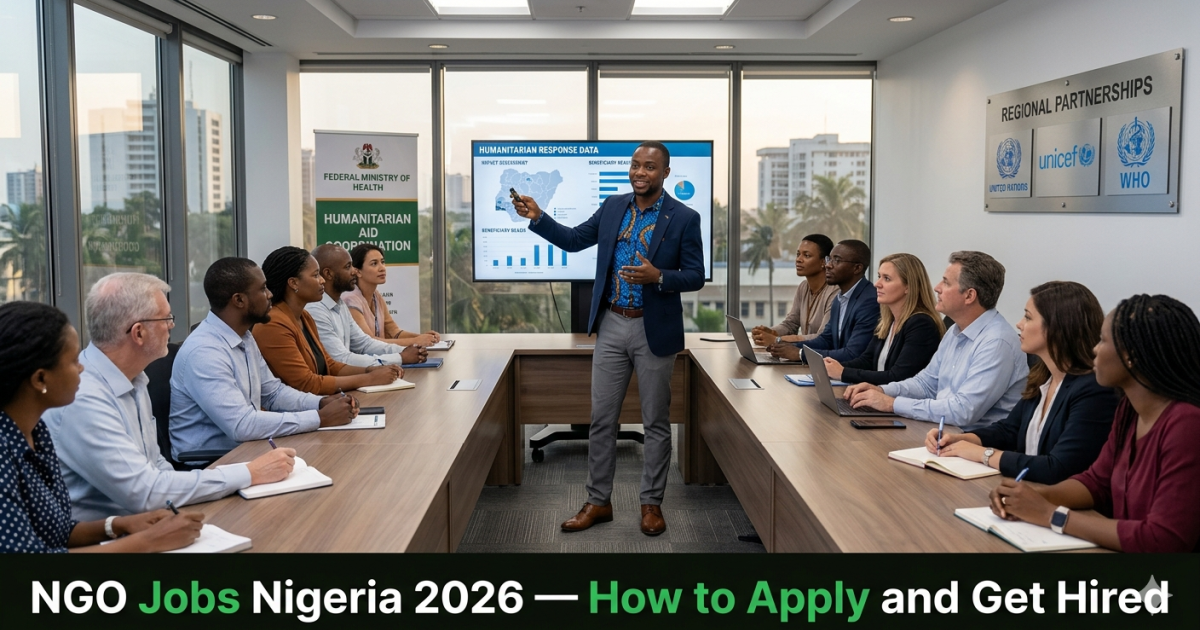
Nigeria is one of the largest hubs for humanitarian and development work in Africa. With over 200 million people, a significant humanitarian situation in the Northeast, ongoing health challenges, food security pressures, and a growing economy requiring development investment, Nigeria attracts more international NGOs, UN agencies, and development organisations than almost any other country on the continent. As of April 14, 2026, HotNigerianJobs listed 509 active NGO vacancies in Nigeria — a figure that fluctuates but rarely drops below 400. For Nigerians with the right qualifications and strategy, the NGO sector offers some of the best-paying, most professionally stimulating, and most globally relevant employment in the country.
But the NGO sector is also competitive, opaque, and heavily networked. Knowing what qualifications are required is only part of the puzzle. This guide gives you the full picture: who is hiring, what they are paying, what they actually want in a candidate, and the specific application strategies that consistently get Nigerians hired in international development roles.
Why NGO Jobs Are Attractive for Nigerian Professionals in 2026
Global Jobs Guider’s April 2026 Nigeria NGO career guide describes the current moment well: “Many organizations are prioritizing local professionals who understand the Nigerian development landscape and can support long-term sustainability of programmes. This makes 2026 a strong year for professionals seeking careers in the NGO and UN sector.” Nexford University’s analysis of the highest-paying NGO roles in Nigeria lists the following benefits of the sector:
- Competitive salaries often pegged to international pay scales (USD, GBP, or EUR-indexed) rather than naira
- Exposure to global standards, donor reporting frameworks, and large-scale programme management
- Strong CV value — NGO and UN experience opens doors internationally and domestically
- Meaningful work with direct community impact
- Travel opportunities across Nigeria and sometimes internationally
- Strong professional networks across the development sector
- Pathway to postgraduate programmes, international positions, and consultancy careers
NGO Salary Ranges in Nigeria 2026
Salaries in the NGO sector vary significantly by organisation type (UN agency vs. international NGO vs. local NGO), position level, and funding source. Here is a realistic overview based on current 2026 listings:
| Position Level | Organisation Type | Monthly Salary Range | Notes |
|---|---|---|---|
| Entry-level / Support staff | Local Nigerian NGO | ₦80,000–₦200,000 | Administrative, logistics, field assistants |
| Programme Assistant | INGO (Pan-African NGO) | ₦250,000–₦300,000 | HotNigerianJobs listing for Democracy & Governance role, Abuja, February 2026 |
| Officer / Coordinator | International NGO (IRC, Save the Children, etc.) | ₦400,000–₦800,000 | Project officers, M&E officers, WASH coordinators |
| Manager / Technical Advisor | International NGO | ₦800,000–₦2,000,000 | Finance managers, programme managers, technical specialists |
| Senior Manager / Director | Large INGO / UN Agency | ₦2,000,000–₦5,000,000+ | Country directors, heads of programme |
| Regional Director | International NGO | ₦8,040,000/year (~₦670,000/month) | Nexford University data for NGO Regional Director Nigeria |
| UN International Professional (P2–P5) | UNDP, UNICEF, WHO, UNHCR | Equivalent to $60,000–$150,000/year USD | UN salary scales indexed to New York; tax-free; significant benefits package |
Important context: For international NGO and UN positions, salaries are often paid partly or wholly in USD or EUR-indexed naira, providing significant protection against naira depreciation. This is one of the most compelling financial reasons Nigerians pursue NGO careers. Daily Jobs Nigeria’s 2025/2026 international NGO salary guide notes that INGO roles at officer and above level consistently rank among Nigeria’s best-compensated professional positions when benefits (health insurance, pension contributions, housing allowances, security allowances in Northeast Nigeria) are factored in.
Top International NGOs and UN Agencies Hiring in Nigeria 2026
| Organisation | Focus Areas in Nigeria | Active Hiring Locations | Official Career Portal |
|---|---|---|---|
| UNICEF Nigeria | Child health, education, WASH, nutrition, protection | Abuja, Lagos, Maiduguri, Kaduna | unicef.org/careers |
| UNDP Nigeria | Governance, poverty reduction, climate, livelihoods | Abuja (primarily) | undp.org/jobs |
| WHO Nigeria | Health systems, disease surveillance, immunisation | Abuja, state offices | who.int/careers |
| UNHCR Nigeria | Refugee protection, IDPs, North-East humanitarian | Maiduguri, Abuja | unhcr.org/jobs |
| UN Women Nigeria | Gender equality, women’s economic empowerment | Abuja | jobs.undp.org (UN Women) |
| IRC (International Rescue Committee) | Health, WASH, nutrition, child protection, economic recovery | Maiduguri, Adamawa, Yobe, Abuja | rescue.org/careers |
| Save the Children Nigeria | Child protection, education, health, nutrition | Lagos, Abuja, Northeast | savethechildren.net/jobs |
| Action Contre la Faim (ACF/Action Against Hunger) | Nutrition, WASH, food security, Northeast emergency | Maiduguri, Borno, Yobe | actionagainsthunger.org/careers |
| Médecins Sans Frontières (MSF) | Emergency medicine, surgery, disease outbreak response | Borno, Yobe, Niger State, others | msf.org/careers |
| Malaria Consortium Nigeria | Malaria prevention and control, public health | Abuja, Northern states | malariaconsortium.org/jobs |
| FHI 360 Nigeria | Health (HIV/AIDS), education, economic development | Abuja, Lagos, states | fhi360.org/careers |
| Plan International Nigeria | Children’s rights, girls’ education, protection | Lagos, Abuja, North | plan-international.org/careers |
| Christian Health Association of Nigeria (CHAN) | Public health, immunisation (UNICEF-partnered) | Abuja, multiple states | chan.com.ng |
| Intersos Nigeria | Protection, humanitarian response, Northeast | Maiduguri (primarily) | intersos.org/careers |
| One Acre Fund Nigeria | Agriculture, rural livelihoods, sustainability | Nasarawa, North-Central | oneacrefund.org/careers |
Most In-Demand NGO Job Types in Nigeria 2026
Based on current vacancy listings across HotNigerianJobs, MyJobMag, and official NGO portals, these are the most consistently in-demand role categories:
| Job Category | Typical Roles | Key Qualification | Most Active Locations |
|---|---|---|---|
| Health and Public Health | Health Officer, Epidemiologist, Community Health Worker Supervisor, M&E Officer (Health) | Medicine, Nursing, Public Health, Epidemiology degree | Abuja, Northeast states, Lagos |
| WASH (Water, Sanitation, Hygiene) | WASH Engineer, WASH Officer, WASH Coordinator | Civil/Environmental Engineering, WASH experience | Northeast Nigeria, rural states |
| M&E (Monitoring and Evaluation) | MEAL Officer, M&E Specialist, Data Analyst | Statistics, Epidemiology, Social Science + M&E experience | All locations |
| Finance and Grants | Finance Officer, Grants Manager, Finance Coordinator | Accounting, Finance, ICAN/ACCA + NGO donor experience | Abuja, Lagos, Northeast |
| Nutrition | Nutrition Officer, Community Nutrition Educator | Nutrition, Dietetics, Public Health | Northern states, Northeast |
| Child Protection / GBV | Protection Officer, GBV Case Worker, Case Management Supervisor | Social Work, Psychology, Gender Studies | Northeast, North-West |
| Programme Management | Programme Officer, Project Coordinator, Programme Manager | Development Studies, International Relations, MBA or equivalent | Abuja, Lagos, Northeast |
| Logistics and Supply Chain | Logistics Officer, Supply Chain Coordinator, Fleet Manager | Logistics, Supply Chain, or relevant experience | Northeast (operational areas) |
| Communications and Advocacy | Communications Officer, Advocacy Manager, Media Liaison | Communications, Journalism, Public Relations | Abuja, Lagos |
| Human Resources | HR Officer, Recruitment Officer | HRM degree or CIPM | Abuja, Lagos |
General Requirements for NGO Jobs in Nigeria
Requirements vary significantly by organisation and role level. Based on current 2026 vacancy listings from HotNigerianJobs, Global Jobs Guider, and Daily Jobs Nigeria, here are the common requirements across different levels:
Entry-Level / Junior Roles
- Bachelor’s degree in a relevant field (Public Health, Social Science, Development Studies, Engineering, Accounting, etc.)
- NYSC discharge or exemption certificate
- 0–2 years of relevant work experience (some roles accept fresh graduates)
- Basic computer skills (Microsoft Office, data collection tools)
- Strong written and verbal communication skills
- Willingness to work in field/humanitarian settings, including Northeast Nigeria if required
Mid-Level / Officer Roles (Most Common Category)
- Bachelor’s degree, Master’s preferred (especially for technical roles)
- 3–5 years of relevant experience in NGO, government, or related sector
- Specific sector knowledge (public health experience for health roles, M&E experience for M&E roles, ICAN/ACCA for finance roles)
- Experience with donor reporting frameworks: USAID, EU, DFID/FCDO, Global Fund, ECHO — knowledge of these is a significant advantage
- Strong project management skills
- Experience with data collection tools: ODK, Kobo Toolbox, DHIS2
- Proficiency in Microsoft Excel, Word, and PowerPoint
Senior / Management Roles
- Master’s degree in a relevant field is typically required
- 7–10+ years of progressive experience in NGO/humanitarian sector
- Demonstrated experience managing teams, budgets, and donor relationships
- Experience writing and managing project proposals
- Track record of programme delivery with measurable outcomes
- Strong leadership and people management skills
The Skills That Actually Get You Hired in NGO Jobs
Beyond qualifications, Global Jobs Guider’s 2026 NGO career guide identifies the specific competencies that distinguish successful candidates from those who are screened out: “Candidates who stand out usually demonstrate… tailoring your CV to show measurable achievements rather than responsibilities significantly improves your chances.” Daily Jobs Nigeria’s international NGO guide specifies the following as the most sought-after skills in 2026:
| Skill | Why NGOs Value It | How to Demonstrate It |
|---|---|---|
| Proposal and report writing | NGOs survive on donor grants — the ability to write compelling proposals and accurate reports is essential at all levels | Samples of project reports, grant proposals, donor updates you have contributed to |
| M&E and data analysis | Every major donor now requires rigorous monitoring and evaluation; without M&E professionals, NGOs cannot demonstrate impact | Experience with KoboToolbox, ODK, DHIS2, STATA, SPSS, or Excel pivot tables; completed M&E training or certification |
| Knowledge of donor regulations | USAID, EU, DFID/FCDO, Global Fund each have specific compliance requirements; NGOs need staff who understand these | List any projects you have worked on with these donors; take free online USAID/EU compliance courses |
| Measurable results in your CV | NGOs are results-oriented — they want to see numbers, not just job descriptions | “Managed a team of 15 field workers across 3 LGAs” vs. “Supervised field team”; “Trained 250 community health workers” vs. “Conducted training” |
| Cultural sensitivity and community engagement | Working with vulnerable populations requires specific communication and engagement skills | Evidence of community-level fieldwork, languages spoken, local knowledge of target communities |
| Security awareness (Northeast roles) | Operations in Borno, Yobe, and Adamawa require specific security protocol knowledge | HEAT (Hostile Environment and First Aid Training) certificate is highly valued for Northeast roles |
| Financial management and donor compliance | NGO finance is complex — understanding budgets, burn rates, and variance analysis is essential for finance roles | ICAN/ACCA/CPA, plus experience specifically in NGO/donor-funded budgets |
Where to Find Verified NGO Job Vacancies in Nigeria 2026
| Platform | Type | URL | Notes |
|---|---|---|---|
| HotNigerianJobs | Nigerian job board — NGO focus | hotnigerianjobs.com | 509+ active NGO listings as of April 14, 2026. Updated daily. Most comprehensive local NGO vacancy aggregator. |
| MyJobMag | Nigerian job board | myjobmag.com | Nexford University identifies as one of the top 4 platforms for NGO jobs in Nigeria. Updated frequently. |
| Jobberman Nigeria | Nigerian job board | jobberman.com | Broad Nigerian job board with strong NGO section; salary ranges shown on many listings |
| ReliefWeb | International humanitarian job board | reliefweb.int/jobs | The world’s leading humanitarian job board — every major INGO and UN agency posts here. Essential for senior roles. |
| DevEx | International development job board | devex.com | Top platform for mid-to-senior development sector roles globally including Nigeria. Paid premium membership for full access but free listings visible. |
| Professional network | linkedin.com | Increasingly used by INGOs for Nigerian roles; follow organisations you want to work for and apply directly | |
| UN Careers Portal | UN-specific | careers.un.org | Official portal for all United Nations jobs globally including Nigeria positions |
| Individual organisation career pages | Direct application | (see table above) | Always the most reliable source — check weekly for each organisation you are targeting |
Step-by-Step: How to Apply for NGO Jobs in Nigeria and Get Hired
- Choose your sector and career track. The NGO sector is broad — health, education, WASH, protection, nutrition, finance, M&E, logistics. Nexford University advises: “Decide what job you want and then work your way backwards from that.” Spreading your applications randomly across all sectors produces generic, weak applications. Pick two or three sectors where your qualifications and passion align and focus there.
- Build the specific qualifications the sector requires. If you are targeting health roles, a public health certification or M&E training course makes your application more competitive. If targeting finance roles, ICAN and NGO-specific financial management experience are the keys. Online platforms including Coursera, edX, and the UN’s own learning management system offer free or low-cost courses in M&E, humanitarian response, project management, and donor compliance that many successful candidates use to bridge qualification gaps.
- Tailor your CV to NGO language and standards. A corporate CV does not work for NGO applications. Your CV must: use results-based language (“reached 12,000 beneficiaries” rather than “worked with communities”); list specific tools and frameworks you have used (KoboToolbox, ODK, logical frameworks, budget management systems); and align with the specific terminology of the sector (WASH, MEAL, beneficiaries, interventions, target groups). Global Jobs Guider’s 2026 guide confirms: “Tailoring your CV to show measurable achievements rather than responsibilities significantly improves your chances.”
- Write a tailored cover letter for every application. The cover letter for an NGO job is not a formality — it is where you demonstrate alignment with the organisation’s mission, knowledge of their programmes in Nigeria, and understanding of the specific challenges of the role. Generic cover letters go directly to the rejection pile. Daily Jobs Nigeria’s NGO job guide specifies: “Tailor your CV and cover letter to match the job description. Highlight relevant achievements, measurable results, and alignment with the NGO’s values.”
- Apply only through official channels. As Global Jobs Guider emphasises: “Only apply through official career portals or verified organizational emails.” Fake NGO job listings are a real scam in Nigeria — often asking for application fees or personal banking details. Legitimate NGOs never charge fees for job applications. Always verify that the email domain matches the organisation’s official website before submitting any personal information.
- Get sector experience — even unpaid — to build your profile. For candidates without formal NGO experience, volunteering with a local NGO or development organisation is the most commonly used entry point. Even 3–6 months of verified field volunteer experience creates the “NGO experience” line on your CV that gets you past the first screening for entry-level positions. Many INGOs also offer formal internship programmes (UNICEF, UNDP, WHO, Plan International all run structured internship schemes in Nigeria).
- Network within the sector. Many NGO roles, especially at senior level, are filled through referrals and professional networks before they are even advertised externally. Join professional networks (LinkedIn groups for Nigerian development professionals, sector-specific WhatsApp groups, INGO coordination meetings if you are already working in the sector). Attending public development sector events in Abuja and Lagos (INGO coordination forums, public health events, development conferences) provides access to recruiters and programme managers.
- Prepare for competency-based interviews. NGO interviews use structured, competency-based questioning: “Tell me about a time when you had to manage a project under significant resource constraints” or “Describe how you have used data to improve programme outcomes.” Prepare specific STAR (Situation, Task, Action, Result) answers for scenarios involving programme delivery, teamwork, crisis management, and community engagement.
NGO Job Scams in Nigeria: How to Stay Safe
The NGO sector in Nigeria has attracted a significant number of fraudulent job advertisements. Common scam patterns to recognise and avoid:
- Application fees: No legitimate NGO charges a fee to apply for a job. If an “NGO” asks you to pay ₦2,000–₦50,000 to “register” or “process” your application, it is a scam.
- Fake organisation names: Scammers use names that sound like real INGOs (e.g., “United Nations Development Fund Nigeria” — which is not a real organisation). Always verify the organisation’s name and Nigerian office on their official international website before applying.
- WhatsApp and Telegram only recruitment: Legitimate INGOs advertise through official career portals, ReliefWeb, and registered Nigerian job boards — not through random WhatsApp messages. If a “job offer” arrives only via WhatsApp from an unknown contact, treat it with extreme suspicion.
- Requests for personal banking details early in the process: No legitimate employer asks for your bank account details before making a formal job offer and going through standard payroll setup. Any pre-employment request for banking information is a scam.
- Too-good-to-be-true salaries for simple roles: A “consultant” role paying $5,000/month with no specific qualifications required is almost certainly fake. Research the realistic salary range for any role before applying.
Frequently Asked Questions
How do I start a career in NGOs in Nigeria with no experience?
The most effective entry points for Nigerians with no prior NGO experience are: volunteering with a registered local NGO or community-based organisation (even 3–6 months creates the NGO experience needed for entry-level screening); applying for INGO internship programmes (UNICEF, UNDP, WHO, Plan International, and Save the Children all run formal internship schemes); targeting entry-level roles in administration, logistics, or community mobilisation (which have lower experience requirements than technical roles); and building relevant certifications through free online courses (Coursera’s global health courses, USAID’s development professional courses, humanitarian.id certifications). Nexford University also notes that “volunteering, on-the-job training, and procuring hard and soft skills” are legitimate pathways alongside formal degrees.
What is the highest-paying NGO job in Nigeria?
The highest-paying NGO roles in Nigeria are at the Country Director and Regional Director level at large INGOs and UN International Professional positions. Nexford University data puts the average NGO Regional Director salary at ₦8,040,000 per year. UN International Professional positions (P3–P5 grade) are effectively tax-free and indexed to USD, making them financially equivalent to hundreds of millions of naira annually when benefits are included. The Head of Fundraising and Country Programme Director roles at large INGOs like Save the Children, IRC, and Plan International are also among the highest-compensated positions in Nigeria’s development sector.
Is Abuja or Lagos better for NGO jobs in Nigeria?
Abuja is significantly better for NGO and UN jobs. Most INGO country offices, UN agency offices, and development sector coordination bodies are headquartered in Abuja (FCT). UNICEF, UNDP, WHO, UNHCR, IRC, Save the Children, Plan International, Action Against Hunger, and most other major organisations have their Nigeria country office in Abuja. Lagos has some NGO presence — particularly in health (HIV/AIDS programming) and education — but for the widest range of NGO opportunities, Abuja is the primary base. Northeast Nigeria (Maiduguri, Borno State) is where the most active humanitarian operations are concentrated, with significant premium salaries and hardship allowances for roles there.
Do Nigerian NGOs hire fresh graduates?
Yes — many international and local NGOs hire fresh graduates for entry-level and support roles. Study2C’s 2026 NGO Nigeria guide confirms: “Entry-level positions are also available for fresh graduates, especially in administrative and support roles.” Many organisations also offer graduate schemes, internships, and fellowship programmes specifically targeting early-career Nigerians. UNICEF, UNDP, and UNFPA all run youth volunteer and internship programmes. The key is targeting roles that match your level — applying for a Senior Programme Manager role with zero experience wastes your time and the recruiter’s attention.
🌍 NGO Jobs Nigeria 2026 — Quick Reference
- Active vacancies: 509+ as of April 14, 2026 (HotNigerianJobs) — updated daily
- Best platforms: HotNigerianJobs, ReliefWeb, MyJobMag, DevEx, LinkedIn, official organisation career pages
- Top organisations hiring: UNICEF, UNDP, WHO, IRC, Save the Children, Action Against Hunger, FHI 360, Plan International
- Hottest roles: M&E Officers, Health Officers, WASH Engineers, Finance/Grants Officers, Programme Officers
- Best location for NGO jobs: Abuja (most country offices) — with premium salaries for Northeast (Maiduguri) operations
- Salary range: ₦80,000–₦8,040,000+/month depending on level and organisation
- Minimum entry requirement: B.Sc. + NYSC certificate for most roles; Master’s preferred for technical/senior positions
- Most valued skills: M&E tools, proposal writing, donor compliance knowledge, measurable CV achievements
- Application fees = SCAM: Legitimate NGOs never charge to apply. Verify all organisations on their official international website.
- Nexford University advice: Decide your career track first, then build specifically toward that — broad applications produce weak results
The NGO sector in Nigeria in 2026 is hiring actively and paying well — but it rewards preparation, sector-specific knowledge, and tailored applications over volume. The candidates who get hired are not necessarily those with the most impressive degrees; they are the ones who understand what humanitarian and development organisations actually need, can demonstrate measurable results in their work history, and can articulate genuine alignment with the mission. Start with that clarity, build your specific skills, apply strategically, and the NGO career path in Nigeria is genuinely accessible.
Are you currently job-hunting in the NGO sector? Share which organisations you are targeting in the comments — the NaijaSabi community often has insights and contacts that are not on any job board. Also read our guides on Federal Government Recruitment Nigeria 2026 and Remote Jobs Paying in Dollars from Nigeria 2026.



0 Comments
No comments yet. Be the first to share your thoughts!