
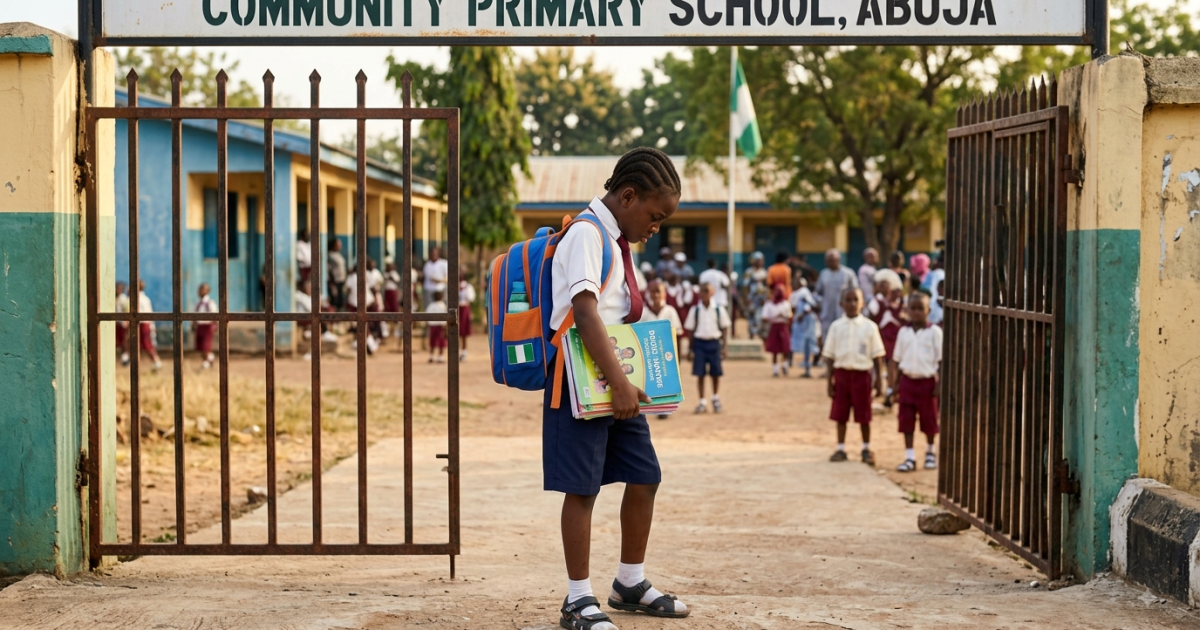
📌 Quick Summary: Nigerian schools resume in September 2026. This complete cost guide covers everything parents need to budget for — school fees, uniforms, supplies, textbooks, transport, and feeding — with realistic price ranges for Lagos, Abuja, and other major Nigerian cities.
September is approaching, and for millions of Nigerian parents, that means one thing above everything else: the back-to-school spend is coming. Nigeria’s annual school resumption period is one of the most financially demanding moments in the family calendar — and in 2026, with inflation having pushed prices significantly higher over the past two years, the preparation requires more planning and more lead time than ever. This is the complete back-to-school guide for Nigerian parents: what to budget, what to buy first, where to save, and how to manage the financial pressure without destroying your monthly budget.
The Full Back-to-School Cost: What to Expect in 2026
| Item | Public School | Private School (Budget) | Private School (Mid-Range) |
| School Fees (per term) | ₦5,000–₦30,000 | ₦50,000–₦150,000 | ₦150,000–₦400,000 |
| School Uniform (set of 3) | ₦5,000–₦15,000 | ₦15,000–₦40,000 | ₦30,000–₦80,000 |
| Shoes and Socks | ₦5,000–₦12,000 | ₦10,000–₦25,000 | ₦20,000–₦50,000 |
| School Bag | ₦3,000–₦10,000 | ₦8,000–₦20,000 | ₦15,000–₦40,000 |
| Textbooks and Workbooks | ₦10,000–₦30,000 | ₦20,000–₦60,000 | ₦40,000–₦100,000 |
| Stationery (full set) | ₦3,000–₦8,000 | ₦5,000–₦15,000 | ₦8,000–₦20,000 |
| Lunch / Feeding (monthly) | ₦8,000–₦20,000 | ₦15,000–₦40,000 | ₦25,000–₦60,000 |
| Transport (monthly) | ₦5,000–₦20,000 | ₦10,000–₦30,000 | ₦20,000–₦50,000 |
| PTA and levies | ₦2,000–₦10,000 | ₦5,000–₦20,000 | ₦10,000–₦50,000 |
Total First-Month Spend: Realistic Estimates
Public school child (1 child, Lagos): ₦46,000–₦145,000 for the opening month including fees, uniform, books, and first month transport and feeding. Budget private school child (1 child, Lagos): ₦123,000–₦330,000 for the opening month. Mid-range private school child (1 child, Lagos): ₦298,000–₦790,000 for the opening month. These figures assume a first-year or new-school entry where everything must be bought new. Returning students with reusable items (bag, some textbooks, uniform that still fits) will spend less.
Where to Save: Smart Back-to-School Shopping in Nigeria 2026
Buy uniforms early (now, in August). School uniform prices rise 20–40% in the week before resumption as tailors and uniform shops capitalise on deadline demand. Order yours now — even if resumption is six weeks away — and pay the current price. Buy secondhand textbooks. Nigerian secondhand textbook markets (physical markets near universities, WhatsApp groups, Facebook Marketplace) offer textbooks at 30–60% of new prices. For standard national curriculum books that do not change significantly year-to-year, secondhand is almost always the right choice. Buy stationery in bulk from wholesale markets. Computer Village in Lagos, Wuse Market in Abuja, and equivalent wholesale markets in other cities sell stationery at 30–50% below the price of the same items in school bookshops. Buy pens, pencils, erasers, rulers, and exercise books in bulk at the start of the year. Plan transport routes before choosing schools. Transport costs are one of the most underestimated back-to-school expenses. A school that seems more affordable on fees alone may cost significantly more in monthly transport than a slightly more expensive school that is closer to home. Calculate the full annual cost — not just the fee — before deciding.
Handling School Fee Payment Pressure
For parents struggling with school fee payment in 2026, several options are available: NELFUND student loans (for university-level children — see NaijaSabi’s NELFUND guide); school payment plans — many private schools now accept termly fees split into two or three monthly instalments rather than requiring full payment at resumption; salary advance from employer — many Nigerian companies offer back-to-school salary advances specifically for this period; and cooperative savings — if your workplace or community has a cooperative society, a back-to-school loan from the cooperative at lower interest rates than commercial banks is worth exploring.
What Nigerian Schools Are Requiring in 2026
Beyond the standard uniform and stationery list, many Nigerian schools in 2026 are additionally requiring: a personal tablet or laptop for digital learning programmes (estimate ₦50,000–₦200,000 for budget devices); school portal registration fees; extracurricular activity fees; and building development levies. Read the official school circular carefully before shopping — the hidden fees that appear after registration can significantly exceed the headline school fee figure.
Frequently Asked Questions
When do Nigerian schools resume for the 2026/2027 academic year?
Most Nigerian primary and secondary schools resume in September 2026 for the first term of the 2026/2027 academic year. Specific resumption dates vary by state and school — check with your child’s school directly.
How much does it cost to send a child to school in Nigeria in 2026?
The total first-month cost ranges from approximately ₦46,000 for a public school child to ₦300,000+ for a mid-range private school child, depending on location, school, and whether the child needs all items bought new.
Where can I buy cheap school uniforms in Lagos?
Balogun Market and Idumota in Lagos Island offer the most competitive prices for school uniform fabric and ready-made uniforms. Yaba Market is a good alternative for ready-made items.
Can I split school fees payment?
Many private schools now offer instalment payment plans. Discuss payment terms with the school’s bursar before resumption — most schools prefer advance discussion to post-resumption fee disputes.
Sources
- NaijaSabi Education Desk research — August 2026
Last updated: 18 August 2026 · NaijaSabi Education Desk.
Stay Updated with NaijaSabi
Nigeria’s most important stories — across education, finance, entertainment, civic affairs, sport, and lifestyle — are covered daily by NaijaSabi’s editorial team. We research deeply, verify carefully, and write specifically for Nigerian audiences who deserve accurate, useful, actionable information. Bookmark naijasabi.com.ng/ and subscribe to our Morning Brief newsletter, which delivers the most important Nigerian stories to over 52,000 inboxes every morning. Whether you are a student navigating the admission process, a professional tracking economic policy, a parent managing family finances, or a fan following Nigerian music and sport — NaijaSabi has the content you need, written with the depth you deserve. Share this article with anyone who needs this information. Drop your questions and thoughts in the comments section below — our editorial team reads every comment and updates articles based on reader questions. Return to this page for the most current information as the situation develops. NaijaSabi: Nigeria’s most trusted independent digital publication, serving millions of readers monthly across Nigeria and the Nigerian diaspora worldwide. From Lagos to London, Abuja to Atlanta, Kano to Toronto — wherever Nigerians are, NaijaSabi keeps them informed, engaged, and ahead of the story.

0 Comments
No comments yet. Be the first to share your thoughts!