


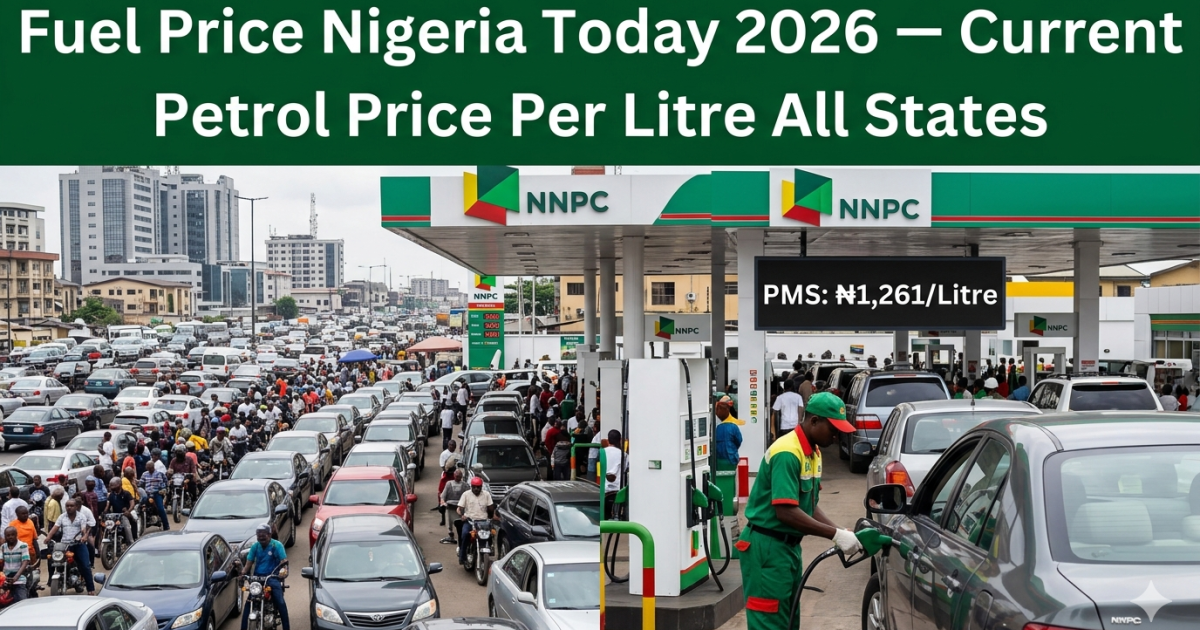
Petrol — officially known as Premium Motor Spirit (PMS) — is the most politically and economically sensitive commodity in Nigeria. The price of a litre of fuel at the pump affects every Nigerian, regardless of whether they own a vehicle or not. It determines the cost of transportation and logistics, which in turn influences the price of food at the market, the cost of goods in shops, the fare charged by okada riders, bus drivers and ride-hailing services, and the cost of operating a business of any kind. When fuel prices rise, every other price in the Nigerian economy eventually rises too — with the heaviest burden falling on the poorest households who spend the largest proportion of their income on food and transportation.
This article gives you the current petrol Price in Nigeria as of April 20, 2026, explains prices state by state, breaks down why petrol costs what it does, tells the story of how Nigeria’s fuel market works since subsidy removal, and helps you understand what to expect from prices going forward in 2026.
Current Petrol Price in Nigeria Today — April 20, 2026
Nigeria’s petrol market is now fully deregulated — there is no government-set pump price. What you pay at the filling station depends on where the station gets its fuel (from the Dangote Refinery, from import depots, or from NNPC supply), the transportation cost to get it to your state, and the station’s margin. As a result, prices vary significantly between station types, cities, and states.
Here is the current price breakdown based on multiple April 2026 sources including Angle360ng, DepotData.ng, and 247News.com.ng:
| Station Type / Source | Price Per Litre (April 2026) | Notes |
|---|---|---|
| Dangote Refinery Gantry (wholesale) | ₦1,200 | DepotData.ng confirmed — this is what depot buyers pay ex-refinery |
| Dangote Coastal Price | ₦1,153 | Coastal depot price (lower due to maritime logistics savings) |
| NNPC Retail Outlets | ~₦1,261 per litre | Angle360ng April 2026 — NNPC-branded stations in major cities |
| Major Independent Stations (Lagos, Abuja, PH) | ₦1,250 – ₦1,295 | Angle360ng April 9, 2026 — after crude oil price easing |
| General Independent Stations | ₦1,335 – ₦1,400 | Angle360ng broader April 2026 range |
| Northern States (higher logistics) | ₦1,380 – ₦1,470 | 247News.com.ng March 2026; higher due to transportation distance |
Important: Petrol prices in Nigeria’s deregulated market can change at any time without advance notice, in response to changes in Dangote Refinery’s gantry price, global crude oil movements, or shifts in the naira/dollar exchange rate. Always verify the current price at your local station. The latest available data as of writing shows the market easing slightly toward the ₦1,250–₦1,295 range in major cities following a recent drop in global crude oil prices.
Petrol Price by State — Nigeria April 2026
Because Nigeria’s fuel market is deregulated and prices are influenced by transportation costs from refineries and depots to each state, prices vary significantly across the country. States closer to the Dangote Refinery in Lagos or major seaport depots pay lower logistics costs and therefore lower pump prices. States in the far north, north-east, and remote areas pay significantly more per litre due to the additional distance fuel must travel by road.
| State / Region | Approximate Pump Price (April 2026) | Notes |
|---|---|---|
| Lagos | ₦1,250 – ₦1,295 | Closest to Dangote Refinery; lowest logistics cost in Nigeria |
| Abuja (FCT) | ₦1,280 – ₦1,350 | Major city with good depot access; slightly higher than Lagos |
| Port Harcourt (Rivers State) | ₦1,280 – ₦1,360 | Near southern depots; relatively competitive pricing |
| Ogun State | ₦1,260 – ₦1,310 | Close proximity to Lagos depot infrastructure |
| Oyo State (Ibadan) | ₦1,280 – ₦1,340 | Moderate logistics distance from Lagos |
| Edo State (Benin City) | ₦1,290 – ₦1,360 | Mid-South; moderate pricing |
| Anambra / Enugu | ₦1,300 – ₦1,380 | South-East; additional road transport from Port Harcourt or Lagos |
| Kano | ₦1,350 – ₦1,420 | Far North; significant logistics cost above Lagos price |
| Kaduna | ₦1,340 – ₦1,410 | North-West; high road transport cost |
| Borno / Adamawa (North-East) | ₦1,400 – ₦1,470 | Most remote; highest logistics costs in country |
| Sokoto / Zamfara (North-West) | ₦1,380 – ₦1,450 | Security challenges add to distribution costs |
| Kebbi / Niger States | ₦1,350 – ₦1,420 | Moderate northern pricing |
Note: These are indicative April 2026 estimates based on available market data, the confirmed Dangote gantry price of ₦1,200, and typical logistics margins. Actual prices at specific stations may vary. Check with your local filling station or use Intercity.ng and Resagratia.com for real-time updates.
The Dangote Refinery: How It Changed Everything
Before the Dangote Petroleum Refinery became fully operational, Nigeria was one of the world’s most paradoxical countries — a major oil producer that imported virtually all of its own refined petroleum products. Nigeria was spending billions of dollars every year importing petrol, kerosene, and diesel from Europe and other regions, despite sitting on vast crude oil reserves. This structural absurdity meant that every fluctuation in global shipping costs, foreign exchange rates, and international refined product prices directly hit Nigerian pump prices.
The Dangote Petroleum Refinery — located at Lekki Free Trade Zone in Lagos with an official nameplate capacity of 650,000 barrels per day — changed this equation dramatically when it began ramping up production in 2024 and 2025. By April 2026, DepotData.ng confirmed that Dangote had set its gantry price at ₦1,200 per litre, and Angle360ng described the refinery as “the dominant price-setter in Nigeria’s fuel market.” This means when Dangote adjusts its wholesale price, filling stations across Nigeria adjust their pump prices accordingly within days — a far faster transmission mechanism than the old import-dependent system.
The refinery’s impact is most visible when global crude oil prices move. In April 2026, Angle360ng’s analysis documented a clear example: when global crude prices fell following a US-Iran ceasefire deal that eased fears about disruption to the Strait of Hormuz (which handles approximately 20% of global daily oil supply), the Dangote Refinery quickly adjusted its gantry price downward — and pump prices at independent stations fell to ₦1,250–₦1,295 per litre, providing temporary relief to Nigerian motorists and businesses.
What Determines Petrol Prices in Nigeria’s Deregulated Market?
Understanding what drives petrol prices in Nigeria today requires understanding the full supply chain — from crude oil in the ground to the fuel pump at your local station. Here are all the factors at work:
1. Global Crude Oil Price
Crude oil — the raw material from which petrol is refined — is priced in US dollars on international markets. Nigeria primarily produces Bonny Light crude, a high-quality, low-sulphur grade that typically commands a premium over Brent crude. When Brent crude trades above $100 per barrel, the cost of refining rises, and the Dangote Refinery must pass on these costs through its gantry pricing. When crude falls (as it did briefly in April 2026 after the Iran-US ceasefire announcement), the Dangote Refinery can reduce its gantry price and pump prices ease. Global crude price is therefore the primary driver of Nigerian petrol price changes in the deregulated era.
2. The Naira/Dollar Exchange Rate
Even though the Dangote Refinery sources its crude oil domestically (from Nigerian oil fields), the pricing of that crude oil — and all the refinery’s inputs including equipment maintenance, chemical additives, and energy — is largely dollar-denominated. The Dangote Refinery’s operating costs in naira are therefore highly sensitive to the exchange rate. A weaker naira means higher operating costs in naira, which pushes up the gantry price and ultimately the pump price. This is why naira depreciation and fuel price increases tend to move together — they are connected through the same dollar-denominated cost base.
3. Transportation and Logistics Costs
Getting fuel from the refinery (or from import depots) to filling stations in different parts of Nigeria involves significant road transportation costs. A tanker truck driving from Lagos to Kano covers approximately 1,100 kilometres and uses substantial diesel in the process. The driver’s wages, the truck owner’s margins, tolls, and the risk of breakdowns or security incidents on northern routes all add to the cost. This logistics premium explains why petrol consistently costs ₦100–₦200 per litre more in northern states compared to Lagos — despite the commodity being the same.
4. Dealer and Retailer Margins
Between the Dangote Refinery gantry price and the final pump price, there are multiple layers of commercial margin. Depot operators, bulk traders (marketers), and individual filling station operators each add their margin. Angle360ng’s April 2026 market analysis noted that “some retailers accused dealers and middlemen of inflating prices beyond what manufacturers charge” — a persistent problem in Nigeria’s distribution chain where middlemen between manufacturer and end retailer add costs that appear in the final consumer price.
5. Security and Access Challenges
In some parts of northern Nigeria, security challenges (banditry, terrorism, kidnapping of truck drivers on certain routes) add a security risk premium to fuel transportation. Haulage companies charge higher rates for routes they consider dangerous, and these additional costs feed into the higher pump prices seen in states like Borno, Yobe, Zamfara, and parts of Katsina and Kebbi compared to more secure states in the South-West and South-South.
6. Depot Capacity and Congestion
Nigeria’s fuel depot infrastructure — the tank farms and storage facilities at which petrol is held before being loaded onto tankers for distribution — has limited capacity in some states. When depot storage is insufficient or congested, supply delays occur, and retailers facing supply uncertainty sometimes raise prices pre-emptively. Building additional depot infrastructure across more states is a long-term priority for reducing regional price disparities.
A Brief History: How We Got to ₦1,200–₦1,400 Per Litre
Nigeria’s petrol price history is a story of political decisions, economic pressures, and the long-running consequences of fuel subsidy policy. Understanding this history helps explain why today’s prices — despite feeling painfully high — are the result of removing a system that was itself unsustainable.
| Year | Official Pump Price (₦/litre) | Key Event |
|---|---|---|
| 2003 | ₦26 | Obasanjo government; heavily subsidised |
| 2012 | ₦65 (briefly ₦141 before reversal) | Jonathan government attempted removal; nationwide protests forced reversal |
| 2015 | ₦87 | Buhari government; price reduction attempt |
| 2020 | ₦162 | Pandemic-era low oil price allowed temporary reduction |
| May 2023 | ₦502 (first days after removal) | Tinubu announced “fuel subsidy is gone” at inauguration; immediate price jump |
| September 2023 | ₦620 – ₦700 | Further adjustments post-deregulation |
| February 2024 | ₦1,100 – ₦1,200 | Naira devaluation and import cost increases |
| June 2024 | ₦1,400 – ₦1,500 | Peak prices before Dangote Refinery began supplying market |
| October 2024 | ₦1,200 – ₦1,300 | Dangote Refinery supply ramping up; some price relief |
| April 2026 | ₦1,250 – ₦1,400 | Stabilised; easing following crude price drop; Dangote gantry ₦1,200 |
The Fuel Subsidy Era and Why It Ended
For decades, the Nigerian government used fuel subsidy payments to keep the pump price of petrol artificially low — far below the market cost of importing or refining it. The subsidy bridged the gap between what Nigerians paid at the pump and what the government/NNPC actually paid suppliers. At its peak, Nigeria was spending over ₦10 trillion naira per year on fuel subsidy payments — money that critics argued was being stolen, wasted, or redirected to politically connected oil importers rather than genuinely benefiting ordinary Nigerians.
The subsidy also perversely benefited wealthier Nigerians more than the poor, since wealthy Nigerians who own more vehicles consumed more subsidised fuel. It discouraged investment in domestic refining (why build a refinery when subsidised imports undercut any domestic production?), and it created a system where billions of litres of Nigerian subsidised petrol were smuggled to neighbouring countries (Benin, Niger, Cameroon, Ghana) for resale at market prices, enriching smugglers while depleting Nigeria’s resources.
In May 2023, President Bola Tinubu ended the subsidy at his inauguration — a decision that immediately pushed pump prices from approximately ₦185 per litre to over ₦500 per litre overnight. The pain for ordinary Nigerians was severe and immediate, but the fiscal rationale was clear: Nigeria could no longer afford to borrow money to pay for subsidised fuel for its 220 million citizens. The long-term hope is that the freed-up funds go into infrastructure, education, healthcare, and productive public investment rather than being redirected to different forms of waste.
Impact of Fuel Prices on Everyday Nigerian Life
The economic ripple effects of petrol price changes touch every Nigerian. Angle360ng’s April 2026 analysis documented the visible effects of the price surge: “Commercial drivers have increased fares across major routes. Civil servants and daily commuters now spend significantly more on transport. Higher logistics costs are pushing up food prices in urban markets. Many drivers report poor profitability, leading to fewer vehicles on the road.”
Transportation Costs
This is the most immediately felt impact. Danfo bus fares, okada (motorcycle taxi) rates, tricycle (keke napep) fares, and ride-hailing costs all go up when fuel prices rise. A Lagos commuter who spent ₦400 on a daily bus journey in 2022 may now pay ₦800–₦1,200 for the same trip. For low-income workers who commute across Lagos from Ikorodu, Agbado, or Badagry, the doubling or tripling of transport costs has eaten severely into disposable income.
Food Prices
Every food item that must be transported from farm to market to table carries a higher fuel cost component when petrol prices rise. Farmers in Kebbi bringing onions to Lagos by truck, fishermen in Bayelsa bringing catfish to Abuja, and cattle traders moving livestock from Maiduguri to Port Harcourt all pass on higher fuel costs to buyers — who in turn raise the prices they charge consumers. Food inflation and fuel prices are tightly correlated in Nigeria’s road-transport-dependent supply chain.
Generator Costs and Business Operations
Generators running on petrol (not the larger diesel generators) are a daily reality for millions of Nigerian homes and small businesses. Higher petrol prices directly translate to higher daily generator costs. For small businesses — hair salons, tailors, printing shops, restaurants, phone repair shops — generator fuel is a significant operating cost that must either be absorbed (reducing profit) or passed on to customers (reducing competitiveness).
Manufacturing and Supply Chain Costs
Larger businesses — factories, manufacturers, and logistics companies — use diesel rather than petrol, but the overall energy cost environment is still affected by general fuel price levels. Higher energy costs reduce the competitiveness of Nigerian manufacturers relative to imports, reduce margins, and in some cases cause businesses to scale back production or lay off workers.
Petrol vs Diesel vs Kerosene vs Cooking Gas: Price Comparison 2026
Petrol (PMS) is not the only petroleum product that matters to Nigerians. Here is a comparison of the major fuel types and their current approximate prices:
| Fuel Type | Common Use | Approximate Price (April 2026) | Notes |
|---|---|---|---|
| Petrol (PMS) | Cars, motorcycles, small generators | ₦1,250 – ₦1,400/litre | This article’s main subject |
| Diesel (AGO) | Trucks, large generators, heavy equipment | ₦1,300 – ₦1,600/litre | Fully market-priced; varies by depot location |
| Kerosene (DPK) | Cooking (rural), lamps | ₦700 – ₦1,000/litre | Still sold at some government-subsidised retail points |
| Cooking Gas (LPG) | Domestic cooking (urban) | ₦700 – ₦900/kg | 12.5kg cylinder: ~₦8,750–₦11,250 depending on location |
| CNG (Compressed Natural Gas) | CNG-converted vehicles; buses | ~₦230 – ₦260 per standard cubic metre | Government-promoted alternative to petrol; cheaper per unit but few conversion stations |
CNG (Compressed Natural Gas) deserves special mention as the Nigerian government is actively promoting vehicle conversion to CNG as a long-term solution to the fuel cost crisis. At approximately ₦230–₦260 per standard cubic metre (equivalent to roughly ₦300–₦380 per litre of petrol energy equivalent), CNG represents substantial savings for commercial drivers. The government has been subsidising CNG conversion kits for bus owners and tricycle operators in 2025–2026, though the programme is still in early stages with limited conversion stations available nationally.
How to Find the Cheapest Petrol Near You in 2026
In the deregulated market, petrol prices differ from station to station — even within the same city. Here is how to consistently find the best prices available in your area:
- Use Intercity.ng: Intercity.ng/fuel-price provides crowd-sourced real-time fuel price updates from filling stations across Nigeria. Drivers report prices they see at stations, giving a useful community-driven price map.
- Check Resagratia.com: Resagratia’s fuel price tracker visualises current price data across Nigeria with useful charts and comparisons.
- NNPC-branded stations: In most cities, NNPC-branded filling stations consistently offer petrol at the NNPC retail price (~₦1,261 per litre) — typically lower than nearby independent stations that charge ₦1,335–₦1,400. If an NNPC station is nearby, it is worth queuing even if it is slightly longer.
- Avoid stations on major highways at long distances from depots: Highway stations serving long-haul truckers in remote areas often charge the highest prices. Urban stations near depots or refineries offer better pricing.
- Buy when crude prices fall: In a deregulated market, global crude oil price drops translate to gantry price reductions within days. When you see international news about falling oil prices, check local stations shortly after — prices may have already come down.
Will Petrol Prices Come Down Further in 2026?
The answer depends entirely on the interplay of global crude oil prices, the naira/dollar exchange rate, and the operational output of the Dangote Refinery. Here is the outlook based on current trajectories:
Reasons Prices Could Fall Further
- Dangote Refinery scale-up: As the Dangote Refinery moves closer to its full 650,000 barrel-per-day nameplate capacity, domestic supply increases and competition among fuel suppliers should put downward pressure on prices. A fully operational Dangote Refinery producing enough for domestic consumption and export should be the single most powerful long-term price reducer.
- Naira strengthening: If the naira continues its 2025–2026 recovery trend, the dollar-denominated costs of refining and fuel logistics become cheaper in naira terms, allowing lower gantry prices.
- Global oil price softening: If global crude oil prices remain low or fall further — for example, if OPEC+ increases production quotas or global demand weakens — input costs for the Dangote Refinery fall and the gantry price can be reduced.
- Additional domestic refinery capacity: The Warri and Port Harcourt refineries (previously idle NNPC refineries that have been undergoing rehabilitation) are expected to return some capacity. More domestic refining capacity means more competition and lower wholesale prices.
Reasons Prices Could Rise Again
- Crude oil price spike: A major geopolitical event — escalating conflict in the Middle East, a new oil shock, or an unexpected OPEC+ production cut — could send global crude prices above $120/barrel, forcing significant gantry and pump price increases
- Naira weakening: Any significant reversal of the naira’s recent recovery would push up all dollar-denominated fuel costs
- Refinery production problems: Technical issues, planned maintenance shutdowns, or supply disruptions at the Dangote Refinery could reduce domestic supply and force reliance on more expensive imports
Frequently Asked Questions — Fuel Price Nigeria 2026
What is the current petrol price in Nigeria today?
As of April 20, 2026, petrol (PMS) costs approximately ₦1,261 per litre at NNPC retail outlets and between ₦1,250–₦1,295 per litre at major independent stations in Lagos, Abuja, and Port Harcourt. Independent stations elsewhere charge ₦1,335–₦1,400 per litre, while northern states with high logistics costs may pay ₦1,380–₦1,470 per litre. Prices change frequently — always verify at your local station.
What is Dangote Refinery’s current petrol price?
Dangote Refinery’s gantry price (the wholesale price at which bulk buyers purchase fuel from the refinery) is ₦1,200 per litre as of April 2026, confirmed by DepotData.ng. The coastal price is ₦1,153 per litre. These wholesale prices become pump prices of ₦1,250–₦1,295 after transportation and dealer margins are added.
Why is petrol more expensive in northern Nigeria?
Northern states are geographically far from the Dangote Refinery (Lagos) and from southern coastal import depots. Getting fuel to Kano, Maiduguri, Sokoto, or Zamfara requires driving a tanker truck 1,000+ kilometres from Lagos or the South. Transportation costs, driver wages, fuel for the tanker itself, road tolls, and security premiums on some northern routes all add to the final pump price. This logistics premium is why northern states consistently pay ₦100–₦200 more per litre than Lagos.
What was the petrol price before subsidy removal in 2023?
Before President Tinubu announced the end of the fuel subsidy at his inauguration on May 29, 2023, the official pump price of petrol in Nigeria was approximately ₦185 per litre — a heavily subsidised rate that had been maintained through billions of naira in government subsidy payments. Within days of the announcement, prices jumped to ₦502 per litre and have continued rising to today’s ₦1,250–₦1,400 range as the full market price has been established.
Is there any cheaper alternative to petrol for vehicles in Nigeria?
Yes. CNG (Compressed Natural Gas) is significantly cheaper per energy equivalent than petrol — approximately ₦230–₦260 per standard cubic metre versus ₦1,250–₦1,400 per litre for petrol. The government is actively subsidising CNG vehicle conversion kits. Electric vehicles (EVs) are not yet practical for most Nigerians given the charging infrastructure limitations and high vehicle acquisition cost, but CNG conversion is a viable option particularly for commercial vehicle operators looking to cut fuel costs.
⛽ Fuel Price Nigeria April 2026 — Quick Reference
- NNPC retail price: ~₦1,261 per litre
- Independent stations (major cities): ₦1,250–₦1,295 per litre
- Independent stations (general): ₦1,335–₦1,400 per litre
- Northern states: ₦1,380–₦1,470 per litre
- Dangote gantry (wholesale): ₦1,200 per litre (DepotData.ng)
- Cheapest fuel: NNPC-branded stations and stations near depots in Lagos
- Pre-subsidy removal price (2023): ₦185/litre — now fully removed
- Live price tracker: Intercity.ng/fuel-price | Resagratia.com
- CNG alternative: ~₦230–₦260/SCM — substantially cheaper; limited infrastructure
Also read: Dangote Refinery Petrol Price 2026 — Full Update | Dollar to Naira Rate Today 2026 | Electricity Tariff Nigeria 2026: Band A–E Explained
How Nigerians Are Coping With High Fuel Prices in 2026
The economic pressure of petrol prices in the ₦1,200–₦1,400 range has prompted significant behavioural adaptations across Nigerian households and businesses. These adaptations are not hypothetical — they are being documented daily across the country’s cities and towns.
Shift to Public Transport
Many private car owners in Lagos, Abuja, and other major cities have reduced personal vehicle use and switched to public transport — BRT buses, regular danfo buses, and ride-hailing services — for daily commutes. This increases passenger volumes on public transport systems but simultaneously puts pressure on those systems, since fares have also risen as transport operators pass on their own higher fuel costs. In Lagos, BRT fares that were ₦200–₦300 in 2022 are now ₦600–₦900 for comparable routes in 2026.
Motorcycle and Tricycle Adoption
Motorcycles (okada) and tricycles (keke napep) remain more fuel-efficient than four-wheel vehicles and have become the dominant form of intra-city transport in many Nigerian cities, especially in secondary cities and suburban areas. Their fuel efficiency means their fares have risen less sharply than bus fares, making them popular for short trips.
Generator Reduction and Solar Adoption
The combined effect of high petrol prices and rising Band A electricity tariffs has dramatically accelerated the adoption of solar energy among Nigerian households and businesses in 2025–2026. Solar panel installations — particularly small-scale residential systems — have grown exponentially, with vendors reporting demand increases of 200–400% over 2023 levels. Nigerians who can afford the upfront cost of a solar system are eliminating petrol generator costs entirely, delivering long-term savings that justify the capital investment within 12–24 months in the current fuel cost environment.
Business Relocation and Hours Adjustment
Some businesses have shortened operating hours or adjusted their locations to reduce transportation costs for both employees and customers. Small businesses dependent on generator power have adopted generator-off policies during the day (running only during grid outages) and prioritising solar power to cut fuel costs. Industrial businesses have increasingly consolidated shifts to reduce the number of generator start-stop cycles, which are more fuel-inefficient than sustained running.
The Government’s Response: CNG, Subsidies and Policy Measures
The Tinubu administration has not been passive in the face of post-subsidy-removal fuel price pressures. Several policy responses have been implemented or announced to cushion the impact and provide long-term structural solutions:
Compressed Natural Gas (CNG) Conversion Programme
The government’s most significant long-term response to the fuel cost crisis is the Presidential CNG Initiative — a programme to convert commercial vehicles (particularly buses, taxis, and tricycles) from petrol to CNG. CNG currently costs approximately ₦230–₦260 per standard cubic metre — the energy equivalent of roughly ₦300–₦380 per litre of petrol. For commercial drivers covering hundreds of kilometres daily, conversion to CNG offers fuel cost savings of 60–70% versus petrol. The government has been subsidising conversion kits and working with gas distribution companies to expand CNG filling station infrastructure across major routes. The programme is in its early stages as of 2026, with conversion kits deployed primarily in Lagos and Abuja, but the government has set ambitious expansion targets for all 36 states.
NNPC Price Moderation
NNPC continues to supply fuel to its own retail network at approximately ₦1,261 per litre — typically ₦50–₦150 below what independent stations charge in the same city. This provides some price moderation, though NNPC’s retail network covers only a fraction of the total filling stations in Nigeria. Expanding NNPC’s retail presence has been discussed as a price-dampening measure but requires significant capital investment.
Dangote Refinery Oversight
The government has maintained pressure on the Dangote Refinery to price competitively. While the refinery operates commercially (not as a subsidised entity), the government’s ability to negotiate through NNPC (which provides crude oil feedstock to the refinery) gives it some indirect pricing influence. The April 2026 gantry price of ₦1,200/litre — lower than the earlier peak — reflects the combined effect of global crude price falls and this pricing dynamic.
Comparing Petrol Prices: Nigeria vs Other African Countries (2026)
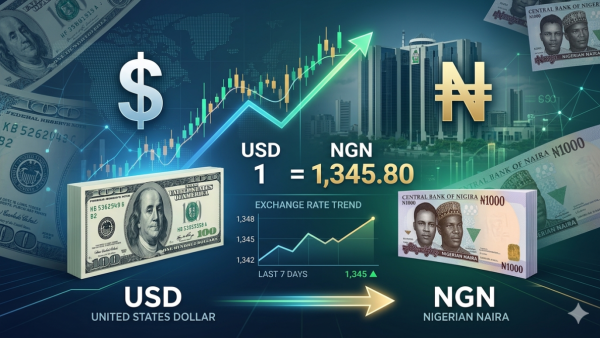
Despite feeling painfully expensive to Nigerians, the pump price of petrol in Nigeria in April 2026 — approximately ₦1,261–₦1,400/litre — is actually lower than in many peer African countries when converted to US dollars. At the current CBN rate of approximately ₦1,352/$1, Nigeria’s NNPC pump price of ₦1,261 equals approximately $0.93 per litre. GlobalPetrolPrices.com’s April 6, 2026 data showed Nigeria’s octane-95 price at $1,227.25 Naira per litre (approximately ₦1,227), significantly below the global average of ₦2,040 per litre equivalent. This comparison illustrates that while petrol is unaffordable for many Nigerians in naira terms (given domestic wage levels and the cost-of-living context), the absolute price in dollar terms is not especially high by global or African standards. The affordability problem is a consequence of Nigeria’s low average incomes relative to the current market price — a structural issue that higher wages, more productive employment, and stronger naira purchasing power would ultimately address.
How Petrol Prices Affect Food Costs in Nigeria 2026
One of the most direct and painful ways petrol prices touch every Nigerian is through food costs. Nigeria’s food distribution system is almost entirely road-transport-dependent — and every truck, van, and lorry in that system runs on petrol or diesel. When fuel prices rise, the cascade into food prices is fast and wide.
Farmers face higher costs first. Petrol-powered irrigation pumps, generators for cold storage, and small tillers all cost more to run. Next, haulage costs rise: a tomato trader trucking produce from Jos to Lagos, a fish seller moving catfish from Kogi to Abuja, or a grain merchant driving rice from Kebbi to Kano all face higher fuel bills that are recovered through higher sale prices. Market traders running petrol generators for refrigeration and lighting then add their own margin increases. Independent Nigeria’s April 2026 food price report confirmed the result: a 50kg bag of rice has climbed to about ₦61,000 in April 2026 — driven largely by elevated transportation and logistics costs that flow directly from current fuel prices. The April 2026 Lagos State Ministry of Agriculture price tracker similarly showed imported long-grain rice (50kg) at ₦61,125, up from ₦56,000 in January.
Petrol Prices and Transportation Fares — What Commuters Pay in 2026
For the millions of Nigerians who rely on commercial transport, the petrol price story is felt through daily bus and keke fares. In Lagos, a danfo bus trip that cost ₦100–₦150 in early 2023 now costs ₦300–₦600 for the same route. Keke napep fares for short distances have doubled from ₦100–₦150 to ₦200–₦350. Ride-hailing apps like Bolt and Uber have raised base fares by 60–100% since subsidy removal, with surge pricing adding further pressure during peak hours. For a low-income Lagos resident commuting daily from a distant suburb, the monthly transport budget has risen from approximately ₦6,000–₦9,000 in 2022 to ₦15,000–₦25,000 in 2026 — consuming a larger share of income that has not risen at the same pace.
Will Petrol Prices Drop Further in 2026?
The answer depends on three variables: global crude oil prices, the naira/dollar exchange rate, and Dangote Refinery production levels. Prices could fall further if: Brent crude remains soft (below $80/barrel), the naira continues its recovery toward ₦1,200–₦1,300 per dollar, and the Dangote Refinery scales output toward its 650,000 bpd capacity. Conversely, prices could spike back above ₦1,400 if a geopolitical shock pushes crude above $100, or if the naira weakens significantly. The deregulated market means changes flow through quickly in either direction — unlike the subsidised era where prices were politically frozen regardless of global movements. For motorists, the practical implication is to watch global crude price news and Dangote Refinery announcements — these are the two fastest signals of what Nigerian pump prices will do next.
⛽ Fuel Price Nigeria April 2026 — Complete Summary
- NNPC retail: ~₦1,261/litre
- Independent (major cities): ₦1,250–₦1,295/litre after crude oil price easing
- Independent (general): ₦1,335–₦1,400/litre
- Northern states: ₦1,380–₦1,470/litre (high logistics cost)
- Dangote gantry: ₦1,200/litre (DepotData.ng April 2026)
- Pre-subsidy price (2023): ₦185/litre — now fully removed
- Food inflation link: Rice now ~₦61,000 per 50kg — partly driven by fuel-linked logistics
- Track live: Intercity.ng/fuel-price | Resagratia.com
- CNG alternative: ~₦230–₦260/SCM — cheaper per energy equivalent; limited infrastructure
Also read: Dollar to Naira Rate Today 2026 | Dangote Refinery Petrol Price 2026 | Rice Price Nigeria Today 2026



0 Comments
No comments yet. Be the first to share your thoughts!